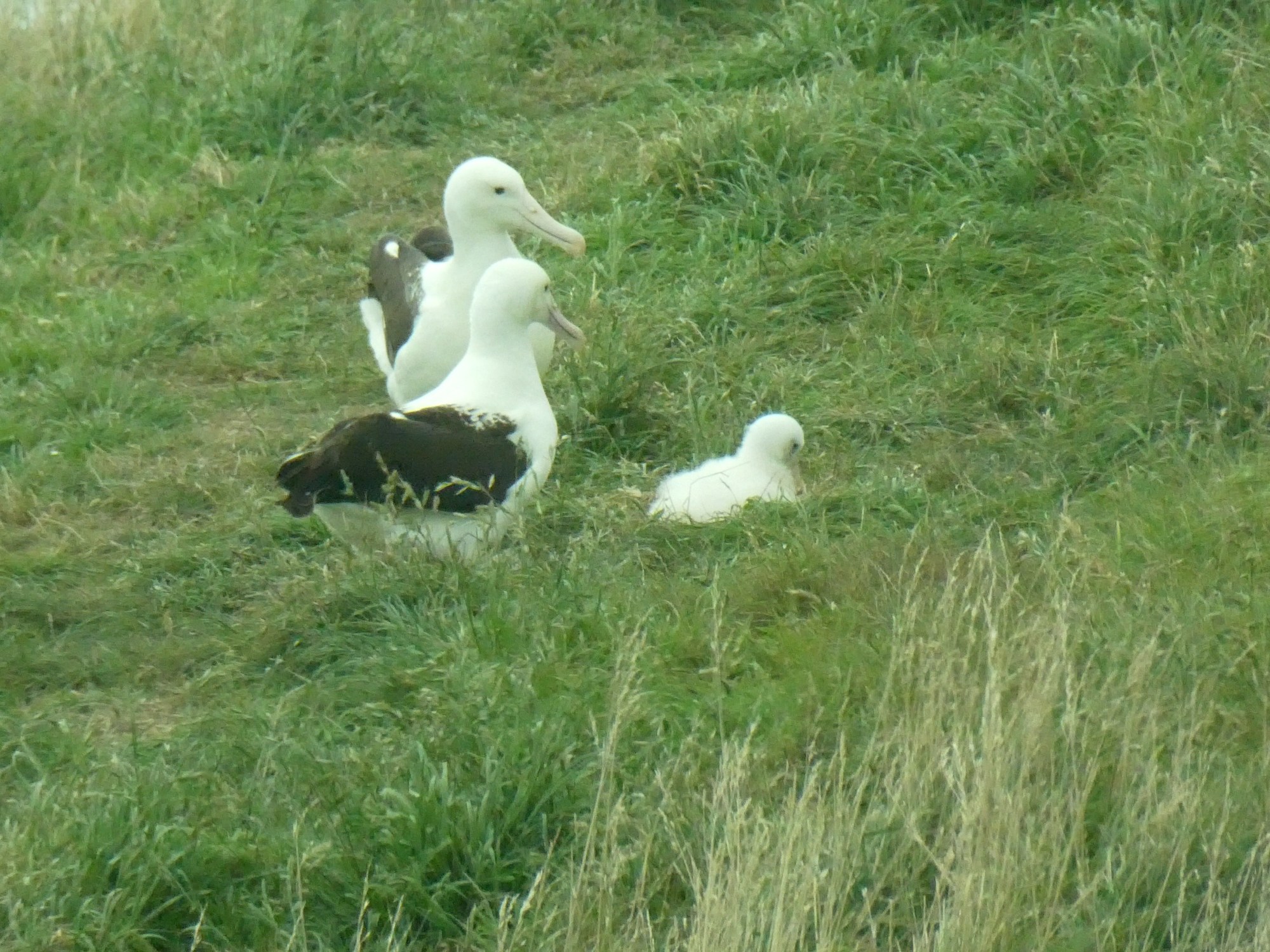


Dunedin welcomed us with low cloud, and a grey, cold day. What a change from the other places we have been. I can’t say we felt enthused about the place on first arrival. However, we decided that we would try to get as much done as possible before the forecasted rain set in so we headed straight for Taiaroa Head, on the Otago Peninsula. We wanted to see the Great Northern Albatross colony. We were told that there were no guarantees that we would see any adult birds, that there were 3 chicks, but the fact that it was a windy day would make it promising.
The talk they gave us was very informative – probably the best we have had to date. The adult bird weighs about 9 kg, has a wing span of 3 metres and can fly at speeds of up to 120km per hour. The adults breed at 8 years of age and normally live for 30 years, although one in the colony lived for 60 years. The chicks reach a weight of around 12 kg so before they can leave the nest and fly, the parents put them on a diet to lose at least 3 kg.
Once the chicks leave home, they are gone for around 4 – 6 years and will not touch land in all that time.
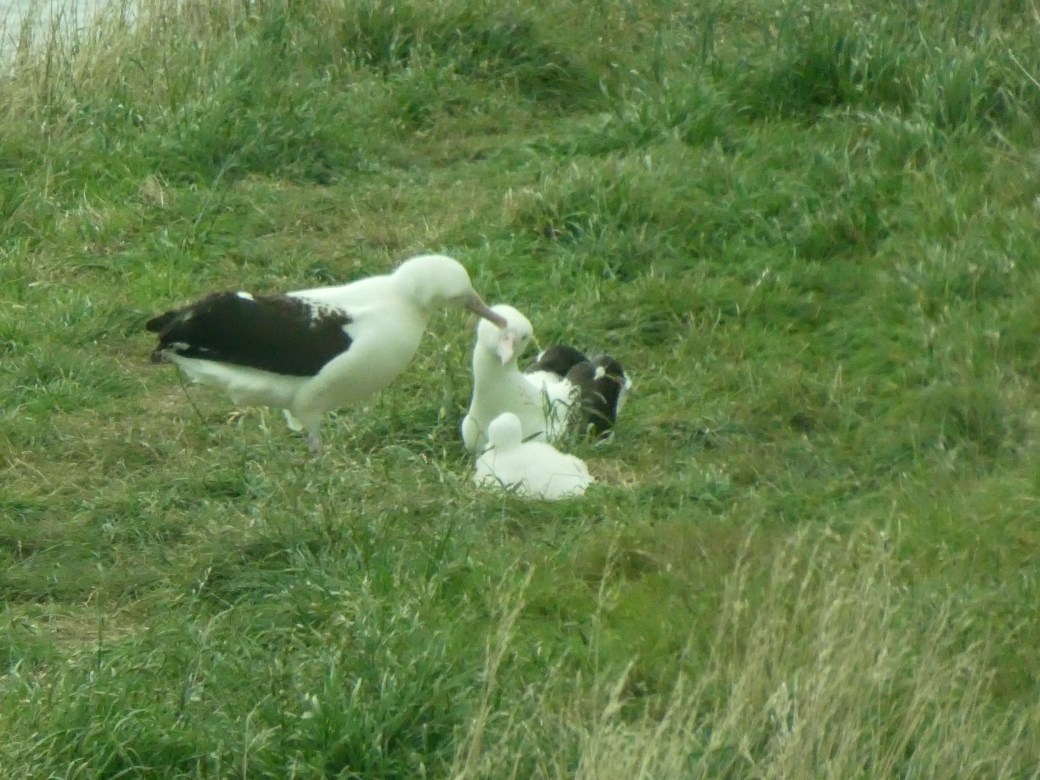
We were very lucky. When we went up to the viewing hut the adult birds were flying all around us and it did not take long to get an idea of how massive these birds are. Very hard to catch on camera though. These pictures were taken from quite a distance so the size is deceptive. In the picture below are 3 adolescent birds around a chick.
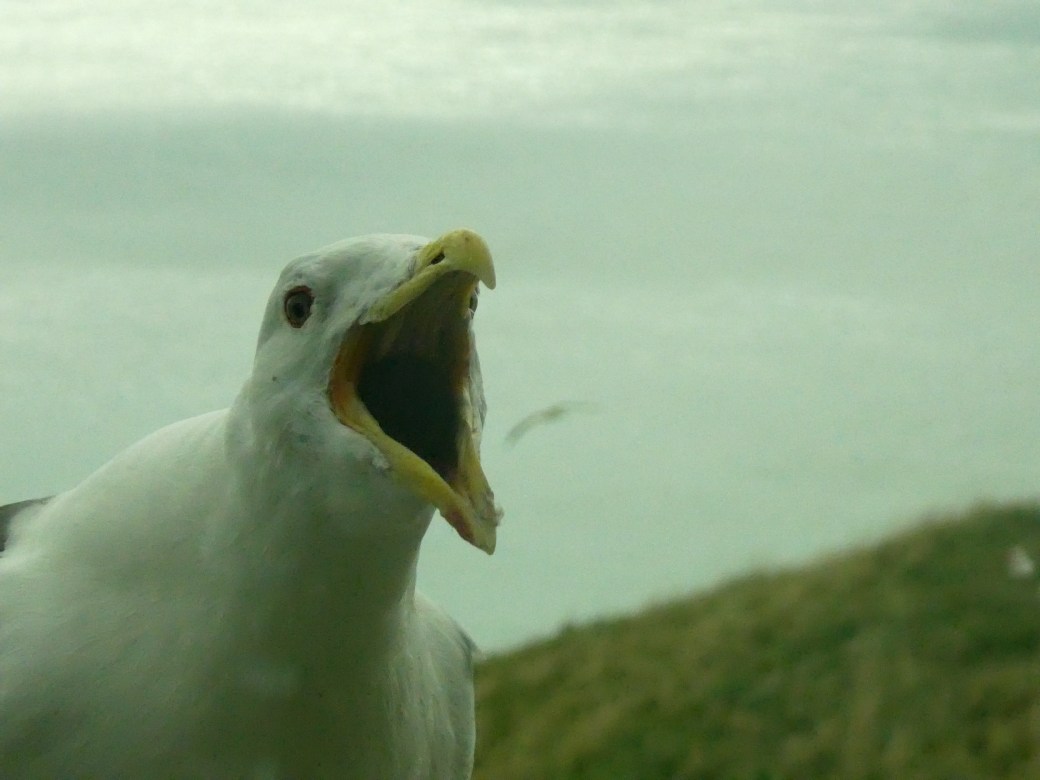
There was also a black backed gull, quite a large bird in his own right, who came right up to the window.
By the time we left this windy hillside, it was getting late so we decided to make our way to the Dunedin NZMCA Park. We got there at 5pm and were very lucky to get the last space. The park is supposed to fit 40 vehicles, but that looks very unlikely to me. It was a bit of a surprise to find our neighbours in the next van were from Whitianga!
The next morning we were off again at an unusually early time (for us) of about 8.30am and made our way back to the Otago Peninsula to visit Larnach Castle. Bruce thought he had been there before, but soon realised it was all unfamiliar to him.
William Larnach was a banker who built his house for his wife and 5 children. However, wife no.1 died, so he married her sister (wife no.2) and put his estate under her name to avoid taxes, and needless to say his children were very unhappy about this. Then wife no.2 died leaving shares in the house to the children, so that left William with no control over the estate at all. He tricked them into signing it over to him and them married wife no 3. Again the children were very unhappy and made the life of wife no. 3 a misery. William couldn’t cope with the stress of it all, and committed suicide. Wealth does not necessarily bring happiness.
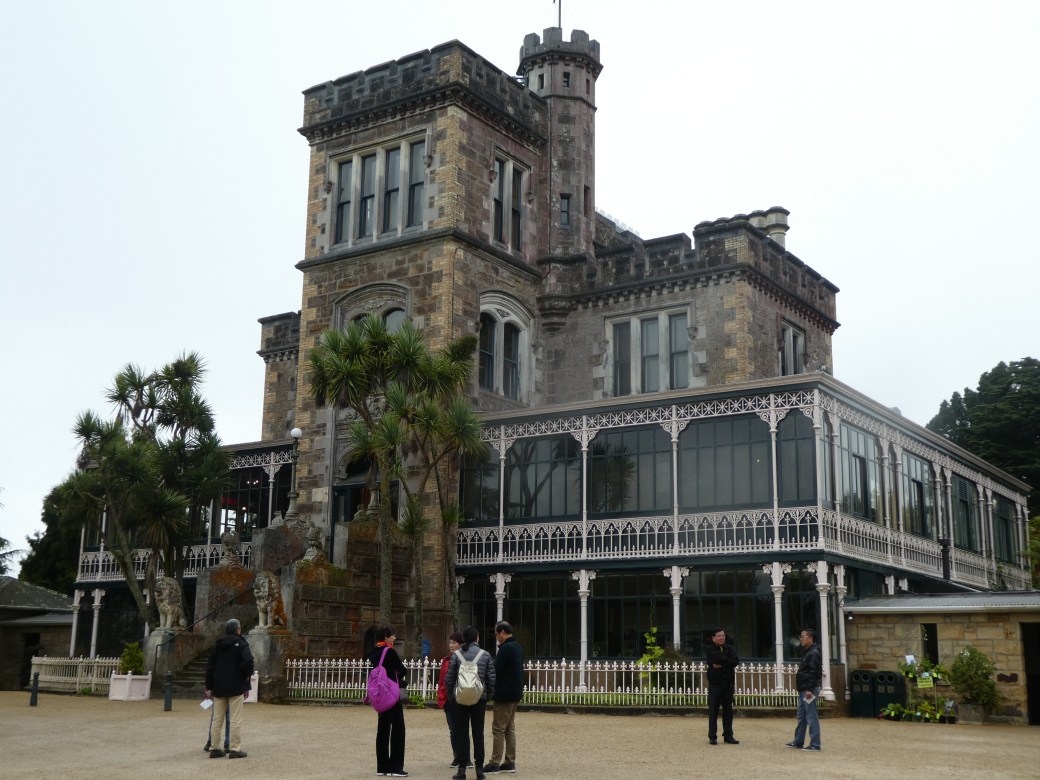
The house was in a poor state of repair until the Barker family purchased it some years ago. The restorations are extensive and well done, but forever ongoing. The interior of the castle has magnificent moulded wooden panels on the wall and the ceilings, and while it is stunning, it is also dark and unwelcoming.


The outer rooms of the castle are lighter and brighter, and have lovely views, but they would also be a lot colder.
The gardens of the castle are lovely – a mixture of English Country garden and NZ Native / coastal.


After a coffee in the very posh cafe, we headed away to town to visit the Chinese Scholar’s Garden. This garden was a gift to the city by the Chinese community and it is said that there are only 3 in the world outside of China, so it makes it quite a privilege for us to be able to see. The design of the garden is to trick the eye and the mind into thinking that the space is much bigger than it actually is, and it achieves that. All the rocks and elements for the structures came from a sacred area in China, filling 100 20 foot containers.


It was a beautiful garden, peaceful and soothing to the soul.
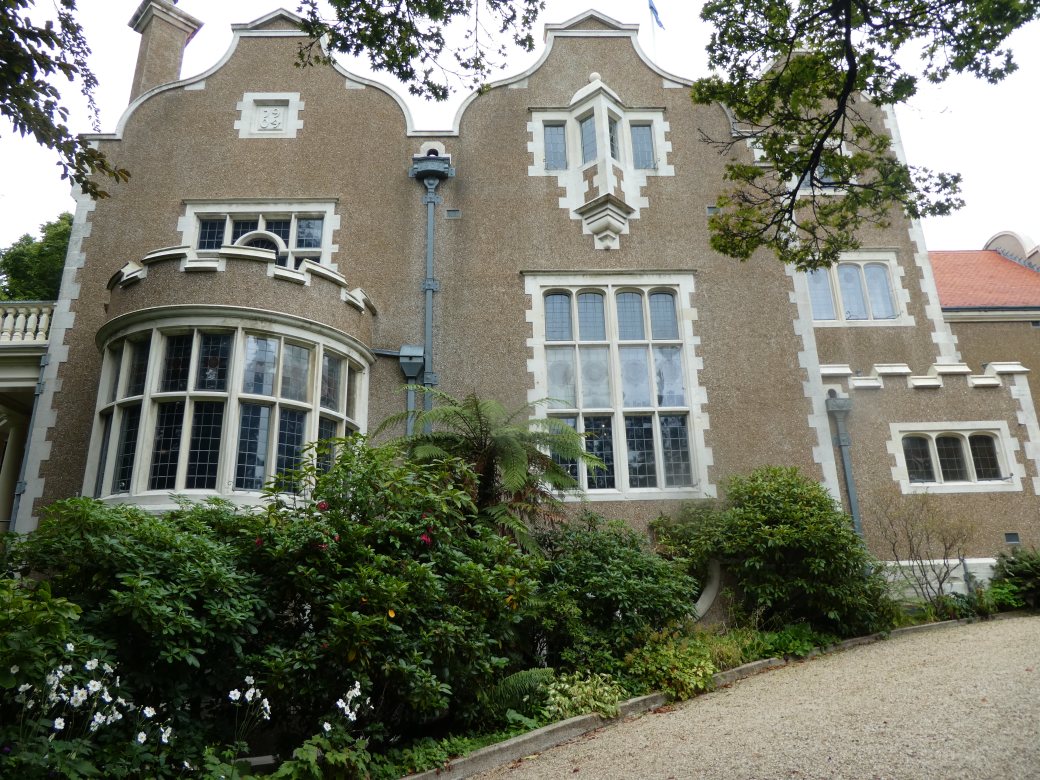
Our last trip for the day was to Olveston House, a historic homestead right in the centre of Dunedin. It was built by a self-made man, an importer, for his wife and 2 children. It has 35 rooms, and a staff of 7 servants. Over their time they collected some tasteful and valuable items, one of which is an original Goldie painting.
However, life wasn’t any kinder to this family. The son died without children, both parents died, and the last remaining child, a daughter did not marry or have children. When she died she gifted the entire house and contents to the city. It is an amazing insight into how the privileged once lived. Unfortunately we were not allowed to take photos inside the house.
That was our last visit for the day as we could not afford to be back to the NZMCA park late, or we would not have a spot.
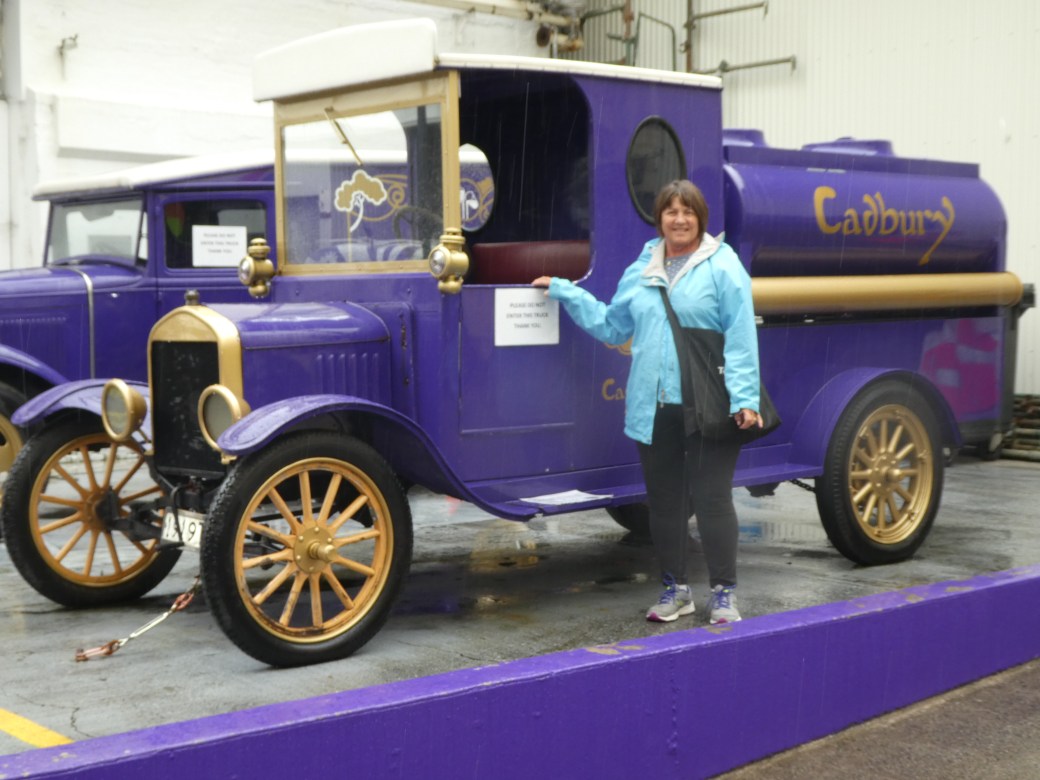
The next day we decided we would visit the Cadbury’s chocolate factory before heading out of town. We enjoyed the history side of things, and the tour was well run, although you did not see the factory working. However, it was a good experience culminating in seeing 1 tonne of liquid chocolate being poured, waterfall fashion, in front of us – quite jaw dropping. Again, cameras were not allowed until the tour had finished but we were allowed a quick photo of the original Cadbury delivery vehicles.
From there it was farewell to Dunedin. It has been wet, cold and very grey the whole time we have been here. The low cloud has clung to the hills and the harbour has been misty. Although we enjoyed our time here, we have not enjoyed the weather.
 Away From Home NZ