If you are looking for evidence of the hard working pioneers of New Zealand, then Ross is one of the places to find it. Gold was discovered in the area in 1864, and there was a rush of people to the area which had previously been sparsley populated. The population was limited though by the shortage (and expense) of food supplies because there were no roads into the area. Early miners almost starved to death. However, once the supply line was secured, until 1872 the Ross area was the country’s most productive gold field, producing around 14,000 oz of gold per year.
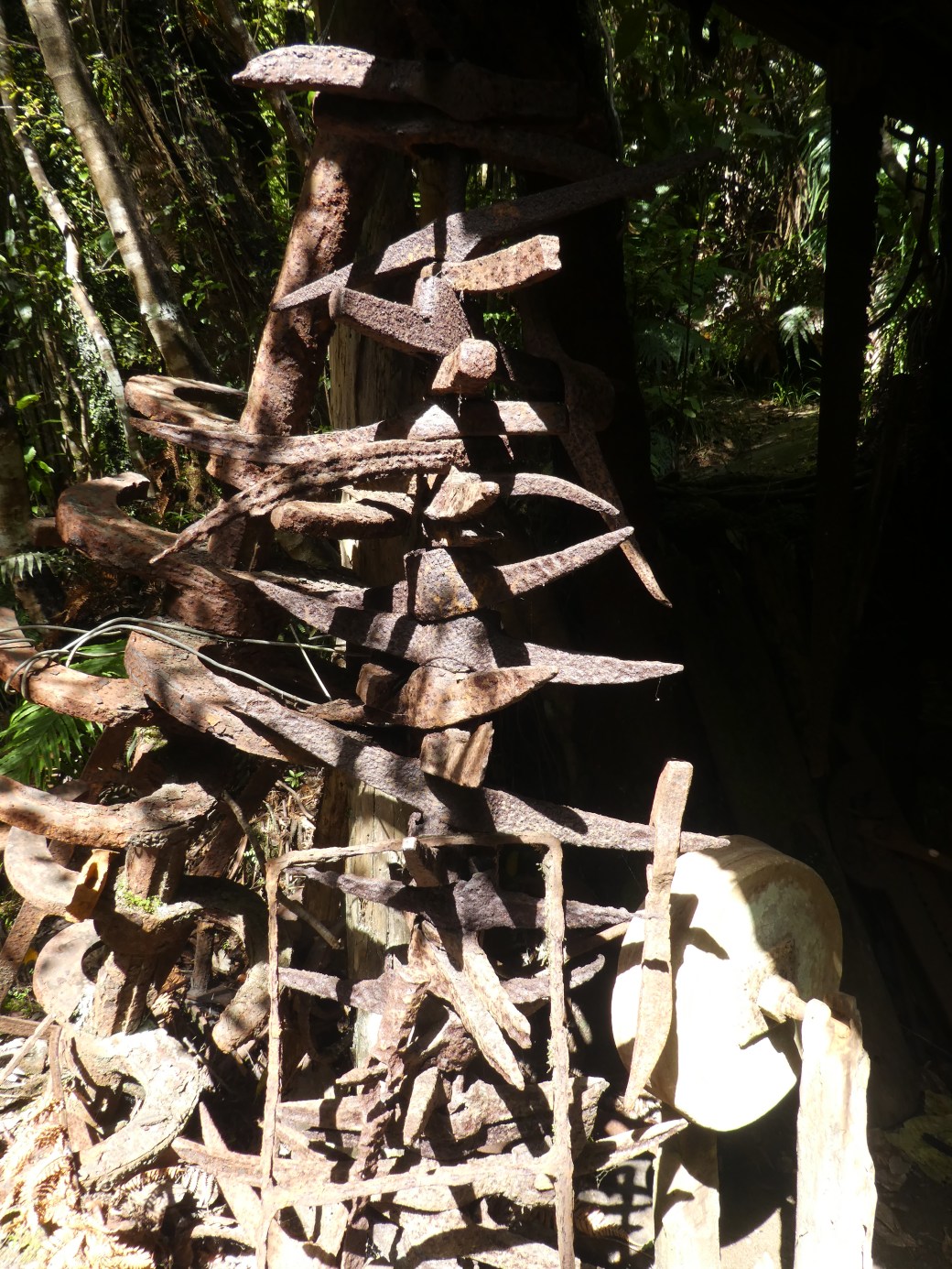
Evidence of these mines are everywhere and our first visit was to Mitchell’s Gully Historic Gold Mine, between Westport and Hokitika. We were greeted at the gate by towers of pick axe heads, and the significance of these was soon apparent.
The tour of the old gold mine, which was established in 1866, took us along very old tram lines, and there were still the old trolleys in evidence that were used for transporting the ore.


The gold that came out of this mine was dug from rock (hence all the pick axe heads). The tram lines went through tunnels that were dug, but there were tunnels in all directions, some adjoining and some in new areas altogether.


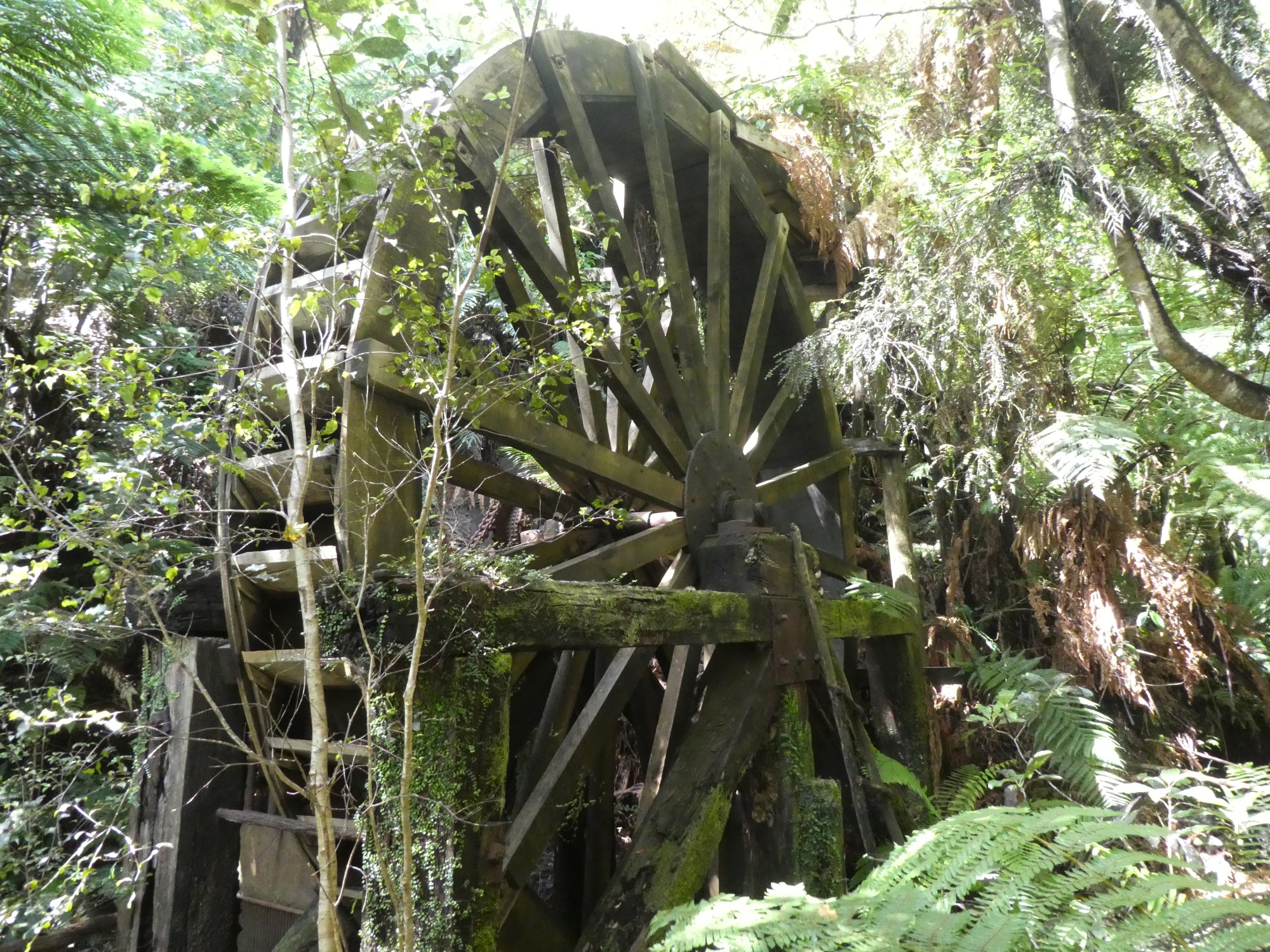
This mine produced an estimated 4 million ounces of gold in total before it closed down. The mine relics come complete with a stamper and water wheel, but apparently, at its peak, it had more than 300 stampers and was working 24 hours a day.

Further along the road is the town of Ross which was to be our resting place for the night. We were totally unprepared to find that our park over property was bordered by an active gold mine. It was hard to see the scale of it until we hiked up the hill behind camp the next day and got a good view.


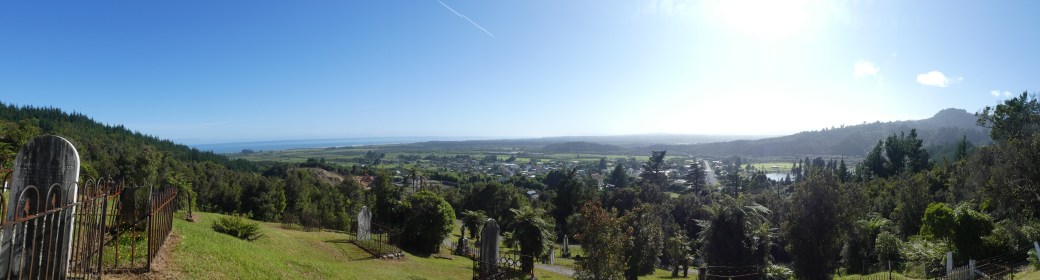
Up behind the property is a historic cemetary. I had thought the graves at Tapu were among the oldest I had seen, but these ones were definitely older, and these people certainly did not reach old age. One gravestone had inscribed that the gentleman had died “in dispair” which is further testament to the toughness of life as a miner.


The track continued through the cemetary following an old water race, and comment was made on the sign board that those who built the water races made more money than the miners digging for gold did. The type of mining done in this area was by using water canon to spray the hillside and then passing the resulting material through sluices and stampers. To get enough water to the area there are dams and kilometres of water races. The path we took followed one of these lines of water race, complete with the remains of an old water canon.


The track was pretty steep in places, but well maintained, and though lovely bush. Some of the walls of the old races had been taken over by moss and fungi, which were rather beautiful.


The track also led us to an old miner’s hut that has been partly restored but with materials as similar to original as possible.


We carried on the track for quite a way but decided not to go to the end, so made our way back to the motorhome and headed into town to have a look there.
The museum there is well set out and is situated beside quite a large lake that was the site of an opencast goldmine. Now it has become an area of beauty.
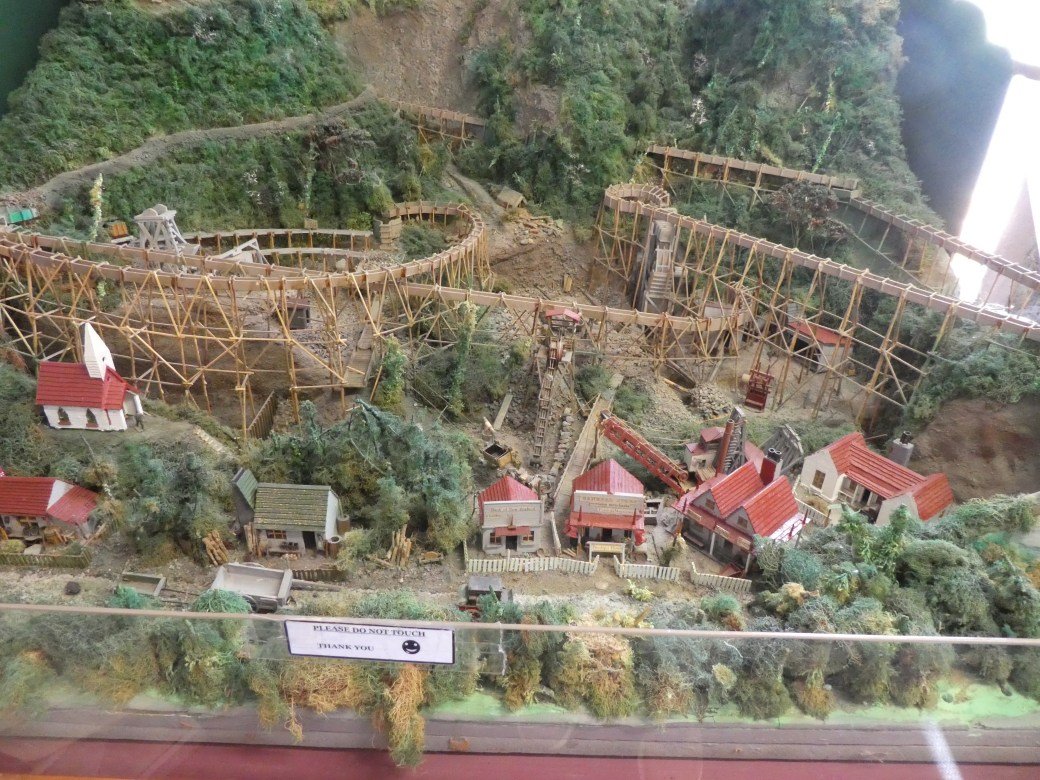
The museum has models of the mining operations that had been active in the town, as well as the opportunity to pan for gold yourself.
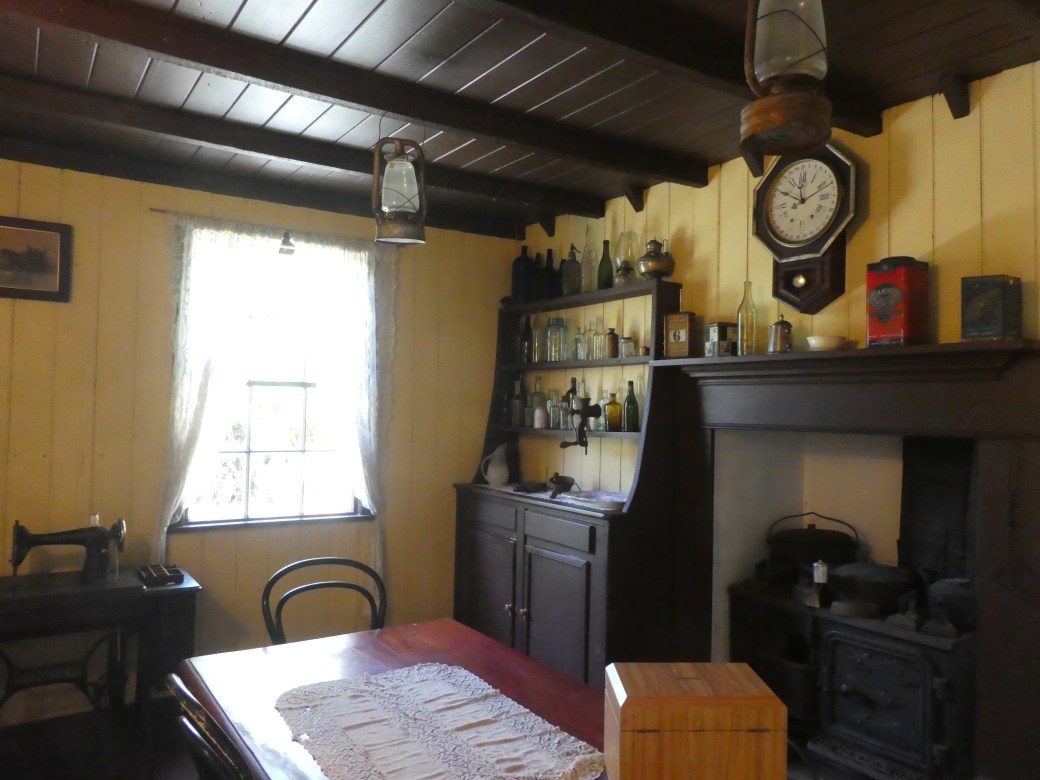
Also in the town centre are examples of the buildings that were around in those early days, such as the old hotel (I couldn’t get a photo of this because there was an asian tourist bus parked in front of it); a settler’s cottage:
the town gaol;


and the beautiful Catholic church, opened in October 1866. It is still original, other than the roof, and is the South Island’s oldest timber church.


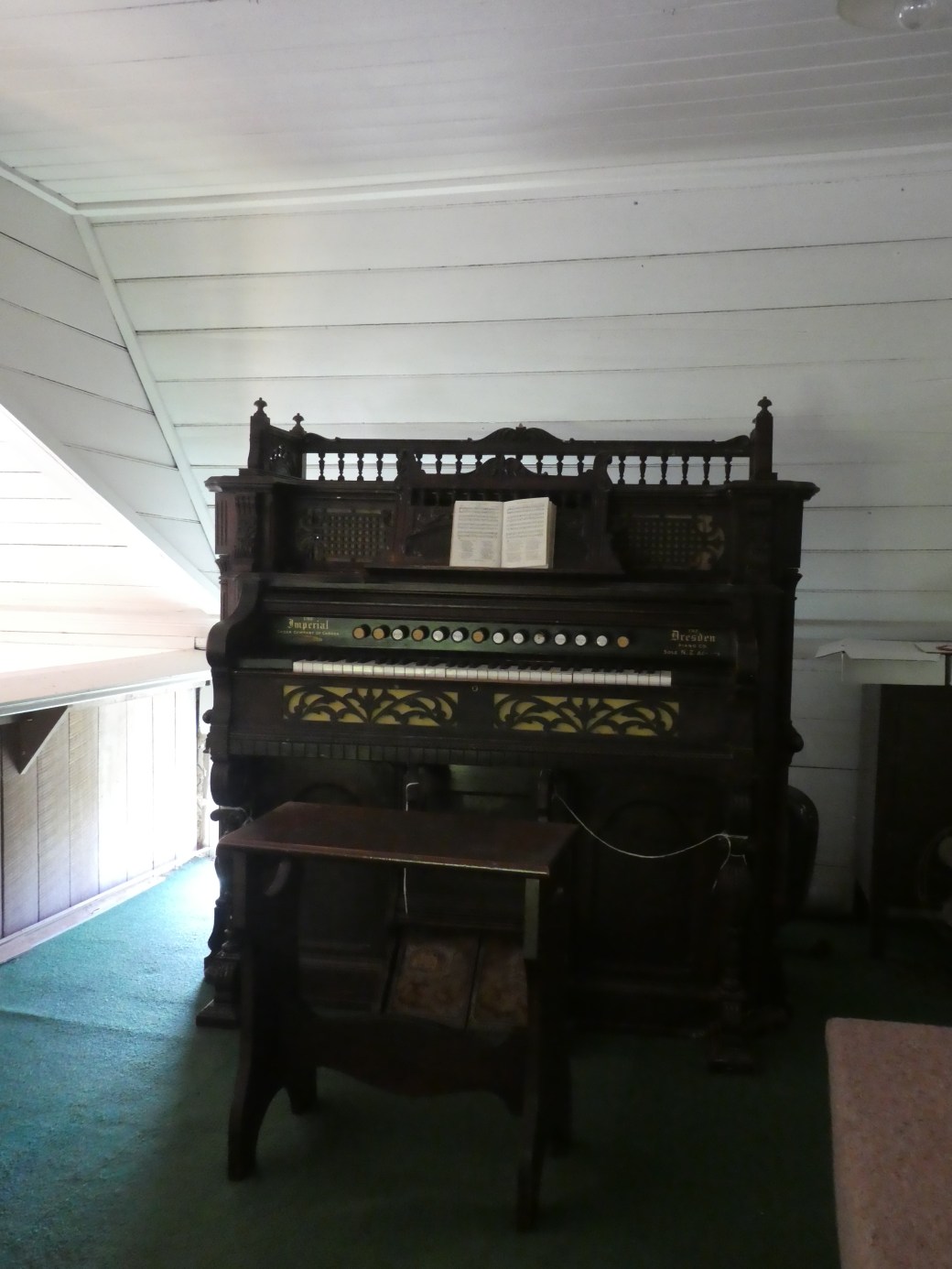
The old organ was also a thing of beauty:
We had to leave Ross, evven though there were more places we could have explored, but if you have not been there yourself, it is to be recommended.
 Away From Home NZ