Blog

Westport

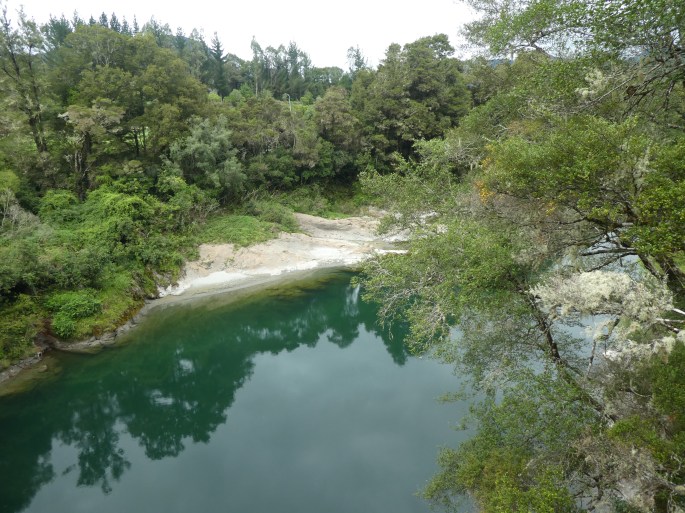
The west coast is a particularly beautiful area, and wherever you drive the scenery is majestic – from steep bush clad hills, to wild rocky beaches, white sand to gravel, deep chocolate brown streams to jade green alpine sourced rivers.

It invariably takes us a long time to drive anywhere in this region because we are continually stopping to take photos or just to drink in the views. This was certainly the case on our drive to Westport. This area was not new to us, as we had explored here three years ago, but we returned as a stepping off place to go to Karamea, and a bolt hole for when severe weather was scheduled.  Despite having been here before, it still took us a long time to get there.

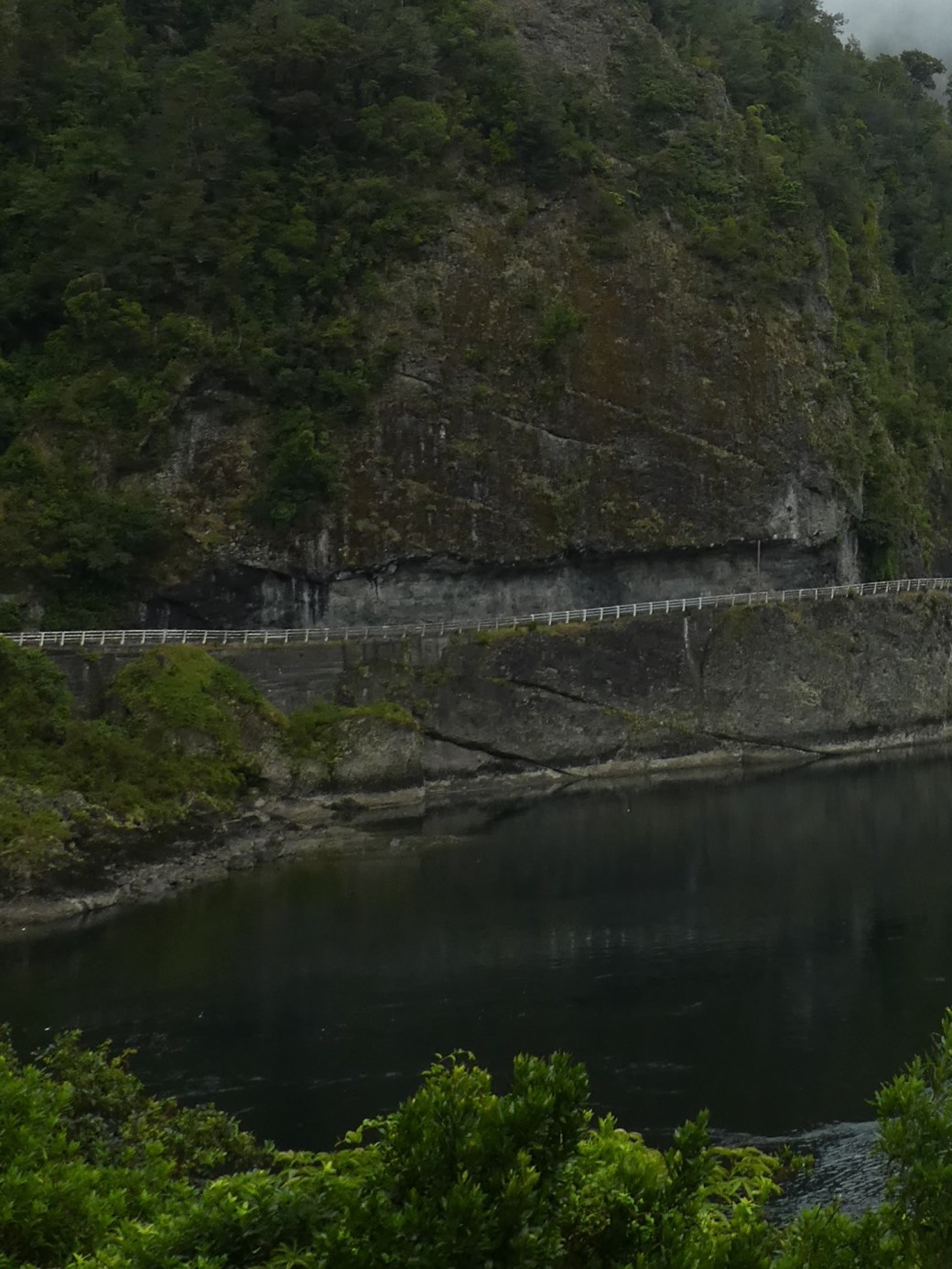
The road through the Buller Gorge (from Murchison) is particularly beautiful –

and the engineering required to  hew out the road from a solid rock cliff face is mind blowing. Traversing this bit of road was a bit harrowing because the one lane stretch of road is on a blind corner and is controlled by lights at each end. However, the lights have not been working for a while now, so you take your chances when you decide to drive it. We were lucky in that we were travelling behind a car and caravan. He decided to go and had to come to a sudden halt when he came across an truck coming the other way around the bend. When he could finally see it was clear we travelled on his coat tails (so to speak).
P1020065 (2)

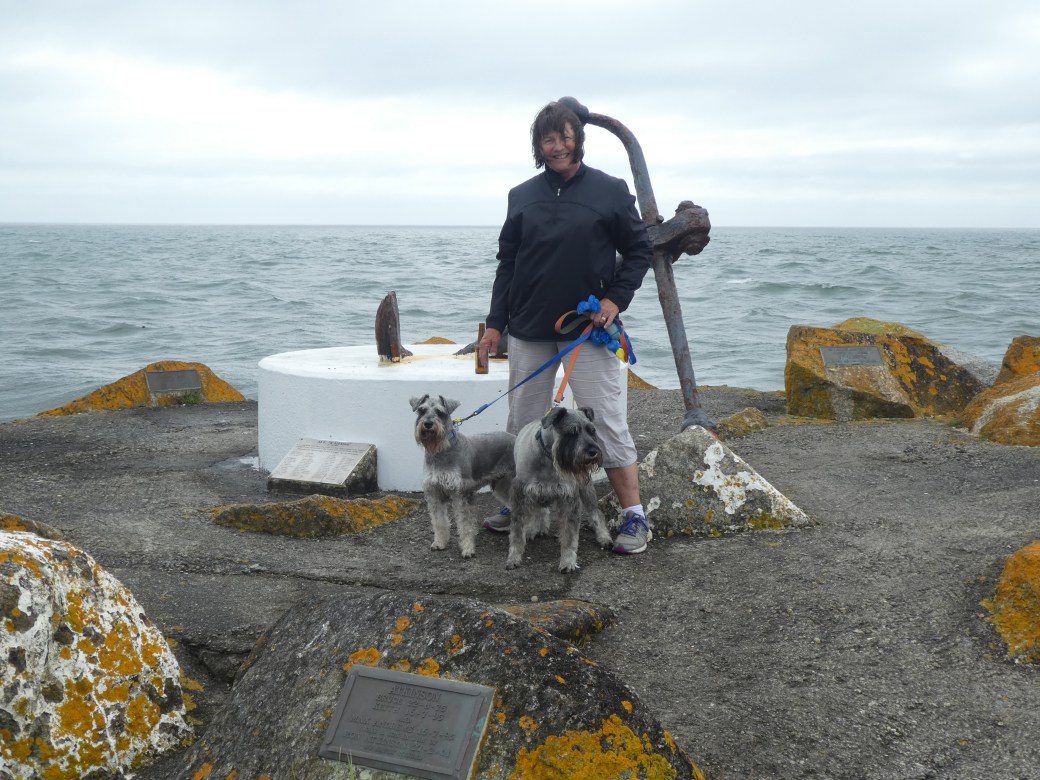
The NZMCA Park at Westport is right on the beach, and that is where we stayed for the two nights we were there. On our first night we walked the beach with the dogs up to the notorious river mouth, where fishing boats risk their lives going out to sea. The memorial on the breakwater is testament to those who never made it. The waves are pretty fierce around here, and I have seen photos of boats crossing the bar here before – it is enough for me to decide it would not be my choice.
P1020085

All the plaques you see in the photo above have the names of those whose lives were lost.

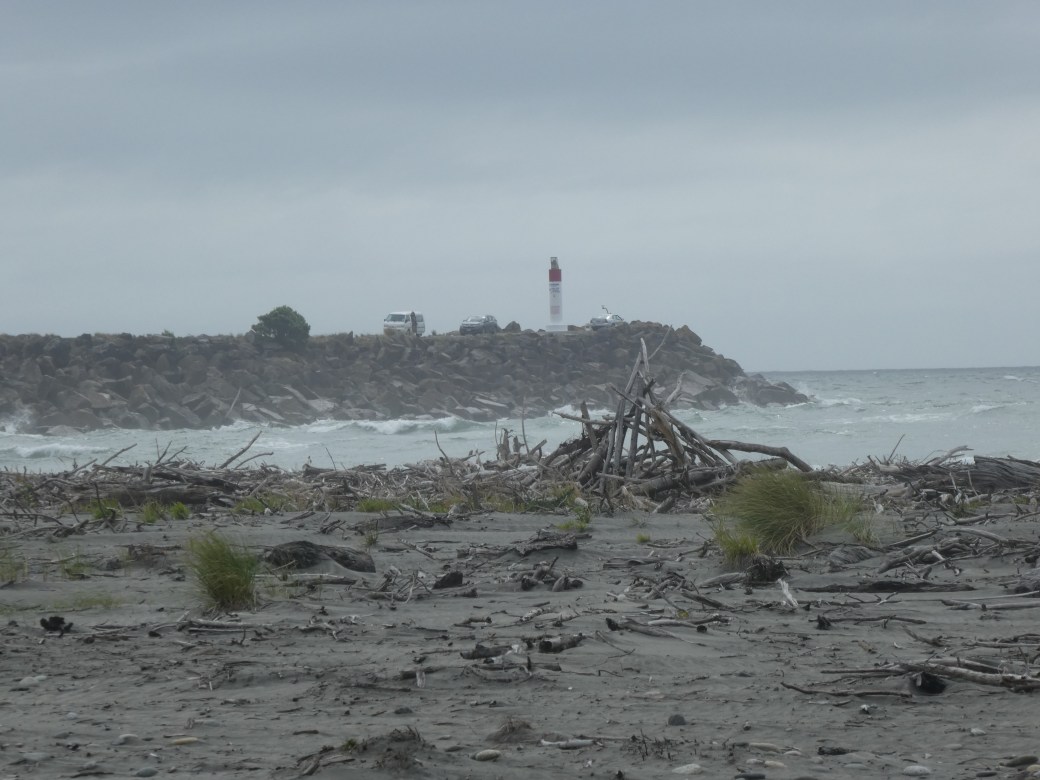
The beaches in this area are strewn several metres deep, and as far as the eye can see, with debris from forestry. It all accumulates on the high tide mark so we quickly learnt that if you want a nicer walk, you go either before or after high tide, when you can get some sandy beach.

Once you are away from all the flotsam, the beach is quite lovely and I enjoy seeing all the different coloured rocks. A lot of them are a perfect shape for rolling along the beach for the dogs to chase, and if they lose one, there are plenty more to replace it.
P1020077

My Dad grew up in this area, and my sister and brother were also born in Westport. We took the opportunity to drive through the area called Utopia, where Dad grew up. I am sure it never looked anything like it looks today when he was around. It is the flasher area of town now!

Just outside of Westport are two areas of interest. The first is the Stockton Coal Mine. Coal was once very big on the West Coast, and my grandfather was involved in the industry. Today, the Stockton Mine is the last big mine to still be in operation. As you will know, many lives have been lost in underground mines in the area, but Stockton is an open cast mine, and tours are available, but we chose to see it from a distance.

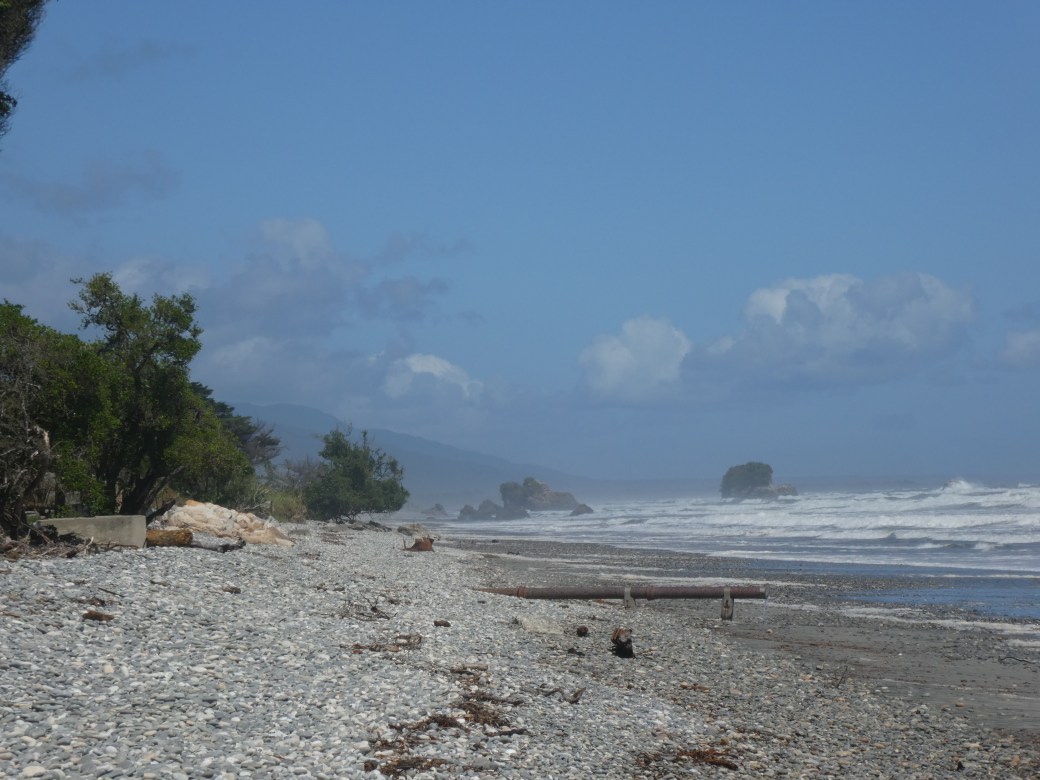
The other area of interest was the town of Granity. It was here that the reality of climate change was very obvious. Houses that are on the seaward side of the road have at least one, but in some cases two large sea retention walls at their back door. We saw one for sale at the advertised price of $48,000, but it looked like it had been on the market for some time. I am not surprised there have been no takers. I did not take any photos of these properties as it seemed insensitive somehow. In the photo below you can see the beauty of the beach, but also the remnants of habitation in the past.
P1020098

Our last night in Westport was a bit dismal – heavy rain and blustery winds, but we woke up to a perfect day – typical west coast really. I would have been happy to have spent more time here, but we must off to Hokitika as we have a meeting date with friends.
Karamea

Bruce and I had heard a bit about Karamea from others who have been here and thought the place was wonderful, so it was definitely on our “must visit” list. So here we are, for a few days to explore, and the area has not disappointed. We stayed at the Memorial Domain Camp and the hosts have made us very welcome, and provided a lot of information about the area. The camp backs on to a stopbank of the Karamea River. This river is like all those in the area – a deep chocolate brown colour from all the tannins leeching out of the abundant bush in the catchment area. The stop bank provides a great area for walking the dogs and leads down to a sandy estuary which will be the site for our fishing later today. The stop bank also provides a great vantage point for watching the beautiful sunsets.

Our motorhome was too high to venture into the Kahurangi National Park to visit the local attractions – the Oporara and Moira Arches, and the Crazy Paving, and Box caves, so we hired a car from an enterprising local, left the dogs at home, and went off to explore.

First visit was to the two caves. The road in to all these attractions was narrow, steep, winding and gravel road, which overall was in pretty good condition but a bit tricky when you strike traffic coming the other way. The bush surrounding the road was thick and probably virgin bush. The caves were right at the end of this road. We went into the Box cave first. It was pretty large, and came complete with limestone stallectities and stalagmites, but no fancy lighting such as at Waitomo. Good torches were a necessity.

The Crazy paving cave is called that because the floor of the cave has sediment that has dried out into shapes, much like mud does in a drought. Scientists think this is something special.

This cave was not as spacious as the Box cave, and Bruce had to watch his head! We then headed a few kilometres back down the road to the walking tracks to the two arches. The Oporara Arch was first on our tour and was about 1.5kms into the bush. The track was pretty good for the most part, and the arch was certainly impressive. It is reputed to be the biggest limestone arch in Australasia at 218 metres in length, 43 metres high and 79 metres long. It is big enough that the photos do not do it justice, and it was certainly awe inspiring.

We walked back to the carpark and had lunch which earned us a lot of interest from a local weka. They are tame enough that they will take a morsel from your hand, but we took care not to feed it.

P1020215

We then took the path to the Moira Arch. Again, for the most part, the track was in good condition, but access to the arch was through a small cave, clambering down over boulders while holding on to a chain fastened to the wall. The photo below is looking back from the arch to the light source where we entered.

P1020224

The arch itself is not as big as the Aporara Arch but much prettier.

The rock formations inside the arch almost look like the pancake rocks at Punakaiki, but there were also plenty of stallectites.

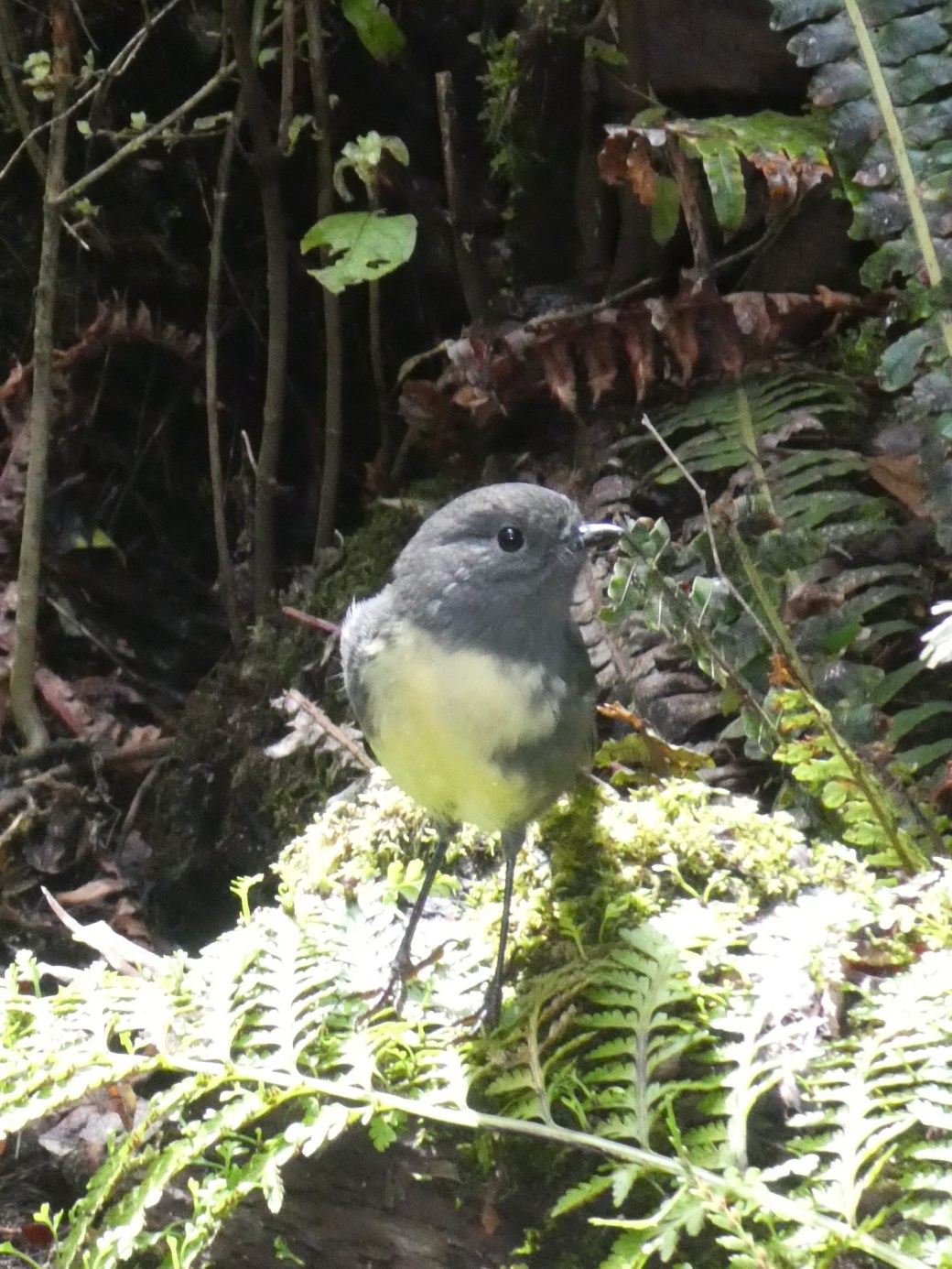
We wandered back to the carpark and were kept company for part of the walk by a little South Island Robin, and there were lots of little wrens around, but they were too  quick and shy to get a photo of.

P1020158 (2)

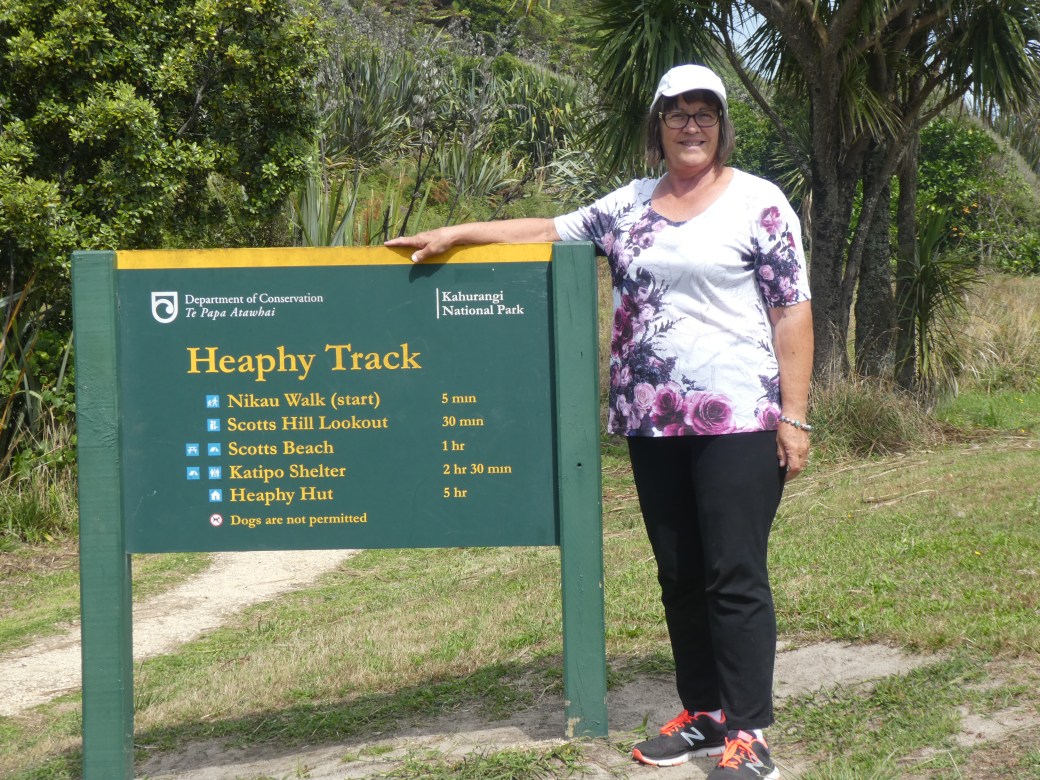
At the end of our walks we still had a bit of time so we ventured further north to the base of the Heaphy Track. I was quite keen to do the Nikau Walk and was very glad we did. The scenery was very different – the road followed the sea which had beautiful white, soft sand but huge breaking waves. Not nearly so much driftwood here, and what was here was generally huge fallen trees, rather than forestry debris.

P1020247

The Nikau walk itself was pretty short, and through totally different territory than the other walks we had done. The nikaus were certainly plentiful, and the ground was covered with old fronds, rather than the lush forest floor we had become used to. We had to cross a swingbridge to get to it and that was a bit of fun.

At the end of that we decided to head back and check on the dogs. However, we cannot be anything but amazed at the beauty of the land around us, its diversity, and how we have the freedom to get out there and enjoy it – what a privilege!.


Motueka area

Every night we looked at the weather forecast for the west coast, and we could see another band of bad weather heading their way so we opted to head north, primarily to visit relatives in the area. Judy’s aunty lives in Motueka and she lost her husband just 4 months before she lost her only brother (Judy’s dad). We felt it was important to spend a bit of time with her and her driveway proved to be a lovely place to park the motorhome.

P1020023

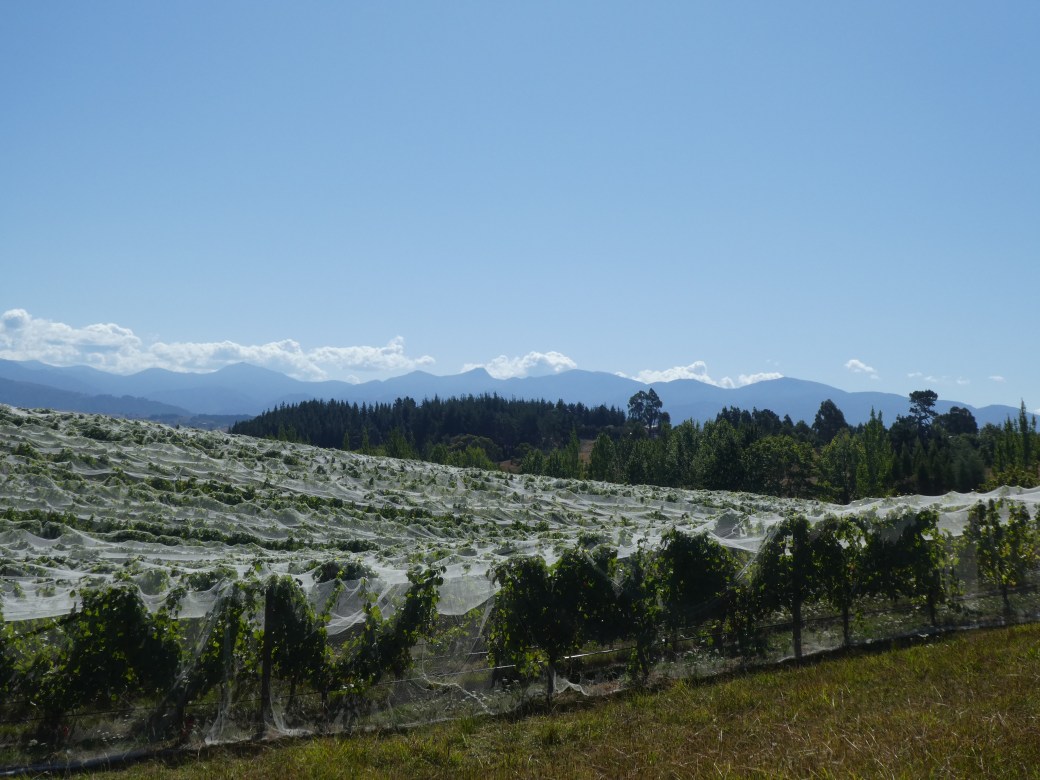
We spent the mornings and evenings with aunty, but in between time we went exploring. One of the places we visited was Seifreid’s winery. Judy in particular is a fan of their sauvignon blanc but it was interesting to hear the story of the winery and to sample some of the other wines they produce. We came away with a bottle of chardonnay to take to dinner with Judy’s cousin, and a bottle of Sweet Agnes Riesling which we especially liked and are saving for our birthday celebrations.

P1010994

Next on the list was a place called The Corner, which is a collective of  local businesses, mainly food producers. We had a lovely lunch at the cafe and brought some beautiful fresh blueberries, and some delicious cheeses.

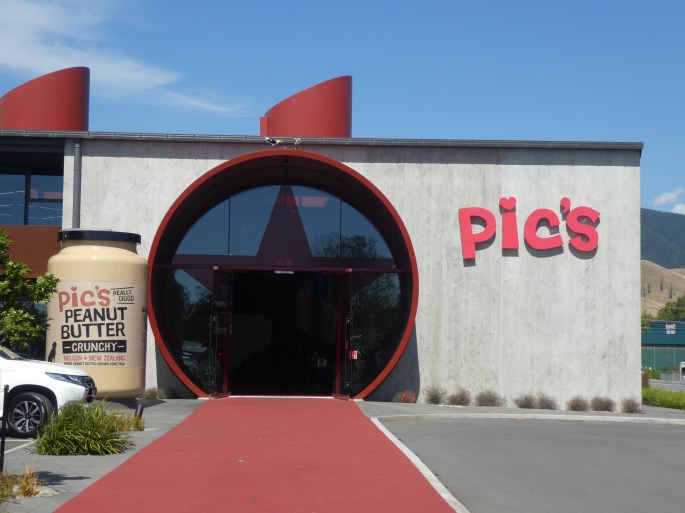
The following day we had booked a tour of the Pic’s peanut butter factory. The making of the peanut butter itself was not a surprise to us, but the story of the growth of the brand was fascinating. What was also interesting were the unusual uses of peanut butter that we learnt. Some examples are below:

There were also the following interesting facts:

As expected the production line is efficient, clean and modern, producing one pallet of peanut butter every 45 minutes.

Our next visit was to McCashin’s Brewery in Stoke, who make a great dark beer that Bruce really likes. I did not realise that they also make a range of ciders, so we had a try of the lime and ginger variety which proved to be really nice so we came away with some of that as well as beer for Bruce.

On our way back to Aunty’s, we had a short explore around Mapua. It is a very scenic area, albeit with a reputation for being very expensive. There are lovely walks and cycle trails in this area, but we confined our visit to the local wharf.

We also enjoyed our daily swims at the salt water pools in Motueka, although surprisingly Oscar and Hunter did not share our enthusiasm. The whole area is lovely with the sea vistas, the vineyards, the hop plantations, the low mountains surrounding the fertile plains, the walks and the cycle trails. It would be easy to spend more time here.


Geraldine

Bruce and I ended up spending only one night in Timaru, where we visited our best man Bob and his wife Vivenne. It was a great catch up and good to see Bob so enthusiastic about his new home and the renovations he is undertaking. He looks well and is promising to come and visit us some time soon.

After a night spent parked in his driveway, we decided to go inland again before heading back up towards the north. Our targetted town was Geraldine, and we had a few stops scheduled here. The first was Barkers, who make a range of jams, chutneys and sauces. They pride themselves on using local ingredients, and they have opened a big new outlet shop and cafe since we were last here, so we headed there for some lunch. Bruce also wanted to see if they had any tomato chilli jam as he had eaten the contents of both of the jars we brought with us. They didn’t but we decided to try some of their capsicum jam to see if it could compensate (nice but not the same!).

We then headed on to the Geraldine Brewery that we had visited previously, that had a Blackberry Porter dark beer that Bruce really liked the last time we were here. Unfortunately we had no luck there either, so came away empty handed.

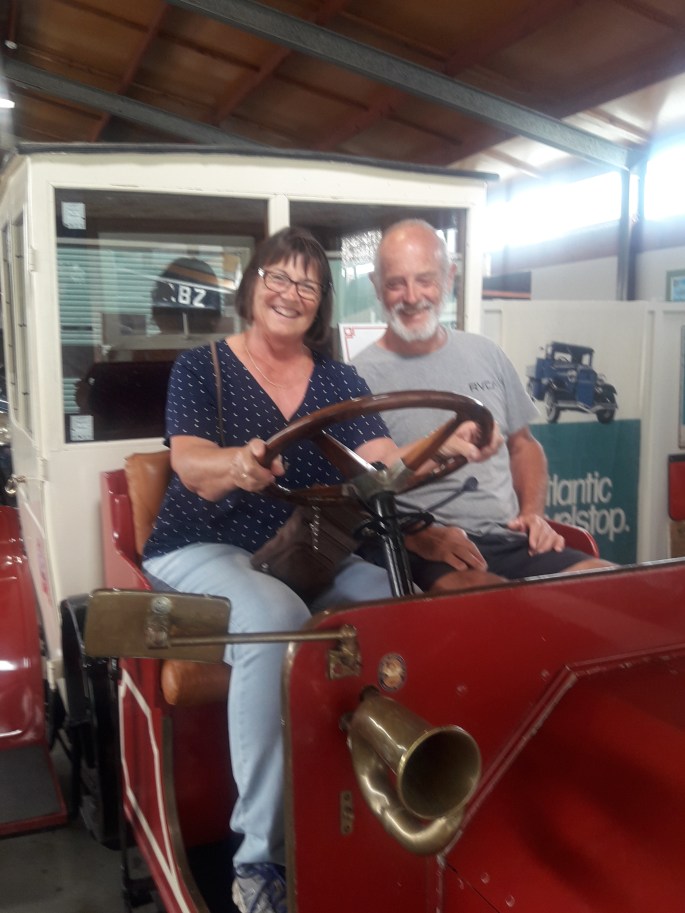
Our last stop was to a little transport museum, and what a gem that turned out to be.

20200220_125715

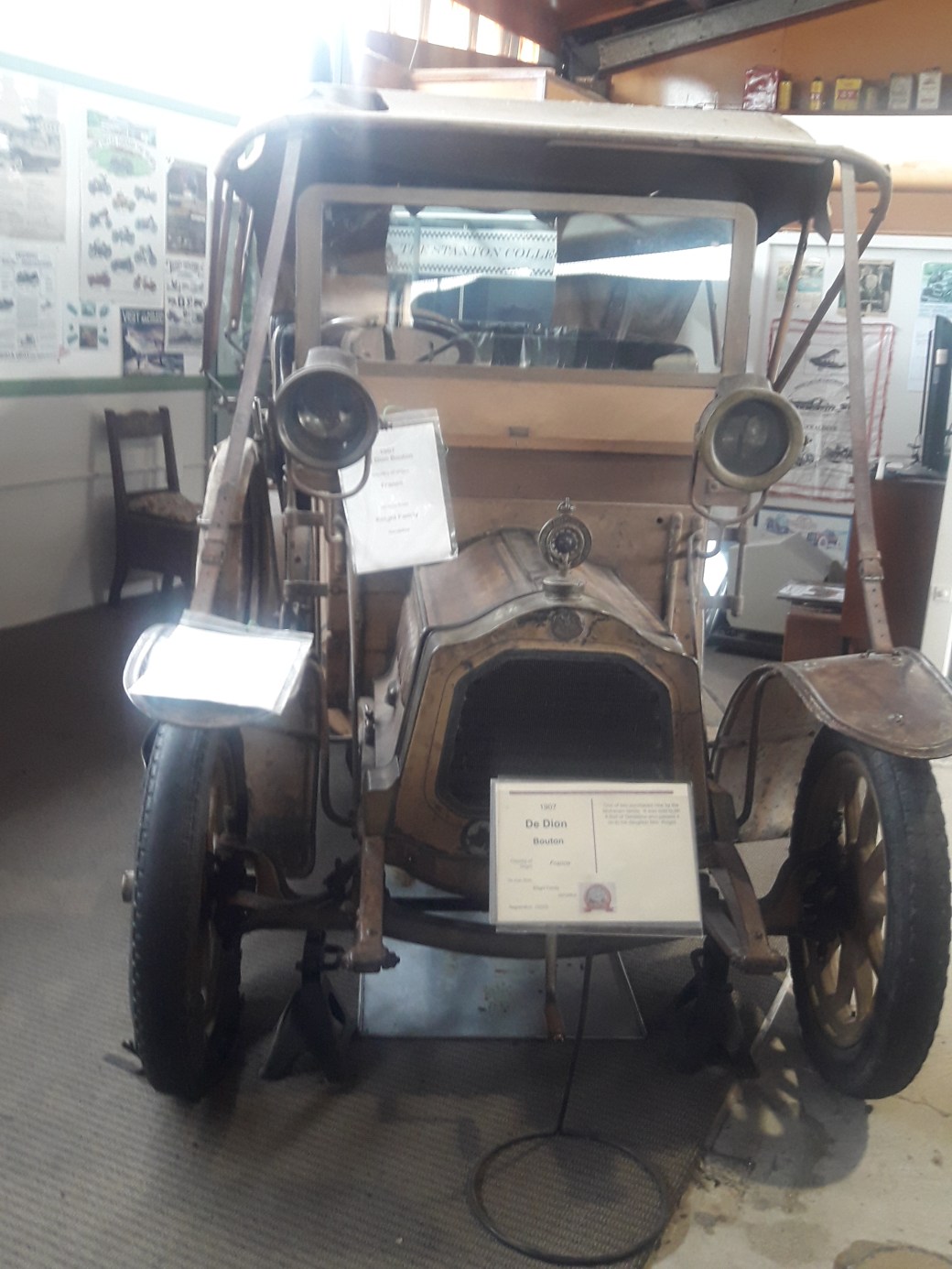
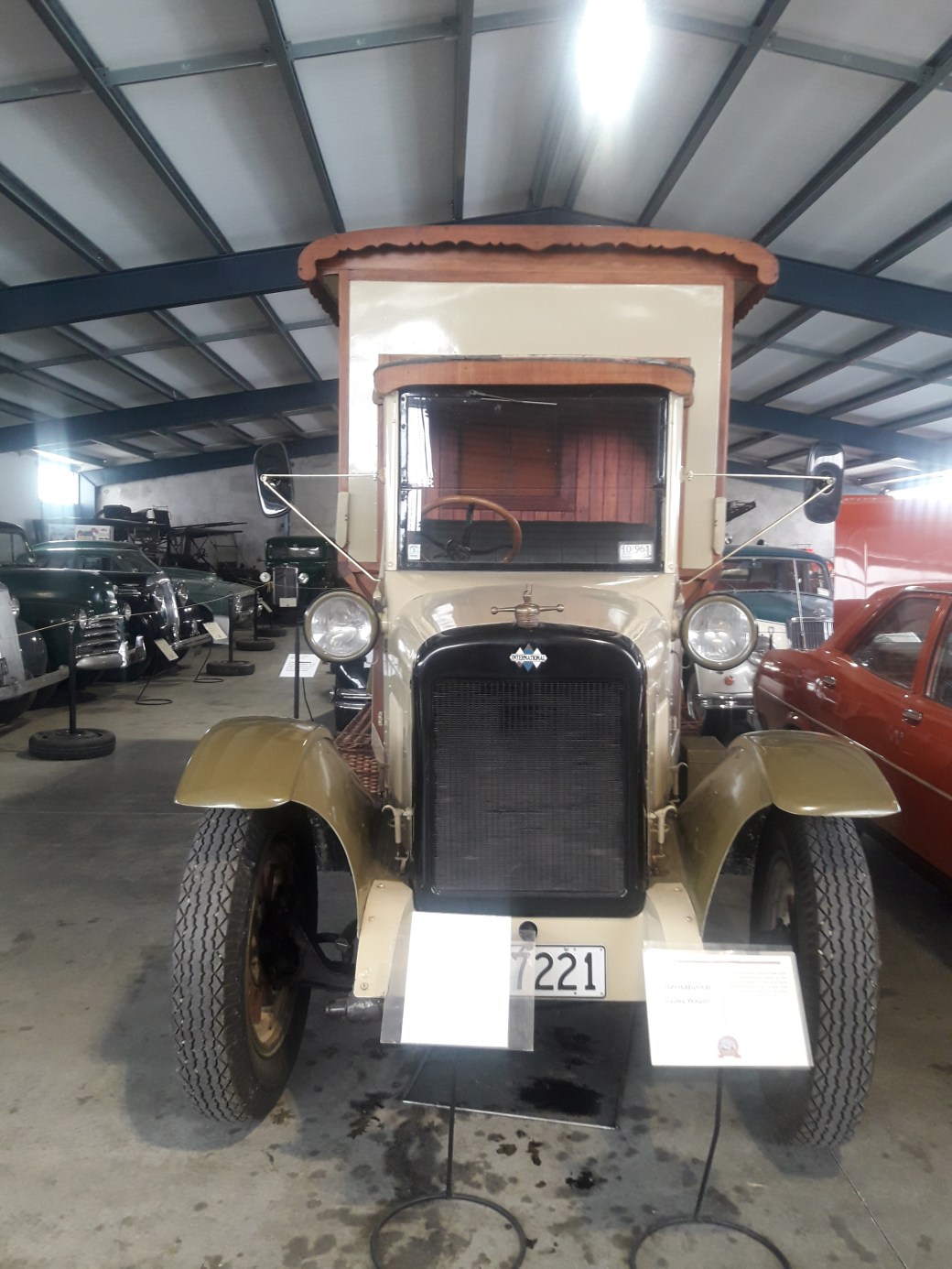
They had some very old cars that I had not seen before, but what really took my fancy was a home built motor home, built by John Britten of motorcycle racing fame. It was a beautiful specimen, made primarily of wood, with wicker storage baskets. The workmanship was superb.

20200220_133140

The inside was also beautifully crafted with a velvet couch, ceramic basin and a wood burner for cooking and heat.

There was not a lot of room inside, but the couch clearly unfolded to make a bed. There would only be room for a couple though, no kids.

Apparently this motorhome was to be trucked to Oamaru in the next few days to be exhibited at the NZMCA National Rally. So glad we got to see it first.

There were lots of other gems in this museum, such as early cinema equipment, and lots of information about how it was used and the problems that arose. I never realised how combustable early film was – so much so that it had to be stored in concrete bunkers with chimneys in case it spontaneously combusted while being stored.

On this trip we did not stay in Geraldine, but headed for Ashburton instead. However, we are really glad we took the time to have a little look.


Rakaia Gorge

Not far outside of Christchurch, inland, is the Rakaia Gorge. We had not been in this area before, so decided to have a look before we headed on to Timaru.

The scenery was  again spectacular – alongside Mt Hutt. We had thought of driving up the slopes but found that it was again a metal road from quite a low level, so we abandoned that idea. Viewing Mt Hutt from a distance was quite special though. We could just imagine it covered in snow!

We headed on towards Mt Somers through the little town of Arundel. The signposts here indicated a track to to waterfalls, so we drove up a narrow road only to find that the track to the falls had been closed since 2016. None of the  signs indicated this, and the only reason we discovered it was because the road turned to a metal one and we googled to see how far we would have to go on a metal road! The shack on the corner of the road was really cute, but most of the houses up this road were fairly palatial. There was one multistorey one that looked quite unique and quite a contrast to the first house we saw.

The other thing that appealed to us in the little town of Arundel was this clipped hedge we came across. We did not understand the wording, but it appealed to us as a work of art!

Access to Mt Somers is by tramping track or 4 wheel drive only so we continued on to the Rakaia Gorge. The camping ground there had great reviews and it certainly lived up to its reputation. To get to it we had to cross quite a spectacular bridge.

Two different styles but crossing the same river. In the second photo you can see the foundations of the first bridge that was built in 1882 apparently. Before that however, the way to get across the river was via ferry. You had to stand on one side and shout until the ferryman heard you, and came to get you and your horse and carriage on his punt (ferry).

The area is also the site of old coal mines. The view from the camp was great,

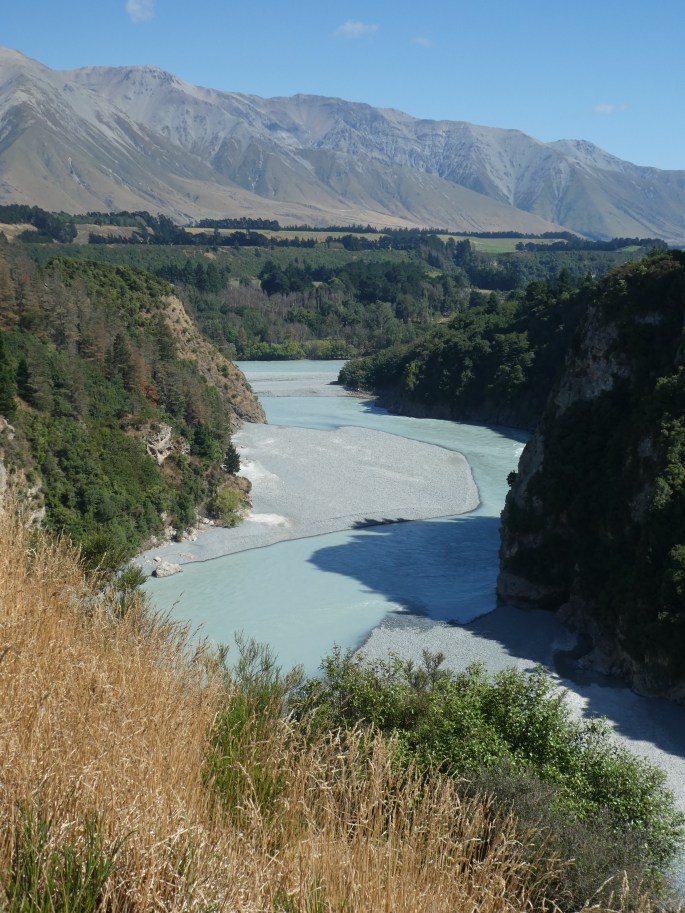
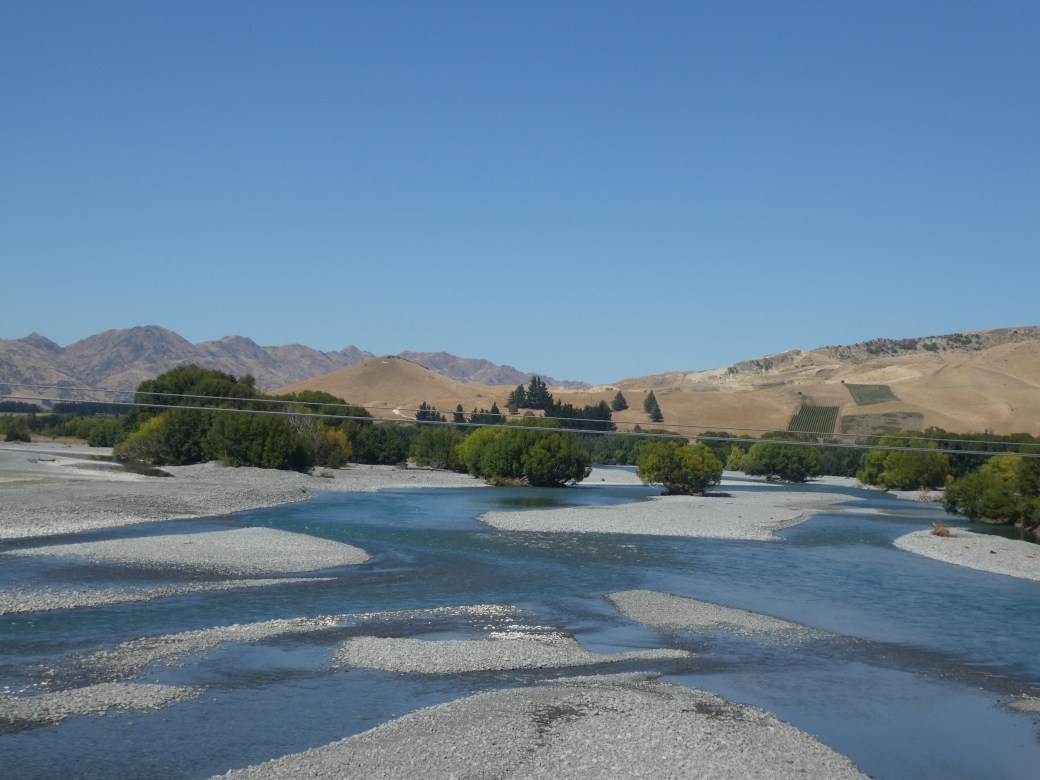
and there was a track from the camp down to the river bed where the dogs were able to have a bit of an explore. The river was flowing quite swiftly, so not a swimming river. The cliffs alongside were sculpted by water into deep vertical channels, and there were piles of shingle at their base, so I guess erosion is a constant here.

The Rakaia Gorge itself is made of ancient lava flows from Mt Somers, from about 80 – 100 million years ago. Apparently there are a lot of fossils in the area, especially of moa, as we saw in the Canterbury Museum. The views of the river from the lookout were gorgeous.

We were due to be in Timaru the day in two days time, to visit our best man and his wife so we travelled on the next day to be a bit closer, but with a leisurely start. Our next stop was due to be an NZMCA Park in Eeling, on the banks of the Rangitata River.

What surprised us in this area were the acres and acres of water retention ponds.

A little more research revealed this to be the Rangitata irrigation scheme which cost $115 million to build and contruction started in 2011 (it was all funded by one man, businessman Gary Rooney). It covers 16,000 hectares of land and supplies more than 30 farms with their irrigation needs. It is designed to draw water from the Rangitata River when it is in flood, and store it in a series of 7 man made lakes for use in irrigation when needed over the summer months. There are more than 80kms of irrigation channels leading from the lakes to farms that subscribe to the scheme (information sources from Stuff).

10496506[1]

rangi-irri[1]

The Eeling camp was easy to find, and quite a pleasant place, albeit noisy, place to stay. It was itself just over the road from another private water storage pond, and I believe the camp was once a church. One of the pulpits was used as a place for the sign in book. However, the bird scarers were loud, as were the trains, and the continual procession of dairy company tankers along the adjacent road. Not exactly a peaceful night!


Christchurch

We reluctantly left the Waipara area, despite there being other vineyards we had yet to visit, and we headed for Christchurch. Naturally we had a couple of stops along the way.

The first was to Waikuku Beach. The day was overcast and pretty windy, so the surf was up, and the kite surfers were out. Although the surf lifeguards were on patrol, no-one was game enough to go surfing. It was cold enough that I had a wind breaker on!

The dogs enjoyed the walk though, and feeling the sand on their paws. We continued on, and our next stop was a place called Kairaki, at the mouth of the Waimakariri river. This was a really charming place, and very popular with fishermen. We saw someone land a good sized kahawai, but those we spoke to were hoping for a salmon. None of those were landed in the time we were there.

It was disappointing to see the amount of rubbish on the beach. This was despite there being lots of bins around. Not only that, the council had provided built in bait boards, and fishermen seemed to be OK with leaving herring heads lying around. They could have at least thrown in in the rubbish, or in the river as fish food.

Our first night was at a NZMCA Park called the Willows, outside of Christchurch, and there we caught up with old friends Gayle and Allan. We had met them in Gisborne 4 years ago when we were tripping around the area and had a very sick little dog. we had seen them periodically since, so it was nice to catch up again. They have a Dethleffs Trend now.

The next day we headed for my cousin Sharon and Chris’s house in Christchurch, after taking the dogs for a forest walk next to the camp. It was supposed to be a 4km loop track but somehow we lost the loop and in fact just got lost. Fortunately we found our way back to camp eventually but I am sure we did at least an extra kilometre in the process.

Sharon and Chris live close to the Christchurch area and have an ideal parking place for the van. They were pretty keen on the boys being there as they used to have a miniature schnauzer called Zac a couple of years ago. I have not had a lot to do with Sharon over the years, probably due to distance, so it was wonderful getting to know them a bit more. Uncle Ron also joined us for meals and he is looking really well.

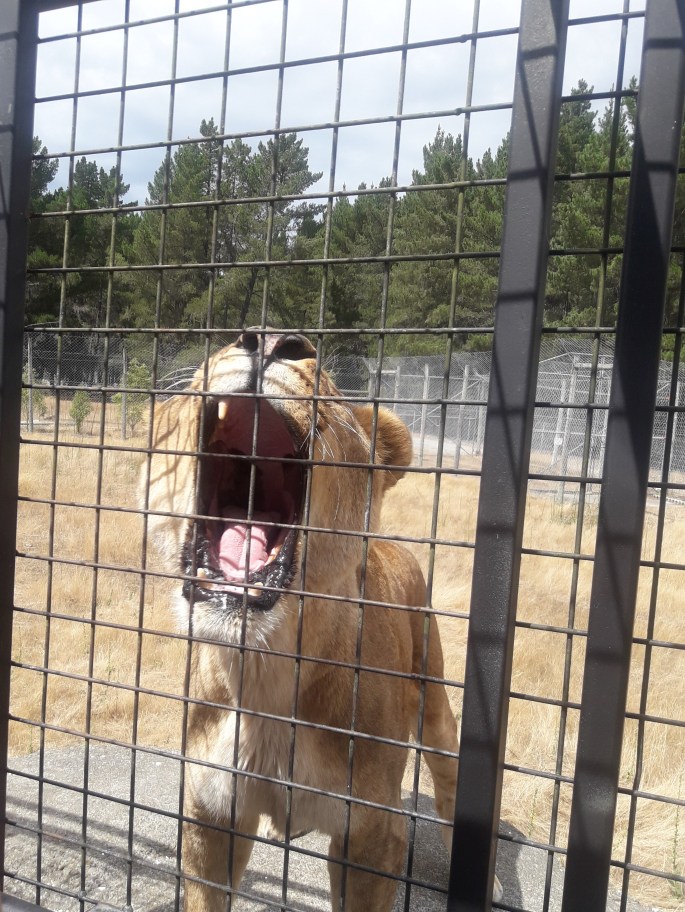
Ron was kind enough to babysit the dogs the next day while we headed out to Orana Park. I had not been there before and we wanted to experience the lion encounter. It was really memorable. We were loaded into a crate on the back of a truck with keepers who had meat and big bones. The lions climbed all over the crate so we got really close and personal. A bit too personal in fact because I got lion slobber down the front of my shirt!

What wonderful animals they were though. So big and powerful! Apparently the male lions here at Orana are bigger than they would be in the wild, but they had no manes because they had to be neutered early on to prevent in-breeding.

The next stop was to the giraffes and we had the opportunity to get up close to them as well, and to feed them. Again, they are magnifient beautiful animals.

We had a look at meerkats, zebra, bison and yaks and monkeys from a distance but decided to head back as the heat was unbearable – over 36 degrees.

The dogs were evidently very comfortable with Ron and we had another lovely meal with him and Sharon and Chris.

The next morning we had a quick explore of the central city before heading inland. We wanted to see the progress of the re-build but got a bit side tracked. We found ourselves parked near the old university buildings so headed in there for a look. I had not been there before except to the retail shops in one little bit of it, but it warranted more attention than that. The building itself is exquisite, despite some of it still being under repair.

The old lecture hall in particular was really something.

Everywhere we looked we were wowed by the building.

Across the road was the Botanic Gardens, and although we did not have enough time to explore the whole park, we saw a little bit.

Another whistle stop tour was the Museum, which we were very impressed with.  We loved the example of Fred and Myrtle’s front room of their Paua House. The short movie on the subject was good too. Apparently they had over 1 million visitors to their house when it was at Bluff.

It would have been very easy to spend more time in Christchurch as we missed the Air Force Museum  and more exploration of the central city, but it was time to move on. Next stop the Rakaia Gorge.

P1010881

Waipara Magic

We had a fairly peaceful night at Karetu Downs Farmstay and woke to a bit a drizzle in the morning. After farewelling our hosts, and me talking Bruce in to driving us out of there, we navigated the steep metal, winding road in to Waipara. We went in the other direction and this time only had 7 kms of metal road to shudder our way through. The other end of the road led straight in to the area of Waipara where vineyards abound. I was determined to visit a few of them and first on our list (where we opted for a coffee) was Fiddlers Green Vineyard. We were the only visitors there, so had the chance to talk to the owner about growing grapes. Apparently there is an underground river that flows through the area and the vineyards tap into this to water their vines.

20200213_110618

We were quite taken with their outdoor tables made to look like boats. When the seats were pushed under the table they looked like the sides of the boat. The shade sail looked like the sail of the boat.

The next stop was Waipara Hills Vineyard. Here we did do a tasting and purchased a few bottles for our collection.

The staff were well informed, and knew their wines, but were not too protective of their patch. They recommended we call in to Pegasus Bay Vineyard, which was close by. We were very grateful we followed her advice.

Pegasus Bay wowed us from the moment we arrived. There were several acres of garden – from Japanese style to Rose gardens, from herb and veges to exotic conifers, from  native rambles to sweeping lawns. There was plenty of garden art to capture your attention.

We elected to have lunch here, and the food was as wonderful as the garden experience, and very reasonably priced. I opted for a bottle of “Morally Bankrupt” cider that I had tried for the first time at Cooks Beach. It turned out that this cider was actually brewed at this vineyard.

Pegasus Bay were very busy in their restaurant that day, and apologised for having to seat us in bean bags with wine barrel tables. We thought is was really charming and very comfortable at the same time. We really enjoyed our meal, and finished off by exploring the gardens a bit more before heading to our stop for the night.

What a magic place to visit and we resolved that we will definitely be calling in again on our way back home.

Our resting place for the next two nights was the Torlesse Vineyards where our motorhome nestled amongst the grape vines and olive trees. It was a peaceful place and quite popular- there were about 7 other vans there.  The winery was closed at the time so we had to enjoy a drop form the Waipara Hills vineyard with our dinner.

It is a hard life!

Karetu Downs Farmstay

Judy had the bright idea of staying somewhere different once we left Hamner, so we made arrangements to stay at Karetu Downs Farmstay, a high country sheep station. We had no idea what we were in for.

The journey there started off quite pleasantly. We visited a historic Cobb Cottage first of all, just outside of Waiau. It was built in the 1860’s of mud bricks, and was the home of Mr and Mrs Watters and their 7 children. Basically it is a 2 room cottage with a small lean-to for a laundry. How lucky we are these days.

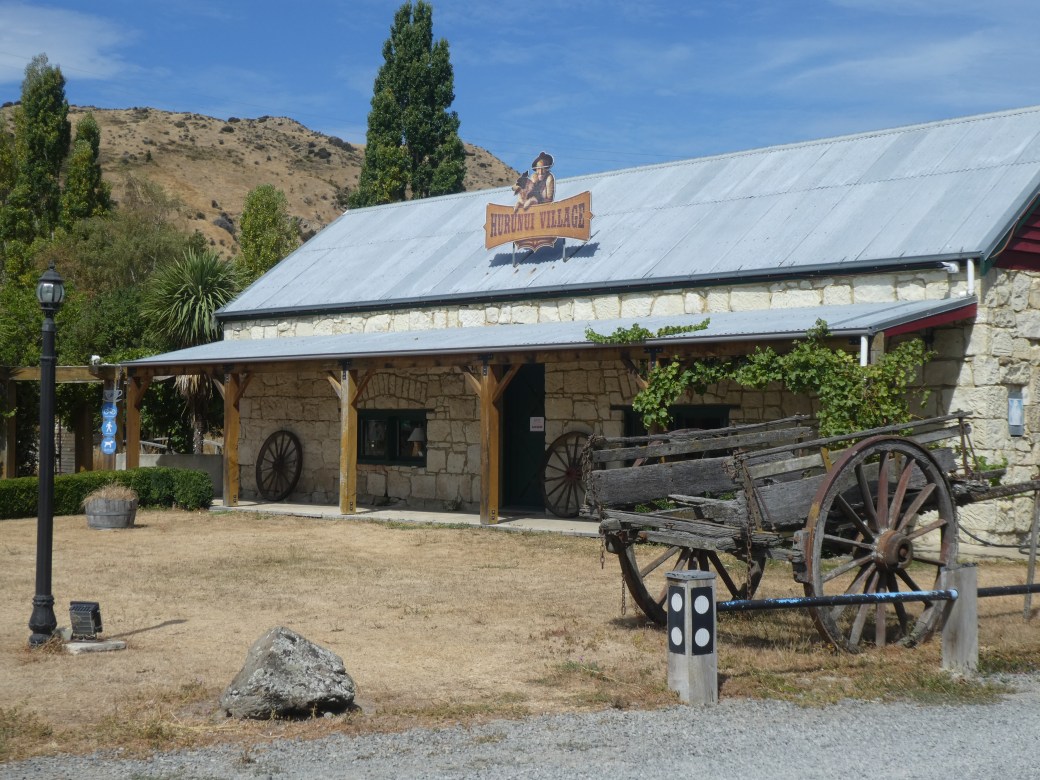
Our next brief stop was to the small settlement of  Hurunui  and their historic pub. There were lots of motorcyclists just leaving as we pulled up to take a few photos, and as it was so busy we did not go in. Pretty charming place though.

P1010702

Another reason for stopping in Hurunui was that I had heard of a wool shop there where all their wool was made from their own little mill and from their own sheep. However, we could not find it so drove on.

The landscape by now was becoming more and more steep, but nevertheless, quite breathtaking.

We were continually amazed at seeing rivers drying out but pastures around the rivers being fully irrigated. The higher we went the less it was happening though. Then came the road that we were not expecting – the road to the Homestead. It was 11km of steep, winding gravel road. Luckily Bruce was driving today so we finally pulled up to the homestead. I was concerned though because it would have been a long way to walk if we broke down or got stuck, and there was no internet or phone coverage.

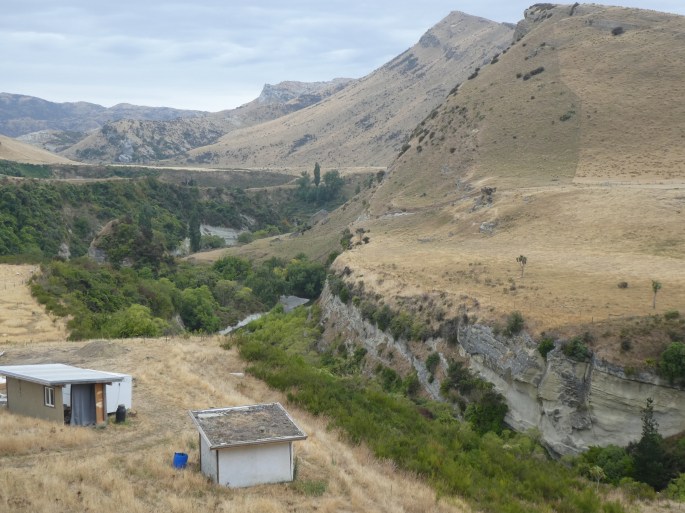
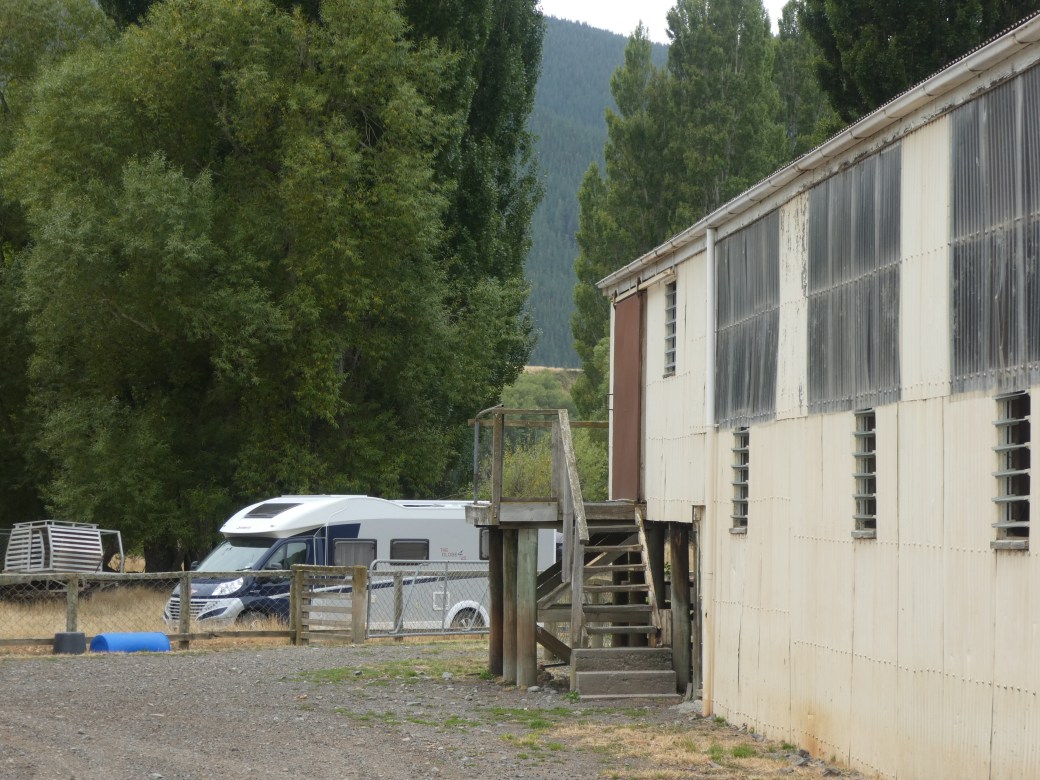
Karetu has been in the same family for 3 generations, and all the buildings are over 100 years old. We were allowed to park any where we liked, but they suggested down by the river, so that is where we went., and close also to the old wool shed.  Very hard to find a level spot though, and when we finally did and looked outside the ground was literally coated in a mixture of sheep dung and rabbit droppings. Bruce did his best to clear an area around the motorhome.

P1010735

The river was barely a trickle. The owners had suggested we follow the river up to the fork and there we would find their own version of Moeraki boulders, so off we set. We never got there though as there were  two hazards in our path 1/ a big, bulky black Angus bull, and 2/ an electric fence. We had to be content with the example they had in their garden!

P1010725

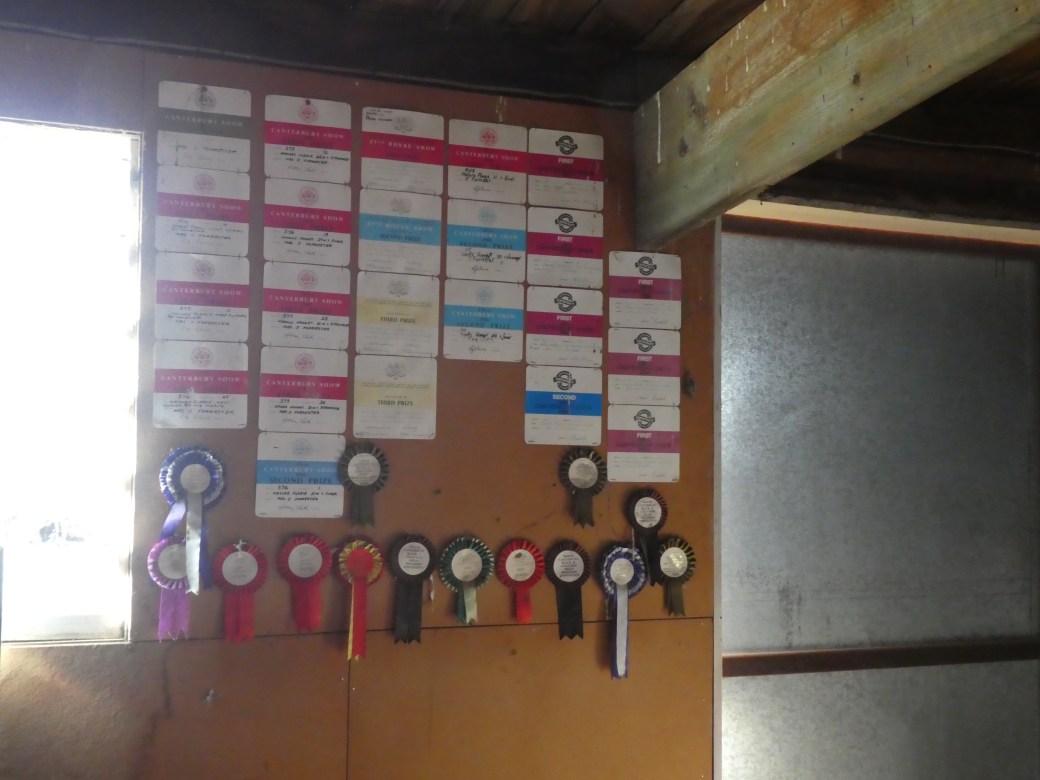
We also had free range of the property – having been invited to go anywhere we wanted, so we went to explore the old woolshed. It was great to see all the certificates, rosettes and banners around the walls of all the prizes that had been won for their wool over the years. they covered two walls of the “staff cup of tea” area.

P1010714

I don’t think Bruce was quite prepared for the smell of the shed. For me it brought back memories of holidays we had as children and my aunty and uncle’s sheep farm at Atiamuri, and their shearing times. The shed still had bales of wool in it, and some fleeces still spread out ready for trimming.

The staff bathroom was a bit primitive though.

P1010716

There was no phone or internet here, so it was early to bed and an easy decision to make that one night here was sufficient. Bruce was shaking his head in wonder at the places I take him!. Tomorrow we would be exploring the vineyards of Waipara, but first we would have to navigate more of those steep, windy, metal roads. A motorhoming friend of ours likens metal roads to subjecting your motorhome to one very long earthquake! How I was looking forward to that!

Hanmer Springs

Hanmer Springs is a favourite place of mine so I was determined that we would visit here again. Although a visit to the hot springs was on my list of “to do’s”, we decided against it as the days we spent here were rather warm. The nights were cool though which was actually quite pleasant. The other reasons for re-visiting Hanmer were the scenery and ambience of the town, and for the activities.

We replenished a few of the groceries, and revisited the hot bread shop that Bruce had fond memories of from our last visit. They had possibly changed owners or bakers though, as the memories did not live up to the present day reality.

Bruce spent a bit of time fiddling with the gas jet of the fridge, and talking to the agent for the fridge (based in Christchurch). My clever husband managed to get it all going again thankfully, and the temperature in the fridge gradually fell to the required 4 degrees. The technician in Christchurch was somewhat alarmed though that Bruce had cleared the jet with a bit of fine wire, saying it would make the burner run hotter than it was supposed to, but so far all looks good, and we will get the unit checked over in Christchurch when we are there.

In the meantime the dogs enjoyed a walk down by the Waiau River, which is the main river flowing through Hanmer.

P1010639

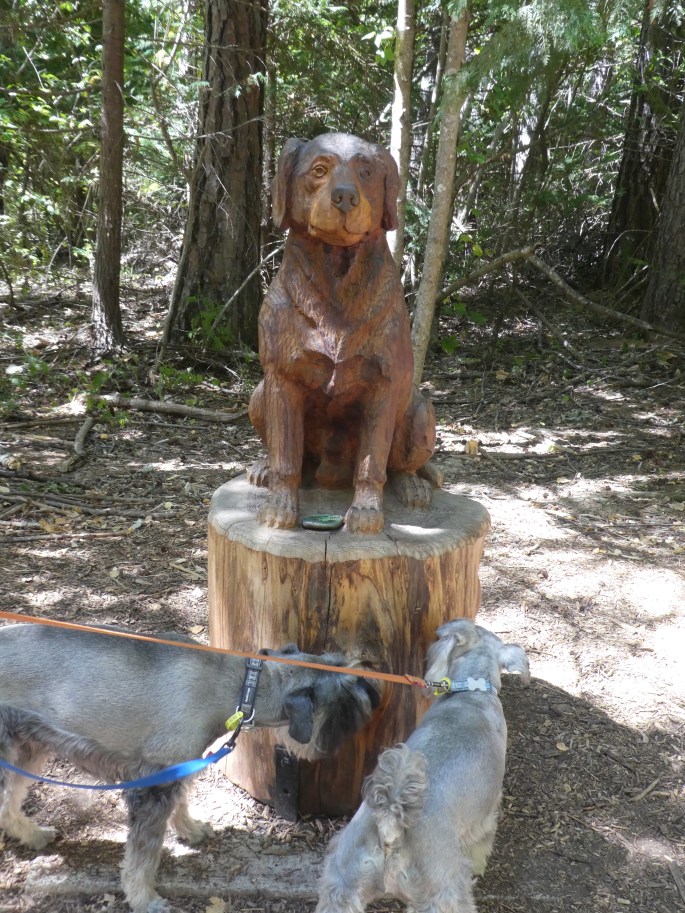
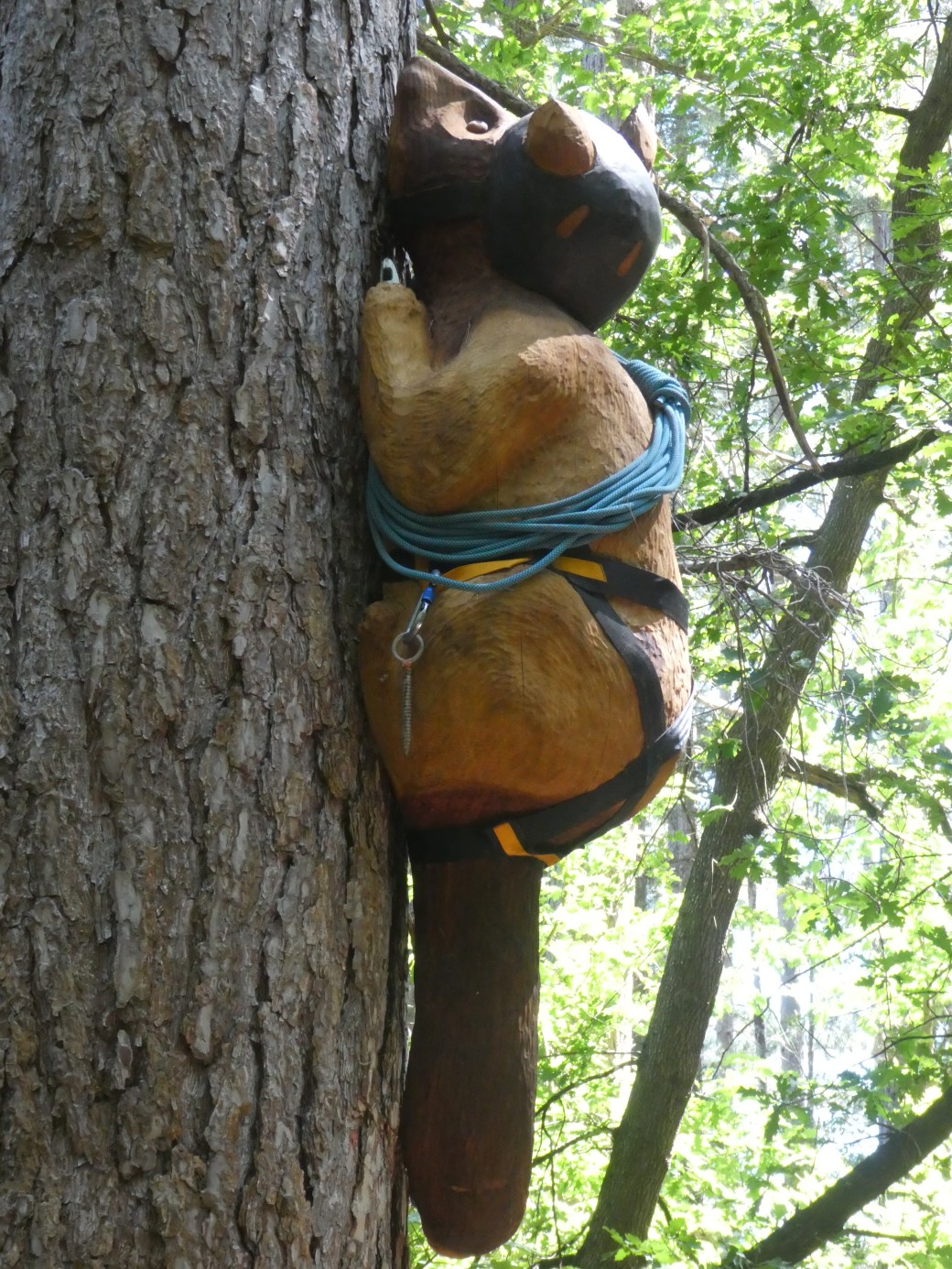
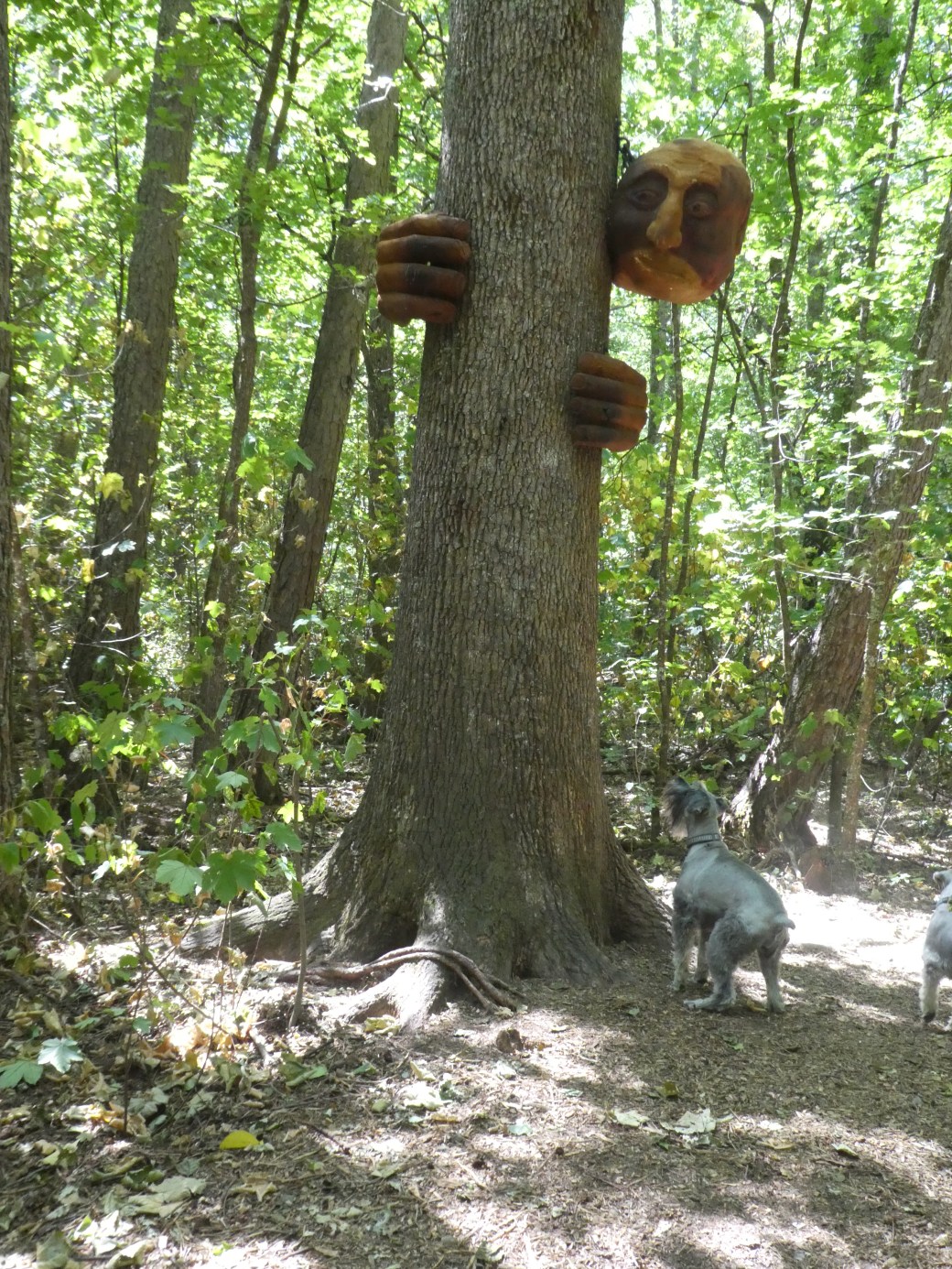
The next morning we headed for a walk labelled the Forest Amble. Here there is a wooded park dotted with various wooden sculptures. Oscar and Hunter were both particularly taken with the possum sculpture. They were very excited until Bruce lifted them up so they could see that it was actually wood – not a real animal.

P1010658

Oscar was particularly interested in the Ogre

P1010663

The rats and eagle were pretty cool too

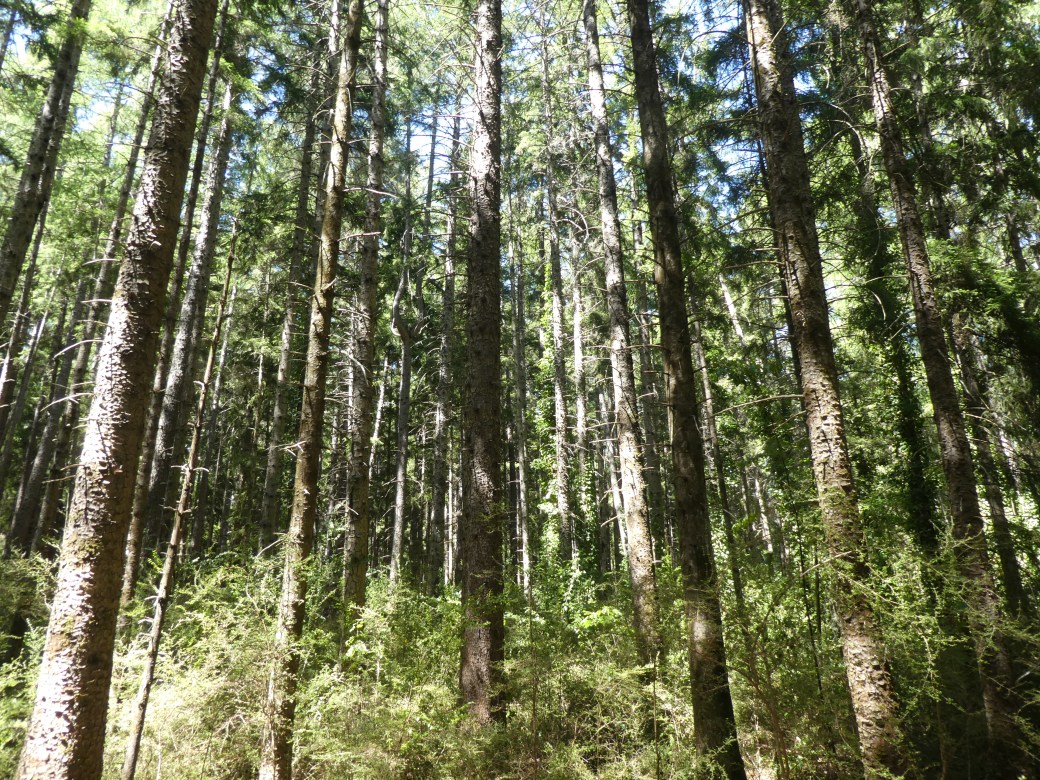
We also saw carved wooden mushrooms but missed the fantail that was supposed to be here somewhere. Across the other side of the road was the Woodland Walk that we also did some of. Here there were examples of all the European varieties of alpine trees – larches, firs, cedars, birches and so on. It was really a lovely shady place to walk on a hot day.

P1010676

The next day we decided to do the Conical Hill walkway, this time without the dogs as we were not sure that Oscar, in particular, would handle it. This walkway zigzags up to a summit 550m above sea level, where there were to be panoramic views over the area. I was afraid it was going to be hot work, seeing as we did not start the walk until around 11am, but was pleasantly suprised that almost all of the track was again through wooded areas. It was a bit of a workout, but not too bad and well worth doing.

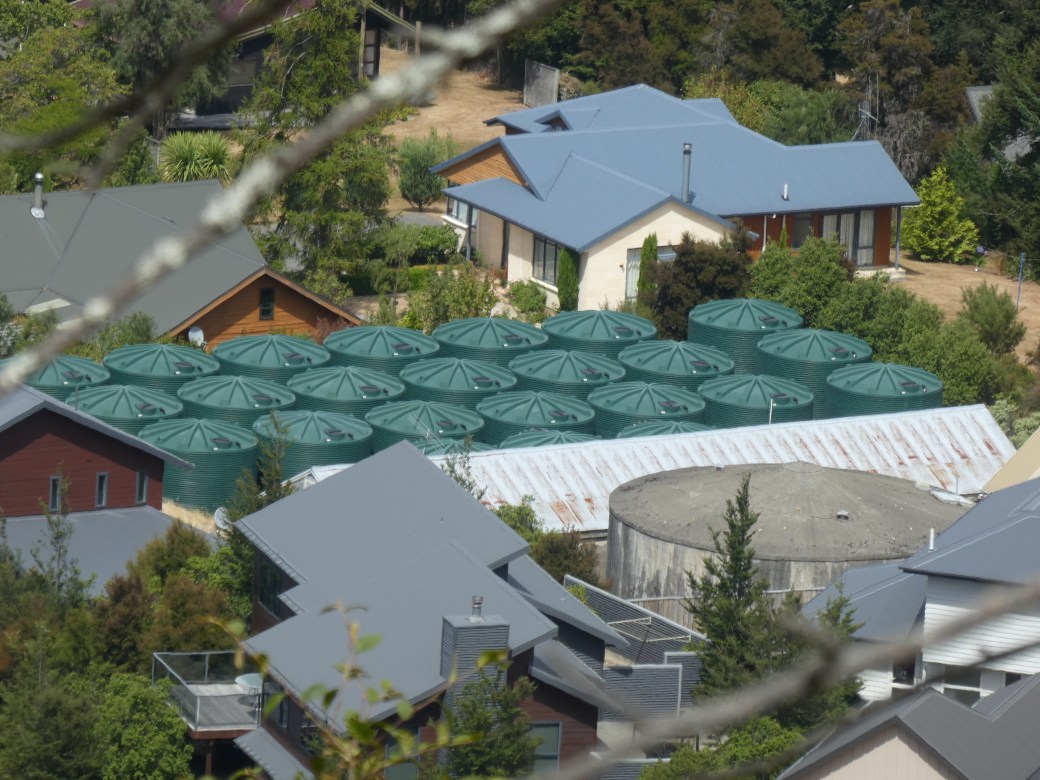
Note the property with the back yard filled with water tanks! Pity the neighbours.

P1010694

We felt that the effort deserved a gelato after wards,  and although we were tempted to stay another night, we pushed on to Waipara.

Mt Lyford

Our stay in Kaikoura has ended and the next stop on our route is to be Mt Lyford, an area that Bruce in particular, wanted to see. I looked on all our maps for Mt Lyford, thinking it was an actual mountain, only to find it wasn’t, but rather the name chosen for the ski resort in the area. The actual mountain is Mt Terako at 1742m above sea level.

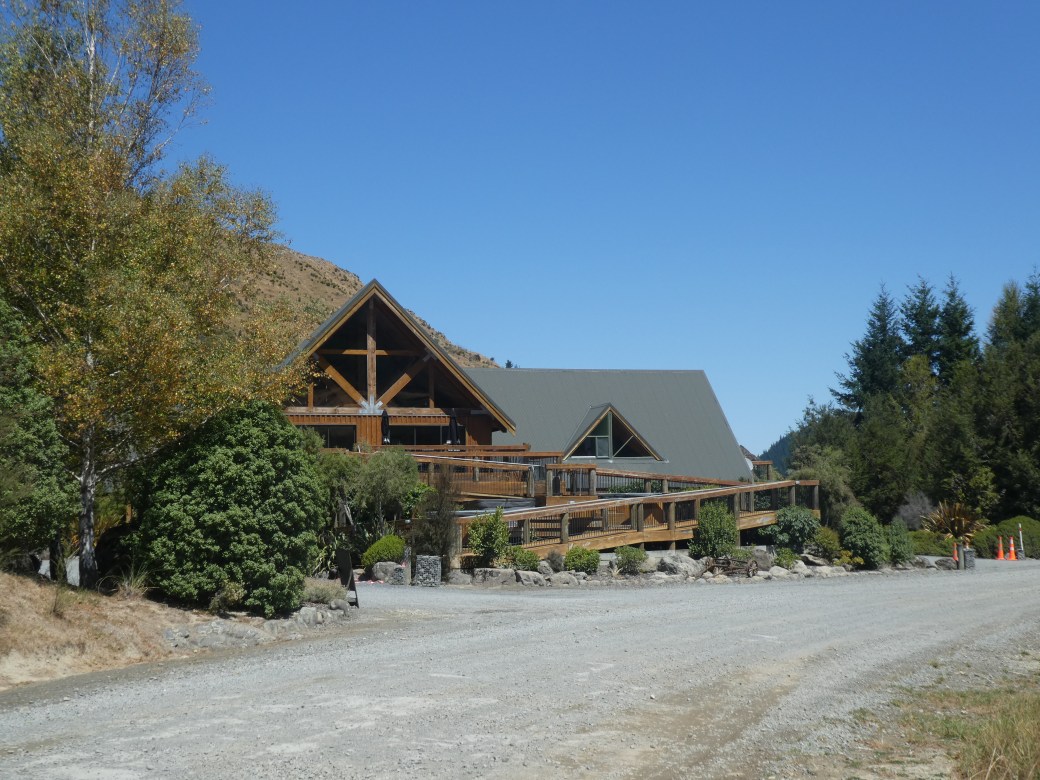
It is at Mt Lyford that there is NZ’s only log cabin village. We parked over in the grounds of Mt Lyford Lodge for the night, which was a pretty peaceful place to stay. The lodge itself was a beautiful building, but closed most of the week as summer is the off season for them.

P1010602

We were having a quiet time reading when we were joined by a friendly little South Island Robin. It did not seem to perturbed by the dogs and was happy exploring the bushes next to us and even taking a few morsels off the dog’s bone.

The next morning, Bruce decided to tackle the gravel, hilly and windy road up to the ski field. The log cabins were nestled in the woods on either side of the road as we went up, and it looked some of those were owned by permanent residents. The scenery was spectacular, but it wasn.t long before we could go no further. After finding a suitable place to park (which turned out to be not so suitable, but more about that later), we got out to explore.

There was a path leading away from the road to we took that and it proved to be a little gem – a trail through a stand of black beech and totara trees. Shady, cool and beautiful. It only took about 20 minutes for us to end back at the car park, so we headed off in the other direction. This route took us over grassy ridges with spectacular views of the mountain, and down to a little lake.

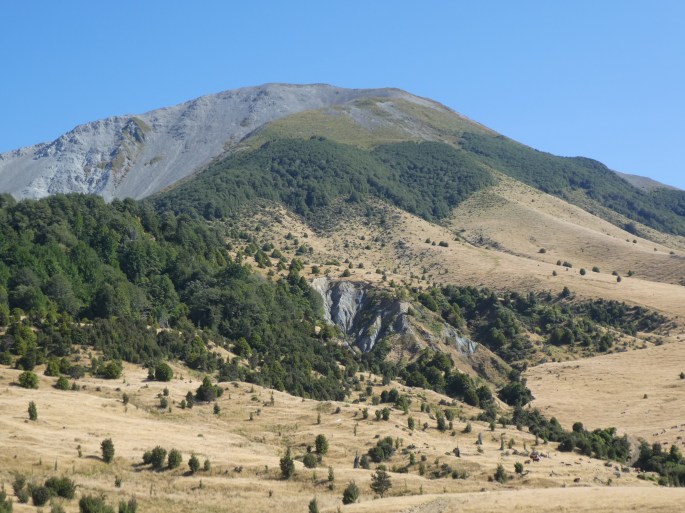
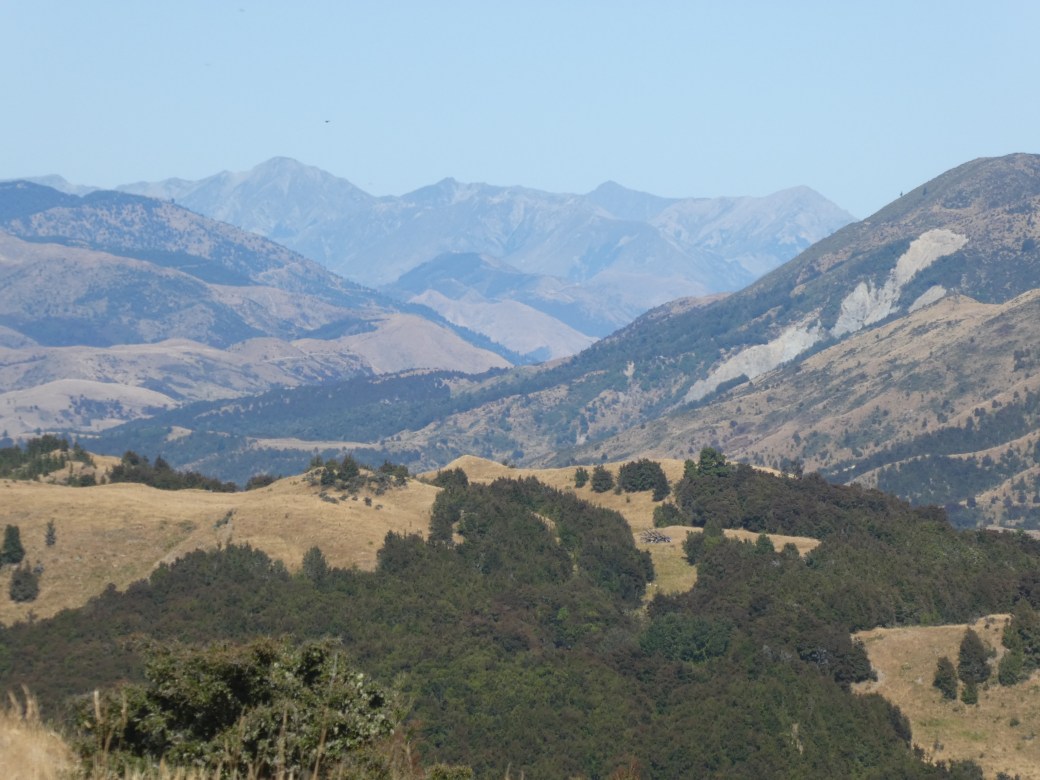
The views were amazing. The hills are so dry and brown, with the only splashes of green being from the beech, macrocapra and cedar trees, and the occassional willow.

P1010632

We finally headed back to the motorhome and made our way down the mountain, and the road in to Hanmer Springs. We thought all was well until we parked up in the NZMCA Park, and at 1.30am Bruce decided that the fridge was not working and had to investigate. It turned out that parking on the slope at Mt Lyford, without turning the fridge off, was probably not a good idea.  The fridge was working on power though, so we made the decision to book into the Top 10 Holiday Park at Hanmer while we sorted it out. However, not much sleep was had that night.