Blog

Kaikoura

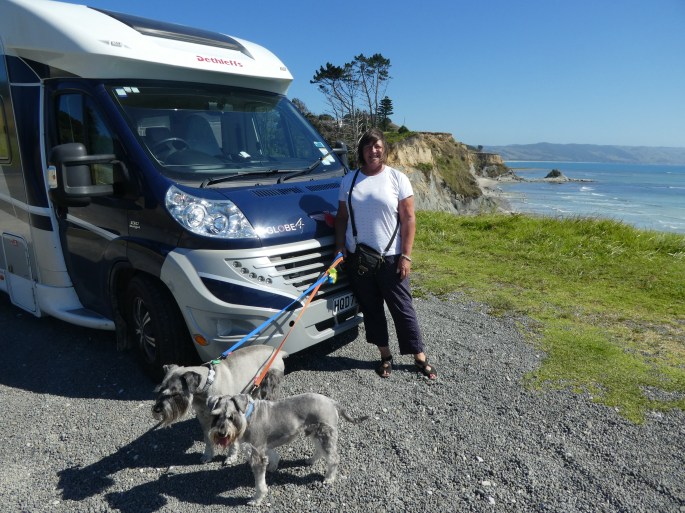
I had never been to Kaikoura before, and Bruce has not been here since the 1970’s, so essentially it was new to both of us. The last time we were in the South Island the area was cut off after the 2016 earthquake, so we were really looking forward to this leg of the trip, and we were not disappointed.

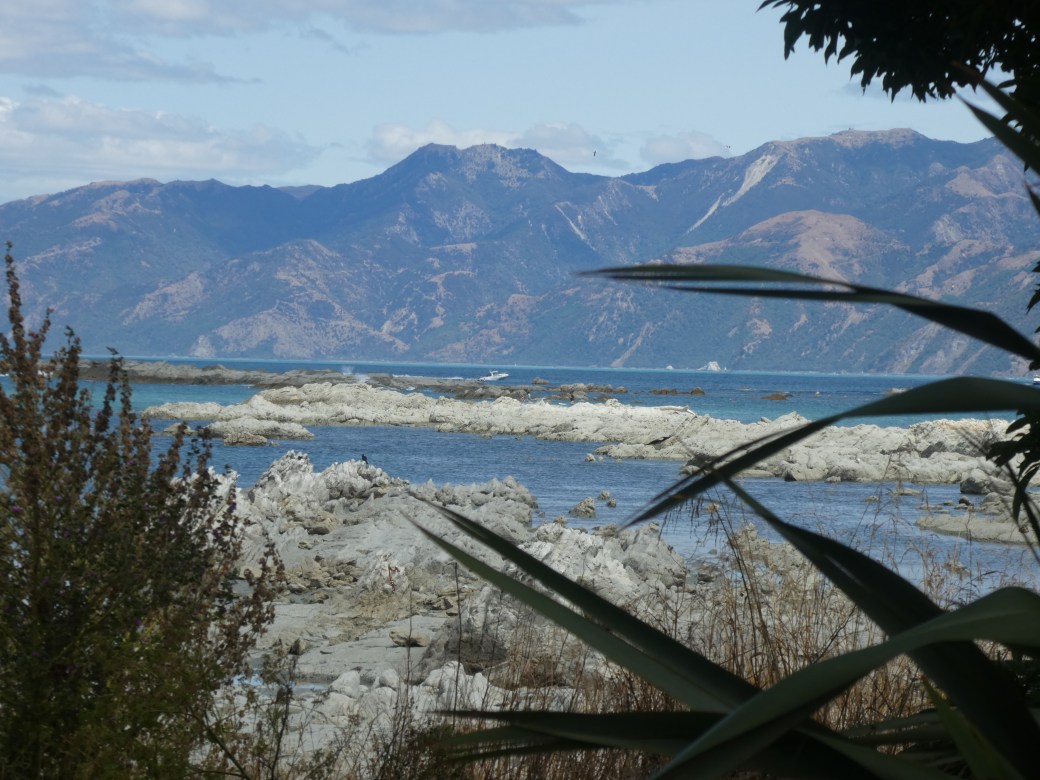
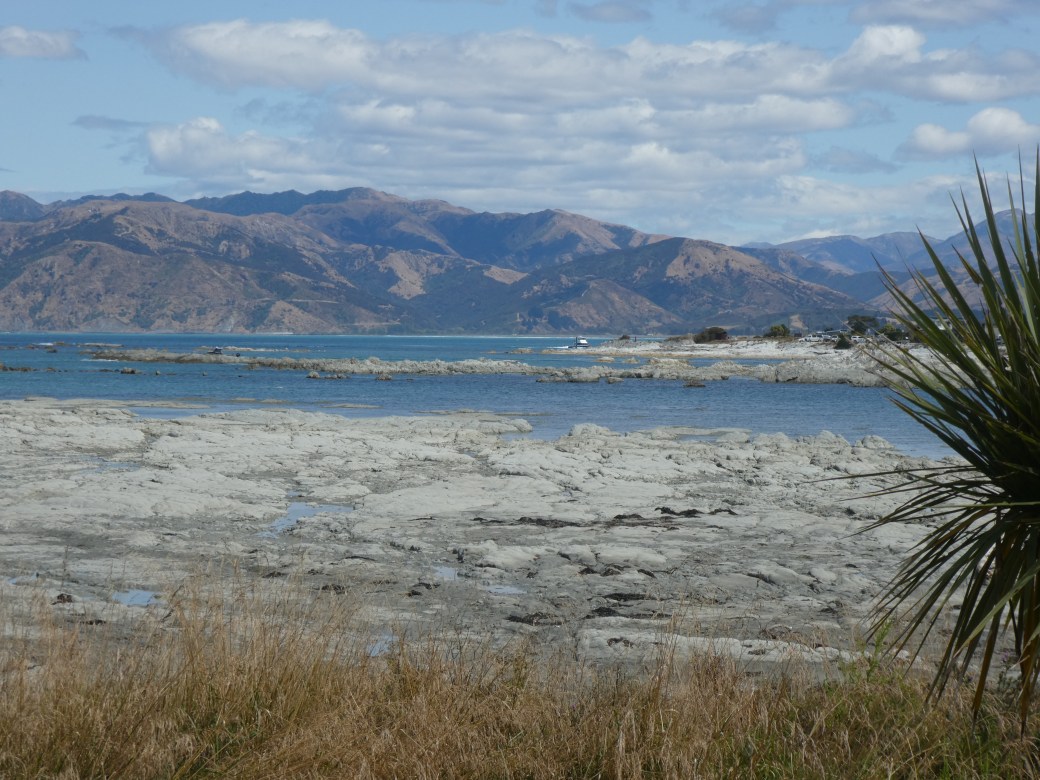
The landscape isĀ  stunning, with the area being surrounded by the seaward Kaikoura Ranges, which, in the midst of winter, are covered with snow.
P1010524

The hills are mainly limestone or alluvial type gravel which is prone to erosion. Kaikoura is situated at the junction of two faultlines, so it is being pushed continually upwards, but the erosion factor means that the mountains stay a similar height.

Below the mountains is an area of flat land before the the sea. This flat land increased following the quake and is evidenced by the white limestone areas at the sea’s edge.
P1010525

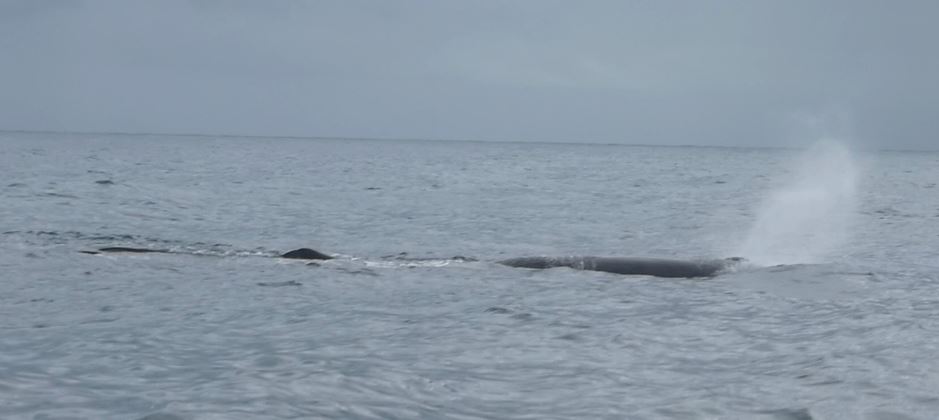
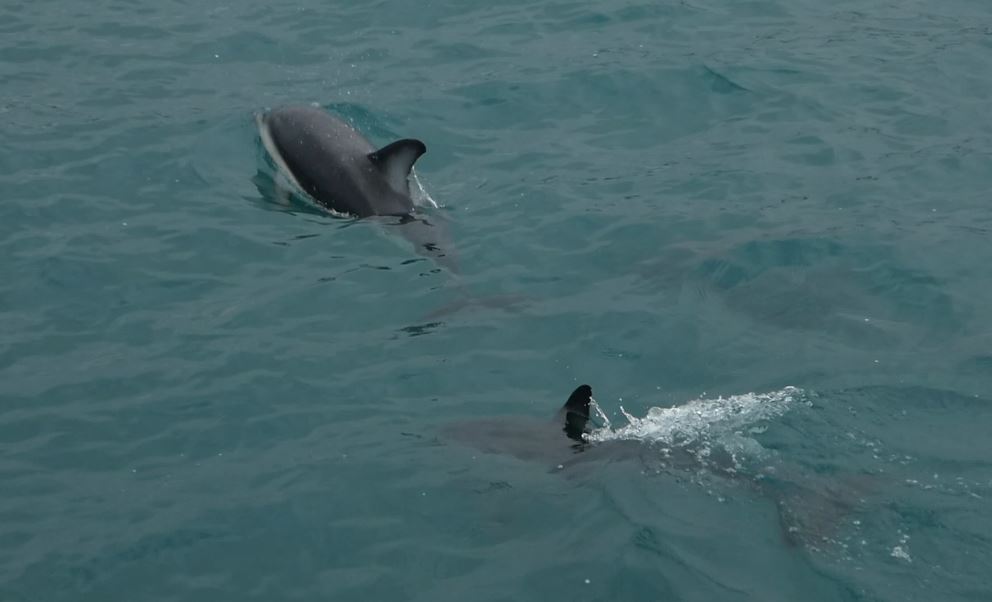
The other unique thing about Kaikoura is the Kaikoura Canyon – an very deep underwater trench that is about 1600m deep and only 5km from shore. This is why sperm whales, in particular, are able to be seen in the area. Bruce and I could not pass up the opportunity to go on a whale watching boat trip. We were lucky enough to see two sperm whales, and also some Dusky dolphins.
surface whale

whale

Each sperm whale was approximately 45 meters long. They rise to the surface and float there for around 10 minutes, taking deep breaths and building up their oxygen levels, before diving to between 1000 and 2000m deep searching for giant squid, hapuku, kingfish etc to eat. They stay under water for about an hour at a time.

On the way back to land we came across a couple of pods of Dusky dolphins. They were quite playful, and are smaller than the dolphins we see in Flaxmill Bay.
Dusky dolphiins

Our friends Marilyn and Dennis were to be travelling on tomorrow so we had a treat night out on the town, enjoying a lovely meal of Blue Cod. We decided to stay on for a couple of more days and the next day headed out to do some exploring around the area. We had a look at the wharf:

and then up to the lookout:

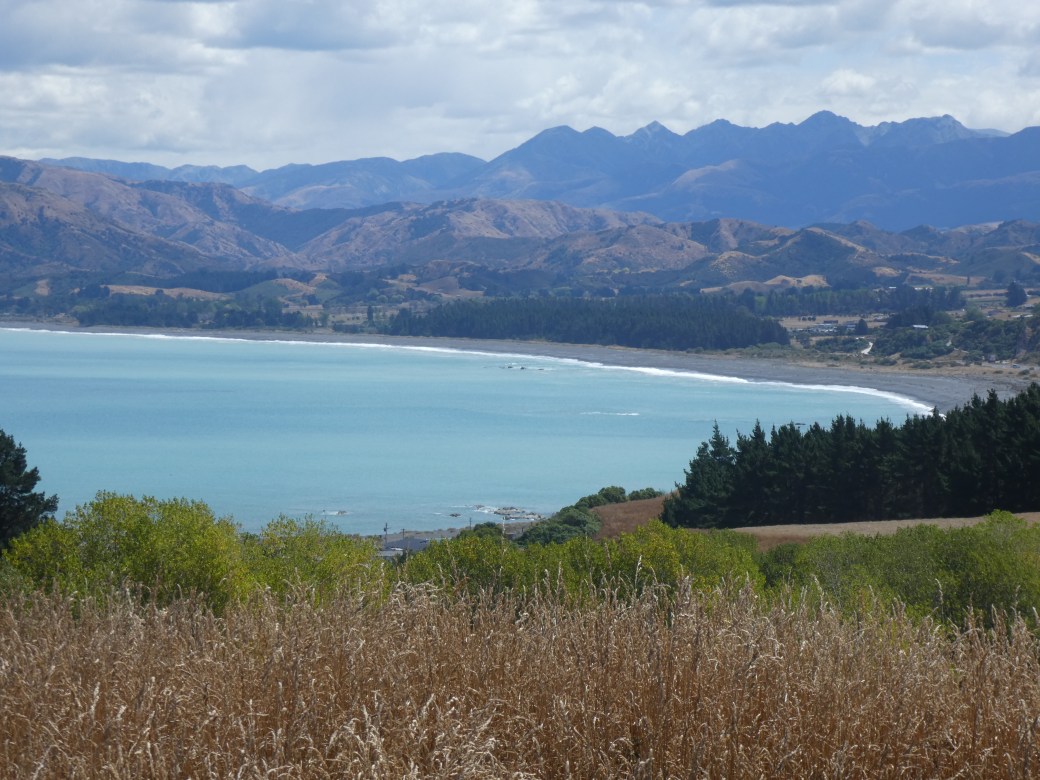
And then along to a walkway at the other end of town:
P1010559

We would have loved to have done the whole penninsula walkway but time and logistics of getting back to our vehicle at the other end meant it will have to wait until next time.

The next morning, on our final day in Kaikoura, we had two short expeditions. The first was to the Lavender Farm, just on the outskirts of town, and the second to the museum. I don’t know what we expected but we found the Lavender Farm somewhat underwhelming. The cafe that was supposed to be on site was almost non-existent, but the owner was trying to be innovative with what she did with the lavender. When we were there she was talking about infusing gin with lavender.

On the other hand, the museum was well worth a visit. There was a lot of information about the history of the area, the wild life to be found in the area, and a whole big section on the earthquake and its effects. Resilience certainly describes the people who lived through those trying times.

I would go back to Kaikoura in a heart beat. The NZMCA Park was wonderful, the scenery spectacular and the people are friendly and welcoming.
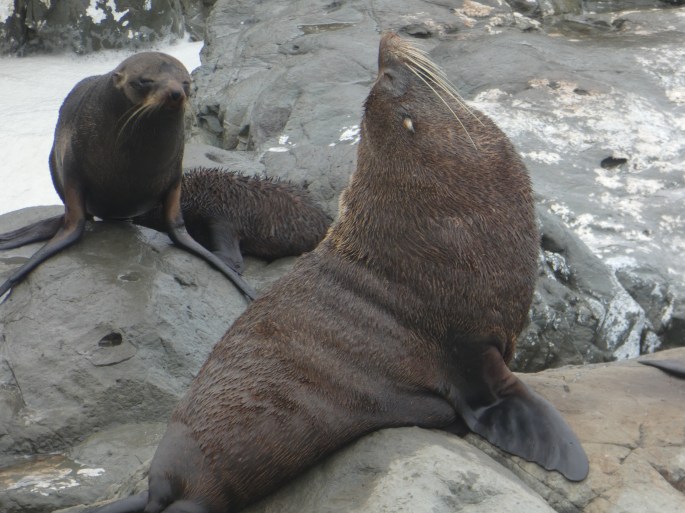


The seals of Kaikoura

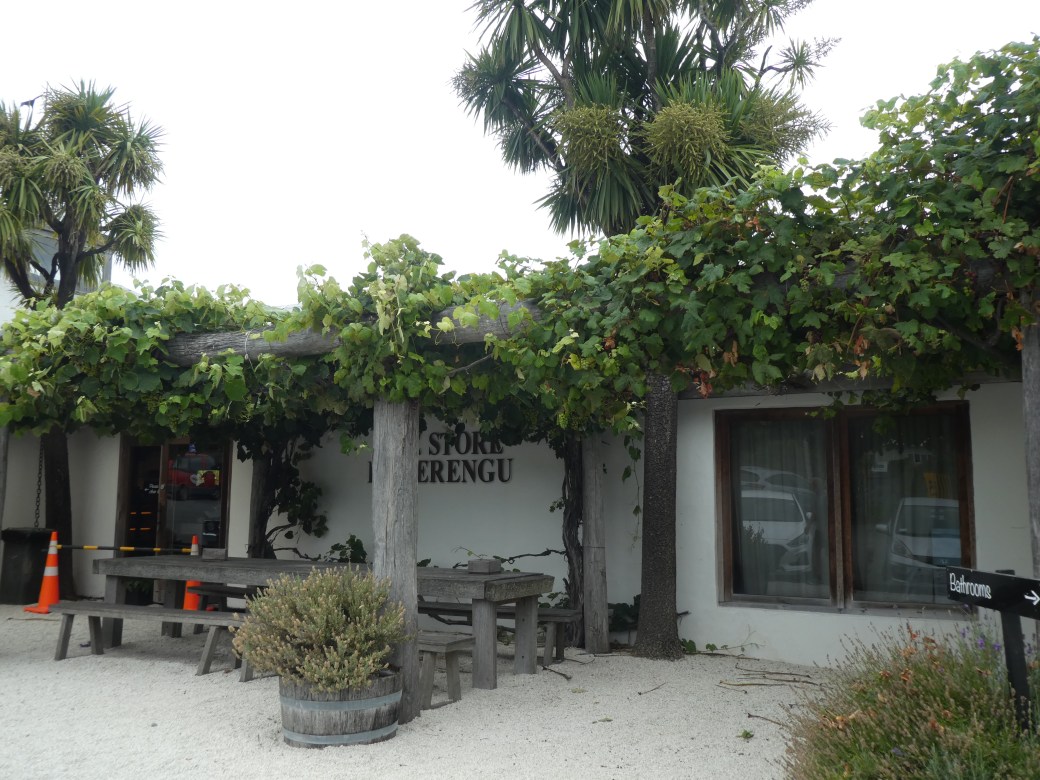
The new day at Ward Beach was not quite as breezy as the day before but we had decided to carry on to Kaikoura just the same, and maybe spend an extra day or so there. We travelled through dry hill country until the road rejoined the coast. Our first stop was at “The Store” situated at a place called Kekerengu. The Store was an unexpected find. It was very styly, with thick ropes used extensively around bollards, around the exterior verandah posts, and even as a scotia on the inside. The grounds were beautifully landscaped with tables set underneath laden grape vines, and the ocean right next door. The food was great too, and we know this because we stopped for lunch here.

The Store 2

grapes at the Store

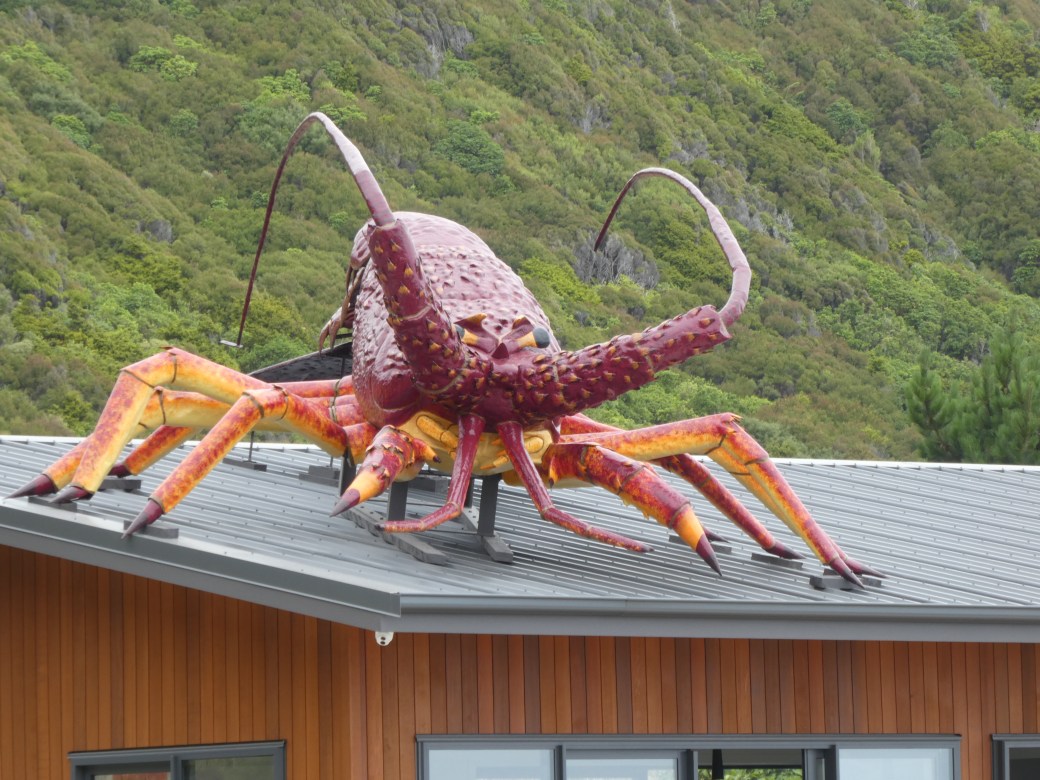
Continuing down the coast we had a few more stops to enjoy the scenery. The next stop was at Okiwi Bay, where there was another small cafe with a large lobster perched on top of it. It was around here that the huge scale of earthworks being undertaken following the earthquake was evident – new bridges, new sea walls, new rail lines, and work is still going on. I hate to think how much this is costing the country.

P1010469

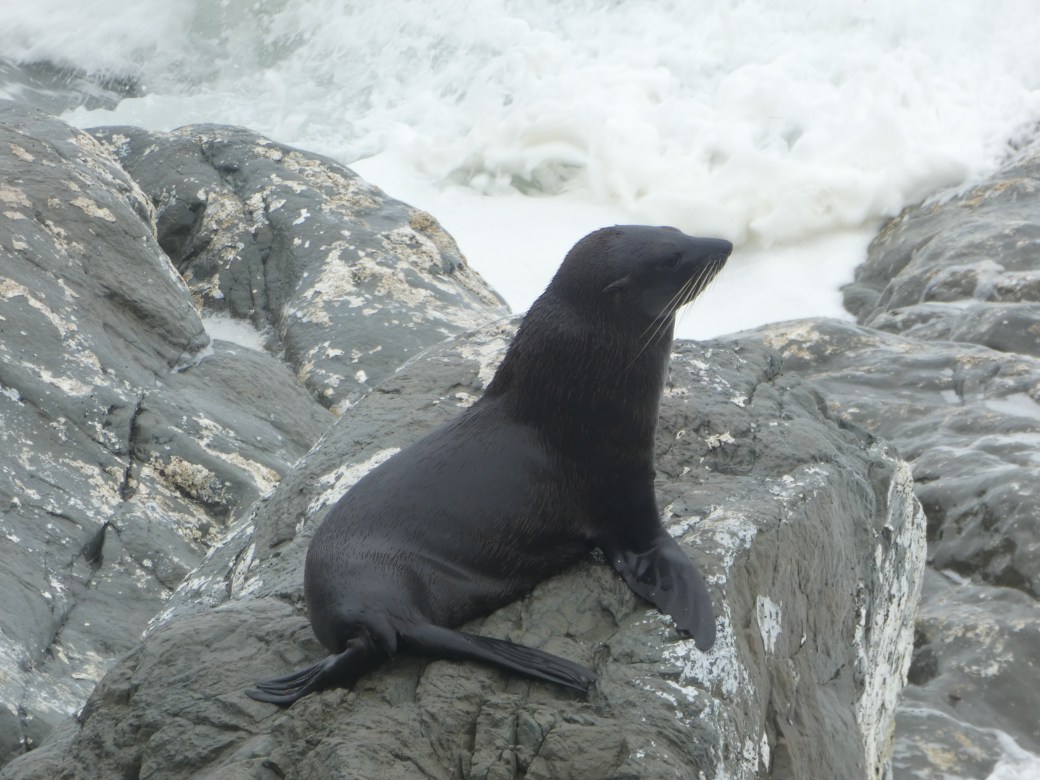
As we continued along the road we started to see seals resting on the rocks. The next bay along was Half Moon Bay (Ohau) where there was a large pull off area and lots of people gazing at the rocks. Here there were hundreds of seals – bull seals, cows feeding calves, and lots of babies either sleeping while waiting for mum to return, or playing with other babies in the rock pools. I could have stayed for hours watching them. I would have to say that it will most likely be one of the highlights of our trip.

P1010490

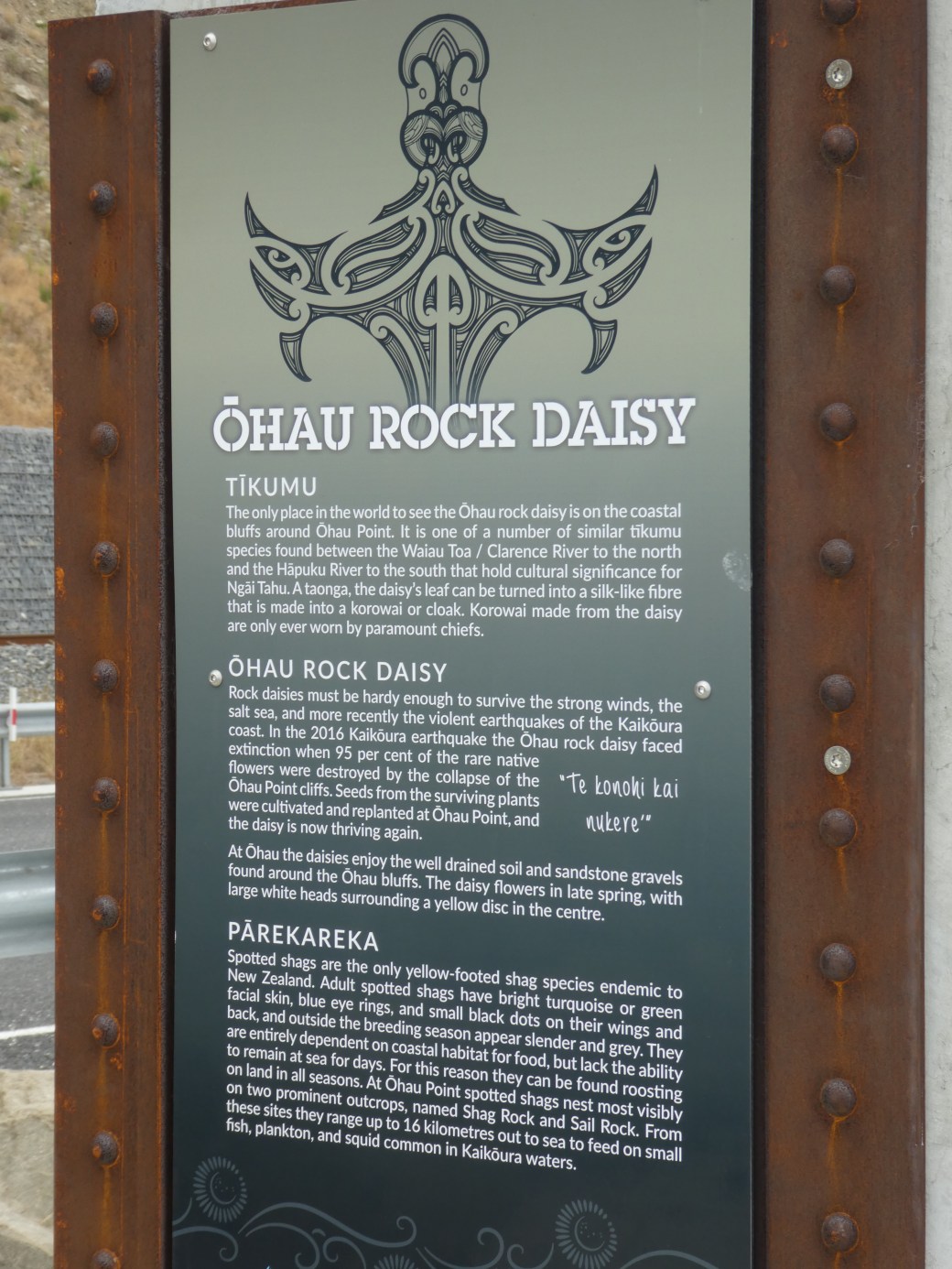
Another effect of the earthquake was that one of our rare plants, the Ohau Rock Daisy, was almost wiped out. 95% of the plants were lost when the cliffs around Ohau collapsed in the earthquake. Fortunately, someone found a plant with seeds, propagated it and now it is once again thriving in the area.

P1010509

P1010510

Overall, a magical day tripping along the coast towards Kaikoura.


Exciting new adventure

We had been looking forward to this trip for a while now, and have been beavering away with preparations – emptying cupboards and restocking, Bruce categorising what was in the boot, and sorting out home and gardens for our plan of being away for almost three months. This time we have only the briefest of itineraries – we plan to make it up as we go along, and we also plan to take time to “smell the roses” instead of rushing from place to place.

We left home on the 29th January, and headed for our friends Dianne and Gary’s place in Taupo. We were well looked after by them and thoroughly enjoyed our catch up, but the next morning we were on the road again and heading for Wanganui to our friend Jenny’s place. We planned to be there 2 nights catching up with her and again we were well looked after. Two days later we were headed for Paraparaumu to catch up with more friends, Helen and Brendon. They also looked after us very well, and it is so lovely that all our friendsĀ  love the dogs as well and they also get spoilt.

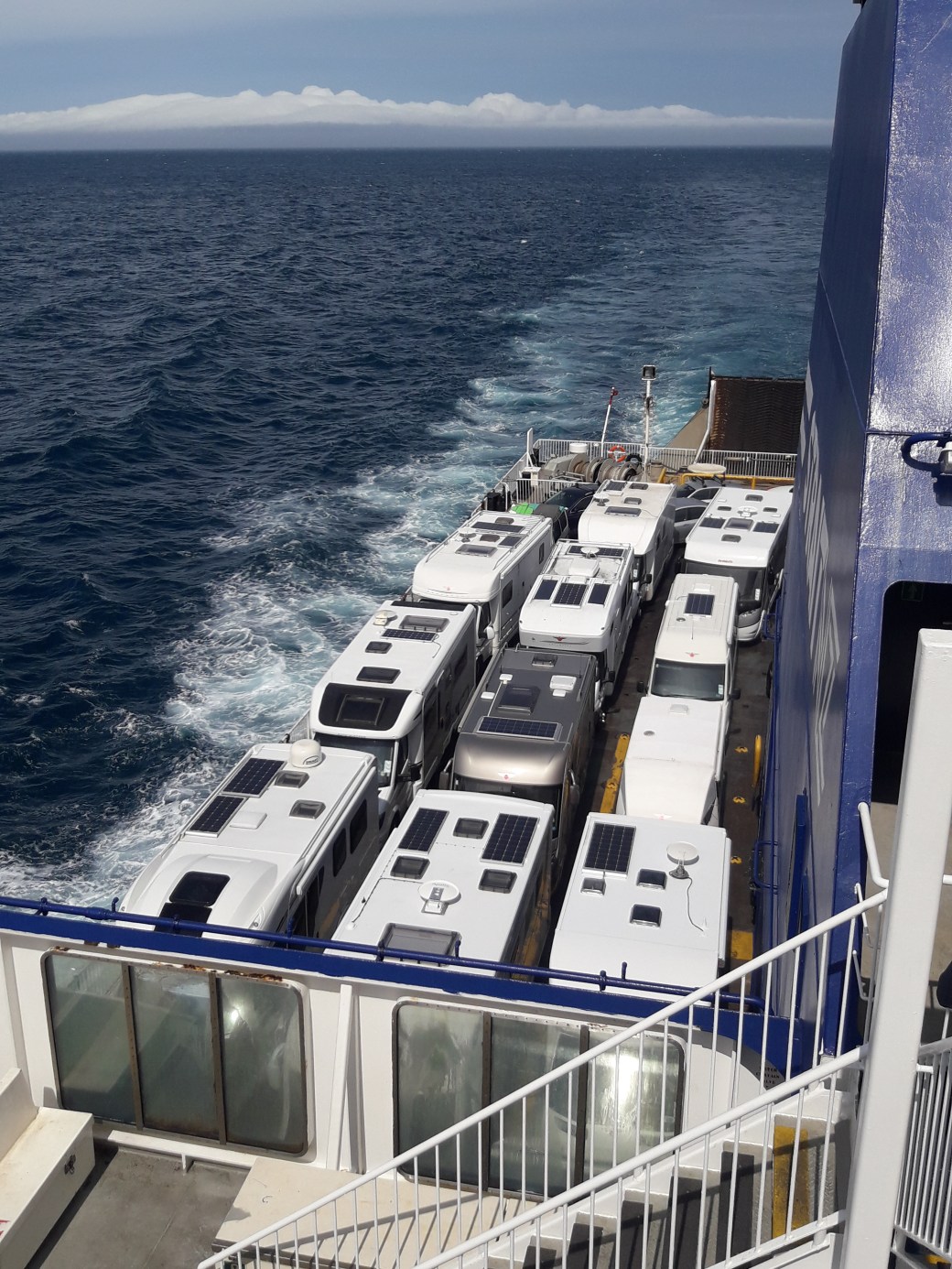
We were booked to cross Cook Strait on the 3rd February at 1.30pm, so we made sure we left Paraparaumu in plenty of time to get in the right line so that the motorhome would be parked beneath decks. We did not want the dogs getting too hot on the 4.5 hour trip. At the ferry we caught up with the group from the NZMCA Hauraki CoromandelĀ  area, and our friends Marilyn and Dennis who we planned to travel part of the way with. There were lots of motorhomes, of all shapes and sizes, on the boat, but this time there were no smelly stock trucks. 20200203_154502

The crossing was a bit rocky at times but certainly not as bad as it could have been had the forecasted gale force winds eventuated.

Once we disembarked we headed for our first stop in the South Island – the Damfam vineyard. We stayed here two years ago and liked it then, so had no hesitation in re-visiting. They set aside a field on the banks of the Wairau River for motorhomes. There was no traffic noise, but unfortunately for Hunter, there was the regular booming of bird scarers in a nearby vineyard. He quivered and shookĀ  whenever we sat outside, so staying here more than one night was clearly not going to be good for him – precious soul that he is. We enjoyed the beautiful sunset and the peaceful night before heading off again the next day.


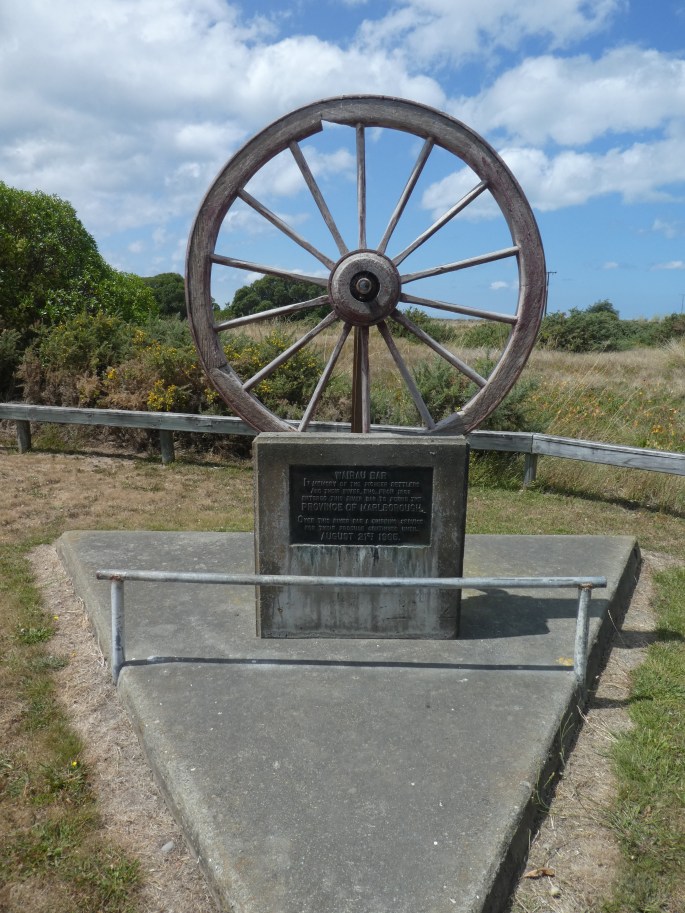
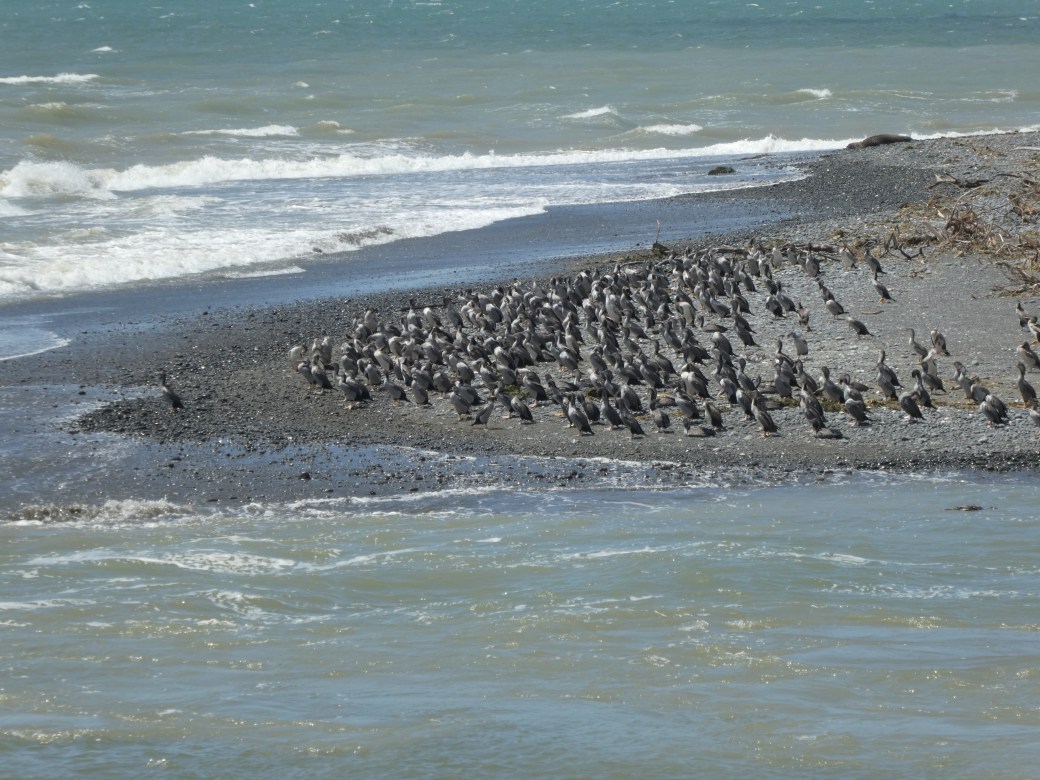
The next morning we decided to explore the Wairau Bar before heading off to Ward Beach which was to be our next stop. The road out to the bar was mostly sealed, but narrow. However, cars passing us were very considerate in that they pulled right over to let us past. At the end of the road was a big lagoon, where the river meets the sea. One of the locals told us that a ferry used to come all the way up the river to service Blenheim and the remains of that boat are still in Blenheim. The coastline was pretty rugged, and the surf looked pretty mean. Oscar wanted to take a swim but we would not allow that as we thought we might never see him again! The shoreline was thick with pebbles and rocks smoothed off by the sea. It made walking on it hard work, so we did not venture far from the van.

P1010391

P1010395

After lunch we back tracked down the narrow road and headed for Blenheim and beyond. We had a delightful journey along the coast finding a few treasures along the way such as St Oswalds Church.

The church is longer used as it was damaged in the earthquake and there is not the money to repair it.

We also called in to have a look at the Saltworks. Water (presumably sea water) fills the lakes and is left to evaporate. The remaining salt is them scooped up and processed. It looks pretty filthy at that stage and not something you would want to put in your mouth.

P1010425

We finally arrived at our destination for the night. The camp site was on a private farm, right next to the rugged coast. The weather was fine but windy, so much so that when a gust came through we had to stop walking and turn our backs to it. It was pretty wild. All the landscape around is predominantly limestone, so the cliffs are white, as are the rocky outcrops in the sea.

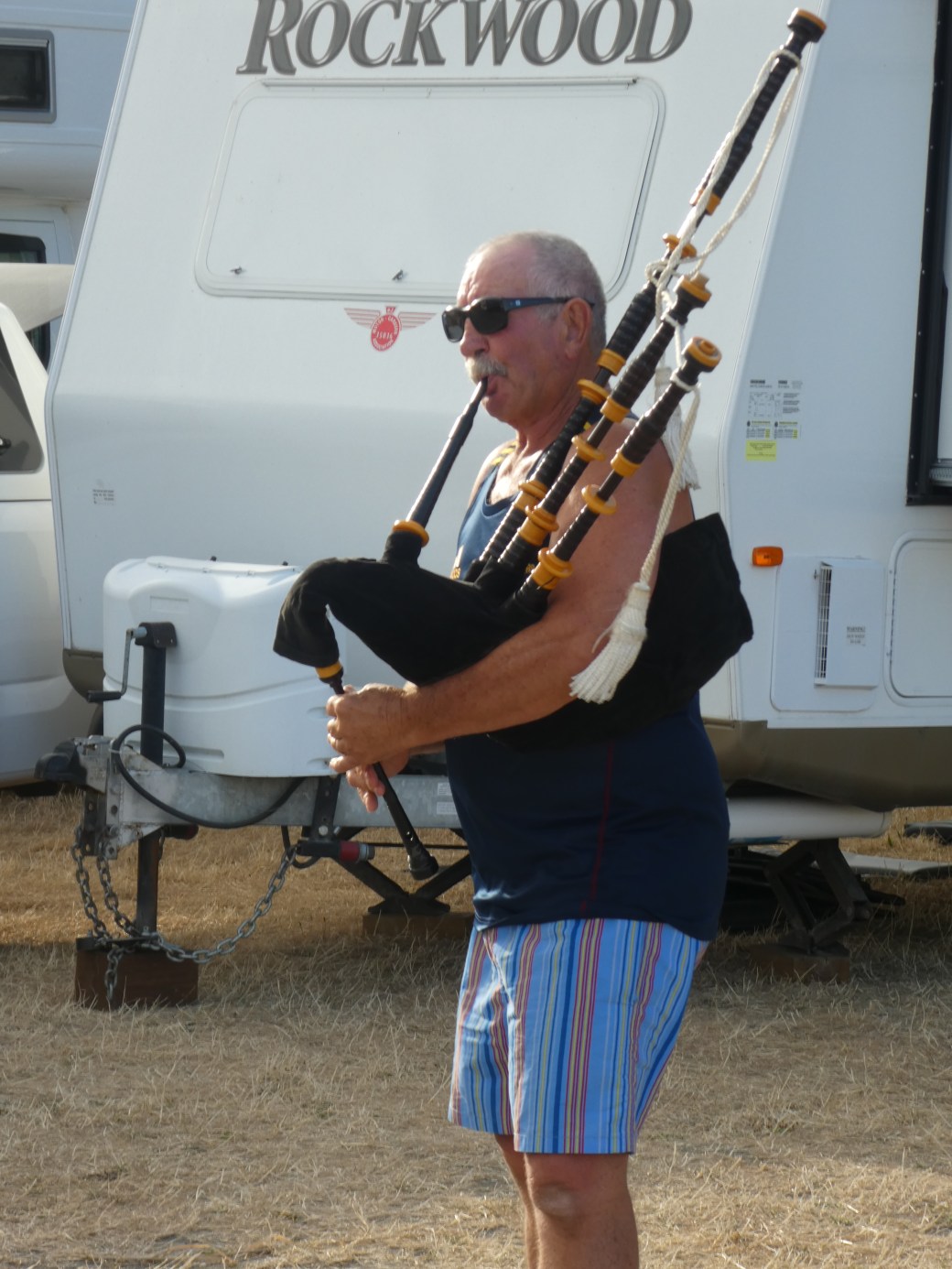
Although we were not enjoying the wind, the forecast was for it to settle during the night so we bunkered down. We were just relaxing inside the motorhome when the evening was pierced by the sound of bagpipes – now that we did not expect. Our piper played us a few songs, despite almost being blown away at one stage, and all of us parked there seemed to enjoy it. We resolved to move on the next day though to somewhere a bit more sheltered.

P1010443


The pre-holiday holiday

The timing was not ideal, as we are preparing to leave on our next big trip on Wednesday, but friends wanted to rent our house for 2 days so we agreed. It seemed that it would be a great opportunity to bring all our pot plants to Emma and Justin to care for while we are away.

Emma and Justin have a small block of land at Hikuai, over looking the Pinnacles on one side, pine forest on another, and farmland and river towards Pauanui out the other direction. Beautiful views, and because of the nice elevation, a nice breeze as well to help keep us cool.

DSCF1772

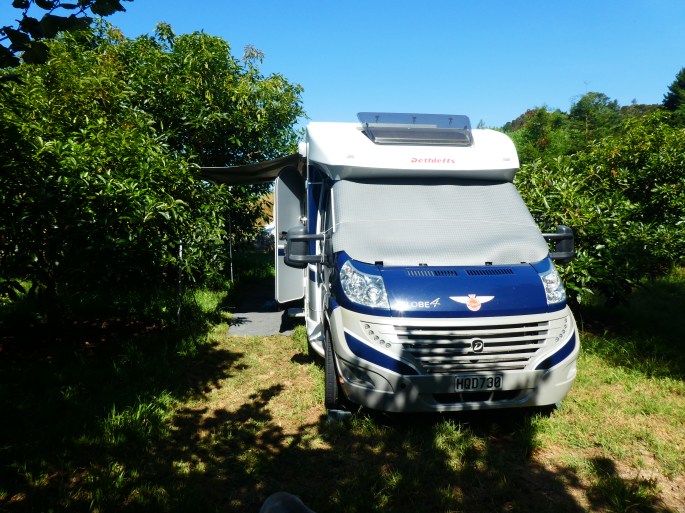
Bruce had the job of choosing the perfect parking spot, and that turned out to be in the middle of a grove of avocado trees. At least one side of theĀ  motorhome was shaded by the trees. There was some concern about possums jumping from the trees onto our roof and coming in the hatches, but that did not happen thankfully. The view out the windows was pretty with avocados in various stages of growth hanging right there – begging to be picked.

Bruce had a lovely time playing with Maia (his grand daughter) looking for frogs, having swings and playing in the garden.

The weather was pretty hot though so a visit to the local swiming hole was an absolute must. It was not far up the road, and a bit of a scramble down the bankĀ  to get to the beach beside the river, but the water was refreshingly cool. The dogs enjoyed the dip as well but the challenge with them was to stop them shaking over other people’s towels – the small beach was pretty well populated.

Nana and Grandad had the job of looking after Maia that night while Mum and Dad went out to dinner. She behaved beautifully (as expected).

Overall, a lovely visit, and the final time we will see them until we return in April, and by then there will be another little girl in the family – how exciting.

Maia

Paparoa and Ruawai

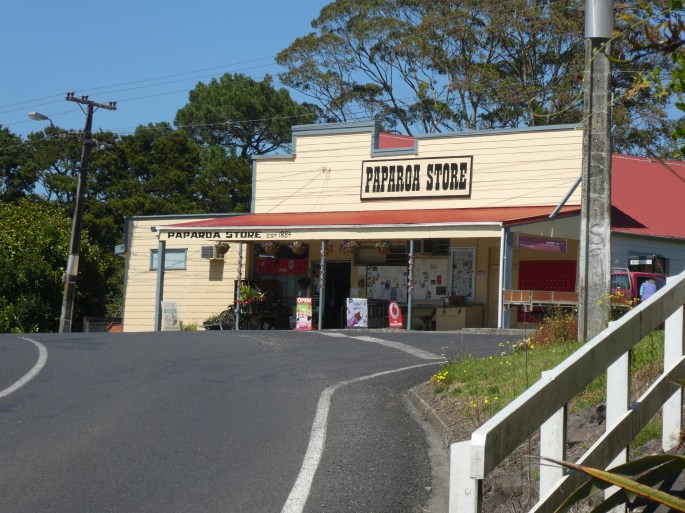
We decided to do a day trip from Pahi to look around the local area, and the first stop was the little historic town of Paparoa – only about 7 kms away from Pahi. The Paparoa stream flows through the town and eventually meets the Kaipara Harbour. The steam boats that serviced Pahi also came to Paparoa, which was also settled by the religious Albertlanders that settled in Pahi.

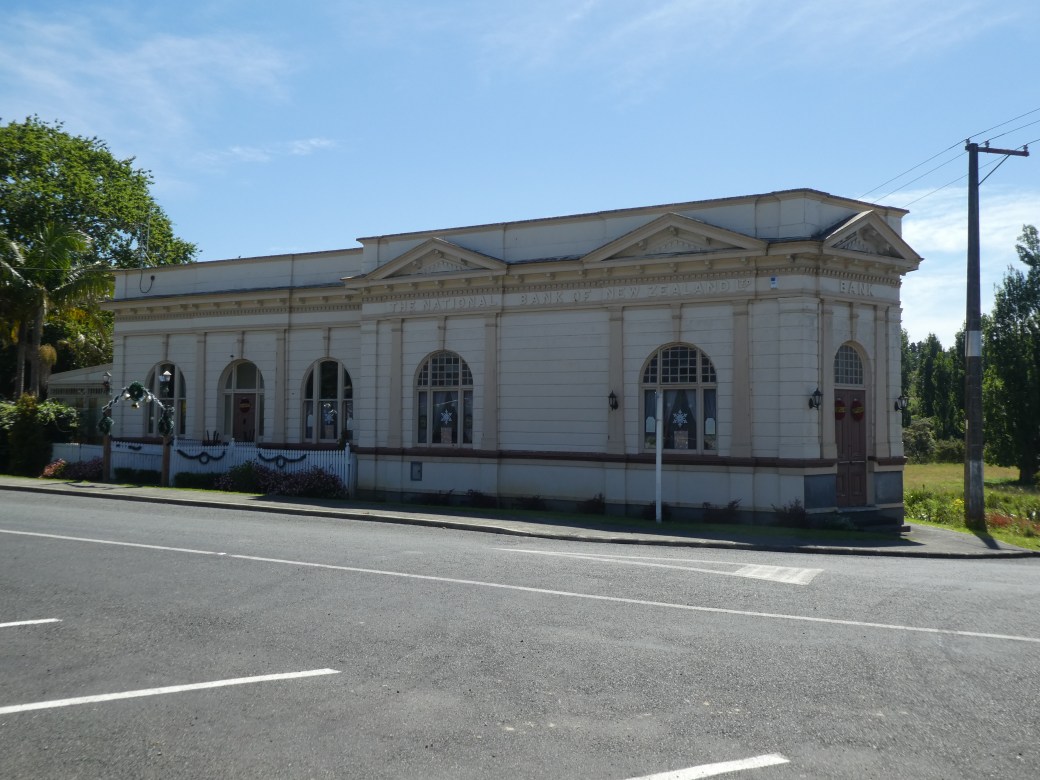
Paparoa is not a big setlement, with a grocery store, a garage, a cafe and a home brew / craft store.Ā  There were two buildings that appealed to me though, and both are nowĀ  private residences. The first was the old National Bank building. You could see that it was once a grand building that once served a bustling township, but is now showing signs of needing some love.P1010186.JPG

The other was a private home, but in contrast this place was evidently well loved and absolutely beautiful.

Across the road was a very pleasant park area, right on the bank of the muddy stream. Here they had erected a sculpture made of old salvaged kauri logs, and someone had taken the time to do a magnificent mosaic on top of the picnic table. The tall trees provided pleasant shade on a hot day. There was a sign for a walking path at the end, apparently to an old pa site, but unfortunately it cuts through farmland and dogs are not allowed, so we had to give that a miss.

After a walk in the park, we piled back into the motorhome and headed for Matatoke. There was a lot to see here so I will do a separate blog on that – watch this space.

Last stop for the day was Ruawai – home of the kumera. And true to its claim to fame, the town was surrounded by acre after acre of the crop. We wondered how it could grow as the soil seemed pretty dry, but the little plants were green and apparently healthy.

Ruawai is located on the very upper reaches of the Kaipara Harbour where the Wairoa river flows into it.

Image result for map of ruawai nz


P1010266

Alongside the river is a small park and a walkway, and we could not resist going for a walk, even though it was pretty hot in the sun at this stage. Not too far along, we came to a sign that explained the history of the area. Apparently, the land around Ruawai was one big flat, impassable bog. The stopbank was built for two purposes –Ā  a roadway through the area, and a way of draining the swampy land. The land, once drained, proved to be extremely fertile, and according to the sign, still does not require the use of fertiliser. The land is now used for dairy farming and the growing of kumera and maize.

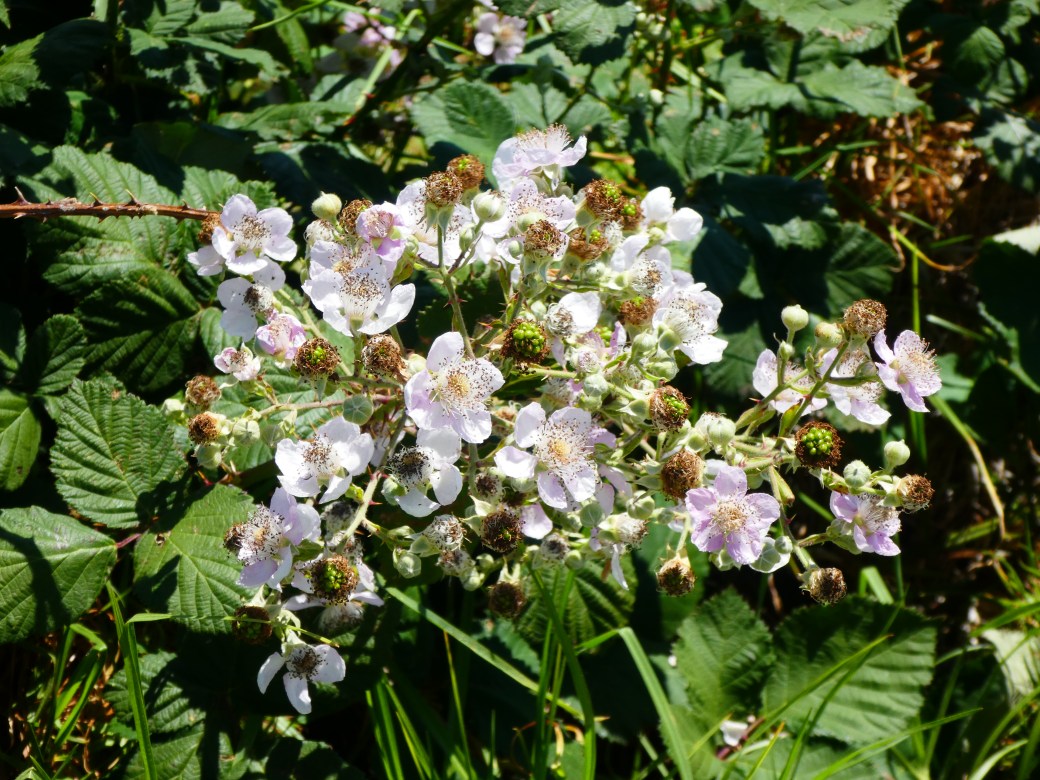
The fertility of the land seemed pretty obvious on my walk because I have never before seen such healthy blackberry plants.

P1010278

Bruce had notions of having a tour through the Kumera Packing plant, but that did not seem to be an option, although there were many roadside stalls selling paper sacks of kumera for $10 a bag.

By this stage the day was marching on so we headed back to Pahi to settle in again, intending to explore Dargaville tomorrow. We had a relaxed and pleasant day. Very little traffic on the road, and all three towns we visited – Paparoa, Matakohe and Ruawai were sleepy little settlements with not may people around.

P1010273 (2)


Pahi, Northland

We had intended to visit family in Whangarei today and tomorrow, but that was not to be – plans cancelled at the last minute by forces outside of our control. The van was already loaded and ready to go, so rather than unpack we decided to visit an area neither of us had been before. We looked at the map, and decided on Pahi, on the way to Dargaville.

Pahi is a historic town on a narrow penninsula, on the Kaipara Harbour. It was orginally settled by members of a religious sect called the Albertowners, who also settled in Matakohe and Waipu. The area rapidly grew with the kauri industry – both logging and the digging for gum. Steamer ships brought supplies by water from Puhoi as the area around Pahi is either steep hills (and covered in bush in those days) or flat and boggy with impassable mud. Logs and kauri products were floated down to Pahi by streams and rivers, and then shipped out by sea.

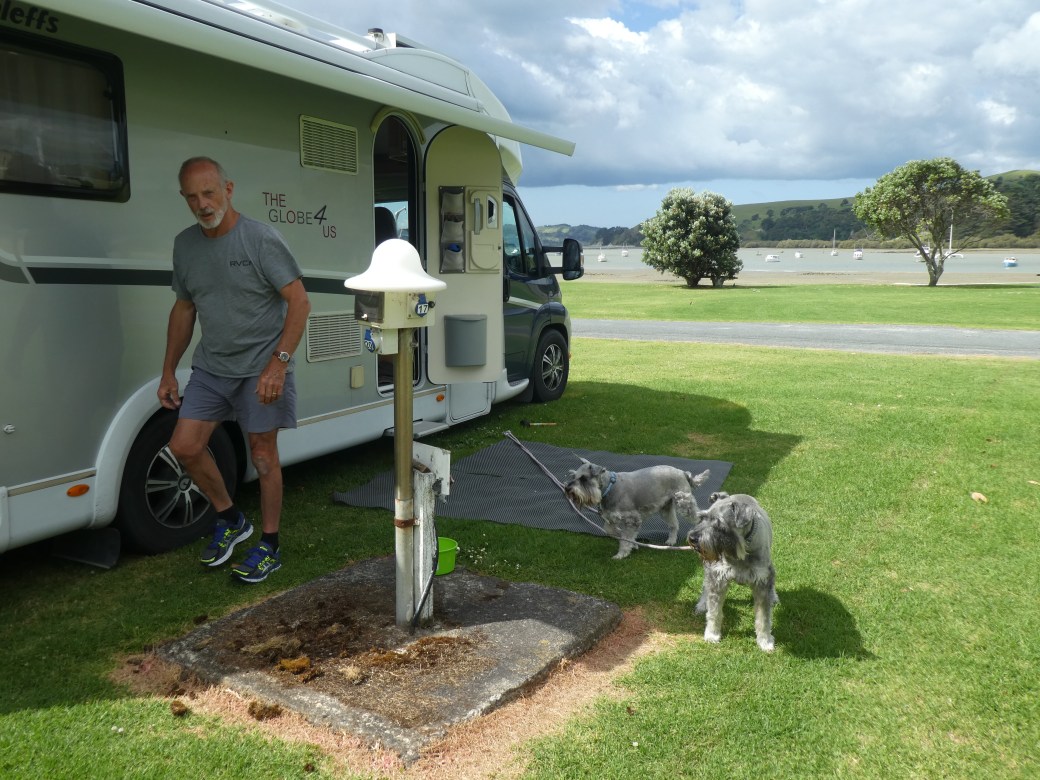
We booked in to the camp (only 3 parties here) and settled in for the afternoon, and had a look around the place. Our outlook is delightful.

P1010158.JPG

The harbour has a lot of mud flats and when the tide is out it can look a bit bleak. The beach is made up of tiny cockle shells mixed in with the mud. The wharf is rustic and encrusted with oysters. Nearby there are oyster farms.

Next to the camp is the largest Moreton Bay Fig treee in the Southern hemisphere. The root structure alone is pretty impressive and the tree is huge – a girth of over 14 metres.

The small settlement is precided over by the old Pahi Hotel, a boarding and drinking establishment built in 1905. It is now a private residence but you can tell it was a great old building in its time.

The old Community Hall, built next to the wharf, is also clearly an old structure, having been built in 1889, but lacks the character of the hotel.

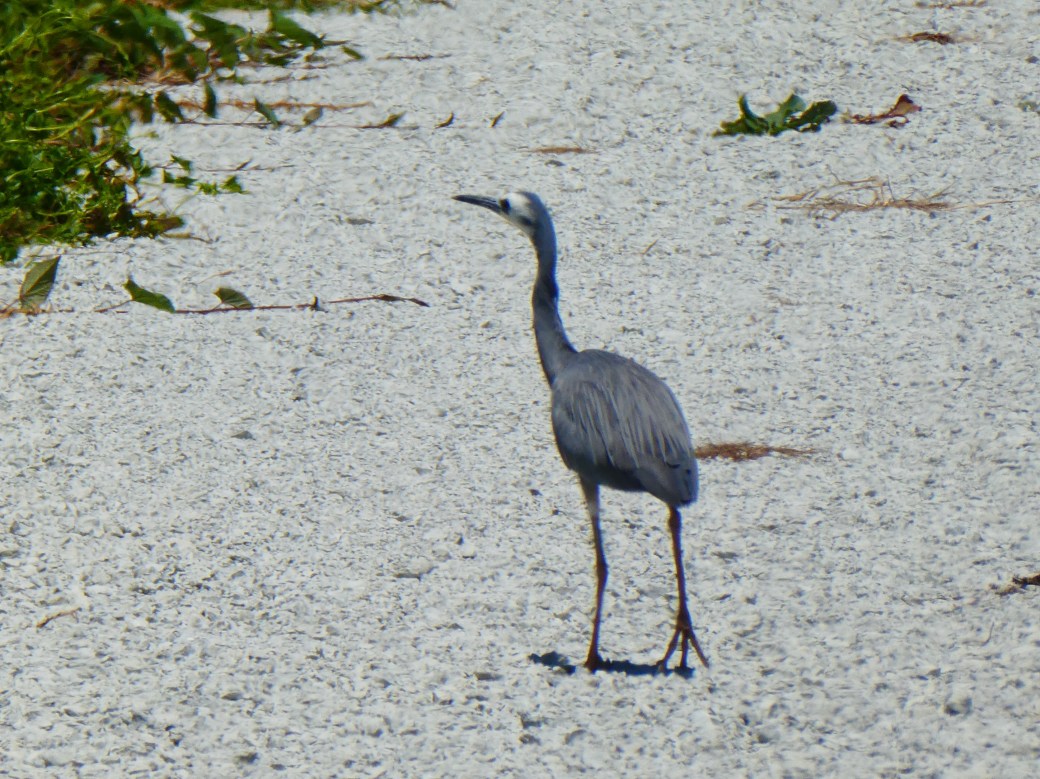
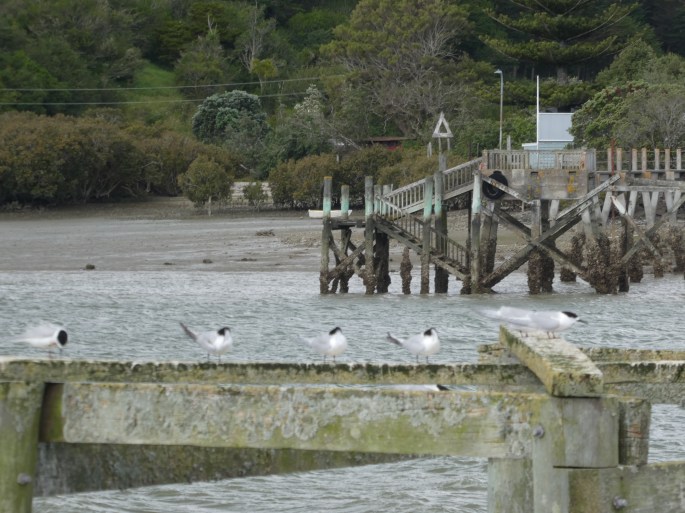
The bird life around here is great. big flocks of seagulls, and oyster catchers, terns roosting on the old wharf,Ā  tuis calling from the pohutukawas, kingfishers swooping on insects on the mud flats, and lets not forget the friendly and ever hungry ducks that hover outside the motorhome waiting for titbits and tormenting the dogs.

The amenities at the camp are clean, the surroundings are hard to beat, and Pahi is a good spot to start our exploration of the area. We are happy travellers.

Tapu on the Thames Coast

Tapu was the designated meeting place of our area (branch) of the NZMCA Christmas get together, and it has been that way for several years now. We were not able to attend last year due to my father’s illness, but this year we were enthusiastic attendees. We were given a prime park right on the shore, and we enjoyed being able to watch the prolific bird life from the windows of our motorhome.

It was a gathering of around 35 vans, although more were scheduled to attend than that. Even so, the company was pleasant as was the weather, aside from a few claps of thunder on the Saturday afternoon.

P1010107We arrived on the Friday afternoon, and once we had paid our fees, said hello to others and set up camp we took the dogs for a walk, exploring an area that we had not looked at before.
The first dog activity was a swim in a deep patch of the water in the stream. The dogs enjoyed having a cool down even if they were tricked into the water by Bruce telling them there was a possum in the bank.P1010060

Further long the road from the camp, and over the adjacent small river, was a reserve, owned by the local council. It was permitted to freedom camp here. It was a large area with a sizeable shore line, and we were delighted to come across several pairs of dotterels,Ā  NZ endangered birds. They clearly had nests nearby and were trying to employ their usual diversionary tactics to keep you away, but we were rapt to be able to get so close to them, and to be able to get some superb photos.

After enjoying our walk, we were headed back to camp when we spied an old cemetery tucked in beneath some pohutukawa trees, and below the level of the road alongside it, so quietly tucked away. We tied the dogs up and went to explore.

Some of the graves there were very old – from some of New Zealands earliest settlers. I had never seen graves that old, and what also surprised us was that some of those buried there had lived a long life – some were in their 80’s when they died, which must have been unusual at that time.

The earliest grave was dated 1867, and a plaque attached to the grave anounced this gentleman as one of our founding fathers. Another was dated 1891, and there were several around 1900. Fascinating place and a shame some of the graves are not well cared for. The oldest grave, however, was.

Back at camp, we enjoyed the Christmas dinner on the Saturday night. It was all catered, so we did not have the pre- dinner effort of making something to contribute. This year was the first time that Santa made an appearance, and he made a point of giving every one of the ladies a kiss as well as present. The guys just got a pat on the shoulder with their gift. After dinner we enjoyed music and dancing.

It was a short couple of days at Tapu but weĀ  enjoyed good company, interesting bird life, beautiful sunsets, a swim (for Bruce and the dogs), entertainment and dancing, and a great meal.

P1010118

Whangarei Heads

We arrived in Whangarei mid afternoon on Monday, and after giving the dogs a good walk we headed up to the hospital to see Judy’s dad. He was really pleased to see us, butĀ  it was sad seeing him so incapacitated. Age is cruel really. We stayed to help him with his dinner, and then back into bed, before saying our good nights and promising to see him at “sparrow’s fart” the next morning when the doctors were due around. Our preferred park at the town basin was not available to we stayed over night at the RSA and it was a quiet night. It turned out that Bruce went to Intermediate school just across the road.

The next morning we were at the hospital by 7am and wouldn’t you know it, the doctors did not turn up until 8.45am. However, we got some questions answered and helped dad with a shave after breakfast, and then we headed away to give the dogs a good walk and to have some breakfast ourselves. Dad was transferred to the rehab ward today and we made a couple of trips in to see him, allowing him time to rest in between times.

We then headed out to Judy’s step sister Andrea’s place for the night but the poor old motorhome could not make it up the steep slope onto the lawn area they had planned for us to stay on. The smell of hot clutch plates was revolting, so we parked up on the neighbours property and had a coffee with Andrea and Rowan while they cooled down. Then it was off to the RSA again for another quiet night.

We decided that as we had spent a long day travelling on Monday, and most of the day at the hospital on Tuesday, both the dogs and ourselves needed a days rest, so we headed off to explore the Whangarei Heads. Bruce is somewhat familiar with this area as he spent time here as a boy, staying at his grandparent’sĀ  place at MacGregor Bay. (We will come to that shortly).

First stop was to Parua Bay, where we had booked a spot for the night at the Cruising Club. We wanted to have a quick look on the way out though, and were completely charmed with the place.

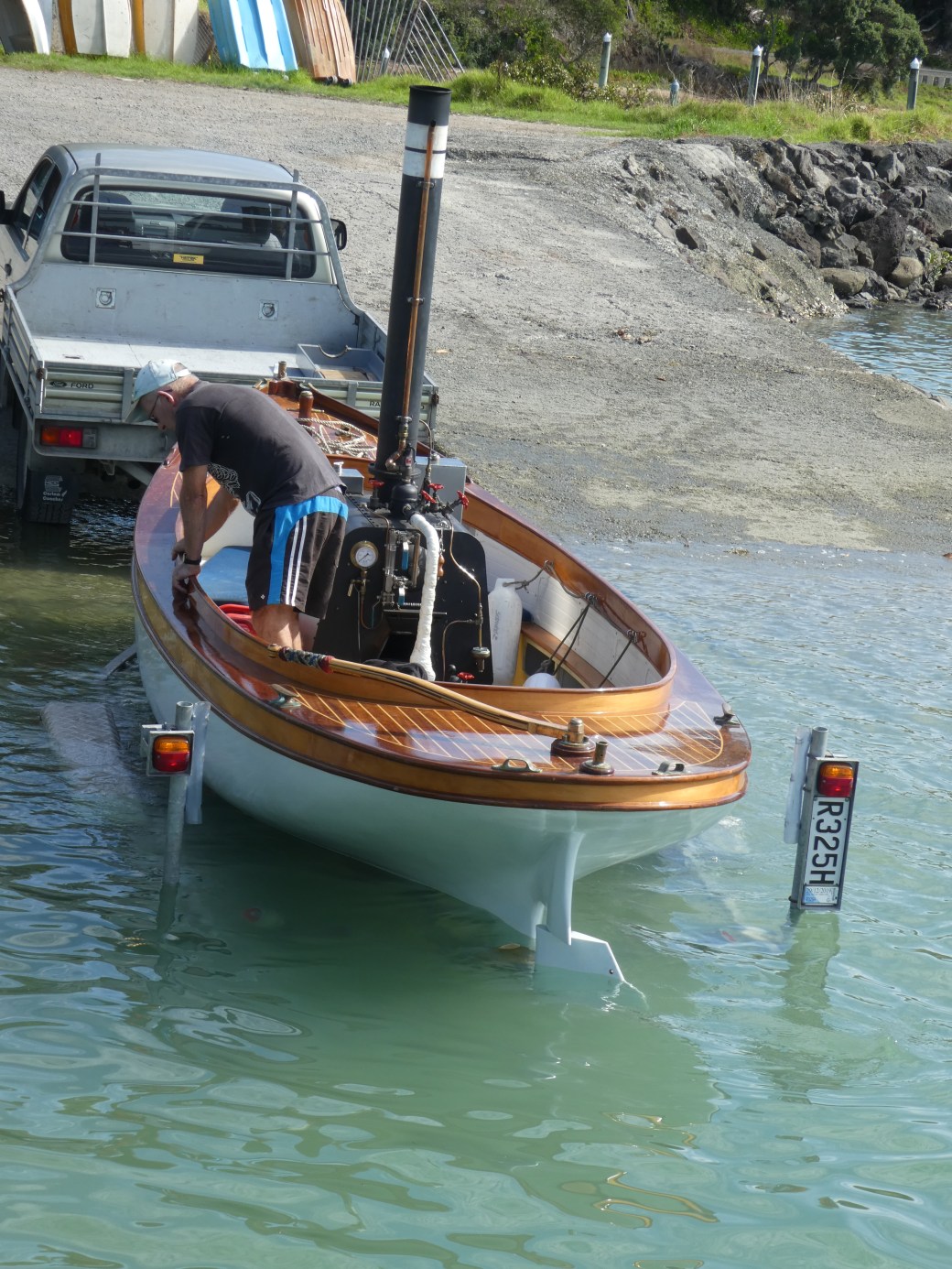
P1000231We gave Oscar and Hunter a swim from the boat ramp, but this was disturbed by a couple of guys launching a refurbished old steam powered clinker. It was immaculate and a real sight to behold. We would have like to have seen it power away but apparently it takes about an hour to get it fired up enough to run.
P1000234


The boiler was first of all fired up with kerosene, and the smell of that pervaded the air around. They had a small basket of wood next to the boiler and I guess that was for when the fire was really going well.

Next stop was Mc Cleods Bay. It was also beautiful but the shore was a bit stony and it didn’t look all that pleasant underfoot, so we had a look around and elected to save our swim for somewhere more suitable.

There seemed to be plenty of oysters growing on the rocks and it was definitely the preferred beach for hundreds of Oyster Catchers. We did not dare let Hunter out of the truck because chasing Oyster Catchers is a favourite past time of his.

Next stop was Mc Gregors Bay, the previous home of Bruce’s grandparents. The beach was beautiful and sandy, although there was not a lot of room to park up so we had to go up the road and turn around.

P1000261.JPG

The dogs had a quick swim but were not all that keen so they went back into the motor home and Bruce and I had a lovely swim.

P1000257


We had our lunch here and a bit of a rest before going past MacKenzie Bay, and on to Urquarts Bay. This is also a lovely beach but the back drop is completely different with views of the port and the oil refinery just over the water. Access is through a little road that is single lane in places and turning around was a bit of a challenge.

In the distance the distinctive rock formations on Mt Manaia can be seen and there are apparently walking tracks up to the summit (1700 stairs we are told, so it makes East Cape Light House look pretty tame). We felt too lazy to tackle them.

P1000268.JPG

The final stop before heading back to camp was to Ocean Beach, a bit further down the road. There was a bit of a walking track to the beach over soft, very hot sand, but the beach was lovely and quite popular. It is not a particularly long beach, so we walked the length of it. The surf looked well behaved – no rips or anything evident, so overall, very pleasant.

We headed back to Parua Bay and set up camp for the night. Bruce could not resist the water so headed off for a big long swim. He hadn’t been back long when the place was invaded by teenagers coming for their sailing class. They all worked together very efficiently to get the boats ready and off they went. Once they came back, they again worked together to clean everything down and pack it away. What a great activity for kids.

Dinner was eaten looking out over the bay. Magic.

P1000270


Heading North

We left Napier on Saturday morning and headed north – it was Judy’s turn to drive and we were headed for Taupo. Although there was rain overnight, the day was fine although overcast.

The road was intially really good, but 30 kms or so into the journey it deteriorated a lot and that happened to coincide with the forestry all around us. The terrain was very steep especially in the area of the Mohaka River, but quite magestic in its own way. It gave the old Fiat a workout though and it performed really well (as usual).

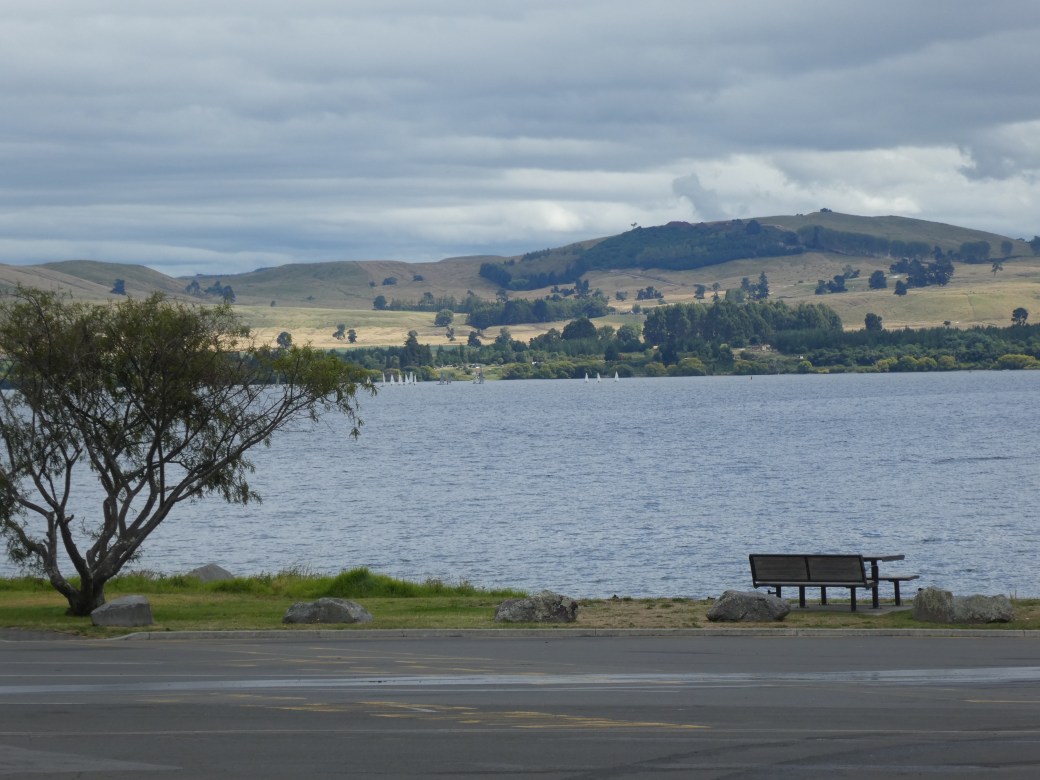
We got to Taupo at about 3pm and elected to take the dogs for a walk straight away, so we headed down to the lake side.

P1000213

The lake was quite low, probably due to the extended dry weather, but we still managed to persuade Oscar to swim for a stick and Hunter got a little wet chasing ducks. It was hot walking (the motorhome told us it was 29 degrees outside) and the temptation was too strong. We decided to go for a swim ourselves, so we headed back to the van and re-located to a popular swimming spot, a bit further around the lake.

We both agree that it was the nicest lake swim we had ever had. The temperature was just right – not to cold and not too warm. There was no weed in this area and the lake bed dropped off pretty rapidly, so only a couple of metres from shore and we were unable to touch the bottom. We persuaded the dogs to have another little swim too. Hunter was more enthusiastic than Oscar, who found flotation difficult in the fresh water.

We had a lovely swim and then headed off to camp for the night at the NZMCA Park. We found a lovely quiet spot and got ourselves settled in our outdoor chairs. However, our peace was short lived. It seemed that a helicopter across the street must have had some work done on it so it was being tested, and it was a big helicopter too. So it roared and thudded and rose to roof height, then lowered again and slowed the engines down, only to do it again and again – not peaceful at all. Eventually though they appeared happy with the chopper so shut it down and peace reigned again, and we ended up having a quiet night.

It rained overnight but the next day was fine and this time we were headed for Cambridge. The idea was to go and have a coffee with Phyl and Ross (Aunty and Uncle) and then go on to Judy’s son’s place just around the corner.

The trip was uneventful other than some delay at Tokoroa due to a car crash, and Phyl and Ross were as welcoming as ever. We had a lovely couple of hours with them before heading to Ben and Karina’s.

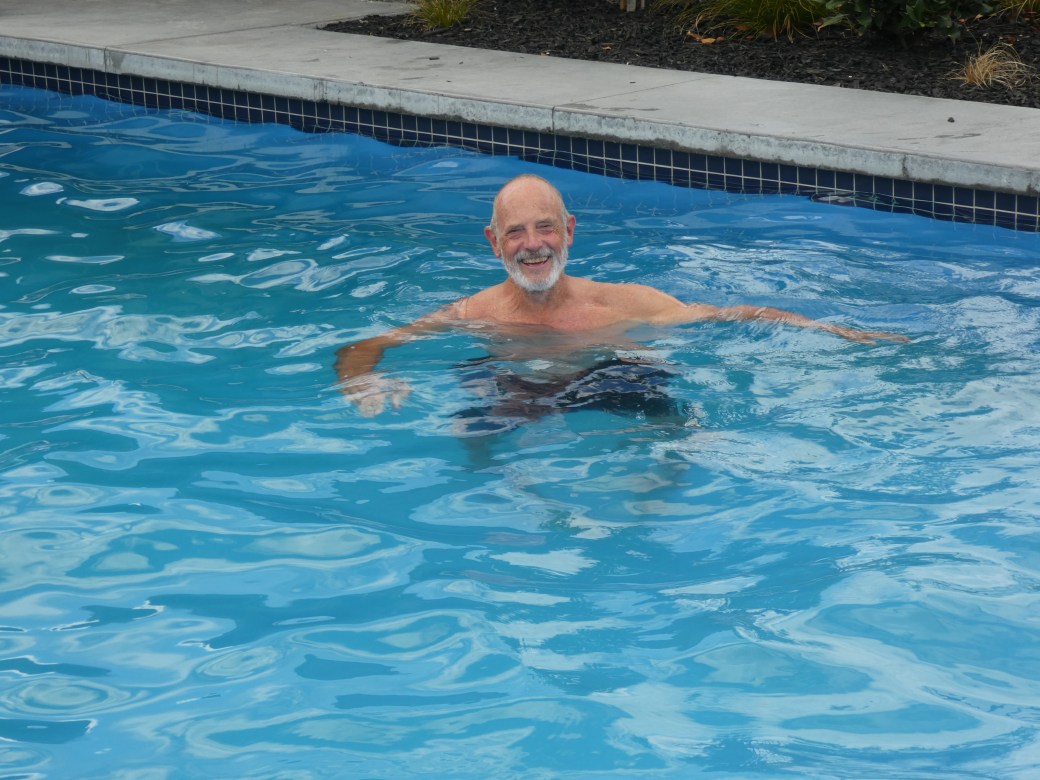
We thought it was quite amusing that we could pull into their driveway, when they were not home, and help ourselves to the pool etc. and the neighbours ignored us. I wonder if we could do it to other unoccupied houses? Anyway, we pulled back the pool covers and had a lovely swim.

P1000222.JPG

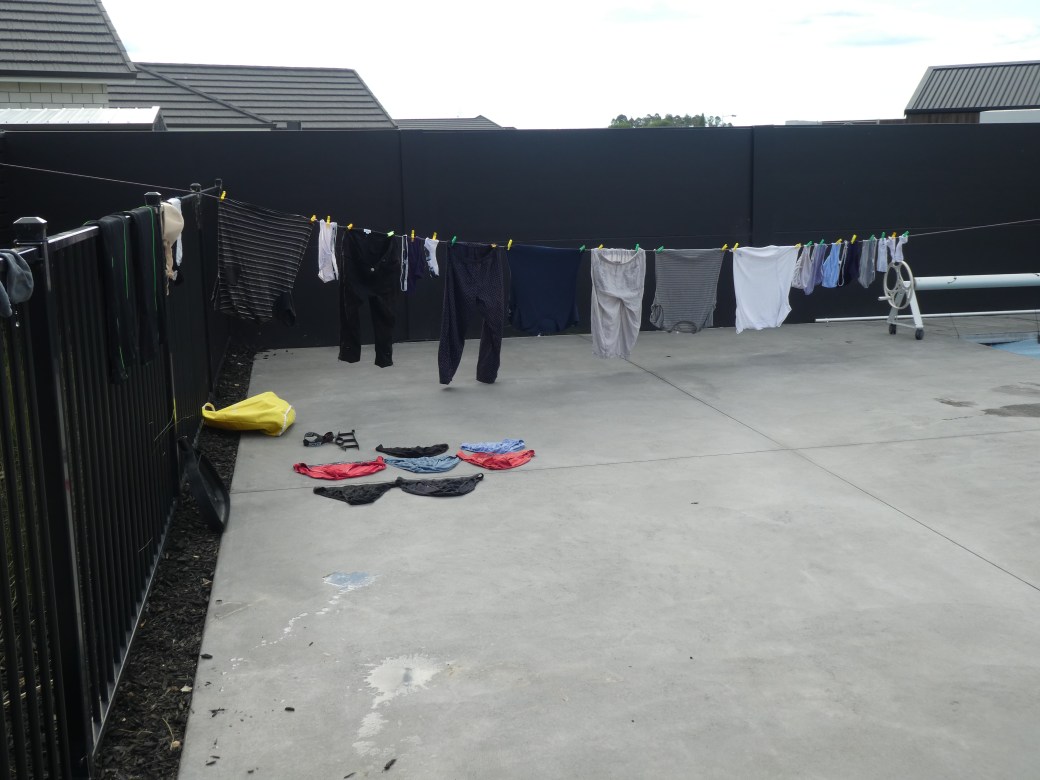
Once we were refreshed, we decided to try and get our washing dry (that we had washed at Phyl’s) so we set up a clothesline in the pool area, making it look like a Chinese laundry. We were completely unaware of the covenants for the area that said clotheslines were not to be visible to the neighbours!

P1000227

In the meantime, the dogs made themselves quite comfortable and the motorhome looked like it belonged there.

P1000223.JPG

P1000224.JPG

Ben and Karina and the children arrived to find us well settled in – having a wine and nibbles in their outdoor entertaining area. They joined us shortly after and we had a lovely evening catch up.

P1000228.JPG

We left at around 9am the next morning for the final push to Whangarei –Ā  a drive of around 5 hours. The first port of call though was to Zion Motorhomes in Pokeno, to show Jonas the rebuilt floor. He was as happy with it as we are. Our visit was brief but pleasant, and we were on the road again about 20 minutes later.


Tough Decisions

Today is Friday, and Brendon and Helen plan to head home today, but first Bruce and Brendon spent a couple of hours exploring the motor of the new motorhome, the GPS etc etc. Helen and I zoned out and drank coffee and left them to it. At one stage we went for a walk around the huge Napier NZMCA Park and I don’t think they were even aware we had gone!

After they went Bruce and I did some serious talking about where we will go to from here. Nearly 3 weeks ago, Judy’s father had a fall (and not for the first time). This time however, he made a proper job of it and broke his arm, his femur and banged his head. He had to have a hip replacement on the broken hip side, but the replacement that had already been there had to be cut out first, so the surgery was a major. Unfortunately, Dad has not really managed to get going since then. A phone call last night from his sister raised concerns that firstly, there were care deficits in the hospital due to busy staff; and secondly that there seems to be a lack of information coming to the family because no-one is there to ask questions and /or demand answers.

We finally made the decision that we would abandon the rest of our planned trip and head up to Whangarei. We decided that we would leave in the morning but in the meantime we would tick off another couple of things on our Napier to do list.

First was to go the Rush Munro’s Icecream outlet. We thought this was a factory outlet but it turned outĀ  that the factory had moved some time ago so it was just a shop. We enjoyed our icecream but would not have gone if we had realised.

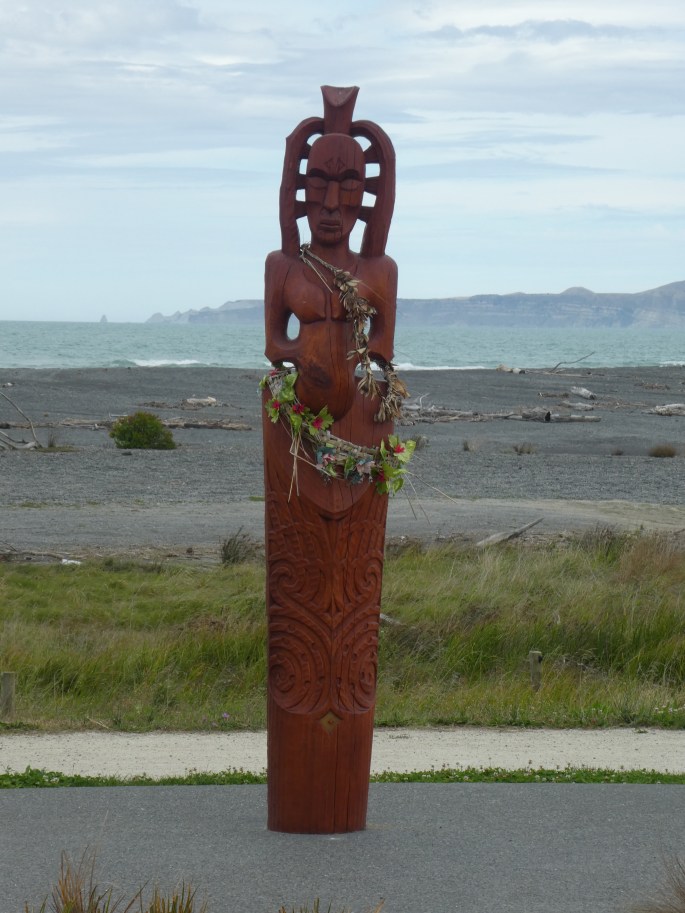
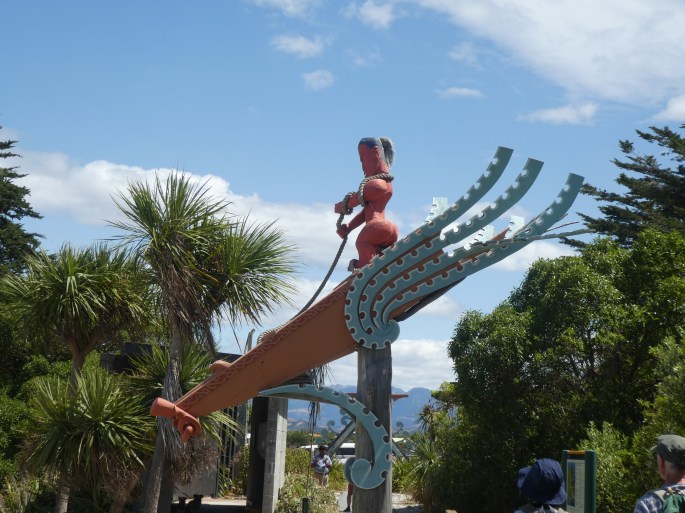
Next we headed off to the Waitangi Cultural Park. There was a large carved gateway to the park.

P1000173

Behind it is a ring of totem poles representing the points of a Maori navigation compass. Apparently there should be 32 in total, so a few are stillĀ  to come. There was a lot of information posted about how the Maori navigated their canoes which was quite interesting.

All around these totems is a large reserve which includes the estuary of the Clive and the point where the river meets the sea.

P1000175

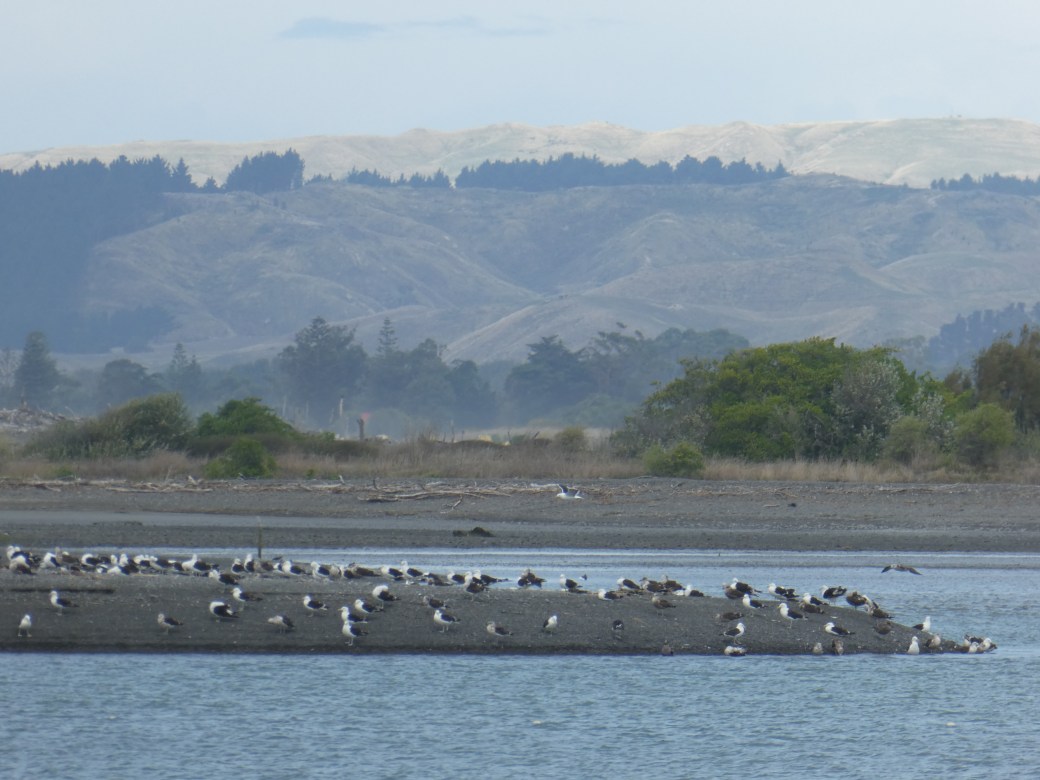
Birdlife is prolific here, but it is sad that the backdrop to the scenes where I photographed the birds is the smokey chimneys of the fertiliser works.


What also disappointed us was the amount of rubbish lying around. We picked a little bit up but the quantity was significant and was going to be more than a two person job.

The rest of the day was spent on preparations for our trip tomorrow – emptying waste tanks, filling up with water, then fuel and heading back to camp for a good night’s rest before the challenges we know we will be facing in coming days.

P1000148.JPG