Blog

Duddings Lake and Foxton

This morning was the first time in a long time that we actually woke to a fine day! It was windy and not too warm but at least we could take the dogs for a good walk on the beach before we left Wainui Beach. We also took the opportunity to again empty and fill the tanks on the motorhome so we left in a “ready for use” state. Whenever Bruce is occupied doing the tanks, I take the opportunity to sweep the carpets inside and to sometimes do a bit of dusting, so the motorhome looks as good as new when we are done.

Today we aimed to head south and drive straight through Whanganui, with the exception of stopping for a “get well” card for our neighbours who were involved in a car accident on the weekend. At times like this we wish we could be closer to be able to give more support. Our planned stop for the day is a place just 10kms or so north of Bulls called Duddings Lake.

This lake was in private ownership until the 1960’s when it was gifted to the local Council on condition that it remained available for public use. Apparently it is well stocked with perch and trout and has good water quality so it is safe for swimming and boating. It is about 2km around the circumference of the lake. Apparently it is a great water skiing venue, but to us it really did not seem big enough for that.

The sign at the entry to the park warned us not to go on grassy areas, and that if you got stuck you had to be prepared to get yourself out. The evidence was all around of vehicles who had driven onto the grass and regretted it. We felt sorry for some fellow motorhomers who had driven in for a scenic lunch stop, had deviated only slightly from the metal drive and had got stuck. They were there for a few hours before getting assistance out of the mud.

This was definitely gumboot territory, and we walked in gumboots all around the lake feeling grateful we had them on board. Overhead we could hear the planes from the Ohakea Airforce Base doing their flight training, but due to the heavy cloud cover we could not see them. As per our luck for this trip, it wasn’t long before the rain started again.

Our night was peaceful enough, and while the sun came out in the morning for a few hours, and we could see how pretty the lake was, we felt it was definitely a summer venue, and at $25 per night for a powered site it was expensive for what was provided (very little).

This morning we headed off  in a southerly direction with the destination for the day being Paraparaumu. Our stopping place on the way was Foxton. We had driven through Foxton many times before but had never stopped. We now realise that this was a mistake, that there is a lot to see in Foxton.

Foxton was established in the 1860’s and was a centre for flax fibre production which was used to make wool packs, matting and rope. Foxton exported more than 22,000 tonnes of flax fibre by boat. The boat part was significant because Foxton had a small harbour – the only one on the coast between Wellington and Whanganui, so while it was a dangerous place to navigate it was an important port for some years until the railway came to town.

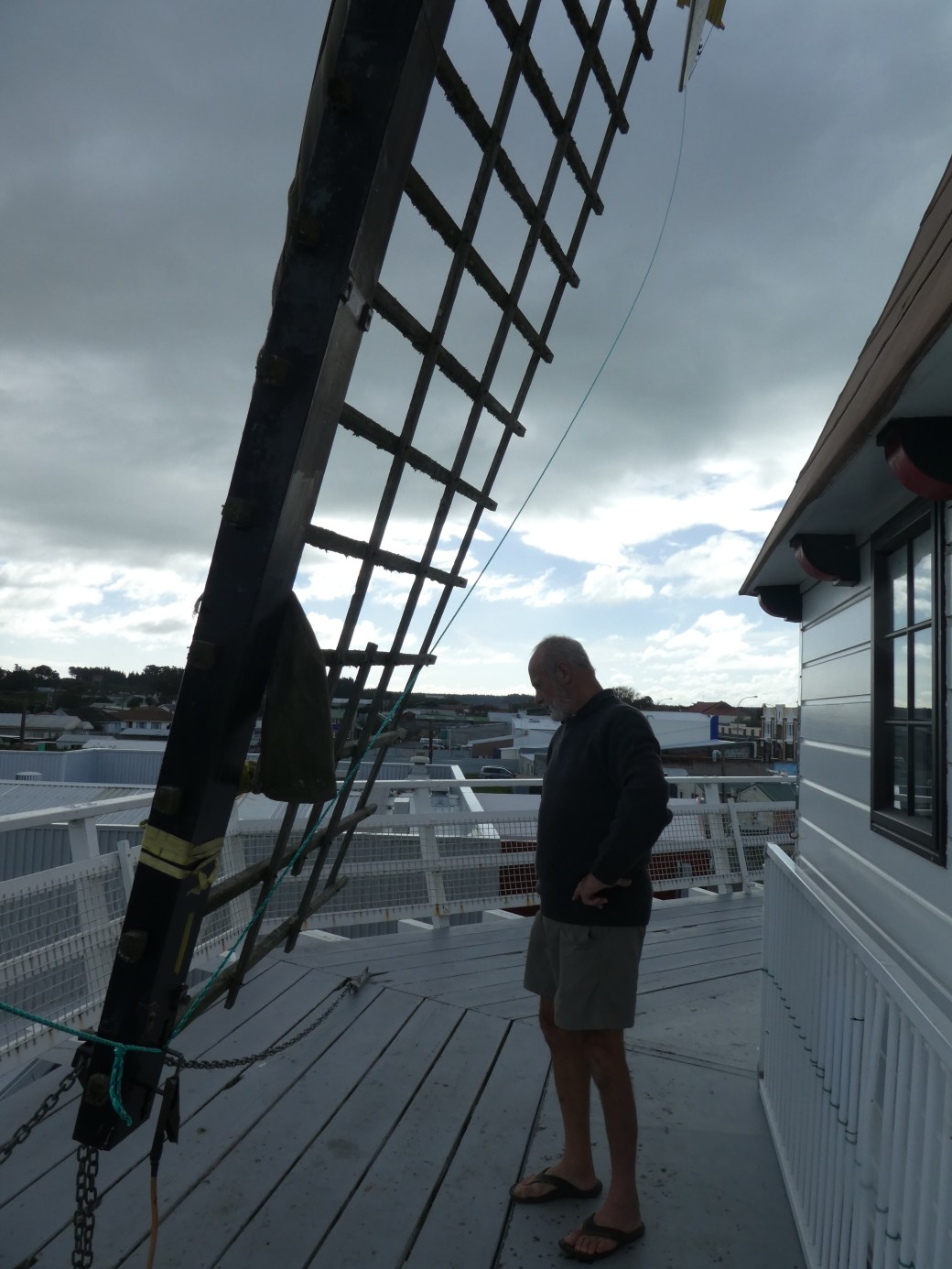
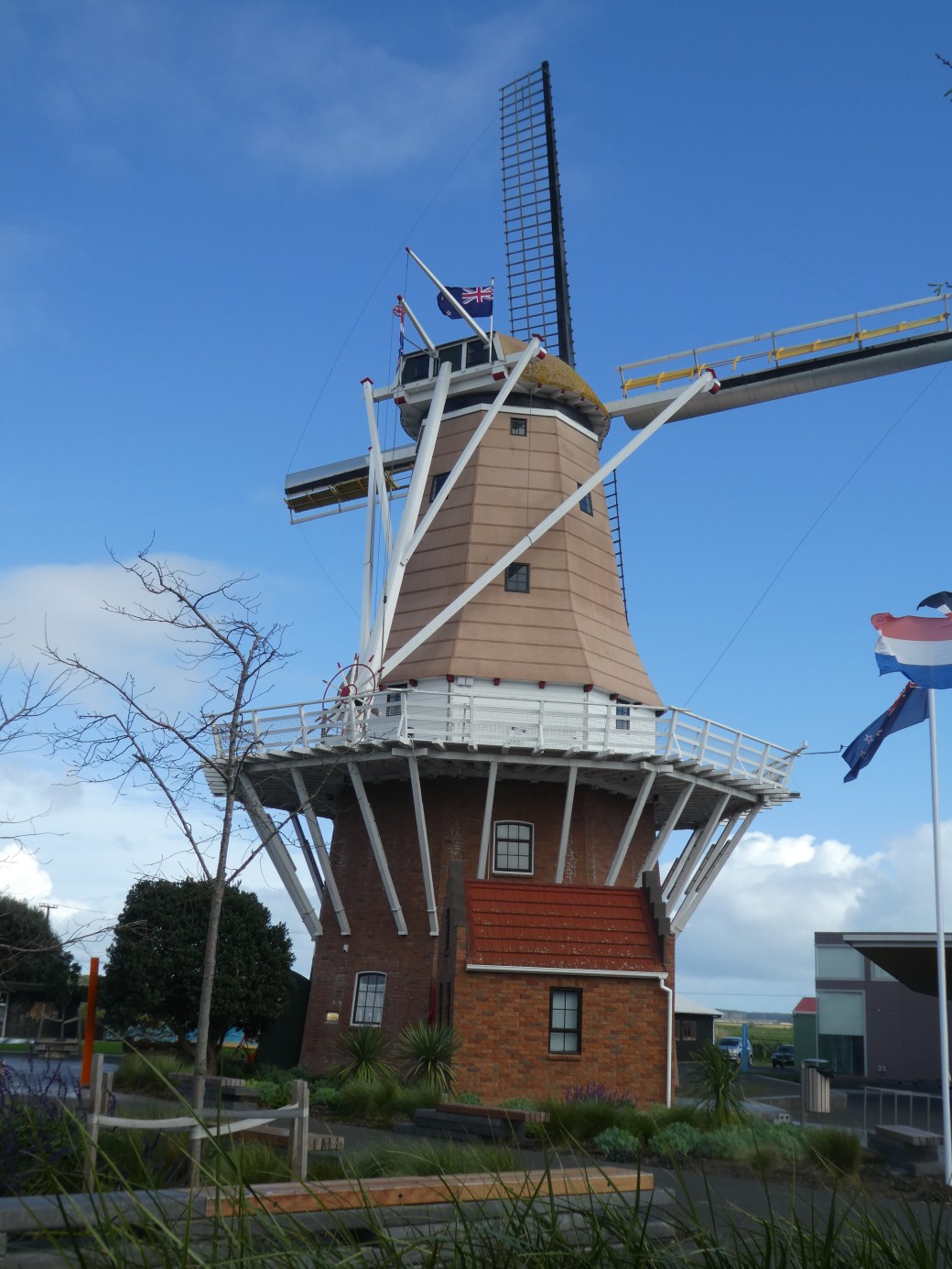
In 2002 a Dutch windmill was built in Foxton, called de Molen, and it continues to stone grind wheat into flour in the present day. There had been a problem a few weeks ago though, when a storm damaged two of the blades of the windmill. They are away being repaired at present so until they are fixed the mill cannot operate.
P1050264

The design was an authentic Dutch windmill design from the 1700’s and craftsmen came out from Holland to complete the building. There were a few concessions that had to be made to keep the Council happy, such as steel beams on the bottom floor instead of wooden ones, and shingle roof instead of a roof made of reeds.
P1050262

However, the rest is true to tradition and it was most impressive. We were amazed by the craftmanship eg. wooden cogs, tradional rope pulleys, flour chutes made of wood. Every wooden item was well sanded down and poly urethaned.

Besides all that, the mill was spotless. I have never seen Canterbury Flour Mills in a state like this one. You could have eaten of the floors, the walls or the ceilings!

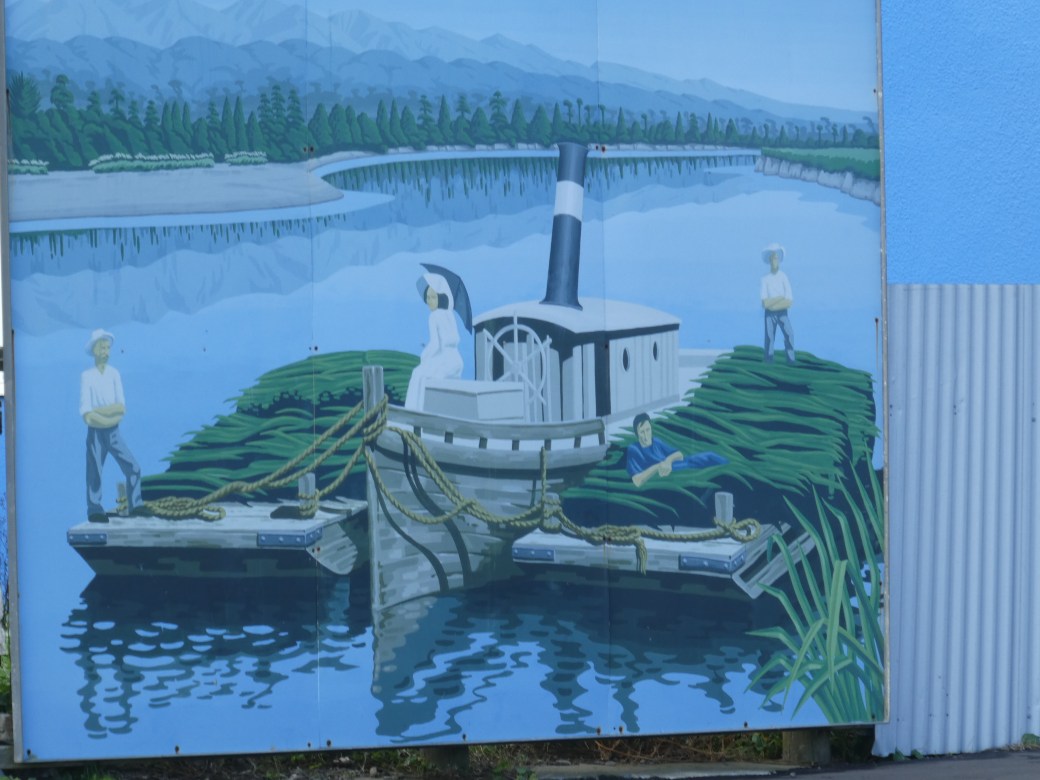
Besides the windmill, there is a lot of work being done on the streets of Foxton to make them beautiful, and you can see by the parts that have been completed that the town centre will look great when it is all finished. Ther are murals dotted about all over the place so although Opunake regards themselves as the “Mural Town”, Foxton could give them a run for their money.

P1050261

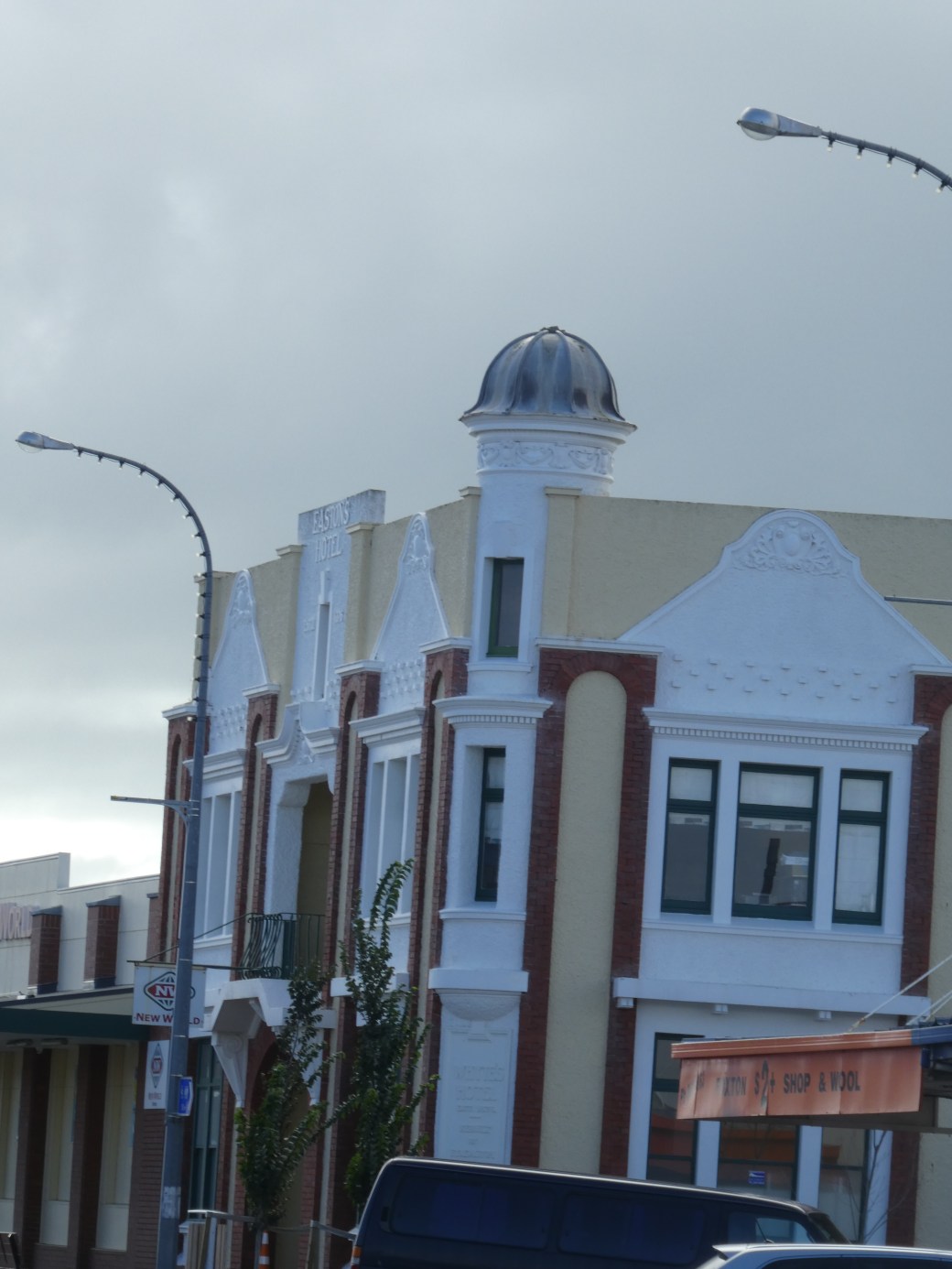
Some of their old buildings have been well restored and the New World store below is the fanciest I have ever seen.
P1050260

We bought some lunch from the Dutch Bakery, including a delicious loaf of Dutch bread that was still warm from the oven, and headed out to Foxton Beach which was about 6km away.

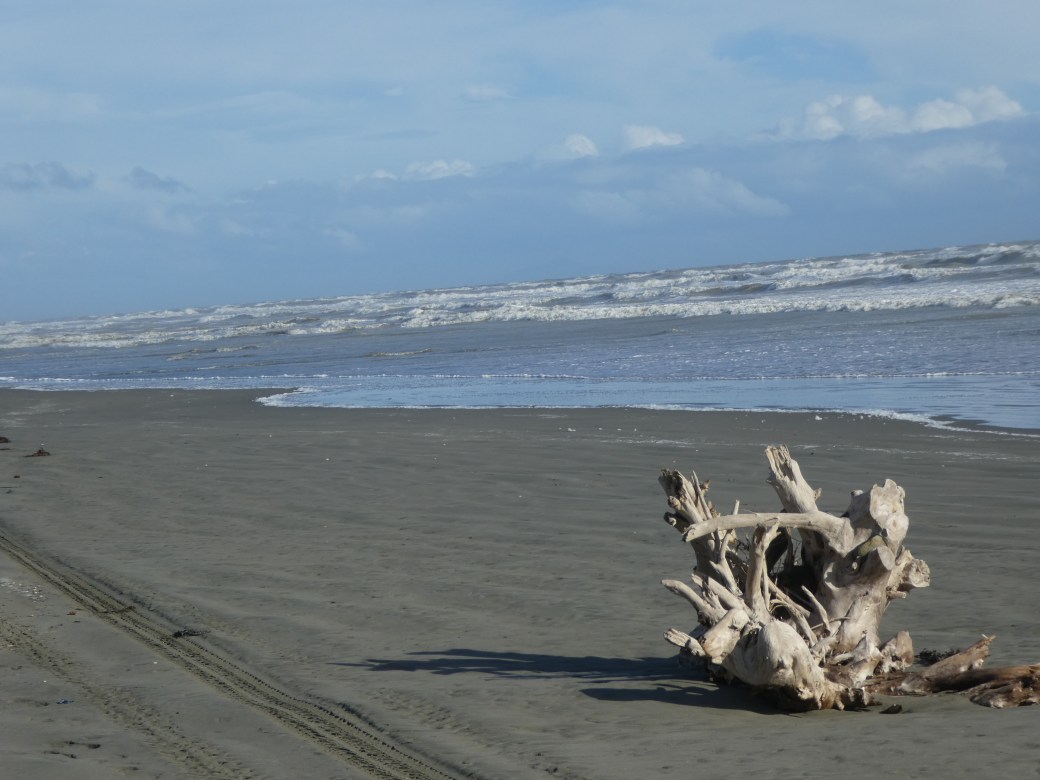
The wind was a really strong off shore wind today and it was picking up the sand and blasting it at us when we headed out for a walk on the beach. The dogs were trying to let Bruce know that it was a bad idea, but once on the beach it was more pleasant. The shore was typical of this coast – dunes, lots of driftwood, rough seas, but it was beautiful in its own way.
P1050285

The sands are not so black here and there are the usual speed limit signs. They make more sense here than at Wainui because at least you have some chance of driving on the beach, and several vehicles were doing that.

P1050281

We had a lovely walk on the beach and found the usual walnuts washed up, as well as lots of blue bottle jellyfish that we had to try and keep the dogs away from.

One we returned from our walk, we drove back to Foxton and stopped at a service station so Bruce could remove the half tonne of sand that had been deposited on the windscreens by the wind while we were walking, and then we carried on south to Paraparaumu, watching the heavy rain clouds get closer and closer.

Maui Gas, Patea and Wainui Beach

Cape Egmont was able to be seen without rain this morning, although the mountain remained invisible. The rain did not look as if it would be gone for long so we hit the road again, heading south and covering the same road as we did yesterday. This time though, we intended to stop in at the Maui Gas Plant which we drove past yesterday.

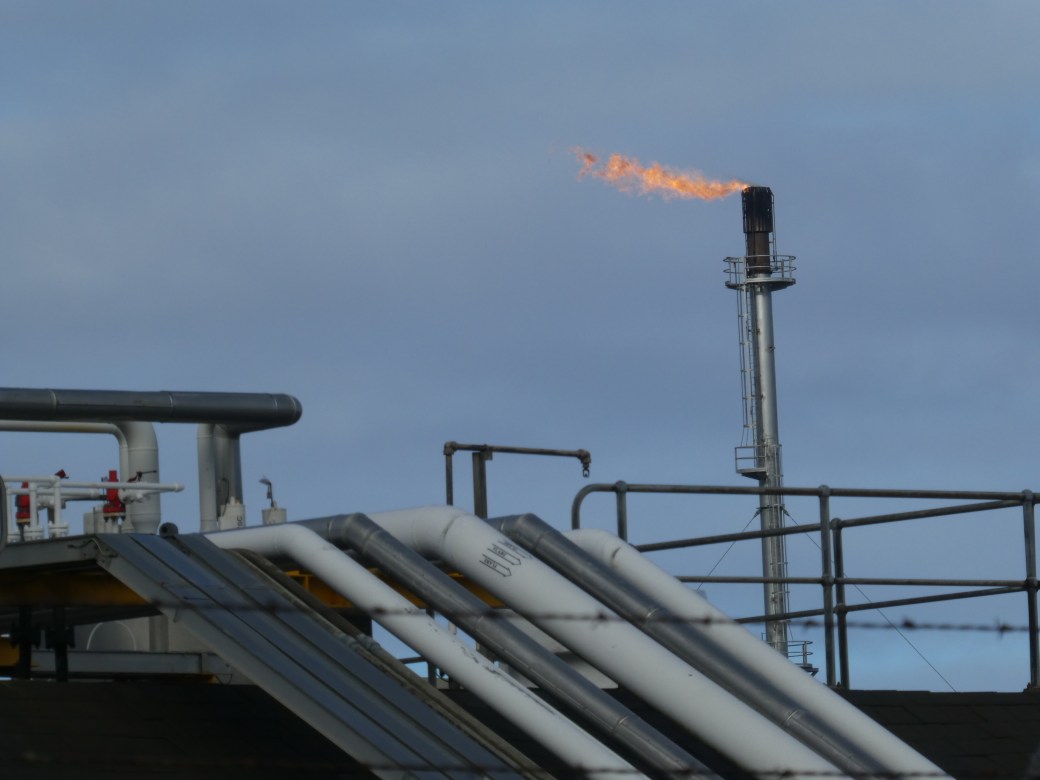
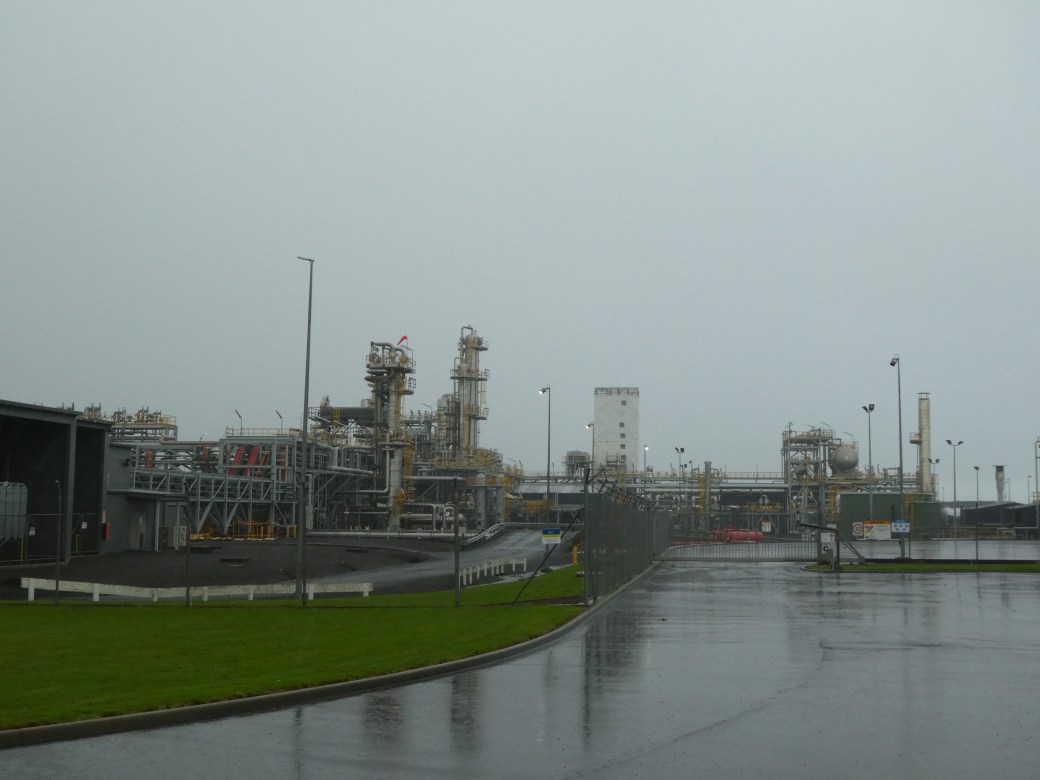
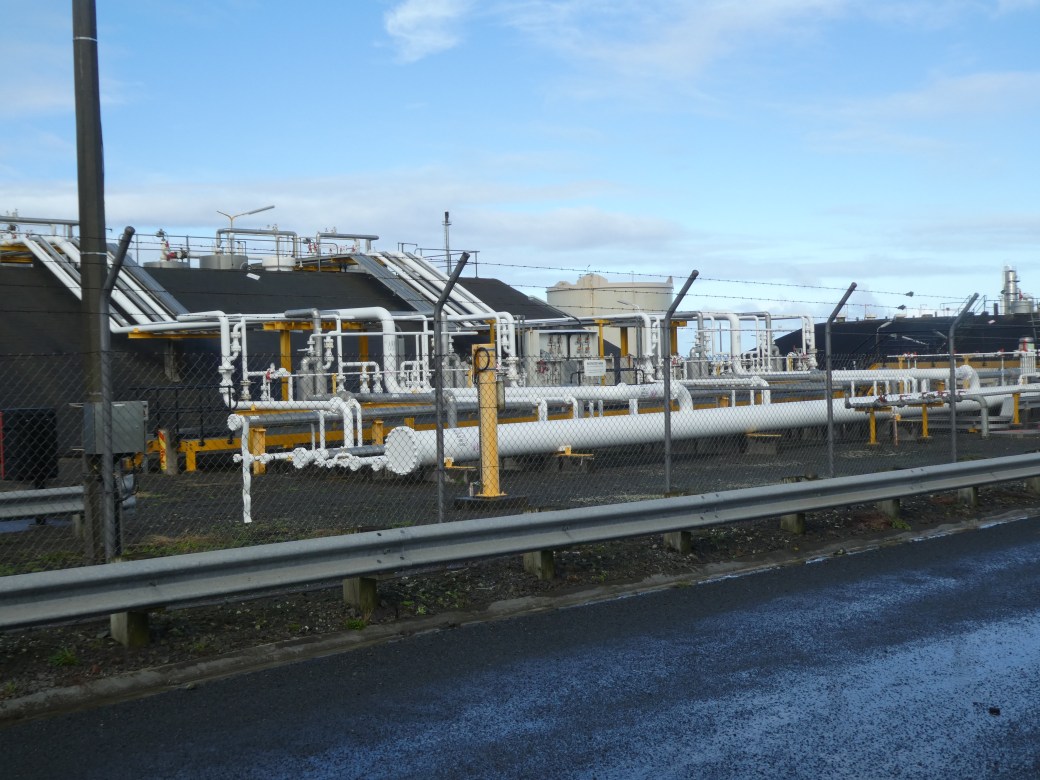
It only took us about 20 minutes to get there  and once again we were the only ones stopped there, although looking at the visitor’s book, someone had been there earlier in the day. The plant is a mass of pipes and it is hard to believe that they all have a purpose and a destination.

P1050199

The flare was burning brightly and Bruce managed to catch a good photograph of that.

P1050197

The visitor’s centre was open, but unattended. It had a scale model of the whole plant with explanations about what part is used for what purpose. There were two models of the Maui Gas platform as well with explanations of what part is used for what. There were also clear diagrams on the walls of the exploration process.

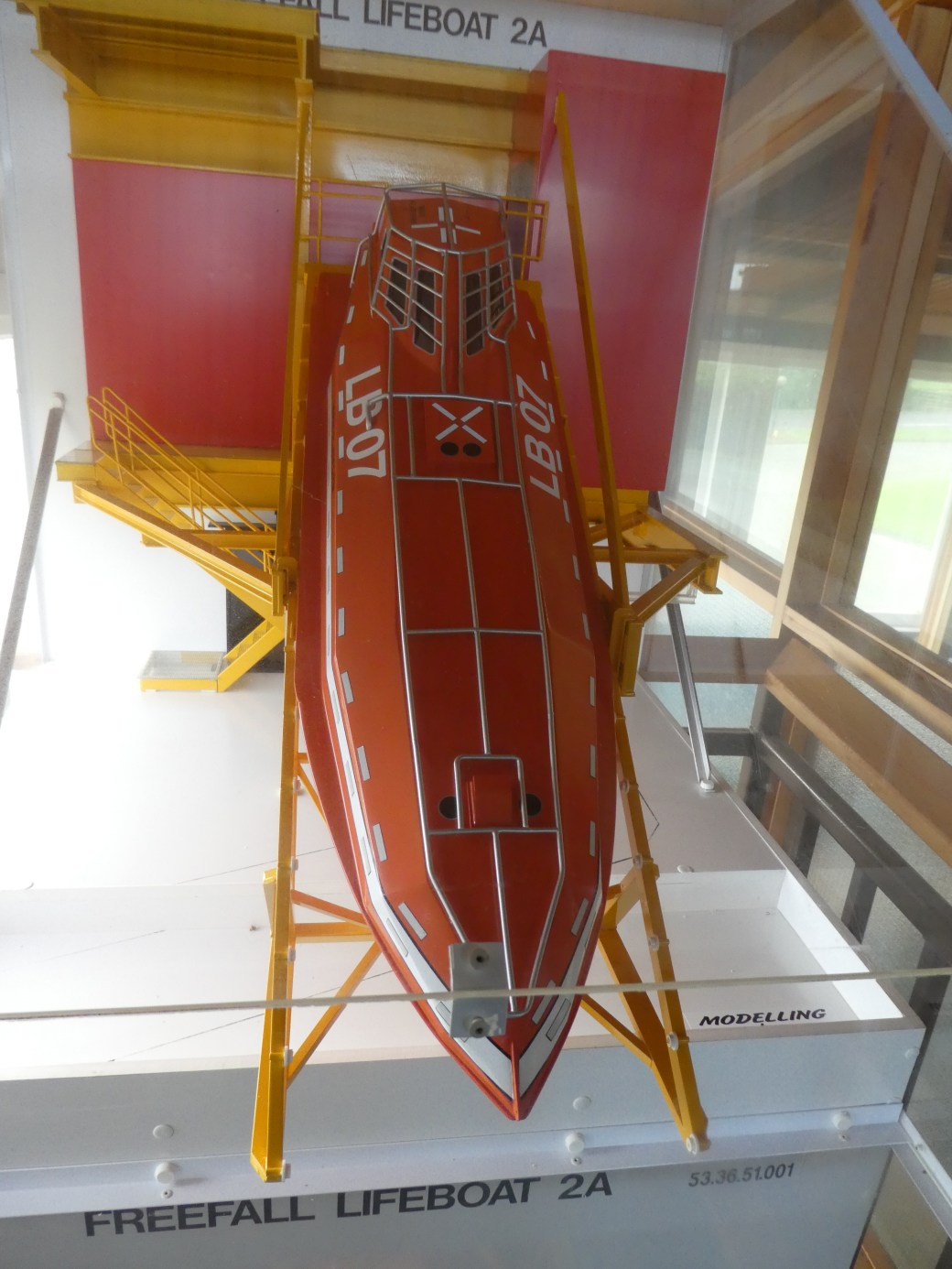
There was also a model of the escape craft should there be a disaster on the Maui Gas Platform.

P1050204

Next on our visit list was the town of Patea, as well as Patea Beach which, until today, I did not know existed. The town of Patea was bigger than I expected but clearly there is quite a lot of deprivation here. I would not put Oscar or Hunter to live in some of the houses that clearly had people living in them.

There were two features of the township that impressed me. One was the wooden steepled Catholic Church that looked just lovely.

The second was the whalebone structure in a park in the centre of town.

We did not linger though , choosing instead to continue on down to the beach.

The beach is like most on this coast –  a river meeting the Tasman Sea, black sand and dunes, breakwaters and rough seas, and a shore line littered with driftwood and timber. The forestry industry say they do not contribute to damaging the environment, but it is not what we see.

There was a solitary man fishing, but not appearing to pull anything in; and we could hear a jet boat nearby but were not able to see it. This was also a place for freedom camping and it was disappointing toi see human excrement in the dunes when there are public toilets available.

We left Patea and headed on to Wainui Beach which was to be our stopping place for the night. We were so surprised by the park. It covered a large area and was available for freedom campers for up to 70 days at a time, at an off peak rate of $5 per night. The area is mown and  all on sandy soils so no getting stuck. There were 5 motorhomes camping here tonight. We chose our spot for the night and were just going to go for a walk when it started to rain so we came back to the van. When it stopped. Bruce thought he would try his luck with a walk but again it rained so he and the dogs came back pretty wet.

The night was pretty blustery – strong winds and some heavy showers and when we first woke up it was still raining but it blew over fairly quickly and we were able to take the dogs for a good walk on the beach.

Believe it or not we also found walnuts washed up on this beach. What really amused me though was a speed limit sign balanced on some rough rocks where no vehicle would be able to go.

We were sorry to leave this magic place. If we had not had commitments to be in a certain place on a certain date, we would probably have stayed longer.

Cape Egmont

The new day dawned with showery rain, and not the heavy down pours that were forecast. We spent some time emptying our waste water tanks and filling up with water, with the day still not looking too bad to we decided to head around the cape as per our original intention. Both of us wanted to see the Cape Egmont lighthouse and Bruce wanted to go to see the Maui Gas plant.

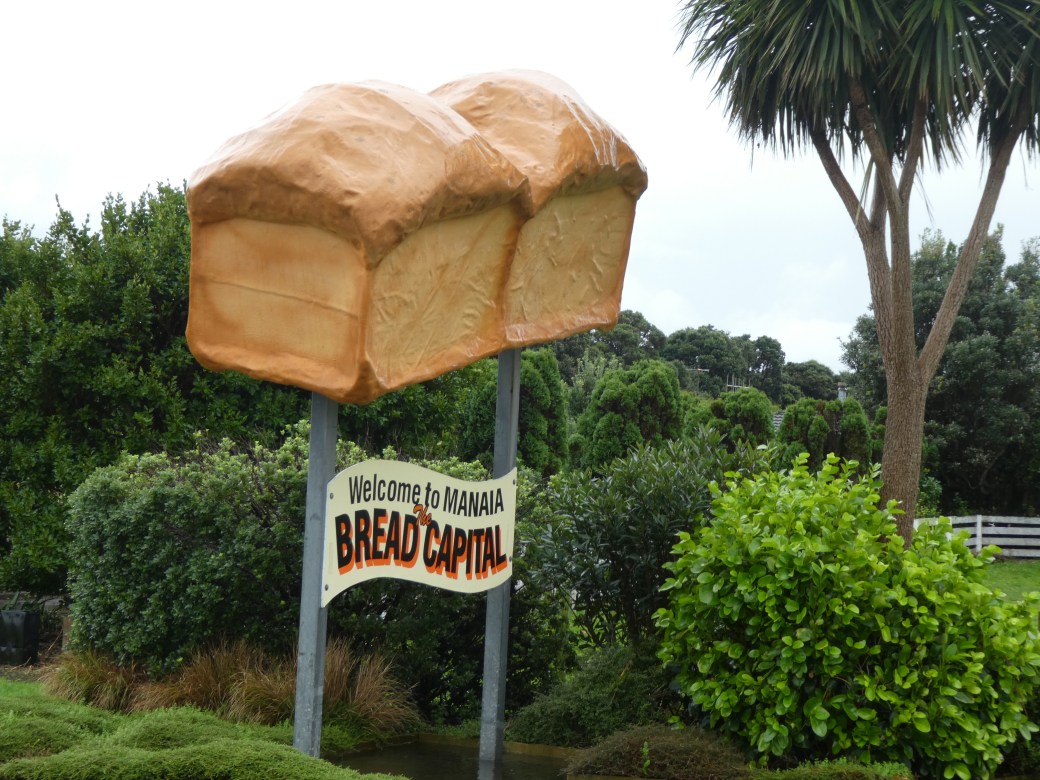
The first town we came to was Manaia and we were somnewhat amused to see that they had called themselves the Bread Capital by virtue of the fact that Yarrow’s bakery is based there. In fact, I think that is the only industry that is based there.

P1050105

Gerald Shand was well acquainted with Yarrow’s who used to produce quite a good range of frozen dough. However, I think calling themselves the Bread Capital is a bit of a stretch!

The next place we called in to was Kaupokanui Beach. This is really just a Motor Camp that does not allow dogs so we got out for a look but did not linger. It was a really pretty place though, with a small pedestrian bridge over to the dunes and the surf beach, but most swimming, in the summer, is done in the river.

We decided that we would leave the Maui Gas Production Centre until tomorrow, on our way back, but we did have a quick look at the Kupe Production field – just a mess of pipes to me, but more interesting to Bruce.

Kupe

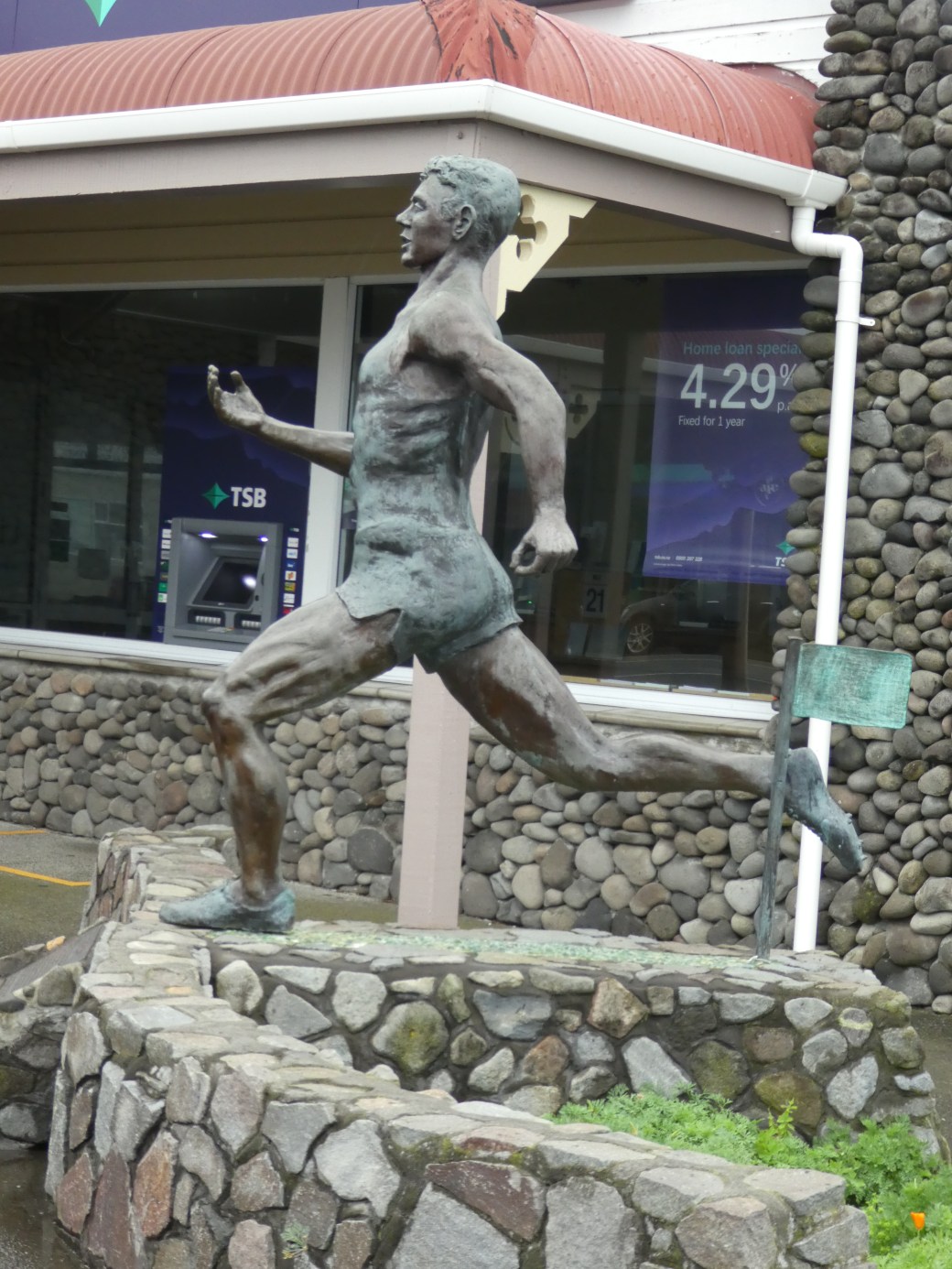
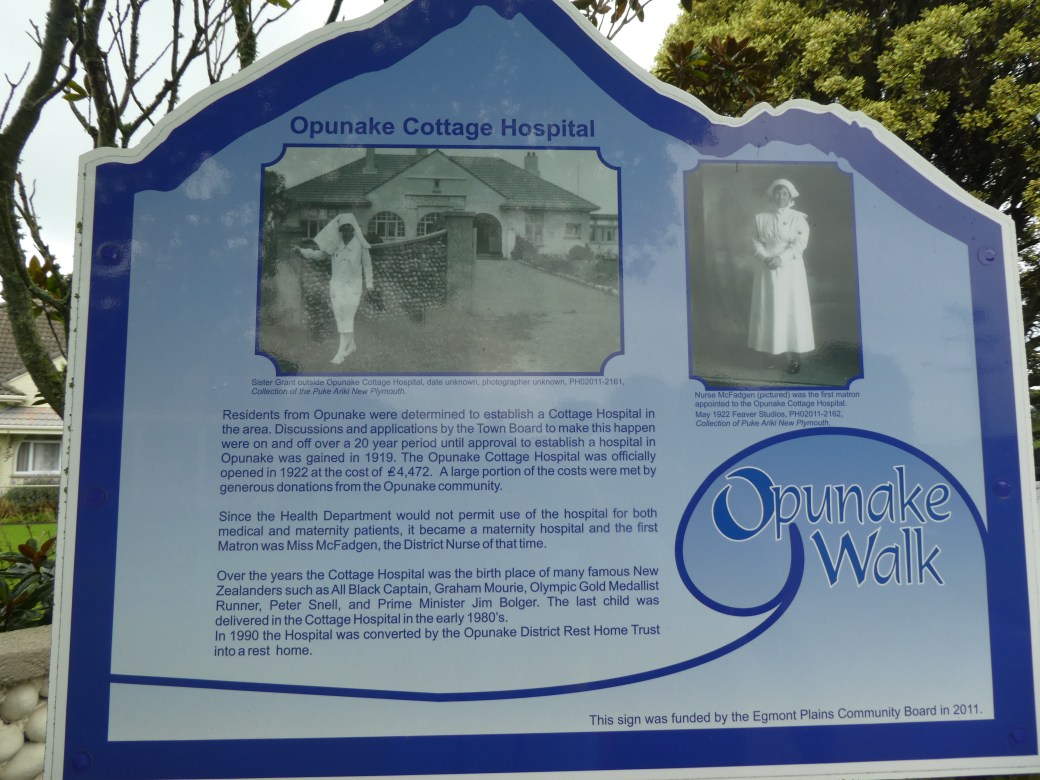
Opunake came next and it is known for being the town of street murals. There were certainly several of them, but Opunake itself was a nice little place regardless. It is the birth place of Peter Snell and Jim Bolger, and there were a couple of freedom camping sites in lovely locations.

P1050136The Cottage Hospital was the place where both Peter Snell and Jim Bolger were born. It sits beside a small lake. This lake was originally a vegetable garden for the local Redoubt (a fortress on the point) but was later filled with water and used as the main water supply for the Redoubt. One of the freedom camps overlooks this lake.
P1050128

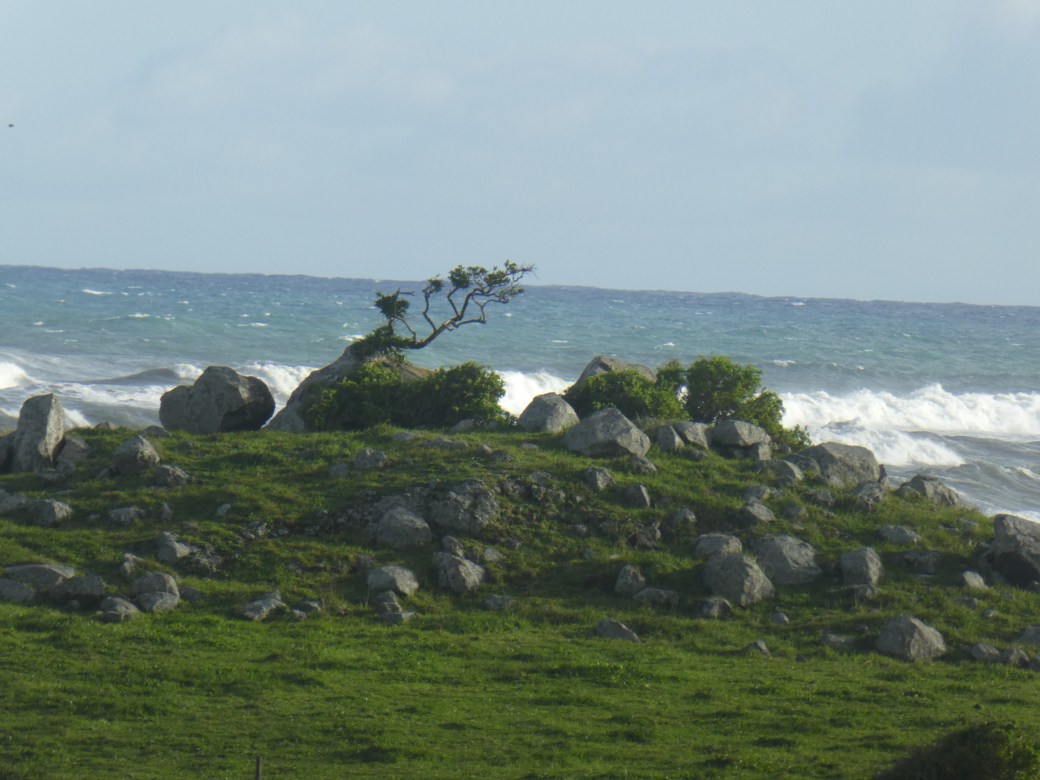
The coastline is very rough, as with a lot of the coastline on this coast.

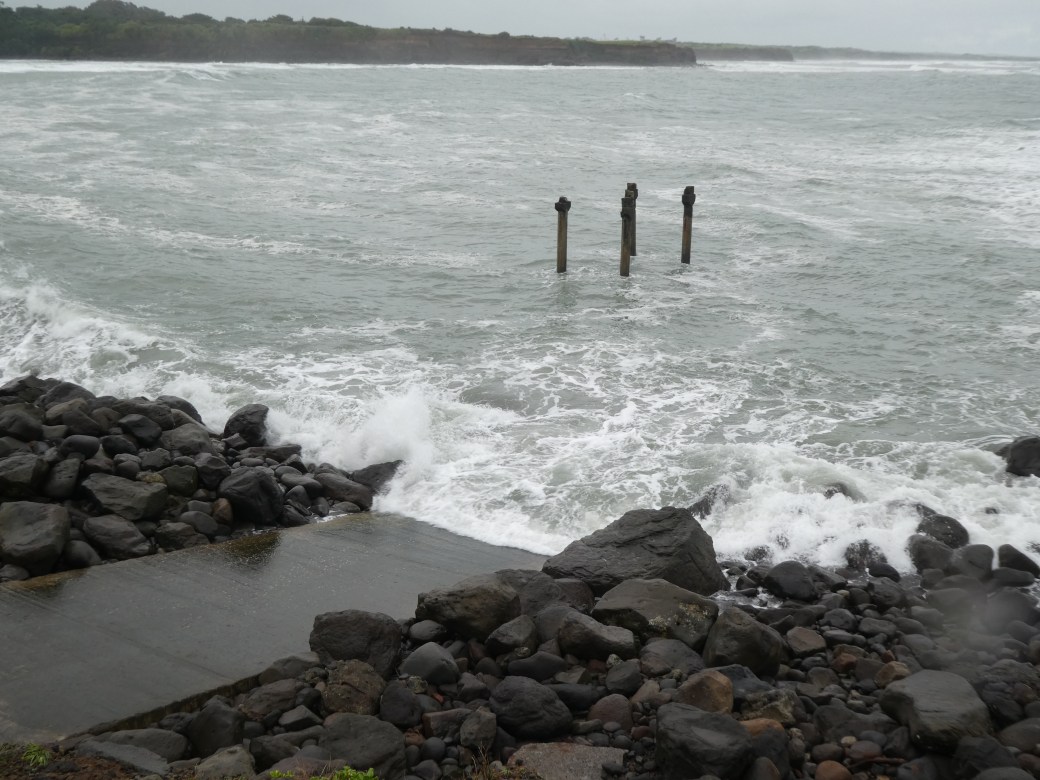
We drove up to the local coastal lookout, on the point where the old Redoubt was sited. Bruce was a bit amused at the boat ramp that was there. Launching from Flaxmill Bay is a totally different experience.

P1050161

It was farewell to Opunake and on we travelled to Cape Egmont. The weather was pretty wet and windy at times, but not really cold. We planned to stay at the Cape Egmont Boat Club and were quite surprised to find that this was at the base of the light house.

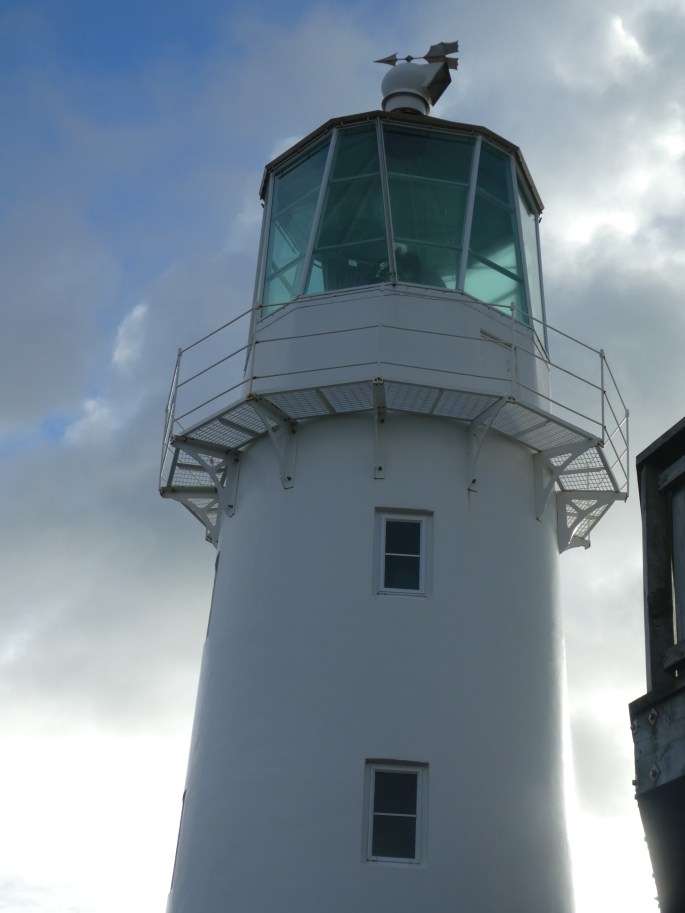
The light house is not functioning any more and has been turned into a museum, but again it is open by appointment, so we did not go in. The campsite was great though and once again we were the only ones here. There was a big field there so the dogs were happy.

Once again, Bruce was interested in the boat ramp, comparing it to launching off the beach at Flaxmill Bay.

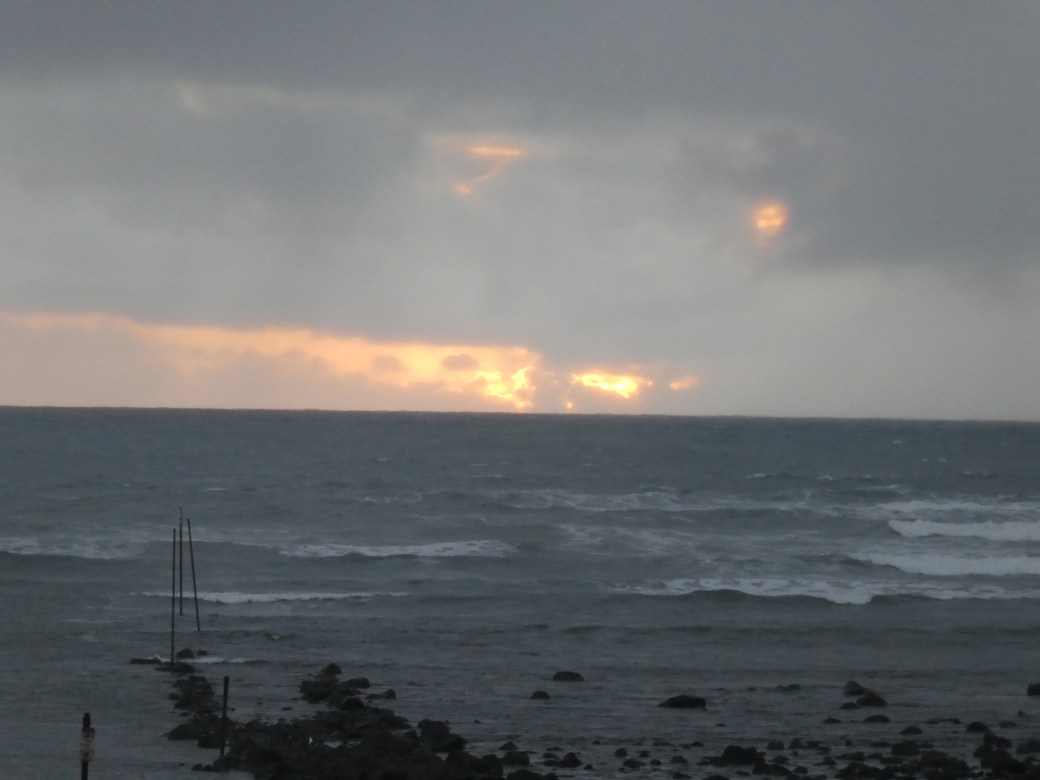
We looked for the sunset that this place is supposed to be famous for, but although it wasn’t raining just then, the cloud cover meant that the sunset was pretty well hidden.

P1050186

We had a peaceful night here, and although is was a lovely place, we planned to travel back along the coast road tomorrow and head further south.

P1050190

Hawera

We ended up staying two nights at the NZMCA park in Hawera, and this was mainly weather driven. Views of Mt Taranaki continue to elude us as persistent rain and wind obscure the mountain but also makes life less pleasant than it could be for sight see’ers like us. Another contributing factor was that Bruce’s knee was getting more painful so we felt a day of rest would help.

He also came away without any warm pants and our first day in Hawera was bitterly cold, so our first trip out was to the Warehouse to buy him a pair of trackpants. We also topped up on a few groceries and then went off to visit the Whalers and Traders Museum.

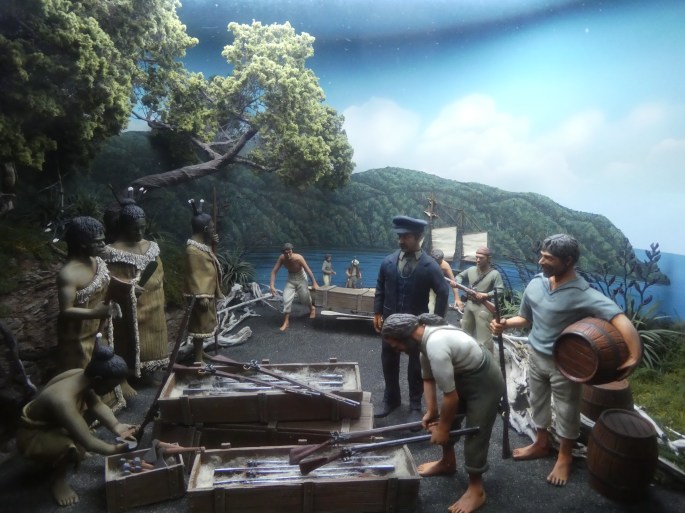
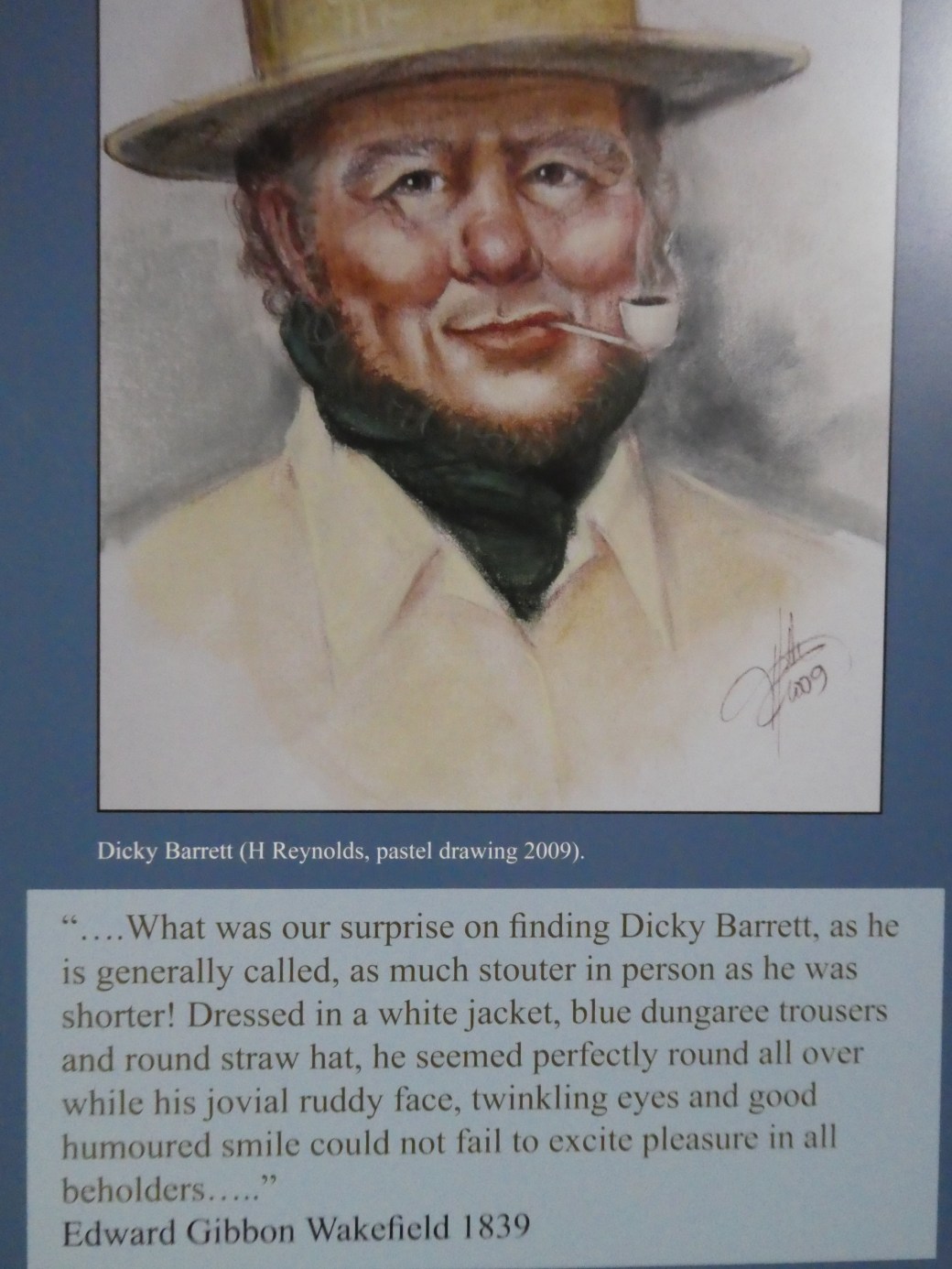
This exhibition featured the life of Dickie Barrett, one of the founding fathers of Hawera.

P1050071

Dickie traded with the local Maori tribes – guns for flax rope. The guns the Maori achieved from this trading enabled them to defeat the Waikato tribes who were invading their territory trying to take their land.  Because of these invasions, Dickie and his trading partners resorted to living in caves in an off shore island. Dickie and his men, who had married into the local tribes, fought alongside the Maori. Once the battles were over Dickie continued living and working in the area in such fields as whaling and farming and hunting.

The exhibition was very well done with lifelike models and a boat ride through various scenes from Dickie’s life. No photography was permitted during the boat ride.

After this exhibition we went through the power farming exhibition which was next door. There were tractors for Africa in this building, but interestingly enough, only 3 David Brown tractors. Bruce was in his happy place in here.

Part of this exhibition also featured a selection of World War 2 trucks and armoured vehicles, and they had an amazing collection of workshop manuals for all sorts of tractors for just about every year as far as we could tell.

The buildings around the complex were all made to look old and in keeping with the Whalers and Traders era. The difference between here and places like Eltham is that there was no rot to be seen.

The next day we explored a bit more of the town. We tried to have a walk down town but again got drowned in the persistent rain. We did, however, find a place called the Gelato Cafe. Their scones had been pre-frozen and Bruce’s was still not thawed when he got it which wasn’t great, but they had an impressive range of authentic looking gelato. Problem was, with the cold rainy weather, we did not really feel like icecream!

We tried to go and see the Elvis museum, but that was located in someone’s garage and only open by arrangement so we gave that a miss. We had a quick look at the King Edward Park but again the rain wasn’t really conducive to much exploration so we headed back to the motorhome park and had a quiet time.

The NZMCA Park is all on the hard and right next to the Hawera Hospital that has lovely grounds that we were able to walk the dogs in. The dogs also made friends with the local postie who was doing her rounds on her electric scooter. She was able to name all the dogs she had met that day, but not the humans!

Tomorrow is also supposed to be very wet but we will see what the morning brings before we decide whether we will travel on or not.


Stratford and Eltham

Well, what an interesting day we have had today!

Our first port of call this morning was the town of Stratford, about 20 minutes south of  Inglewood.

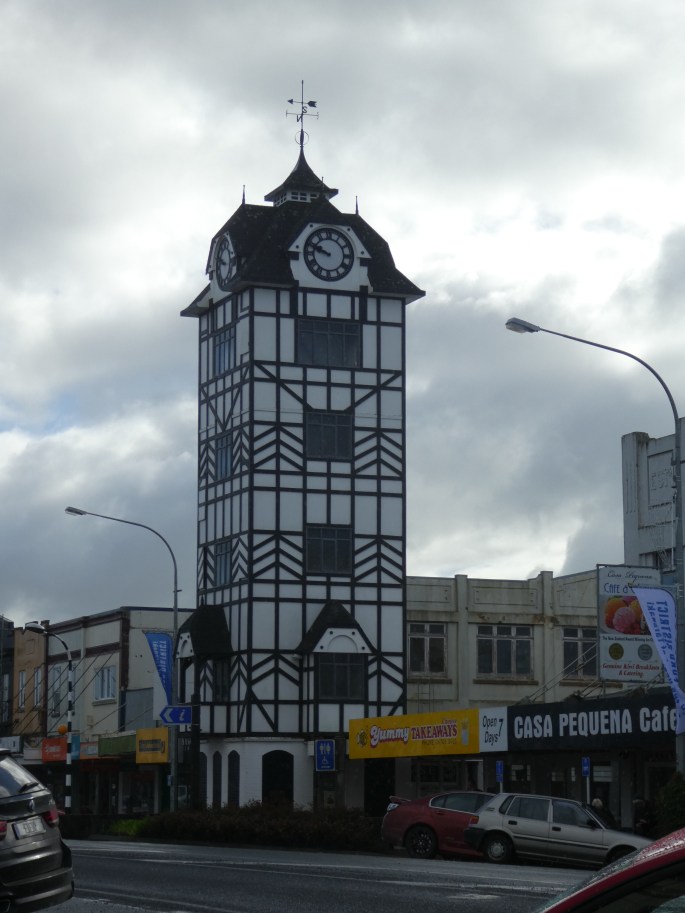
Stratford is a small, well presented town of Dutch heritage and it’s main claim to fame is the clock tower. Four times a day figures of the Shakepearean Romeo and Juliet appear on the balcony. Unfortunately our timing wasn’t great for this and we did not see them.

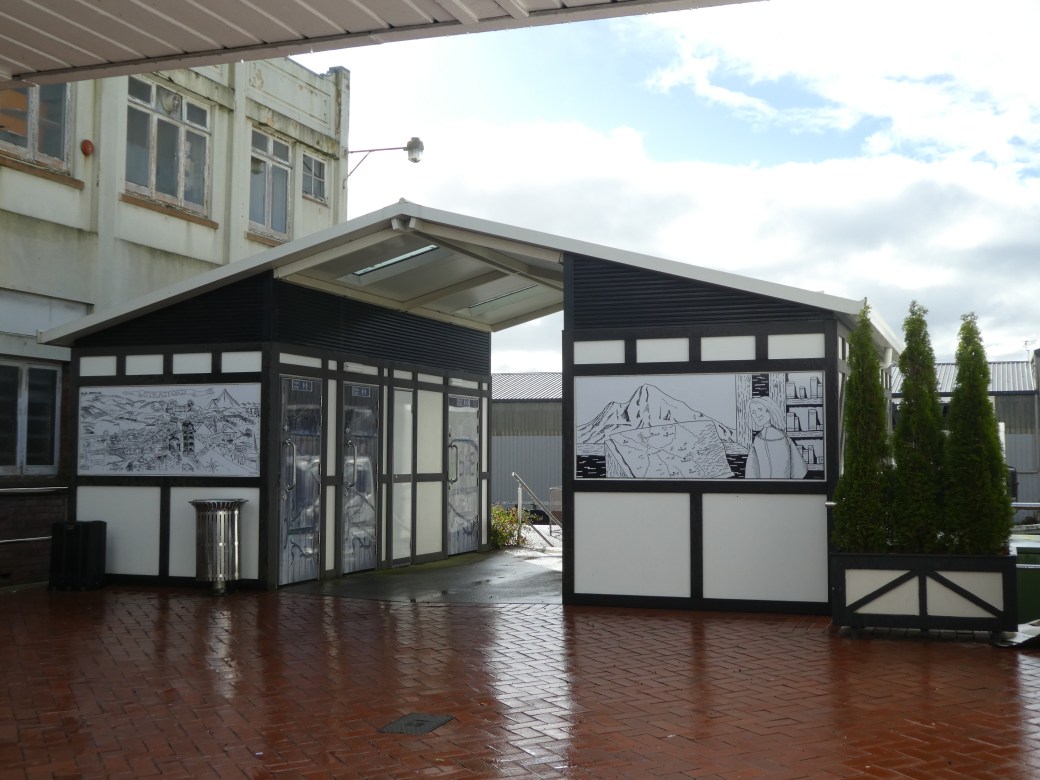
The public toilets were next to the tower and they were decorated in a similar way.

P1040951

Bruce and I were both impressed with Stratford’s Hall of Remembrance. Inside this hall were the photos of every serviceman (yes, there were no women) who died from any of the wars. In addition, beneath every photo were their ranks, and a brief description of how they died (killed in action, died of wounds, died of illness, or missing presumed dead), where, and when. It made the loss of these men so much more real and was quite humbling.

P1040942

We continued on our journey to Eltham, which was only about 10 minutes drive away. In Eltham we were keen to see the Pioneer Village, the Toy Wall and the Mainland Cheese Shop. I would have to say none of these were what we expected to see, and the town of Eltham was definitely NOT what we expected, but more about that later.

The Pioneer Village was the first attraction we came to. The person welcoming us was convinced that this would be a much better experience than Shanty Town on the South Island. In some ways she was correct and in others not so.

The site covers 10 acres and is built around the original homestead on the site. All the other buildings were transported there. There were several cottages of different eras.

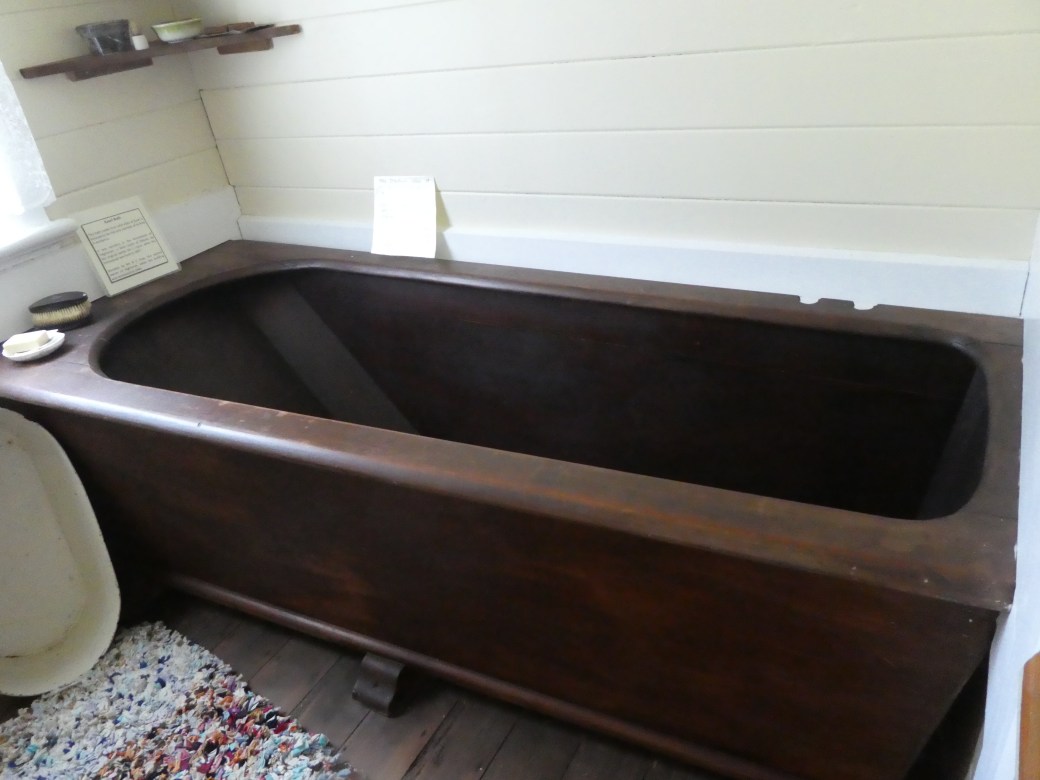
Some I could probably survive living in, but in others it would be more difficult. The original homestead was positively luxurious compared with the cottages. It even had a kauri bath tub!

P1040982

While the Pioneer Village had a lot of old buildings, and a lot of items on display, there was plenty of evidence of maintenance that needed to be done. We could see water leaking through rooves, rot in window frames, paint peeling off etc., so I walked out of the village feeling sad.

After purchasing the nicest date scones we have had all trip from their cafe, we continued on our path into Eltham.

P1050051

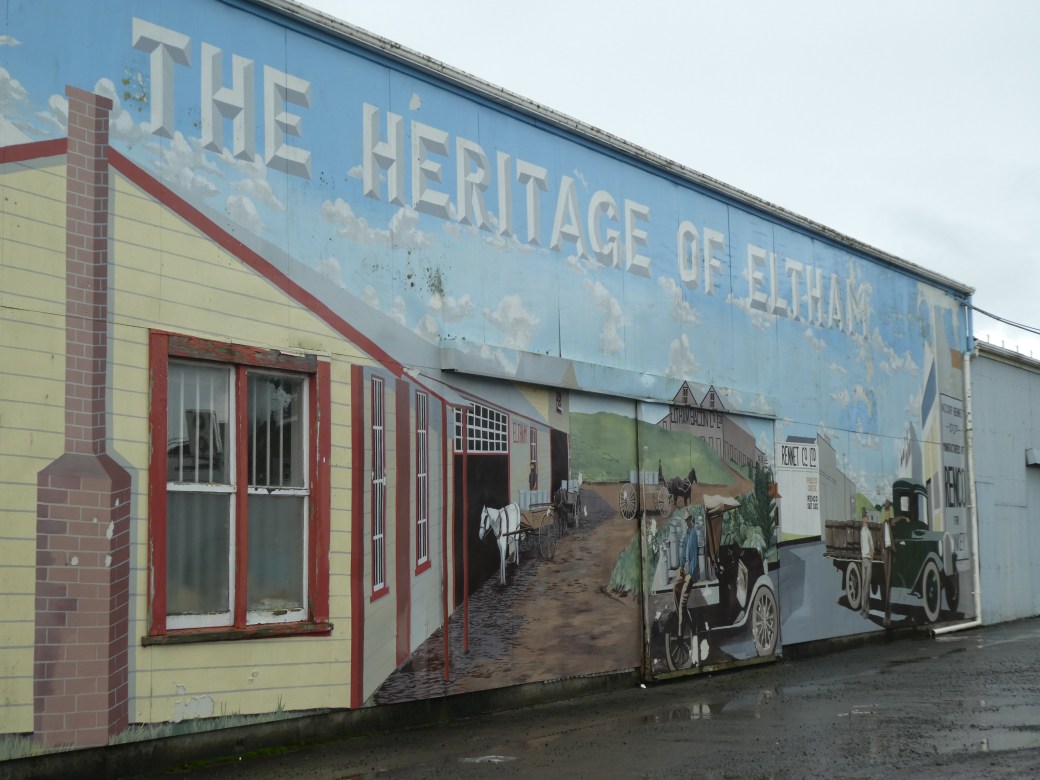
We tried, first of all, to find the toy wall, but there were no signs anywhere and directions gained from Google maps were totally incorrect. In the end we gave up looking and started to just look at the town instead. Most of the buildings are very old and while some had been refurbished, many were in a poor state of repair. What really amused us were the signs in many shops stating their opening hours (which were very limited) and giving a phone number to call if you wanted them to come and open up so you could purchase something!

There was one outdoor courtyard that had some beautiful mosaics. The largest ones were of tiles but the smaller mosaics were made of paint dots.

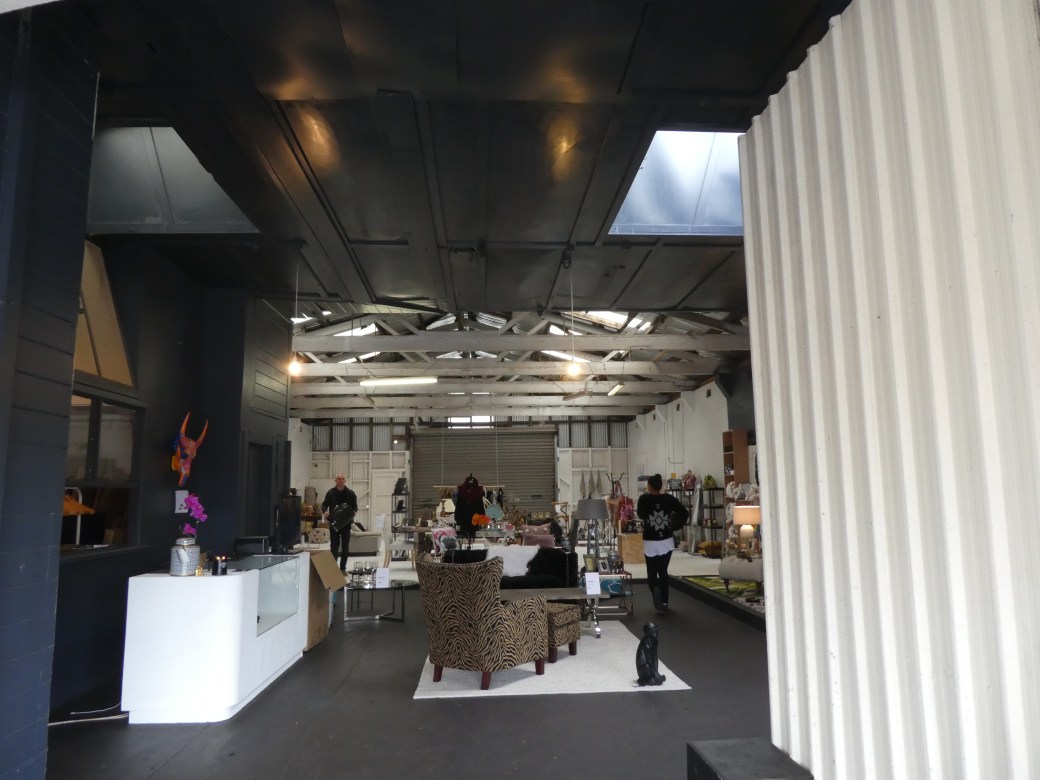
We came across a very open interior design store that actually had some people in it so we asked for directions.

P1050013

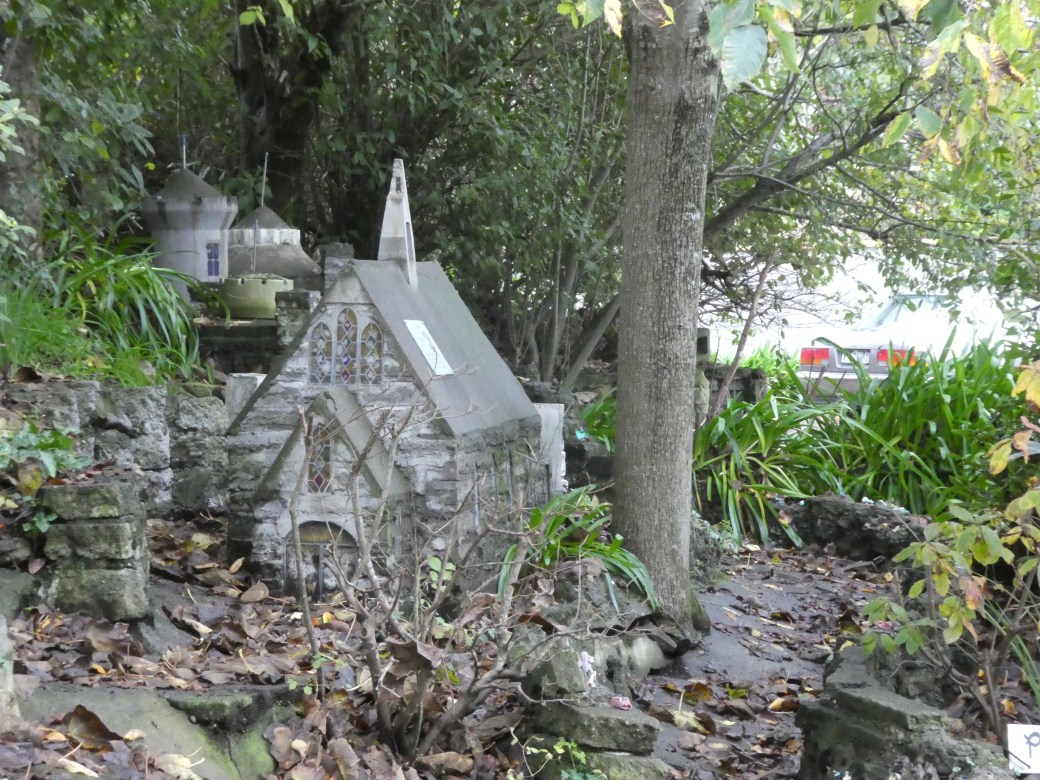
The Toy Wall was just around the corner – a quick walk so we set off to have a look. It was not what was expected – much larger for one thing, and complete with fairy castles for another.

P1050014

The wall started when the owner of the property found a lost toy. She popped it on her garden wall but the wind kept blowing it off, so she cemented it onto the wall. Other children then asked her to add their old toys to the wall.

The wall now goes for about 20 metres and is maintained by the Lionesses.

We had also obtained directions to the Mainland Cheese Shop  so we easily found our way there after seeing the Toy Wall. We could not understand why none of these places were sign posted! We managed to buy several blocks of cheese for a good price but again were surprised that more was not done with this shop. We expected tasting opportunities for various cheeses, and video or sign board presentations on how cheese is made.

We dubbed Eltham as the town where no-one is home. We were amazed at the decrepit old buildings that could be made beautiful again, and the beauty of those that had been restored!

Throughout the day we had many cold showers, and got only one brief glimpse of Mt Taranaki. There was clearly snow on top, but the mountain was quickly hidden by clouds of rain or snow. The weather, and the decay evident in Eltham made us happy to travel on, but we continued feeling amazed at our experiences.


Inglewood

We were very late leaving New Plymouth so our adventures today were just a short trip away to Inglewood – inland and to the east of Mt Taranaki.

At least I had heard there is a mountain there but we certainly couldn’t see it – the day continued to be very overcast with heavy showers. To make it more miserable, by the end of the day the temperatures had certainly dropped and it was feeling decidedly chilly.

The place of interest at Inglewood was the Fun Ho Toy Museum.

Fun Ho

The first toys were made at this factory starting in 1935 and were originally made from lead. There was no awareness at that time about how toxic lead could be. It was ironic that the packets these toys came in advertised these models to have non-toxic paint! Once the dangers of lead was realised, the toys were cast from aluminium.

The Fun Ho Toy Factory at one stage made the model cars that were given away, or sold through Mobil petrol stations!

There are over 100 model toys on display of all sorts, from racing cars, to tractors, airplanes to trains. Also on display were the dies used to cast these toys.

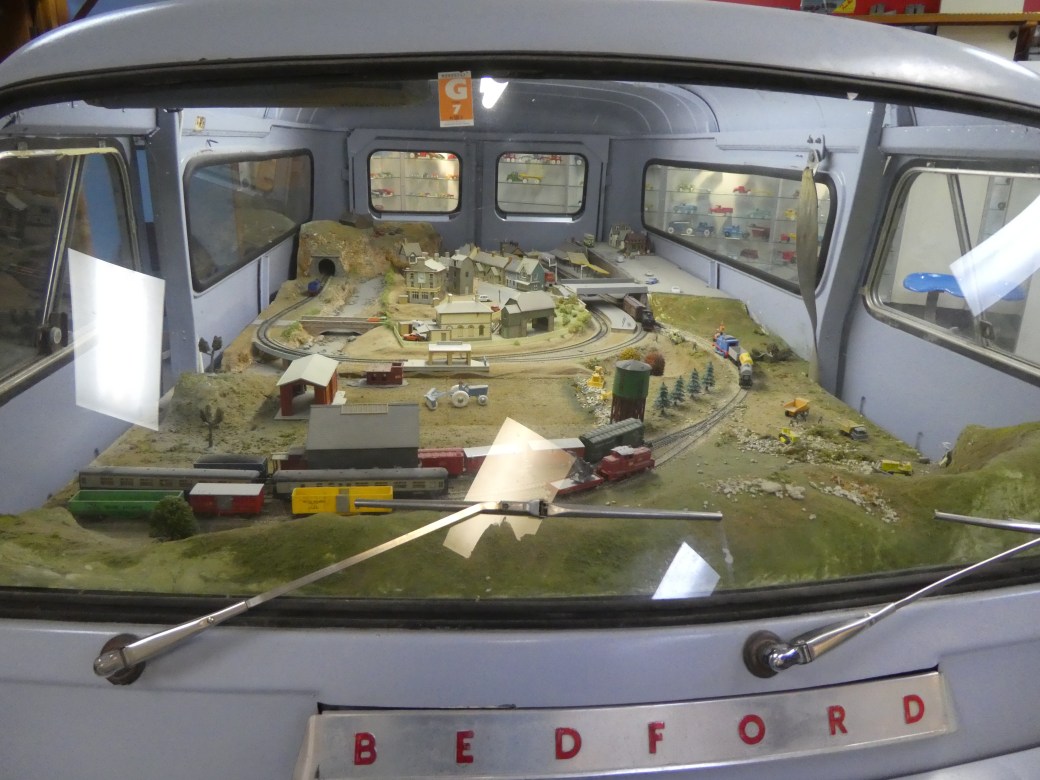
There was also a train set mounted inside the body of an old Bedford van, as well as one travelling around the walls just beneath the ceiling.

P1040938

P1040930

The Fun Ho Toy Factory closed down in the 1980’s as it could no longer compete with the cheaper toys being brought in from overseas. Now the toys are a collector’s item and one little model toy can cost as much as $48.00.

By the time we left the Toy Museum it was after 4pm so we made our way to the Inglewood Club where we planned to stay the night. We were welcomed on the premises and there was no problem with parking as the club was definitely not busy. The site was on the heavy traffic bypass though so it was pretty noisy, but it really did not bother us.

We settled in for the night, ready for the new adventures tomorrow.

New Plymouth

Last night was spent at the NZMCA park in New Plymouth and we did not do much sight seeing before coming here – just went to the information centre and then for a short walk along the waterfront. The NZMCA park was in the southern part of the city alongside the Huatoki track. The park itself was all grass and there was evidence of other vehicles having been stuck in its softness, so we parked on the only bit of hard we could see alongside the driveway. It was slightly unconventional parking but there were only 3  vehicles there so we were not inconveniencing anyone.

Before settling in for the night we took the dogs for a walk along the Huatoki track for a way. The track runs through bush alongside the Huatoki Stream which was engorged and rushing swiftly due to the recent rains. This waterway though was fairly clear – not all muddy and horrible like all the other waterways we had seen.  Once the track became little more than a narrow dirt path we turned back and headed up an accessway – a sealed road behind a locked gate (but with pedestrian access) which ended up at the New Plymouth Pony Club. It was a delightful walk with bush on each side. Once we got to the fields grazing horses we turned back for the motorhome.

Over night there was more heavy rain but that had no adverse effects for Hunter so we would have all had a peaceful night if Bruce had not had a touch of diarrhoea.

The next morning we headed back into the city centre with the biggest goal to be to visit the Len Lye exhibition. There are no parking areas suitable for motorhomes so it took a little time to find a suitable place to park. Then came the challenge of finding enough change to feed the meters –  but we got there and walked to the spectacular Govett Brester Building that houses the gallery. Bruce was fascinated with the stainless steel exterior and its mirror-like finish. How does it keep so clean?

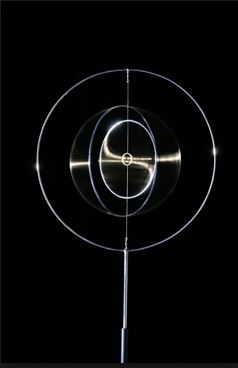
The work of Len Lye was fascinating, with his kinetic sculptures, but I could not really relate to the film that he made as art. I did enjoy his sculptures though, particularly the one made of metal circles of different sizes, with the smallest being his wife’s wedding ring, so I’m not sure what his wife thought of that!

Len lye

The wind wand in New Plymouth was also designed by Len Lye. We expected it to move quite a lot given the windy, stormy weather we experienced in the city, but it did not seem to. At night there is a light at the top but we were not there to see that.

P1040923

There was also another exhibition by the resident artist Sriwhana Spong who was clearly thinking outside the square eg. a set of musical chimes made from aluminium casts of french fries! She also painted a picture of a sheet of music using honey that then dribbled down the wall and onto the floor. I must be getting old because I really can’t relate to that!

After leaving the gallery we went back to the motor home and collected the dogs for a walk along the water front. We walked for about 20 minutes each way and enjoyed the scenery of the wild ocean.

All through out the day the weather was blustery with showers on a frequent basis so we were lucky to get our walk in without getting wet. We did not want to stretch our luck by going through some of the lovely gardens or parks in New Plymouth, so we decided to head on south and made our way towards Inglewood.


Tangiporutu

Once again we had a leisurely start to the day, which was warm and sunny. We decided to have a flat white sitting in the sun on the deck of the Tainui-Wetere Club – very pleasant. We then headed off to see what else we could find. Judy was driving, so Bruce did not have any say when she pulled off the main road heading towards Tangiporutu, and a sign for the Three Sisters.

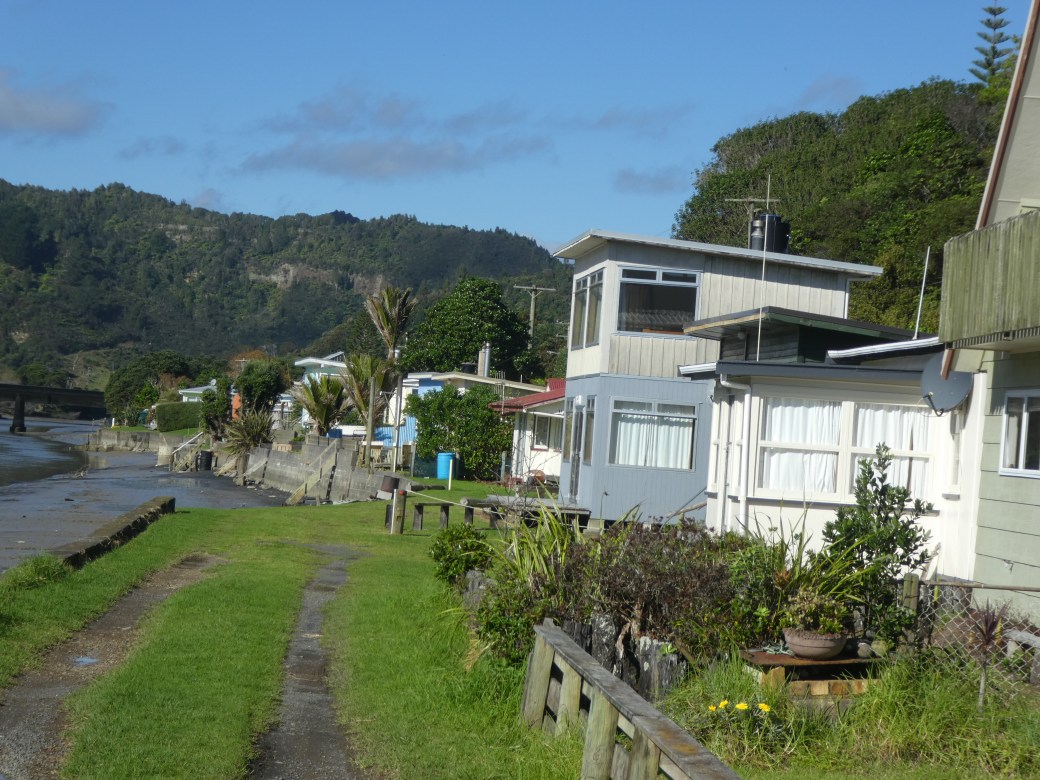
There is a Tangiporutu River that joins the Tasman Sea here and there is the most charming little settlement of about 15 houses lining the banks of the river. All the houses are in one row, are all small and each one is painted in a different bright colour. However, it is very hard to get a photo of this. The best view was on the main (very busy) highway.

P1040908

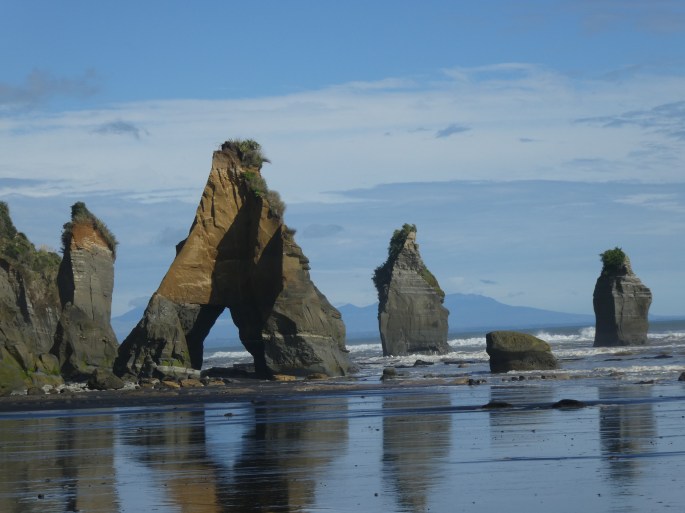
On the end of the row of houses is a large reserve with parking and signage about the Three Sisters. These are limestone rock pillars that have been separated from the cliffs by the actions of the waves. Over time these pillars are eroded completely but by that time new pillars have started. As it was heading towards low tide we decided to go for a walk and have a look.

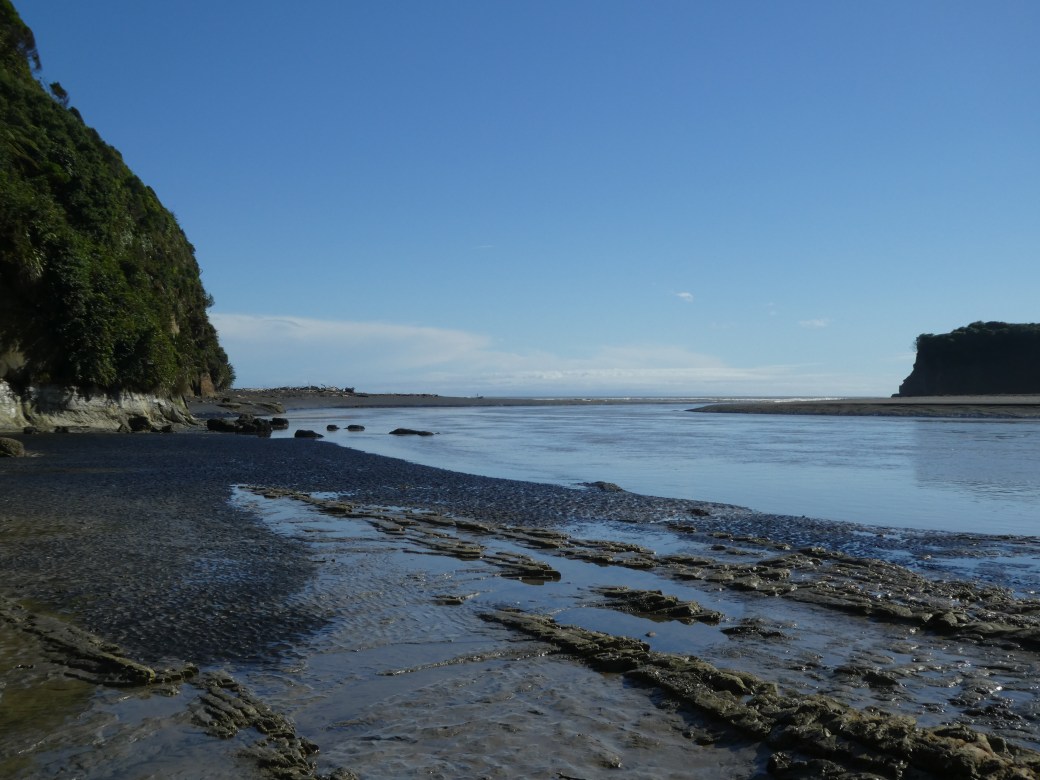
The first part of the walk was over muddy sand and mudstone along the edge of the fast flowing, very muddy and mirky looking river- extremely slippery and we had to take great care. We saw one couple coming back almost take a tumble so we were being extra cautious as I did not want to  have to go to my surgeon and tell him I had damaged my knees by falling in mud!.

P1040880

Once we rounded the point, walking over the much safer black beach sand, there was a wonderful sight to greet us. There were cliffs to the side with caves forming

in several locations, and a large rocky outcrop that had already been cut off and that had several caves of its own – some already going from one side to the other.

Further along the beach were the Three Sisters. We could not get right up to them as the tide was not low enough at that point but we got a good view just the same. The beauty of the view was enhanced by being able to see Mt Taranaki in the distance.

Bruce had a great time playing with the dogs in an out of the caves and when we had finally seen enough we made our way back through the slippery mud to the motorhome for a late lunch.

We continued our travels south through the steep and windy Mt Messenger road. It was slow going at times as the roads were busy and we had to keep pulling over to let traffic pass. Bruce managed to get a couple of photos of the Mt Messenger tunnel as we went through it.

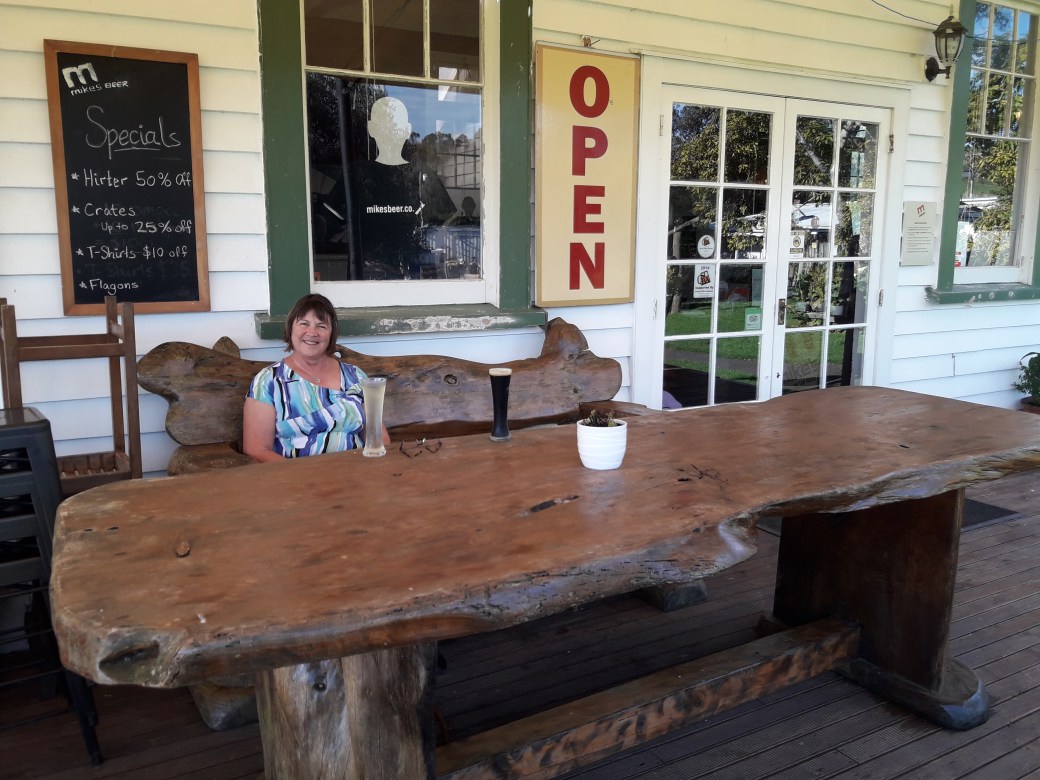
Not too far past Mt Messenger was the Whitecliffs Brewery, also known as Mike’s Brewery. We decided to pop in there as Bruce had visited a craft Brewery in Geraldine that had wonderful black beer, and he wanted to see if Mike’s Brewery also made black beer. Well, he was in luck – they made 3 different types so we had to stop for a drink, and a bowl of fries to share. Judy had some naked apple cider (not sure what it was like when it was fully clothed) which was lovely, and Bruce enjoyed his beer so much he bought some for future consumption.

Mikes Brewery is also a POP stop so we decided to stay there for the night. The staff were so helpful and accomodating, and the parking was all on a sealed carpark (do you get the idea that Judy is paranoid about getting stuck now?). They also had an extensive lawn area for walking the dogs which Bruce reported had part of a whale skeleton in it.

We settled in for the night but as we were preparing for bed there was a really good thunderstorm accompanied by heavy rain. Hunter was really not happy – in fact very stressed, especially when there was a really loud thunderclap directly over head. Nothing we did to try and help him had any effect. It took him several hours to settle down so it was a disturbed night for both Bruce and I.

We all survived the night though, and Hunter seemed no worse for wear in the light of day so we bid Mike’s Brewery good bye and hit the road again.20180514_140448


Mokau

We left Garth and DrewAnne’s place on Sunday, late morning and headed back to Otorohanga. Our goal was to get a few groceries, and to empty our black and grey water tanks ready for the journey onwards. The forecast was for heavy rain so we had thought that we may stay another night at the NZMCA park. However, the weather wasn’t actually too bad, so after doing our chores we decided to continue our journey south.

It turned out to be a good call as the weather improved the further south we went. The countryside was nothing short of spectacular in places with steep hills of artistic limestone formations. Unfortunately there were few places to stop for photos and the places where you could stop didn’t have the views.

We had heard a government minister stating on the news a couple of nights before that 90% of NZ waterways were fenced from stock now, I would have to say that must be a dream of his, rather than fact.. Along river after river we saw no sign of fences and every sign of stock grazing right next to the water. As before the level of sedimentation in the rivers was extremely high and the waters were all a deep muddy brown.

Awakino was the next town and we had a quick drive around but it consisted of 1 block of houses and not much else. A little further on was a place where we could access the beach, so we took the dogs for a walk.

There were several other people with dogs and horses all enjoying the large expanse of black sand.

Believe it or not, it was here that we gathered a harvest of walnuts in their shells. They were an unusual thing to find on the beach but there were plenty of them, so we collected a few for later use.

P1040844

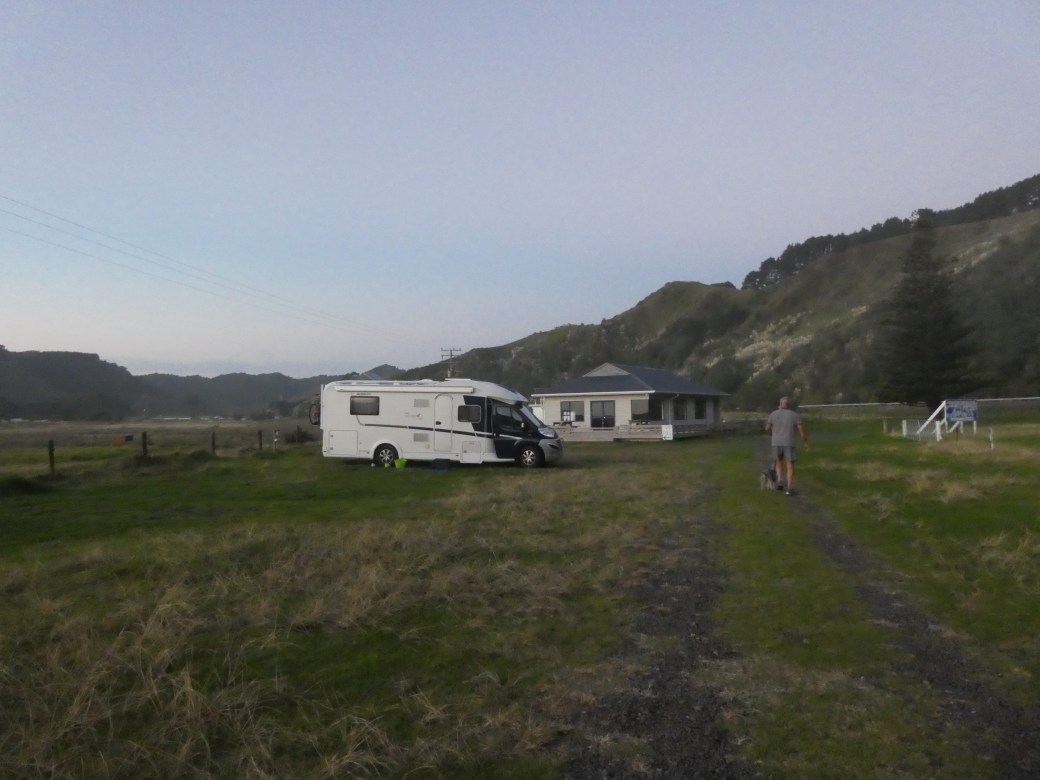
We piled back into the motorhome and continued on toward Mokau, which wasn’t far down the road. We elected to stay at the Tainui-Wetere Sports Domain for the night and were not sorry with our choice. Again, we were the only ones there, but we felt safe and secure. Best of all, the ground was solid under our wheels so no getting stuck here!

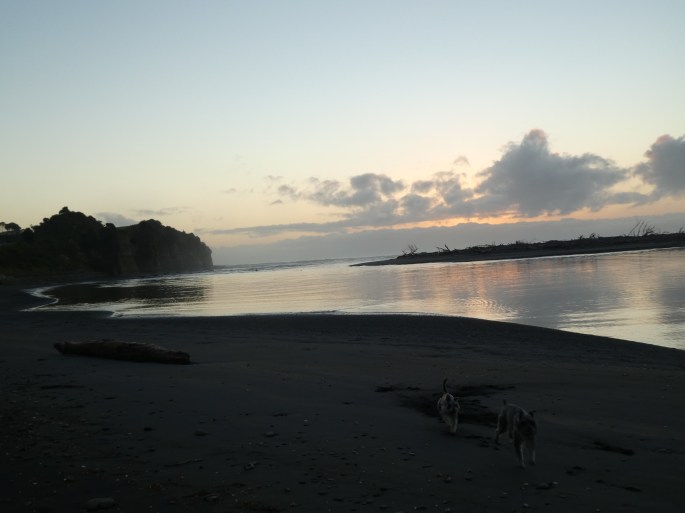
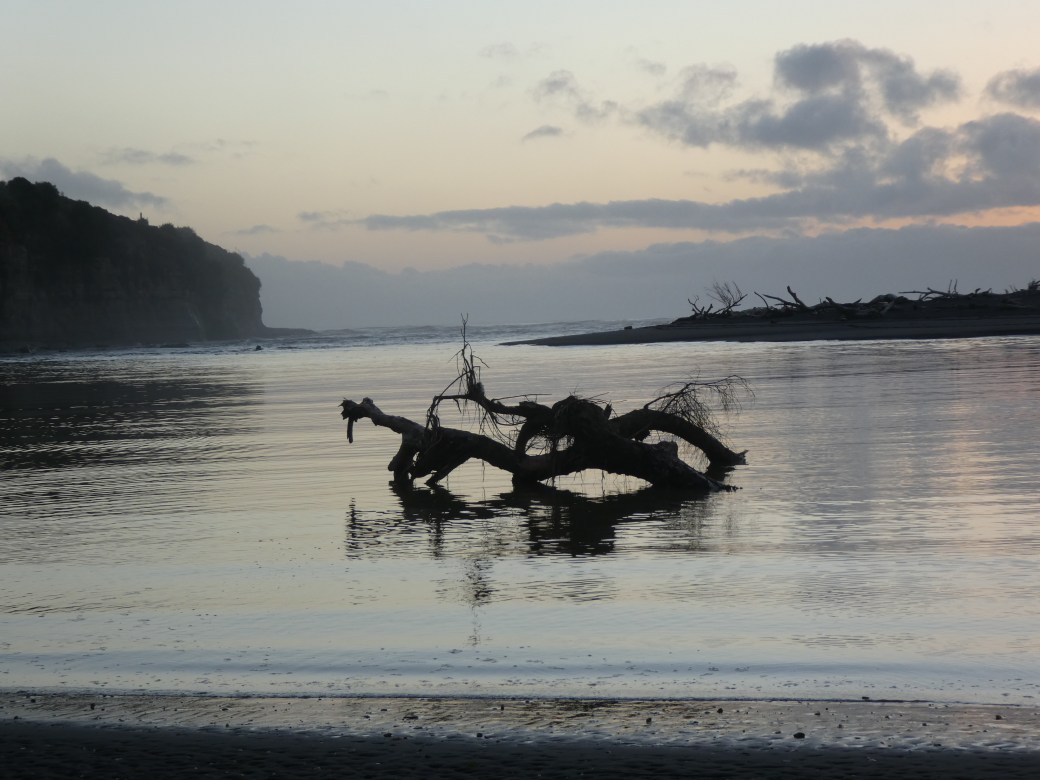
It was just on sun down so we took the dogs for a short walk over the dunes to the Mokau river mouth. The water was still, and we would see the ripples from little fish. It was a shame we did not come to the beach with our fishing rods! Still, we had a walk around and enjoyed the views of the sun setting across the river mouth.P1040848

Just as we were about to leave a bit of mist started rolling in from the sea. It added a new moodiness to the scene, but did not progress to cover the whole landscape.

We made our way back to our camp and enjoyed a peaceful night. There was a bit of traffic noise – there are a lot of trucks using that road, but we were back far enough for it not to bother us.

P1040857

The next morning, after our usual leisurely start, we headed back into Mokau to explore the township. On our list of to do’s was to have a whitebait fritter. Mokau is famous for it’s whitebait. We had a small one each, but in Judy’s opinion it was nothing on the whitebait fritters we purchased at the Otira Hotel in the South Island. Those ones were truly memorable!

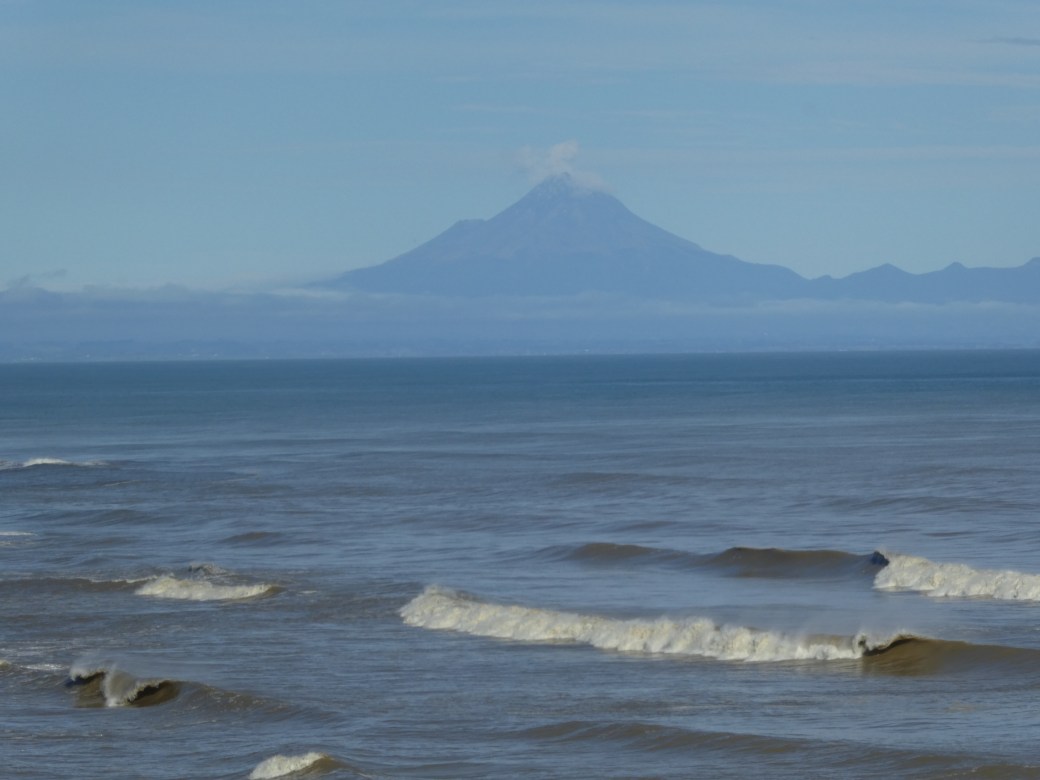
The views from the back of the township of Mokau were amazing and Mount Taranaki could be clearly seen in the distance. The coastline here is pretty rugged and the dirty rivers make the ocean brown for a long way out to sea.

P1040858

After our little bit of sight seeing we headed off into the morning sun to go further south.

Te Kuiti, Otorohanga and Honikiwi

After we finally escaped from the mud and the Gardens outside of Te Kuiti, we came back into the town for a look around to see the bits we had missed the previous day. We had a closer look at the Colin Meades exhibition and also had a closer look at the model of the shearer, parking in the adjacent parking lot and walking the dogs around it.


We then made our way to Otorhanga where there is a NZMCA park where we planned to stay the night. Judy had never been to the Otorohanga Kiwi House though, so that was our main destination for the day.

I think you are always lucky if the kiwis decide to come out and play, even though they are in a twilight zone in their enclosure. We were lucky that one felt like coming over to see us (on the other side of the glass) but all the others were still tucked up in their beds asleep.

There are several other bird enclosures at the park though and because it was duck shooting season there were lots of common ducks as well.

P1040807

There were several keruru and lots of other native birds including kea and kaka.


Overall it was a pleasant hour or so spent there and Judy can now say she has been.

We made our way to our over night stay, but had a nasty surprise when we went to go to bed for the night. It seems that Hunter had been caught short during the day some time and had pee’d on our bed. We had to strip everything down to the mattress topper and mattress. Luckily I had spare sheets and the spare bed had a duvet on it, so we were able to be comfortable for the night. We will have to take more time to make sure Hunter actually goes when he is supposed to.

The next morning was all taken care of then as we became well acquainted with the 24 hour laundromat in Otorohanga. A couple of hours, and a few dollars was spent getting everything clean and dry again, and put back to how it was.

After that we made our way out to Honikiwi, outside of Otorohanga, to spend a couple of nights on the property of Bruce’s friend and former workmate Garth, and his wife DrewAnne. They live almost in the clouds it is so high, and because the weather was wet, the clouds were actually present all around us. Visibility was pretty poor most of the time. It was a shame as I am sure the views would have been spectacular.

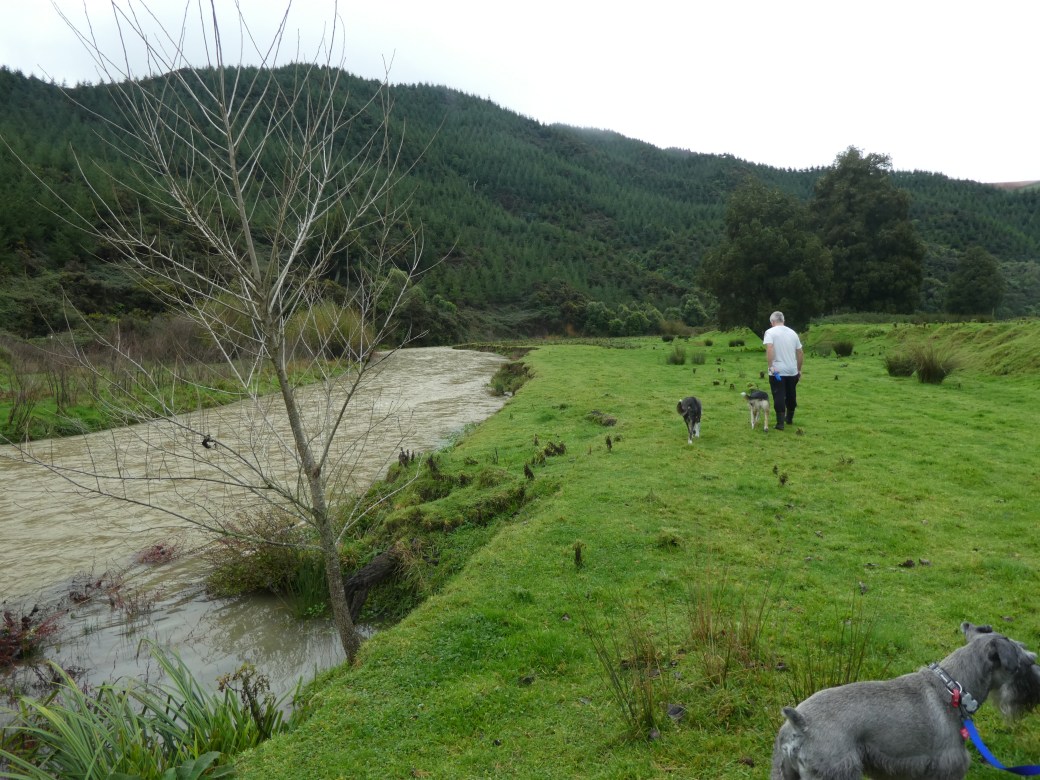
The following afternoon it cleared enough that we all (including dogs) piled into Garth’s ute and drove several kms down to the river flats for a walk. Garth is a keen hunter and fisherman and he was keen to tell us all the spots he had come across deer, pigs and trout.

Because of the rain, all the waterways were a muddy brown mire, and the streams and rivers here were no exception.

P1040820

Drew served us a delicious dinner on each of the nights we were there, of home grown meat and veges,  and  Garth taught us a lot about dog training that we will be able to put into practice with Oscar and Hunter. However, aside from a short stint where our dogs chased their cat, I would have to say they were on their best behaviour. Bruce kept pointing out to them that Garth’s dogs lived and slept in an outside kennel, so I don’t know if that made an impression on them or not.

We said our farewlls on Sunday morning, in the midst of more rain and headed back to Otorohanga.

P1040841