Blog

Kaka Point

We left our little campsite in Roxburgh and set off in the general direction of Balclutha. I was driving today, and Bruce was chief photographer and navigator. The navigating needed a bit of fine tuning as we sailed past the turn off we were supposed to take at 90km per hour, so we found ourselves heading for Lawrence..

As it turned out this wasn’t such a bad thing. Lawrence was a quaint little place, and also quite historic. It had one very large old wooden building that was apparently built in 1863, but it is now in private hands so we could not get a decent look at it. It is safe to say that the owner needs to do a bit of work on preserving it though. We had a walk around and  found a few quirky stores, but also a wonderful little butchery, which I would have to say is the cleanest store I have been in for some time.

Once outside of Lawrence the scenery started changing again from rolling farmland, similar to any you would see throughout the Waikato, to the hilly forestland, similar to that around Tokoroa and Taupo.

After refueling ourselves we carried on our trip, with the next stop being in Balclutha. The Clutha River runs through Balclutha, but a little south of the town it splits into two. It is noticeable that the river is not as swift here but it maintains its beautiful emerald green colour. Balclutha was also subjected to our inspection and although is seemed like a bustling township there wasn’t anything that really caught our eye. We refueled the motorhome this time and carried on our journey.

Just outside Balclutha is a little restored cobb cottage. It was built in the late 1860’s and has been fully restored and furnished in a way that it might have been when it was in use. It must have been a cold dwelling, because it was quite a small space but needed two fireplaces to keep it warm. I don’t think the cottage was much bigger than our motorhome, but it had no bathroom or toilet facilities.

Once through Balclutha the scenery changed yet again – more flat land and we could see sand dunes in the distance. It only took around 20 minutes to arrive at the coast and we could actually see beaches – really the first decent beach since Haast Beach. There is a gentle surf, and lots of the enormous seaweed found on the Otago Penninsula, and around Oamaru.

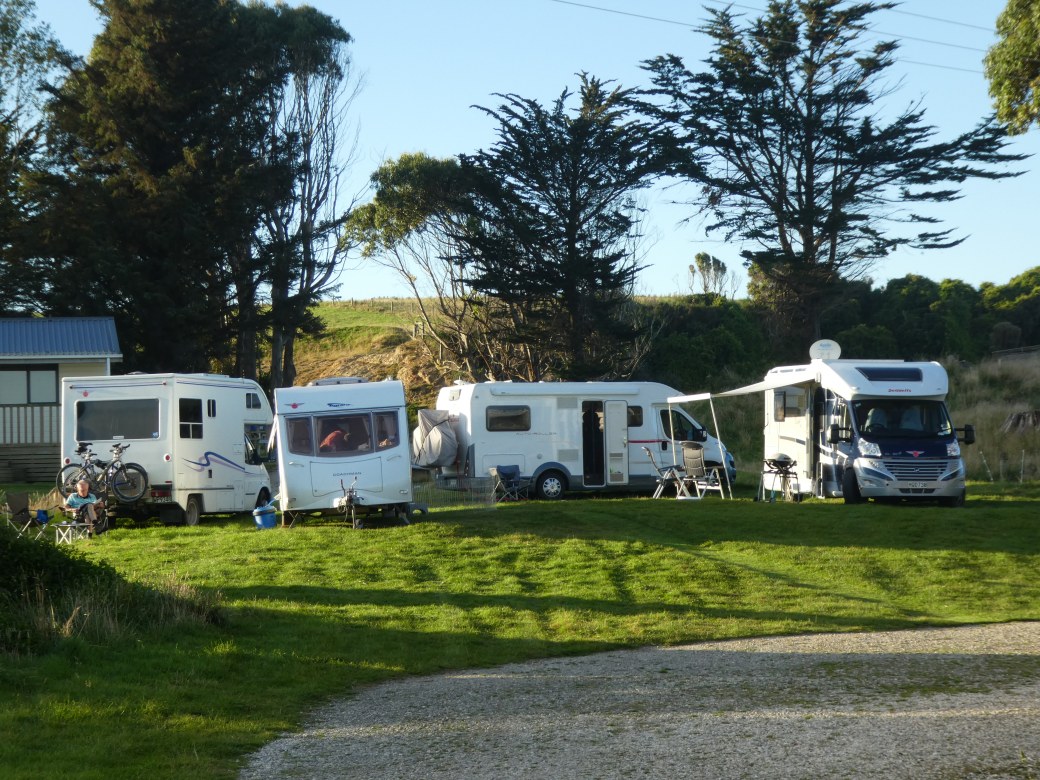
We are staying at a NZMCA POP stop at Kaka Point tonight along with 3 other vans. It is on working beef farm and we have already been informed that a stock truck will arrive at 5.30am tomorrow to load up with weaner beef for the first sale of the season. Oh well, as long as they don’t expect me to get out of bed to help!

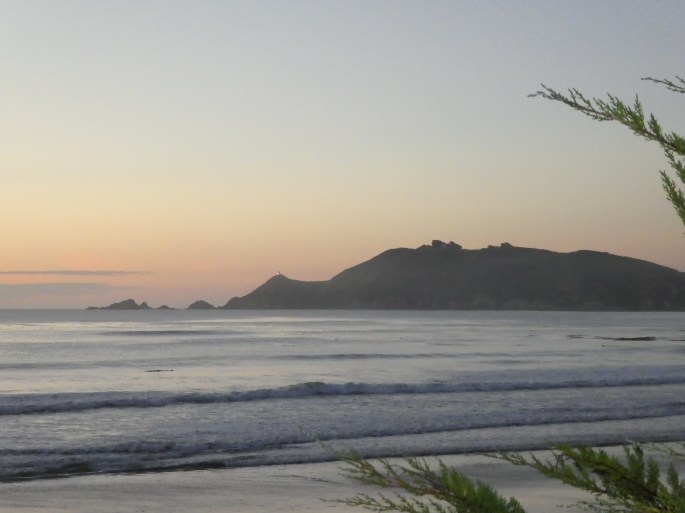
Right across the road is the beach, and we can see down the bay to Nugget Point and the light house, so we are looking forward to our explorations tomorrow.
P1020562


St Bathans and Roxburgh

Today was an unexpected day, a happy day and a day where at the end of it we sigh and say, that was a good day!

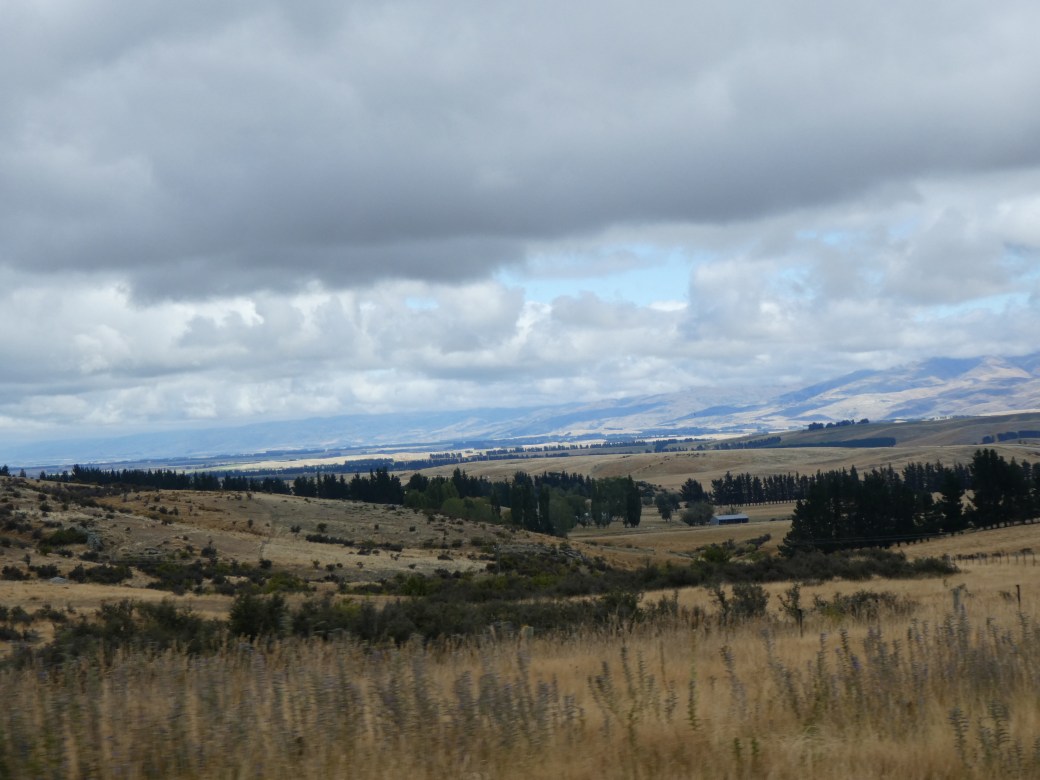
When we woke up this morning in Ranfurly, the rain had stopped and the cloud was starting to clear. What was even nicer was that the thermometer was starting to rise a bit and today we actually got to 15 degrees. There was a big sports park down the road so I took the dogs for a big walk and ball chase and then we were on our way. Several other motorhomers we had spoken to told us about St Bathans, and about how many days they had sat there waiting for the weather to clear until they eventually gave up. On impulse we decided to take the chance and go and have a look. The view leaving Ranfurly was lovely with rolling hills.

P1020426

It wasn’t long though before it began to give way to the rocky, barren sort of land that we had seen around Alexandra. The road into St Bathans was only about 17 km, and aside from knowing it was an old gold mining town we had no expectations, so we were very pleasantly surprised.

P1020448.JPG

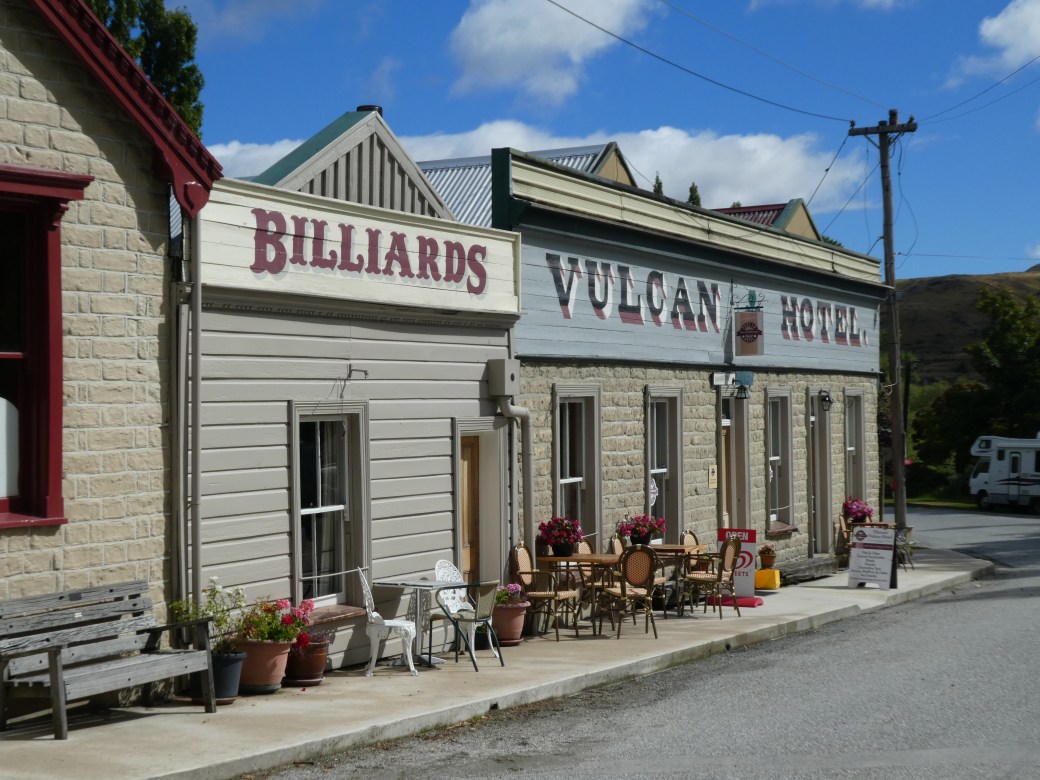
Unlike Naseby, a lot of the old buildings are still standing. Some have been renovated, some kept alive for our inspection, and some repurposed. A few are in ruins. Signboards told us that the buildings in St Bathans were made of whatever materials the folks could get a hold of, so unlike towns like Clyde where they are mainly stone, these buildings are a mixture of cobb bricks, corrugated iron, wood, and stone.

Across the road from the buildings is a bit of a moonscape. The terrain is made up of lots of little quartz rocks and stones, held together with a bit of sandy mud. The gold was of the  alluvial type, mixed in with this material, so they used plenty of water to separate out the gold. Unfortunately there was not a lot of water in the area, so they had to dig canals to get the water from miles away at Mt Ida. In the end, the difficulty getting water was what finished the gold mining here.

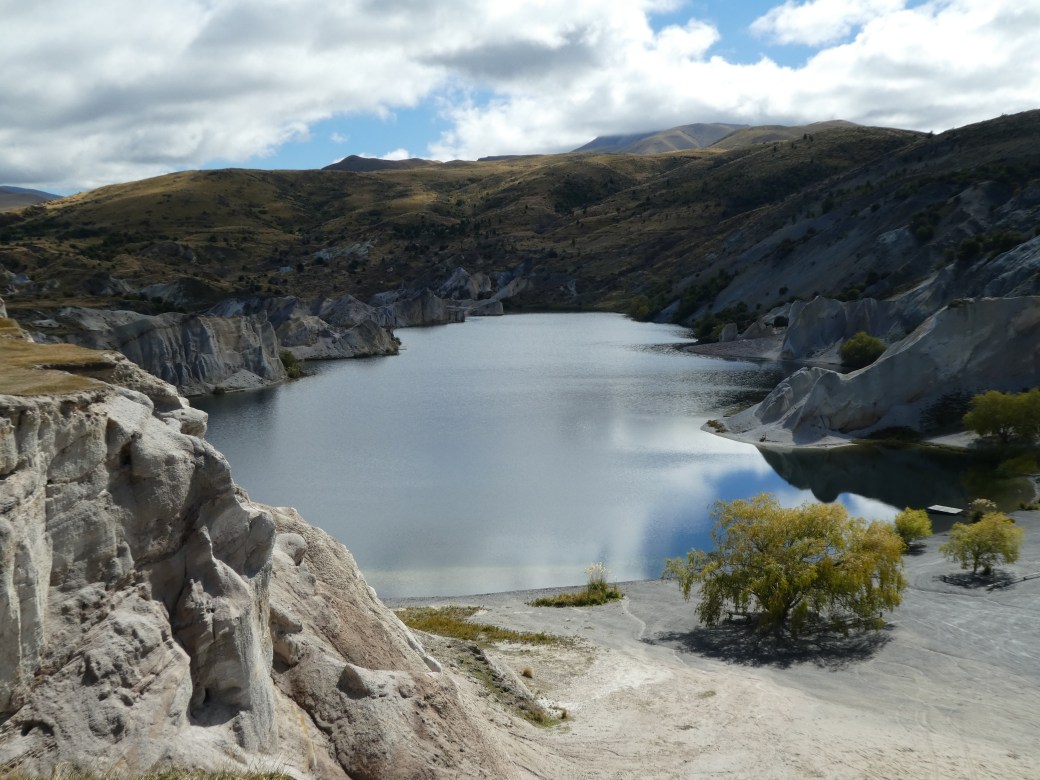
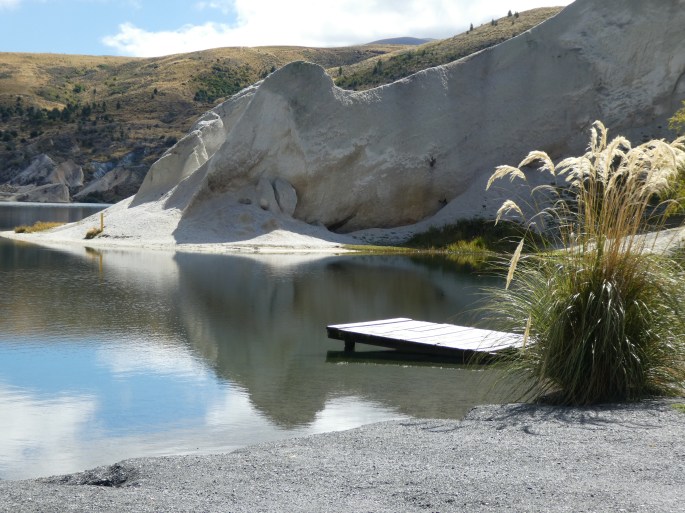
What was left behind was a deep pit, which became a lake now known as the Blue Pool, and a landscape of fascinating forms along with bits of rusty pipes and machinery.

There is a DOC walkway all around and we did the 50 minute one and really enjoyed it and the scenery. The lake itself was still and the reflections beautiful.

The dogs got a bit hot exploring so they enjoyed a quick dip, and then it was back to the motorhome for lunch. We were very glad we took the time to come and have a look.

P1020489.JPG

Then we were making our way again onto the road to Alexandra (but just passing through as we had been there before) and on to Roxburgh. However, we had a short bypass to Clyde again, because Bruce wanted to purchase another of their stunning loaves of ciabatta. He made his way straight to the shop only to find they had sold out! He had to settle for some croissants and some wholemeal bread instead.

The bonus of this side trip was that the Clyde Dam was open to traffic as the old red bridge was undergoing repairs. Bruce couldn’t resist having a drive over this huge dam.

P1020501.JPG

One of the attractions for me in Roxburgh was the stone fruit. I had eaten through most of what we had purchased in Cromwell, so it was time to stock the fridge.

We had a quick look at the town, and it was quick because it wasn’t that big, and made our way to the reserve to look at the dam. It is less impressive that the Clyde Dam, but still a great sight to see.


We decided to stay at the Clutha Gold Cottages camp tonight , and it is a very pleasant place indeed, and very reasonable cost wise. Lovely, helpful people run it so we feel great about our decision.

Tomorrow we head into the Catlins.


Naseby


No.2 on Bruce’s wish list (after catching the salmon) was to go to Naseby to go for a run. He could not bear to let his son do something that he hadn’t done.

We left Dunedin at our usual leisurely hour of around 11.30am and headed down the highway towards Middlemarch, Ranfurly and Naseby.

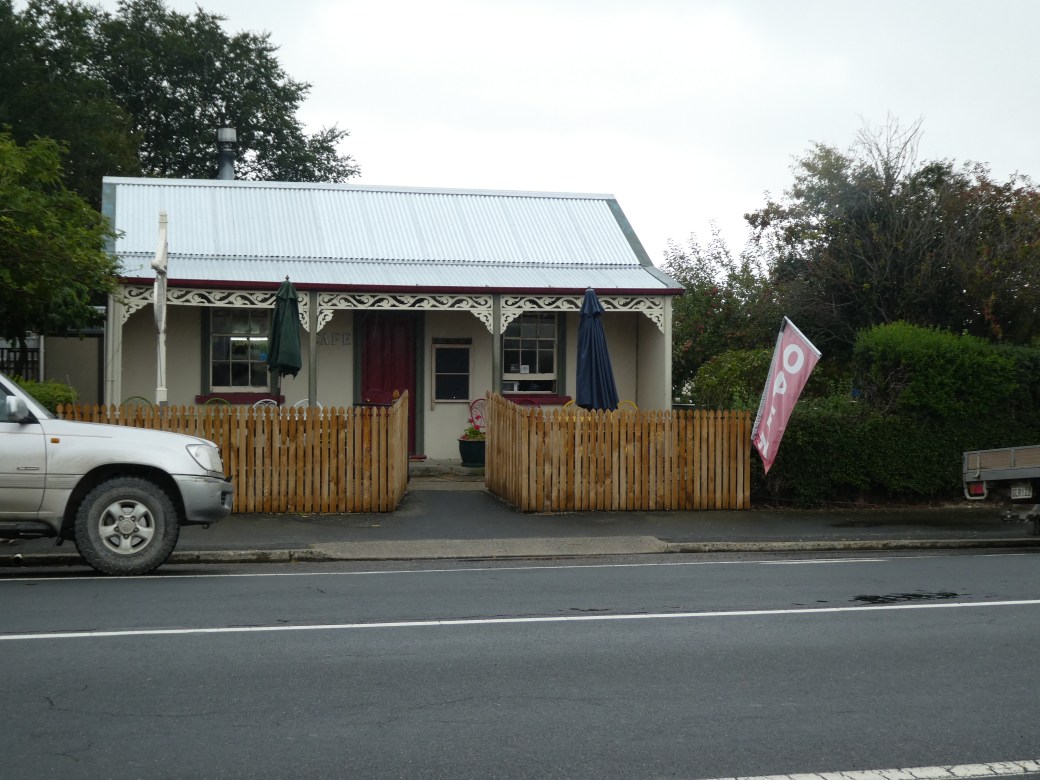
Middlemarch was around 53kms away so we stopped there for lunch. We called in to the most unlikely little cafe – it looked very plain and unassuming from the outside, and only one car parked outside. It was called the Kissing Gate cafe.

P1020389

In this case appearances were truly deceptive.  The cafe was full, and the food was homecooked and really nice. I had a bowl of the nicest vegetable soup I have ever had from a cafe, along with home-made wholemeal bread. Bruce had a bagel stuffed with smoked chicken and spinach and other goodies. The coffee was hot.

That gave us the sustenance to carry on our journey. It was really from there that the landscape began changing from the type of farmland you would see anywhere in New Zealand, to what could only be described as alpine rock garden on a grand scale. Apparently this area is called the Rock and Pillar Range.

The temperature change in this area was very noticeable – the thermometer in the motorhome said the outside temperature was 8 degrees at one stage.

Naseby was about a hour from Middlemarch and is supposed to be a historic town. Some of the buildings are very old, but a lot of the history seems to be in buildings that are no longer there, but their sites are remembered. The place was cold, and mostly shut! There was a cafe open with 4 people in it. Bruce rang Daniel to see what time the town opened! We had to laugh at some of the advertising that told us all about the wonderful goods sold in the I-Site – it was shut until Saturday!

Still, we had to get Bruce doing this run that Daniel was the family trail blazer for, so we made our way out to the Coal Pit Lake Reserve. It was a lovely spot, but still very cold. I can imagine it being a winter wonderland when the dam freezes and people can ice skate on it; and a summer haven when the temperatures are high on a sunny day (if that ever happens here).

Bruce completed his 160m run (just a tiny percentage of Daniel’s 160km run) but he still felt proud of himself for doing it. I guess the bonus is that my husband lives on!

P1020412

We carried on to Ranfurly after that to stay a night in the new NZMCA park there. What a lovely park it is too!. The town itself is considerably bigger than Naseby, and it actually had people in it.


Ranfurly is one of the important towns for the Rail Trail (used by cyclists), so there are a few bikes around and the shops to support them. We are told there is a big reserve here that welcomes dogs so we will try that out in the morning.

Tomorrow, we intend to head to Alexandra on our way to the Catlins.


Dunedin – a 2 day visit


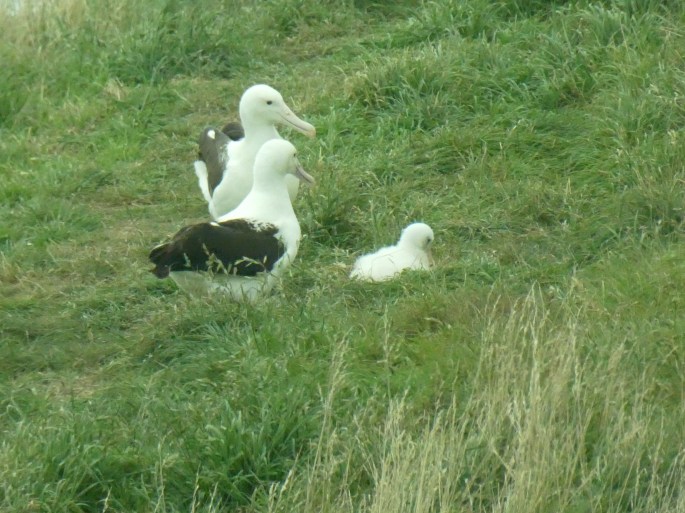
Dunedin welcomed us with low cloud, and a grey, cold day. What a change from the other places we have been. I can’t say we felt enthused about the place on first arrival. However, we decided that we would try to get as much done as possible before the forecasted rain set in so we headed straight for Taiaroa Head, on the Otago Peninsula. We wanted to see the Great Northern Albatross colony. We were told that there were no guarantees that we would see any adult birds, that there were 3 chicks, but the fact that it was a windy day would make it promising.

The talk they gave us was very informative – probably the best we have had to date. The adult bird weighs about 9 kg, has a wing span of 3 metres and can fly at speeds of up to  120km per hour. The adults breed at 8 years of age and normally live for 30 years, although one in the colony lived for 60 years. The chicks reach a weight of around 12 kg  so before they can leave the nest and fly, the parents put them on a diet to lose at least 3 kg.

Once the chicks leave home, they are gone for around 4 – 6 years and will not touch land in all that time.

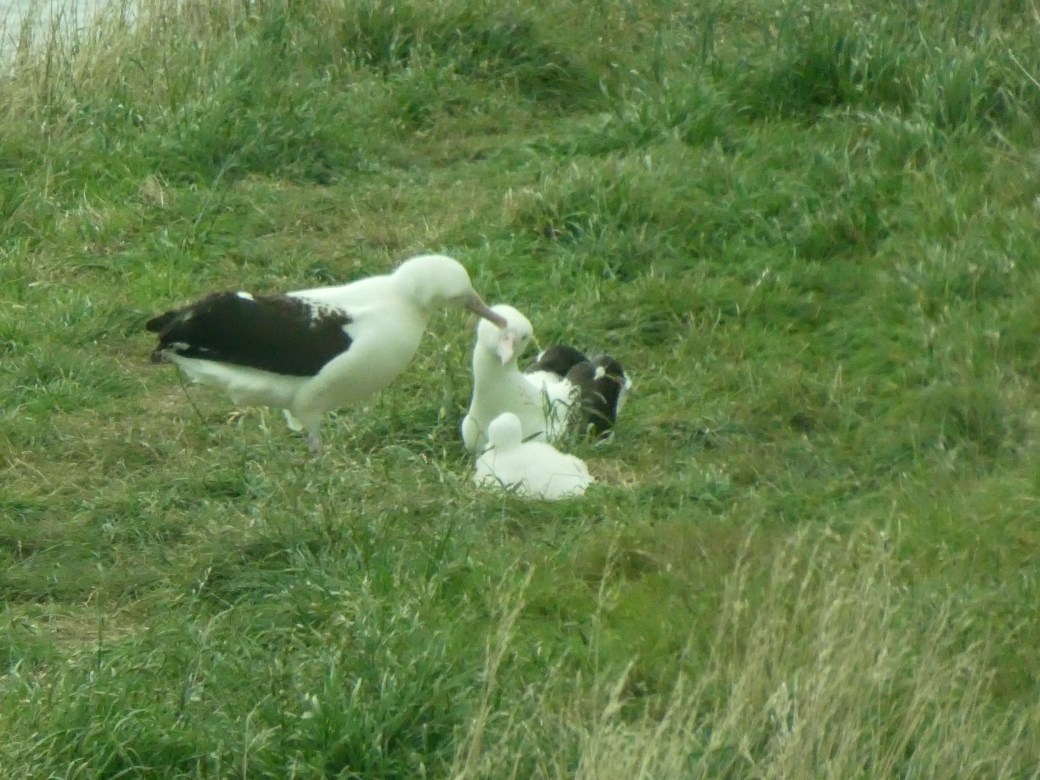
We were very lucky. When we went up to the viewing hut the adult birds were flying all around us and it did not take long to get an idea of how massive these birds are. Very hard to catch on camera though. These pictures were taken from quite a distance so the size is deceptive. In the picture below are 3 adolescent birds around a chick.P1020204.JPG

P1020338

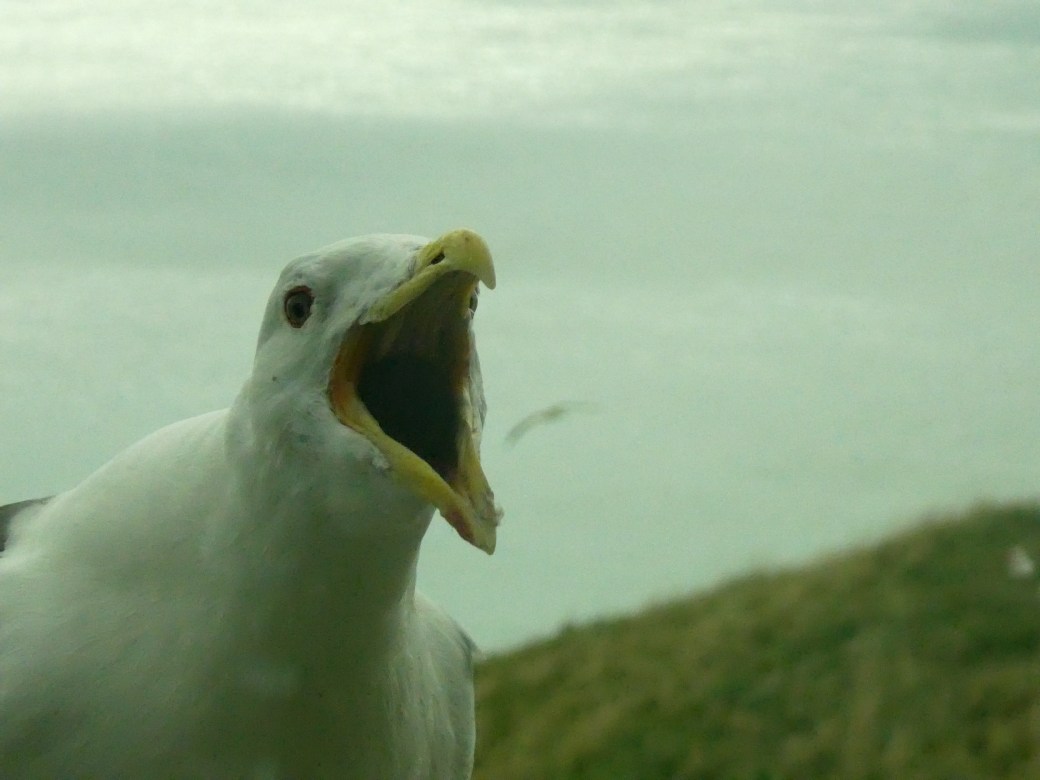
There was also a black backed gull, quite a large bird in his own right, who came right up to the window.

P1020358.JPG

By the time we left this windy hillside, it was getting late so we decided to make our way to the Dunedin NZMCA Park. We got there at 5pm and were very lucky to get the last space. The park is supposed to fit 40 vehicles, but that looks very unlikely to me. It was a bit of a surprise to find our neighbours in the next van were from Whitianga!

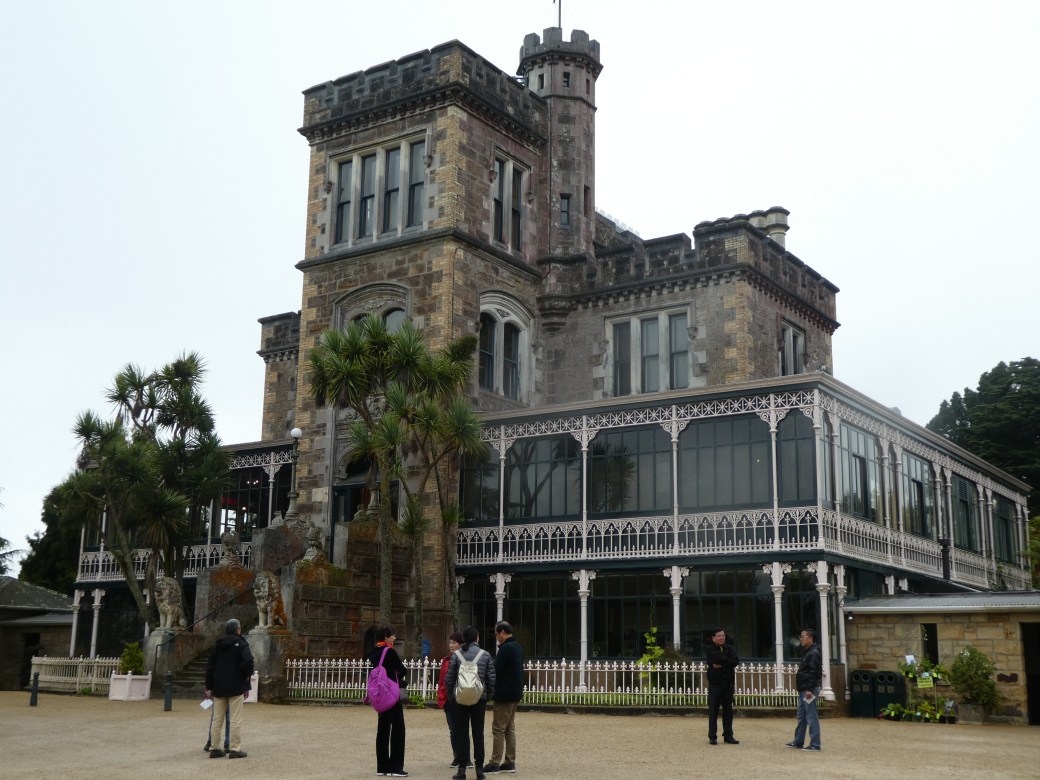
The next morning we were off again at an unusually early time (for us) of about 8.30am and made our way back to the Otago Peninsula to  visit Larnach Castle. Bruce thought he had been there before, but soon realised it was all unfamiliar to him.

William Larnach was a banker who built his house for his wife and 5 children. However, wife no.1 died, so he married her sister (wife no.2) and put his  estate under her name to avoid taxes, and needless to say his children were very unhappy about this. Then wife no.2 died leaving shares in the house to the children, so that left William with no control over the estate at all. He tricked them into signing it over to him and them married wife no 3. Again the children were very unhappy and made the life of wife no. 3 a misery. William couldn’t cope with the stress of it all, and committed suicide. Wealth does not necessarily bring happiness.

P1020216.JPG

The house was in a poor state of repair until the Barker family purchased it some years ago. The restorations are extensive and well done, but forever ongoing. The interior of the castle has magnificent moulded wooden panels on the wall and the ceilings, and while it is stunning, it is also dark and unwelcoming.

The outer rooms of the castle are lighter and brighter, and have lovely views, but they would also be a lot colder.

The gardens of the castle are lovely – a mixture of English Country garden and NZ Native / coastal.

After a coffee in the very posh cafe, we headed away to town to visit the Chinese Scholar’s  Garden. This garden was a gift to the city by the Chinese community and it is said that there are only 3 in the world outside of China, so it makes it quite a privilege for us to be able to see. The design of the garden is to trick the eye and the mind into thinking that the space is much bigger than it actually is, and it achieves that. All the rocks and elements for the structures came from a sacred area in China, filling 100 20 foot containers.

It was a beautiful garden, peaceful and soothing to the soul.

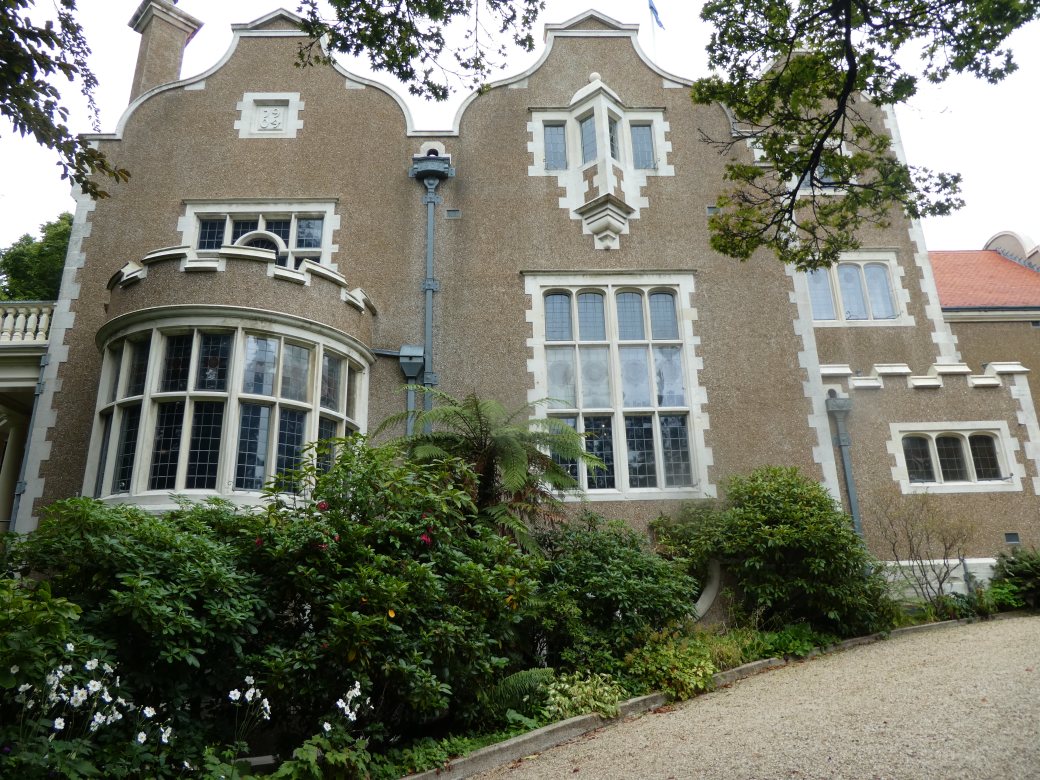
Our last trip for the day was to Olveston House, a historic homestead right in the centre of Dunedin. It was built by a self-made man, an importer, for his wife and 2 children. It has 35 rooms, and a staff of 7 servants.  Over their time they collected some tasteful and valuable items, one of which is an original Goldie painting.

However, life wasn’t any kinder to this family. The son died without children, both parents died, and the last remaining child, a daughter did not marry or have children. When she died she gifted the entire house and contents to the city. It is an amazing insight into how the privileged once lived.  Unfortunately we were not allowed to take photos inside the house.

P1020311.JPG

That was our last visit for the day as we could not afford to be back to the NZMCA park late, or we would not have a spot.

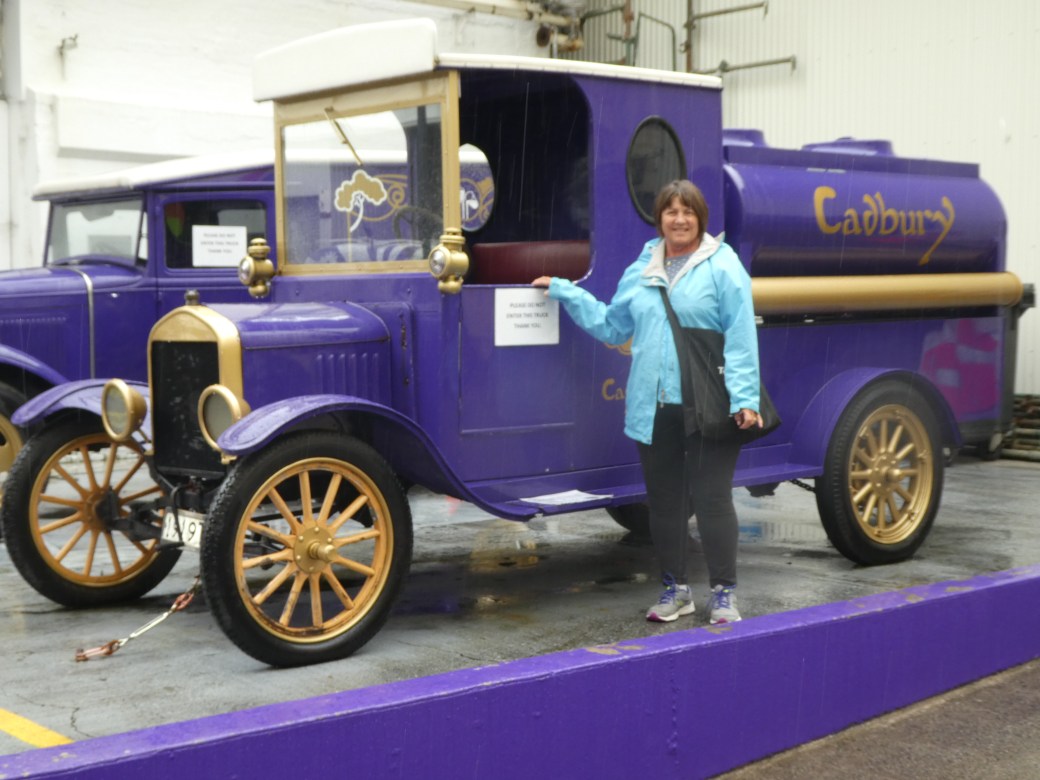
The next day we decided we would visit the Cadbury’s chocolate factory before heading out of town. We enjoyed the history side of things, and the tour was well run, although you did not see the factory working. However, it was a good experience culminating in seeing 1 tonne of liquid chocolate being poured, waterfall fashion, in front of us – quite jaw dropping. Again, cameras were not allowed until the tour had finished but we were allowed a quick photo of the original Cadbury delivery vehicles.

P1020314.JPG

From there it was farewell to Dunedin. It has been wet, cold and very grey the whole time we have been here. The low cloud has clung to the hills and the harbour has been misty. Although we enjoyed our time here, we have not enjoyed the weather.

Moeraki

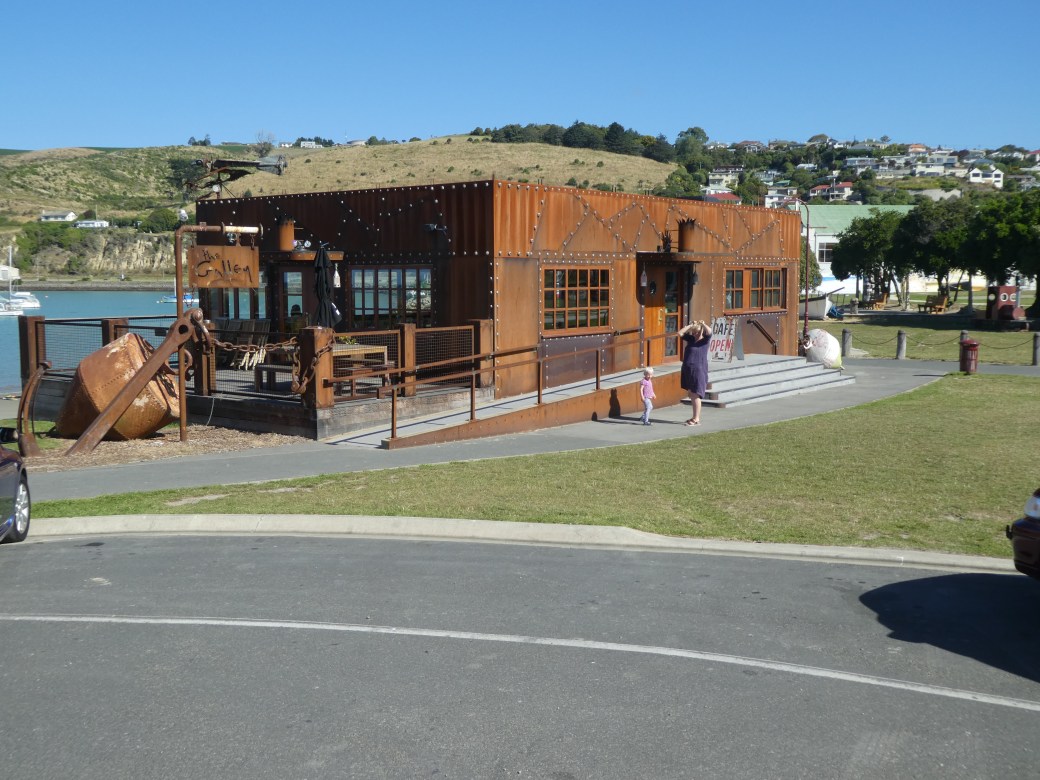
We left Oamaru at lunchtime by the time Bruce completed his shopping for more ciabatta bread and some other decadent treats, a chicken salad for me, and two coffees. The cafe this was purchased at was made of rusty sheet steel and it stood out amongst the other Victorian architecture.

P1010916.JPG

We ate our lunch overlooking the harbour protected by long sea walls and then headed off to see if we could find Moeraki.

We stopped off near the Moeraki Beach Holiday Park at the little town outside of Moeraki, called Hampden. It seemed a really pleasant little place but there were lots of dogs on the beach so we did not let our boys out.

P1020031.JPG

The next place we found was the visitor centre and cafe for the Moeraki Boulders but there wasn’t a lot there for us. We could not see any boulders as it was up a bit of a cliff, but from there we could see a carpark further down the road so we made our way down there.

The visitor centre had told us that we could only see the boulders at low tide, and it was about 3pm by this stage (high tide had been 2pm) so we expected just to take the dogs on the beach for a good walk and play, waiting for the tide to go out more.

P1020042.JPG

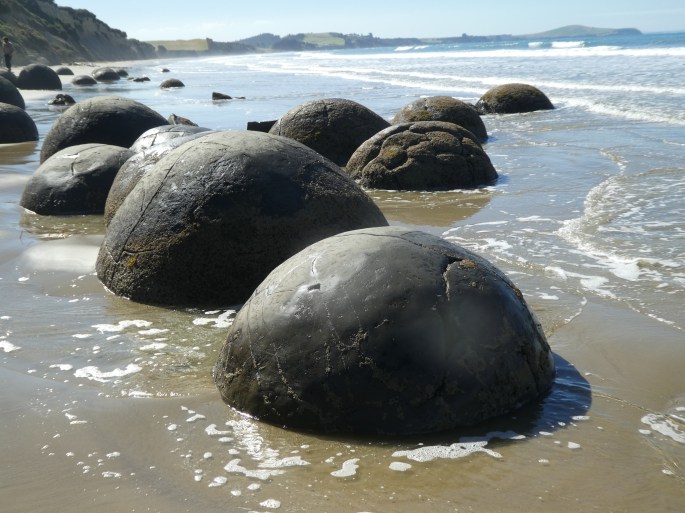
However, a look down the beach revealed what could only be the boulders we were looking for so we walked in that direction. Sure enough, there were plenty of them out of the water, although not the 58 that we had been told were there.

Sign boards informed us that the boulders were formed by dead moluscs whose body tissue attacted sediment to cling to it and the action of the earth around it formed it into big balls. I am not sure I understand why they are layered in contruction; why they are all here and not scattered elsewhere along our coastlines; or what the orange gummy stuff is that you can see in the cracks of the broken ones.

No matter what the explanations are, the boulders are beautiful and the beach is lovely. It was made especially more pleasant by the day being warm and sunny, and the sea not too cold.

We carried on our journey into Moeraki itself as we had a dinner date there and needed to find somewhere to stay. We found the motorcamp there and cheerfully paid a few dollars for a spot. We set up camp and we had a little time to relax before heading out to dinner.

P1020104.JPG

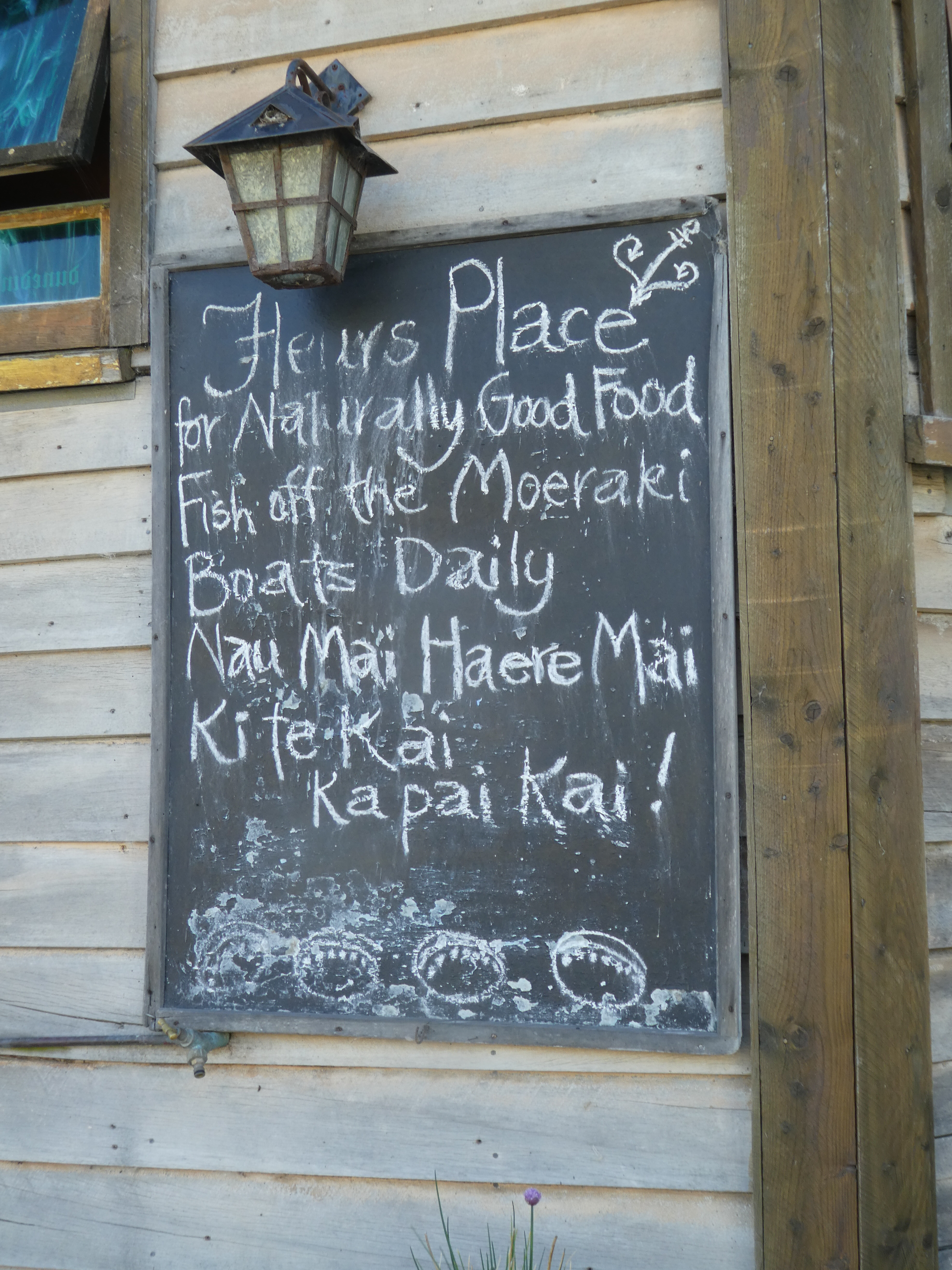
Our dinner date tonight was at Fleurs. This is reputed to be one of the best restaurants in NZ. It is run by Fleur Sullivan who moved to Moeraki to recover from illness, but was so inspired by the local food and ingredients available, she set up her restaurant there.

It is a quirky wooden building with all raw wood inside as well. Past patrons have written their reviews all over the walls and window frames with whatever pen they could find. They cover the place – there are thousands of them.

P1020109.JPG

The specials of the day are handwritten on a piece of A4 paper and photocopied. Fleur herself answers the phones and greets the patrons as they arrive and farewells them as they leave. Her desk is in the middle of the restaurant. Bruce and I had a good 10 minute conversation with her about some of her experiences. She told us she is 78, and she still comes to work each day, even when she has a cold as she had tonight. Amazing lady.

Bruce had blue cod with a coriander, chilli and coconut dressing (with veges); and I had the  3 fillet meal (moki, gurnard and elephant fish) with a fennel dressing (and veges). The fish just melted in your mouth. Bruce’s dressing was particularly nice, so I stole a bit of that for my elephant fish. Thanks to Emma and Justin for their gift of a voucher towards the meal. It was brought out to us once we had ordered, and we were both overwhelmed by it. It made a special night that much more special.

Wonderful place, Moeraki, and a wonderful meal.

Oamaru

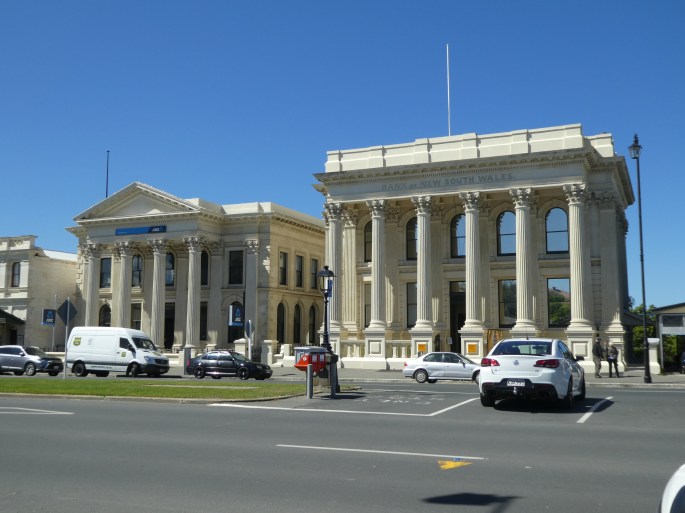
What a charming town Oamaru is. We had no expectations as neither of us had heard a lot about Oamaru, and we were very pleased not to listen to someone who told us the place was a bit of a hole. We felt the warmth of the town envelope us as we drove in and we were immediately charmed by the architecture. Once we started walking around we were further charmed by the people. Down here there seems to be none of  the “how are you today” greetings that are uttered while doing something else and not looking you in the eye (therefore a platitude without meaning). The people here seem to be genuinely friendly, always up for a chat, and always smiling.

Oamaru is famous for three things – it’s Victorian architecture in the Historic Quarter; its penguin colony (and the fur seals that are nearby waiting to grab a penguin, and the gardens.

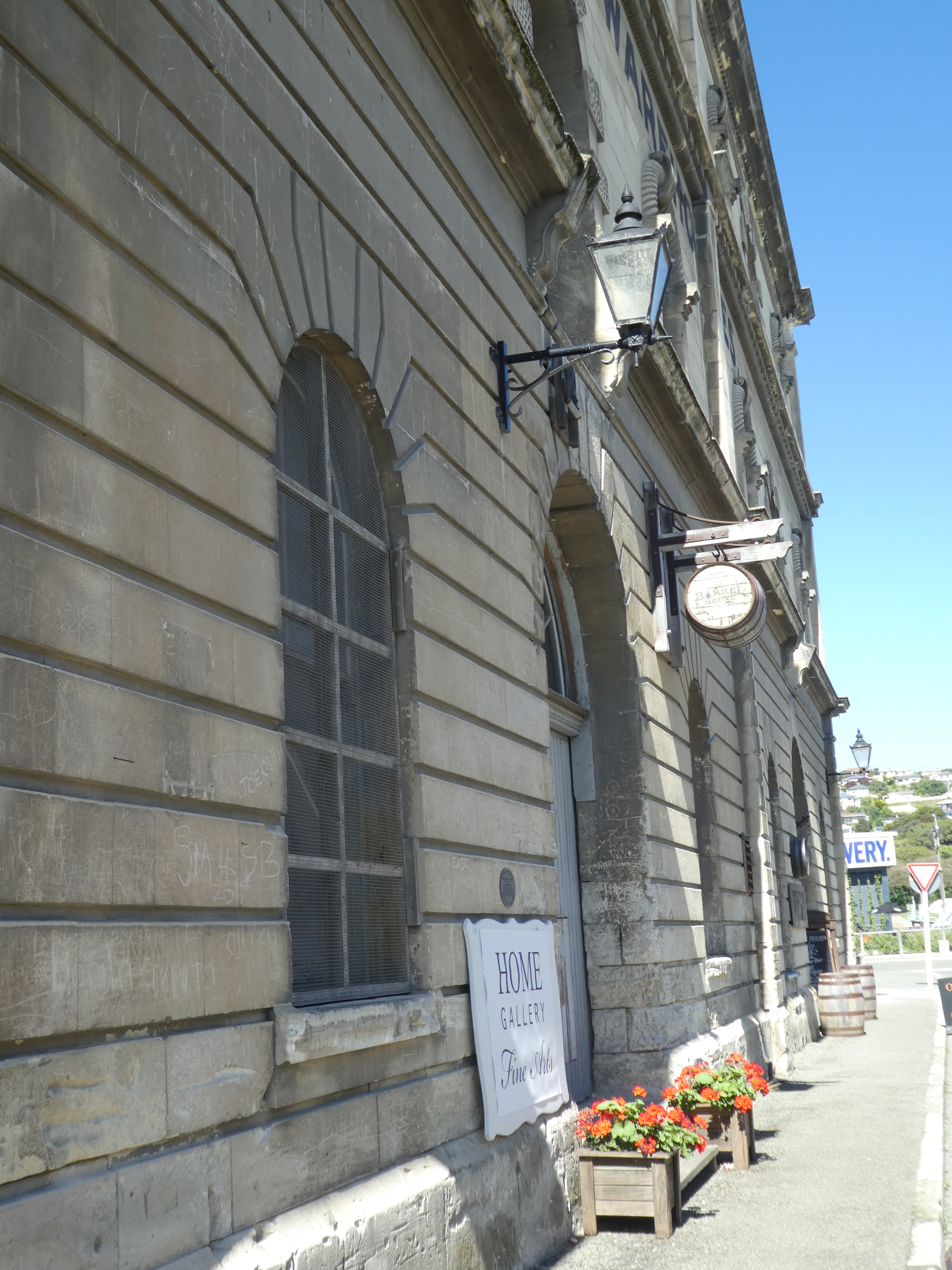
We first chose to walk through the Historic Quarter. Parking for the motorhome in the central city was easy which was surprising because most places don’t consider motorhomer’s too much. We walked through the buildings and some of the shops that house the antiques. Other places though, such as the old woolstore building are still in operation as a woolstore and we were able to peak at all the bales stacked up inside.

Some of the buildings have been converted to the inevitable bars, cafes and restaurants.

P1010846.JPG

Other old buildings are being used to house old stuff.

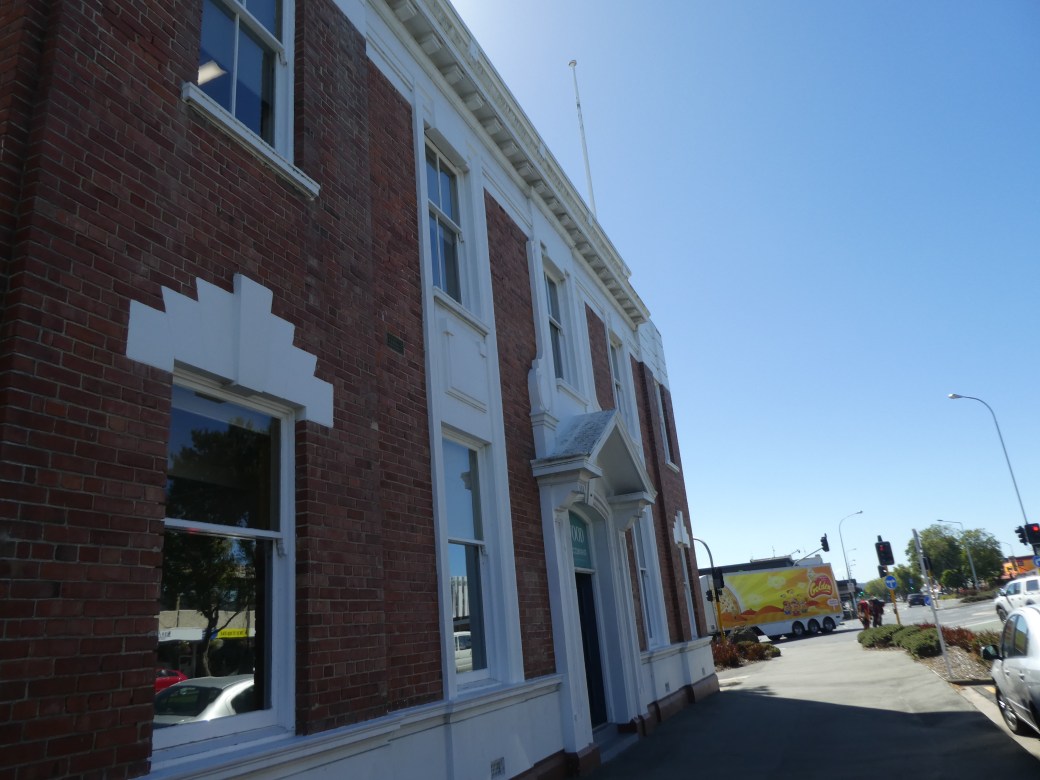
All the buildings are made of Oamaru stone, with the exception of one lonely red brick building.

P1010905.JPG

What is more impressive is the state of repair of all these old buildings. We saw one that looked a bit sad, but the others looked like someone gives a damn.

P1010815

The church pictured above is St Lukes Anglican Church and we went inside for a look. The land was bought for the church in 1862 for the princely sum of 50 pounds and building started in 1866. It was built in 3 stages and is simply beautiful inside.

P1010816.JPG

Bruce’s highlight for the day was finding the best ciabatta bread in a little craft bakery in the old historic quarter.

We stayed in a camping ground for the night, so we went and got that organised and also walked the dogs before having a quick snack and driving to the the old wharves. We had booked in for a penguin colony tour. The little blue penguins come ashore at disk every evening to go back to their burrows and feed their chicks. We were advised to arrive early for the tour to get seats in the area of the stand that would give us the best view.

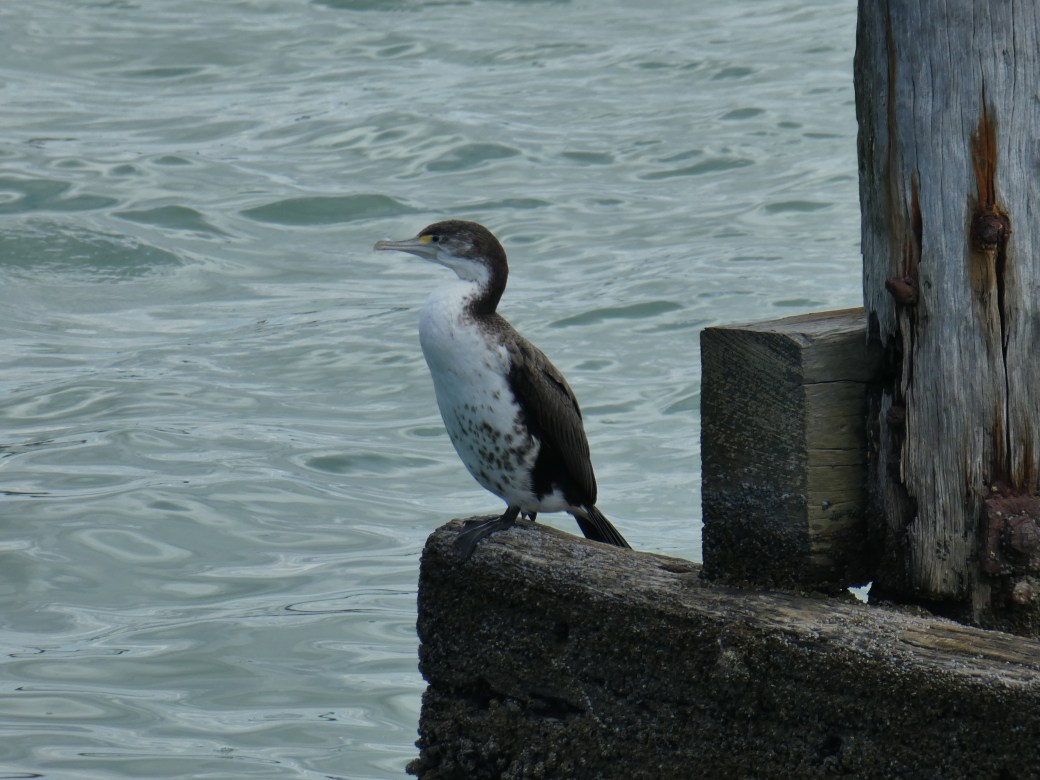
Before we went in we saw the  old wooden wharf that was built in 1862 – the first curved wharf of its kind. It is no longer in use by humans but the shags have taken it over as a roosting place. They certainly make their prescence known with the smell of them.

We also spied the seals who were lazing about in the sun, obviously biding their time until the little blue penguins came ashore and provided them with a chance of a late dinner. We could see them lumbering into the water at dusk.

The penguins themselves were wonderful. We were not allowed to take any pictures, so the ones I have are “borrowed”. They came ashore in groups called rafts, and we could here them chirping before we could see them. Then they hopped up their little rocky path to the nest boxes created for them by the complex. Because they are predator free here, the numbers have tripled over the last few years.

The penguins are not really made for walking, so they look quite clumsy. We were amazed though at the size difference between some of the birds. They are supposed to be about 1 liko, but some a lean and some quite portly. The portly one almost looked like they were not going to be able to manage the trek because they looked more awkward that the lean ones. They all got there though and as we made our way out of the complex we could see the birds at their nesting boxes. I saw one poor parent being chased by two chicks that aggressively wanted to be fed and were not going to take no for an answer. We also saw two other downy “fluffballs” of chicks, sitting outside their burrow cheeping for their parents to arrive. The birds seems familiar with the presence of humans so did not try to run away or hide as we walked past them, within about a metre of them.

In all we saw about 110 penguins land and it was an experience I would recommend. Shame about photos though, but I can understand the reasons why. One thing though, it was very cold.

We enjoyed our stay in Oamaru, and after another trip back into the historic quarter to get Bruce another loaf of ciabatta and a custard croissant, we headed off into the wild blue yonder – in the direction of Moeraki.


Waimate

We were very late leaving Timaru as we had to wait for Judy’s bike to be repaired, so the next leg of our journey had to be a short one. We had intended to head down to Oamaru, but we detoured a little to take a look at Waimate.

Bruce stated that there were some places that were new and made to look old, there are the renovated and beautiful old places, and then there are the places that are just plain old! That pretty much describes Waimate for the most part.

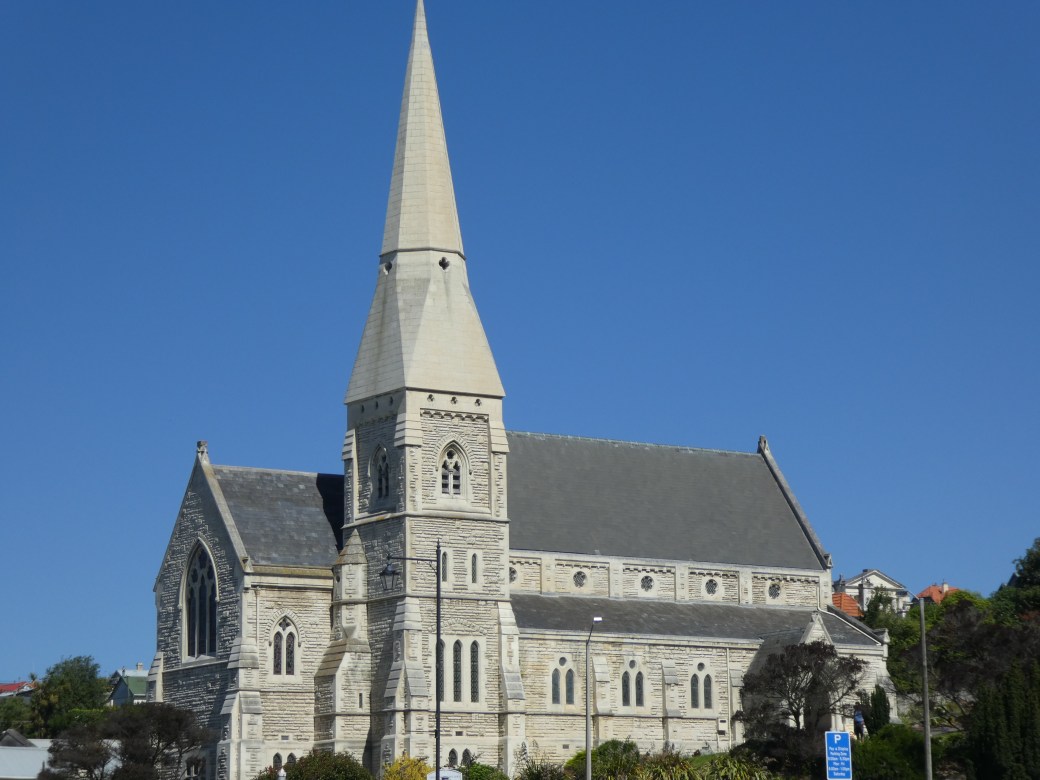
The exception was the Basilica pictured above. It was dated 1909 but has been renovated since then and is a beautiful building, Inside the stained glass windows were intricate and just awesome. The ceilings were very detailed and the woodwork smelled like it had recently been oiled.


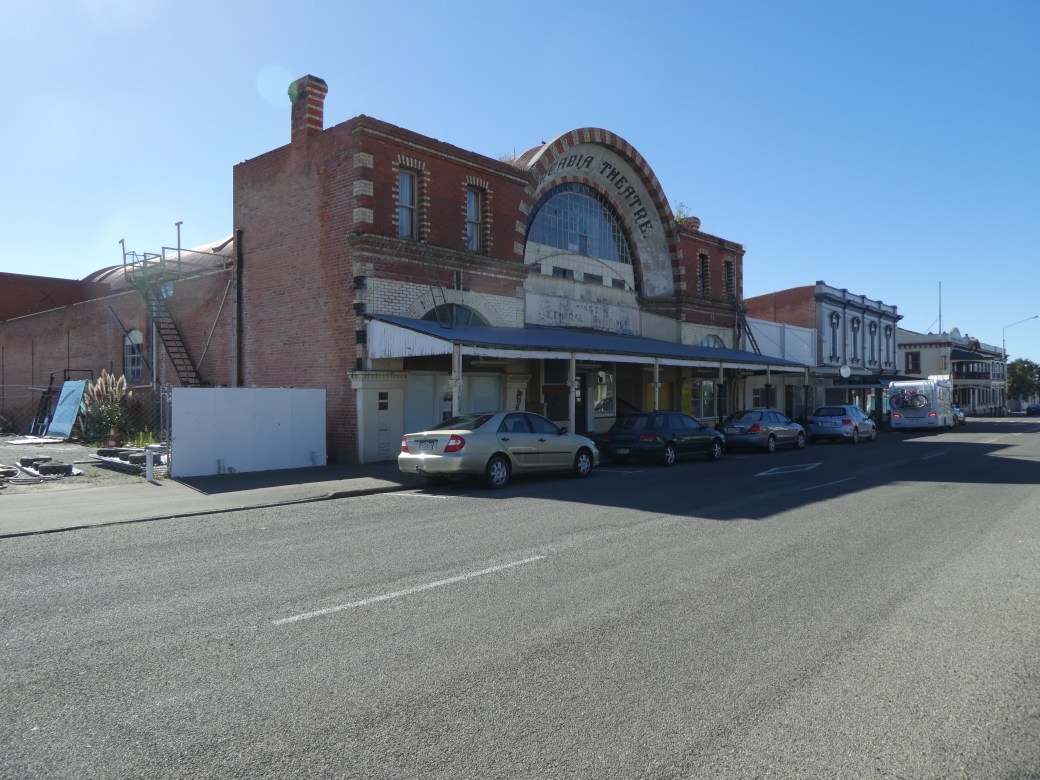
Down the road was an old cinema building that had clearly seen better days and did not look like it was being used by anyone now. However, it looks like it might have been a magnificent building in its time.

P1010805.JPG

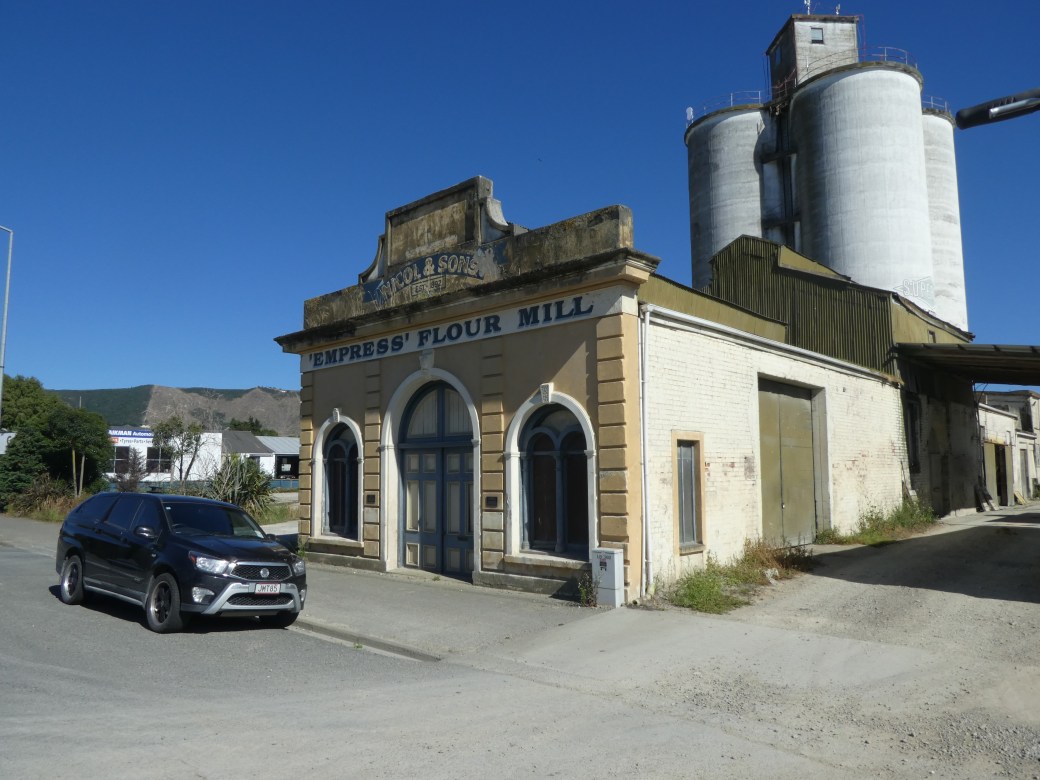
Nearer to the NZMZA park was an old flour mill that is also decommissioned but is being used as a fertiliser depot.

P1010803.JPG

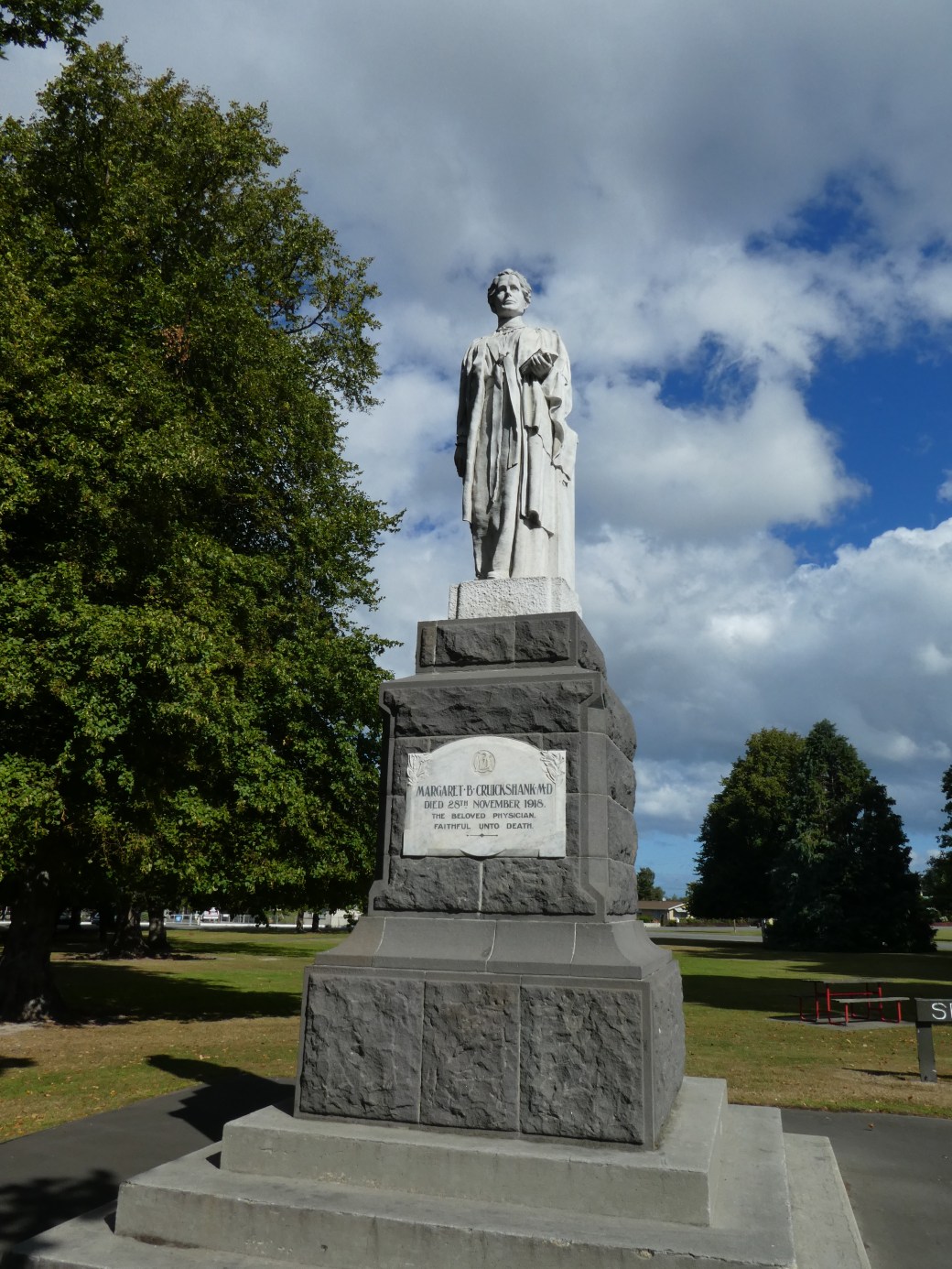
Waimate was the home of the first female practicing GP in NZ, Dr Margaret Cruikshank, and they have erected a statue in the park in her honour. She was New Zealand’s second female qualified doctor on May 3rd, 1897, but chose to remain in the area she was raised. The story goes that during the great flu epidemic she would not only treat the families that became ill (she would visit them in their homes as there were quarantine restrictions), she would also milk the cow to be able to provide them sustenance. Unfortunately she also sucumbed to the flu and died in 1918.

P1010799

The NZMCA camp at Waimate is the best camp to date that we have stayed in. It is a delightful place and we had a peaceful night there. However, Waimate is a small place, somewhat run down and  not particularly dog friendly.


Timaru

The main appeal of Timaru for us was the possibility of catching up with our best man, Bob Woods, but first we had to find him! That turned out to be surprisingly easy. We called in to the National Party Office because we seemed to remember that Bob’s wife had worked there (it turned out that it was actually the Labour Party). From there we were pointed in the direction of Viv’s new workplace along with the worried question “you are not going to make trouble are you?” We gave our assurances that we were really nice people and then called in to see Vivienne. She was in a meeting but excitedly called us back a little later and we were scheduled in for a dinner date with her and Bob.

In the meantime we made our way to their dog park to give the boys some exercise. The park also had an agility course so Bruce enjoyed teaching Oscar to climb up ramps. We followed that with a little exploration of  Patiti Point with its views along the coast and over the port. We could see a lighthouse in the distance and decided to take a look at that tomorrow.
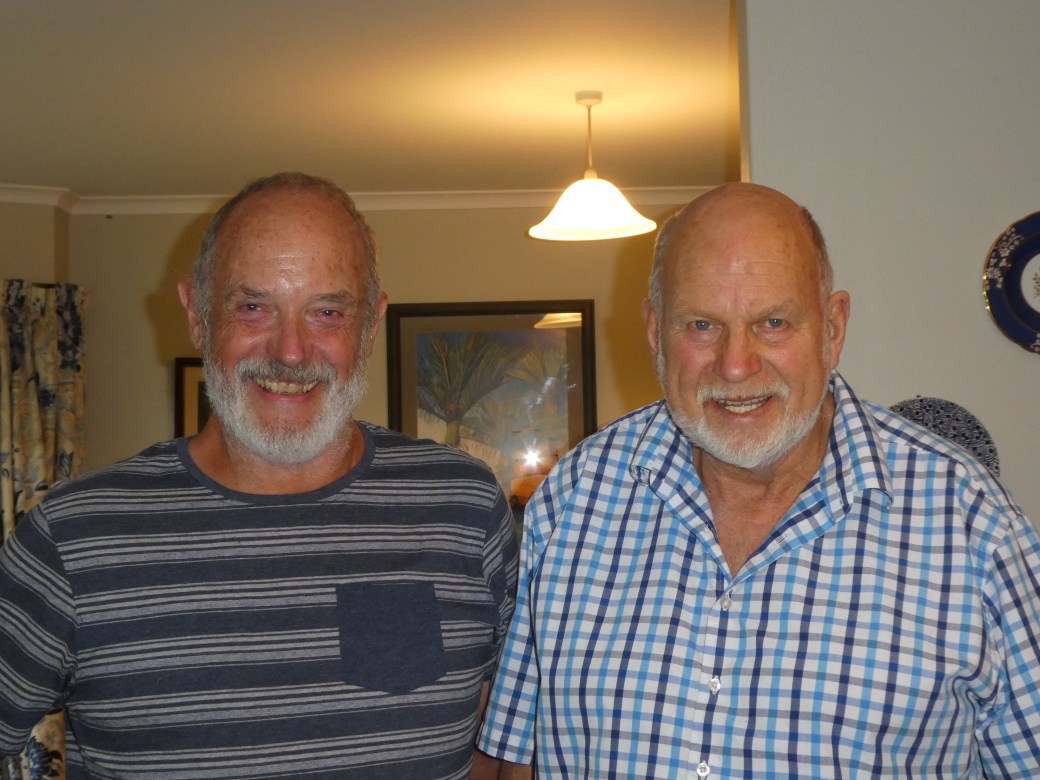
We did a little shopping for some gifts to take with us to dinner and we headed off to meet up with Bob for the first time in about 15 years. He hasn’t changed a lot and seems to have found a nice life in Timaru, with lots of friends. Vivienne is a delight and they make a good pair.

P1010790.JPG

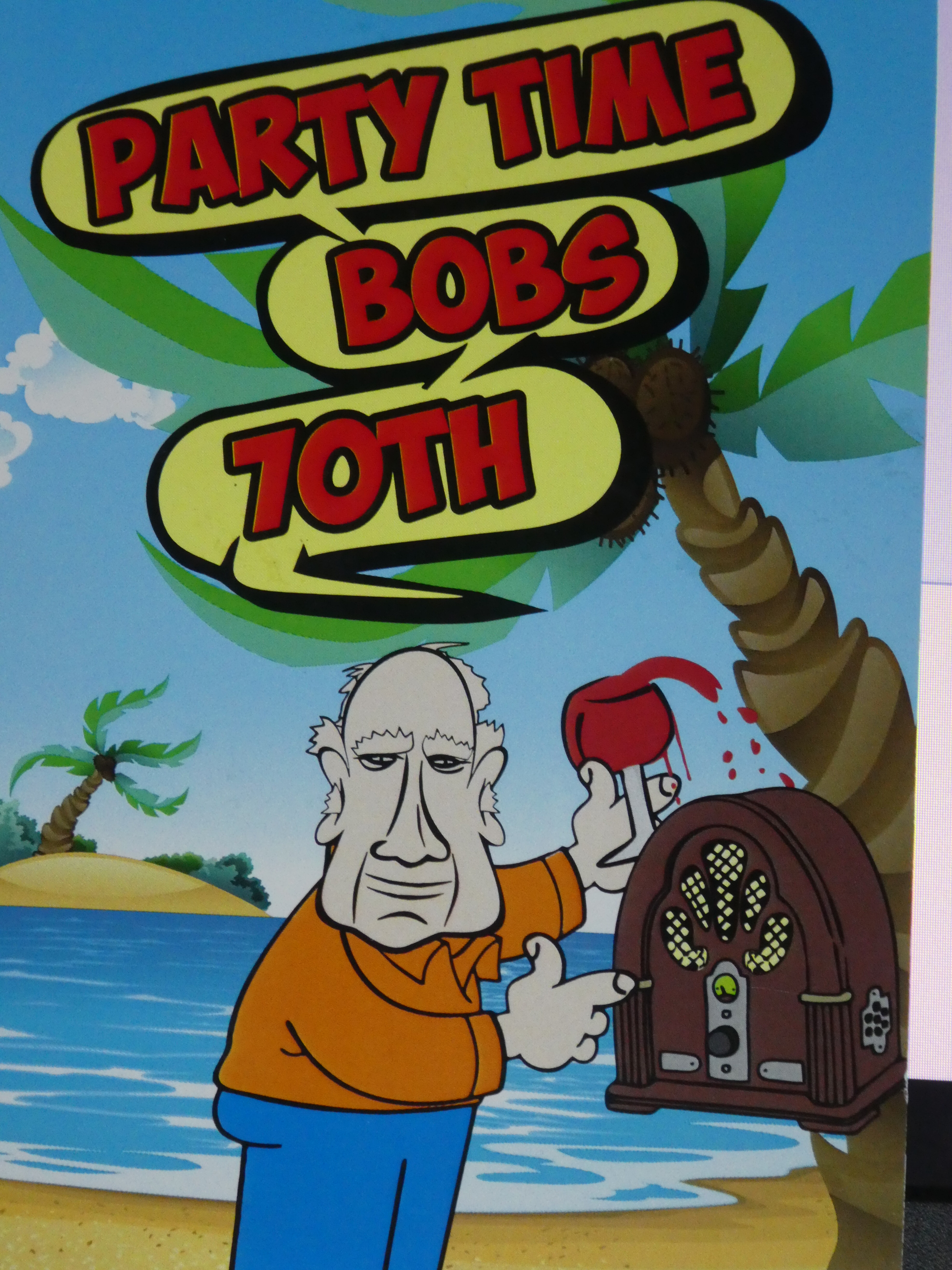
We were surprised to learn that they had been trying to find us as well with an invitation to Bob’s 70th birthday in December of this year – in Rarotonga.

P1010802.JPG

That is something we will have to consider.

We parked on the street overnight and were woken up bright and early by the rubbish trucks. Never mind – it is now Bruce’s birthday so I got up and made him scrambled eggs with ciabatta toast for  breakfast. After a coffee with Bob, we meandered around Timaru having a look at the place.

Timaru is quite a big place with all the shops you could want, but we were struck by several things:

  1. There seems to be a lack of people in the city
  2. There are some really grand old houses but most of them need a lot of love
  3. There are a lot of grand churches
  4. The prices seem pretty reasonable.

Caroline Bay is reputed to be one of the most beautiful beaches in the world so we had to go and have a look. We were completely underwhelmed. The facilities around the bay were great such as the children’s playground etc. but the beach itself did not appear to us as nice as a lot of beaches on the Coromandel.

Apparently the penguins come up the beach to their nests at night and we hope to see that in Oamaru. You are not allowed to take pictures though.

The temperature has suddenly changed down here and today we had the first wet day of our trip. It had rained all night. I had to buy a few warmer clothes as I was taken by surprise at the cool change. We also managed to get a new wheel for my bike from the “Cyclery”. They were super helpful and super efficient. We highly recommend them.

Having accomplished all we set out to do, we headed out of town towards Oamaru. The plan had been for Bruce to have a special birthday dinner at Fleur’s Place in Moeraki. We are not going to make it tonight, but plan to be there tomorrow night.

P1010795.JPG


Geraldine

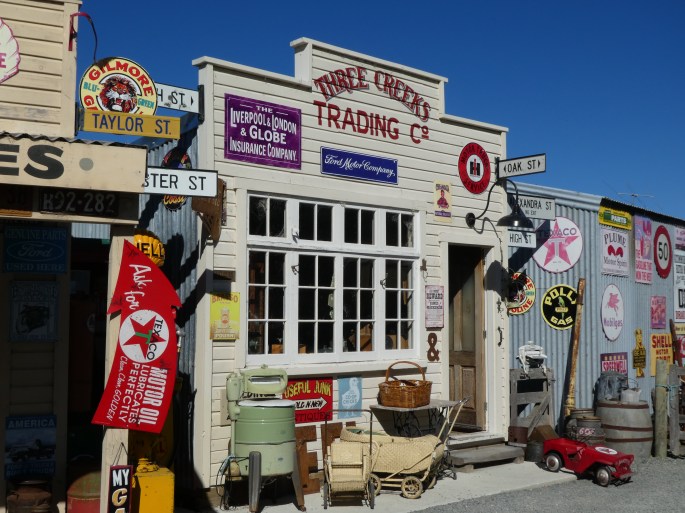
We took the road to Geraldine and the first place we came across was Burkes Pass (no, Bruce is not passed out yet). This was a completely unexpected place – very quaint and focussed on Americana.

The first view we had was of an old church which the sign posts say is New Zealand’s oldest Union church still on its original site. Just like the church at Tekapo, it was very small and doubles as the town’s I-Site during the week.

A few metres down the road was a large selection of hand crafted, timber outdoor furniture that looked really lovely. Some of it was quite conservative, but other peices were quite quirky, such as the table pictured below which has a car front as one end of it.

P1010761.JPG

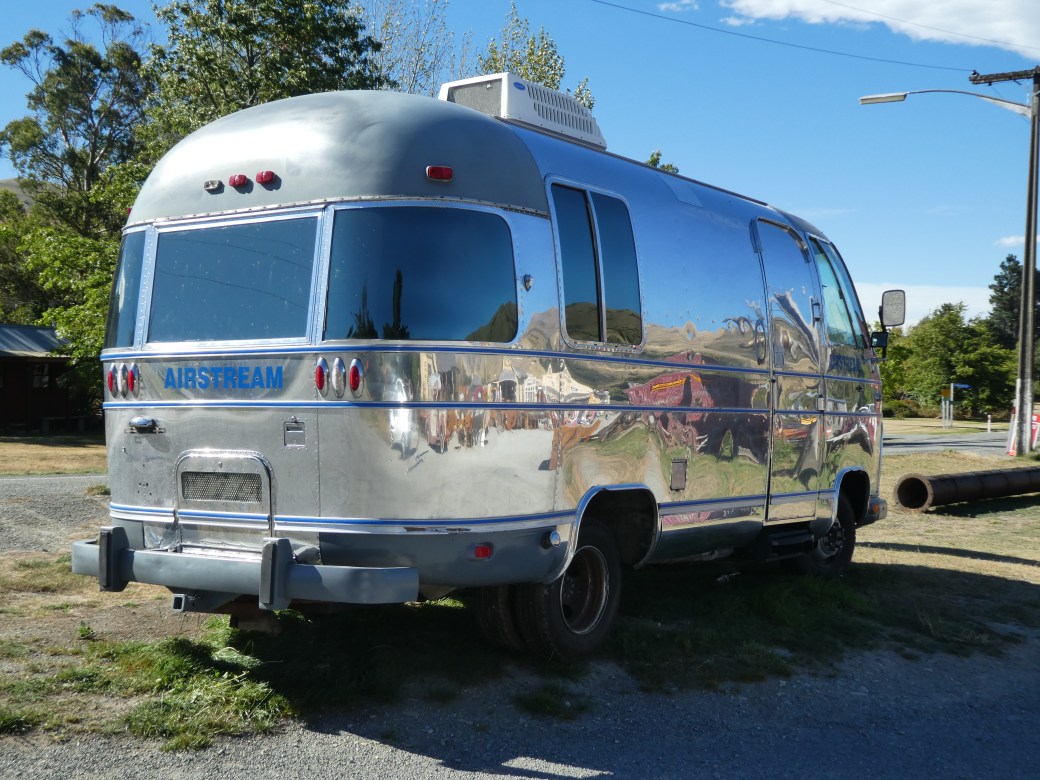
The site had old cars scattered around, and they all needed a lot of care. They included an old Airstream Motorhome which was gutted inside and who knows what the motor was like, but the exterior bodywork still looked eye-catching.

P1010756.JPG

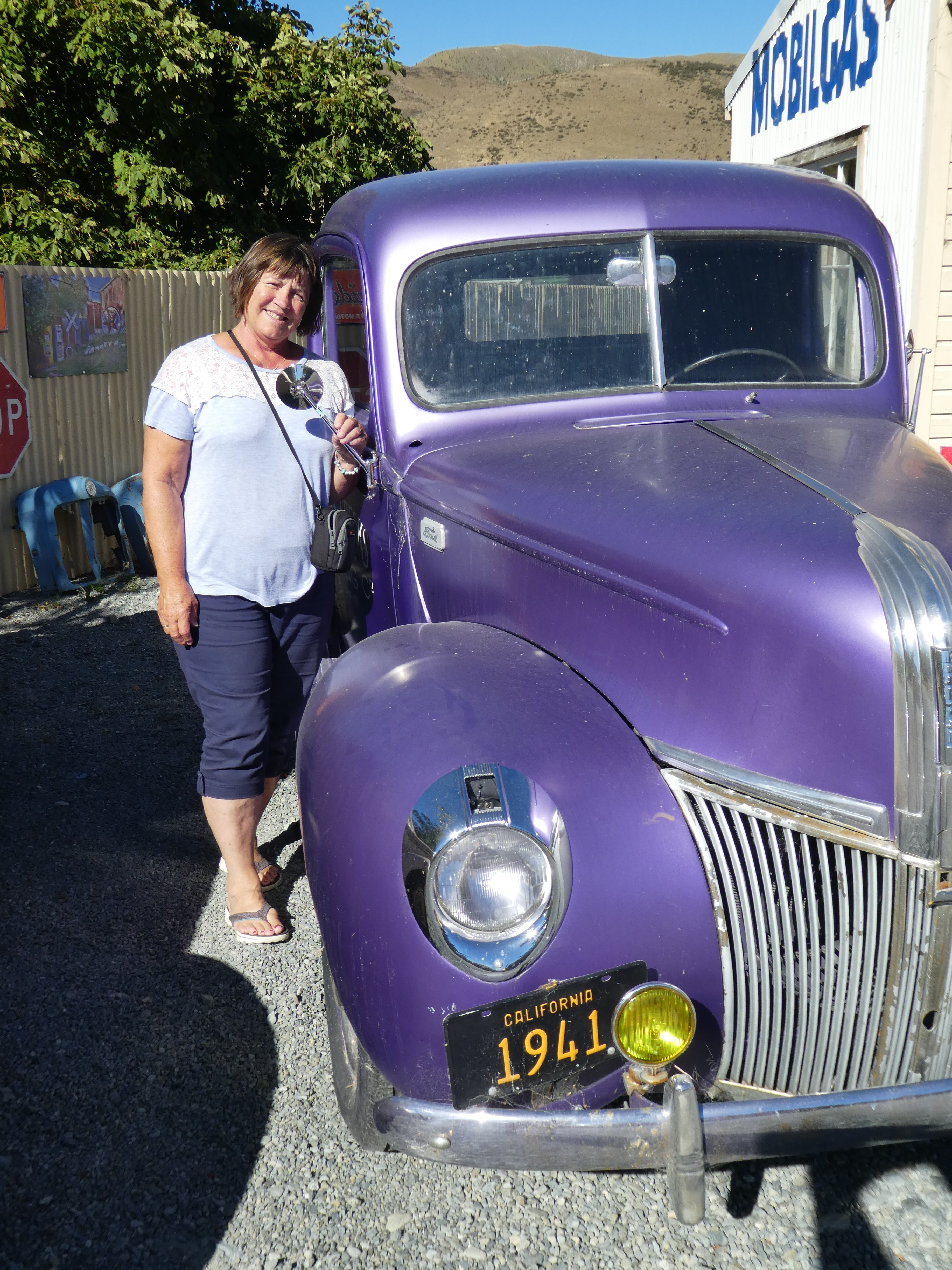
They even had an old car in my colour  – mauve, but it didn’t look like it could go anywhere under motor power. Yes, it was older than me!

P1010777.JPG

The shops around this site all held Americana memorabilia, as well as some antiques. There were a lot of the sort of signs that Mike was looking at in America for his basement and a large assortment of old American number plates.

We travelled on towards Geraldine. Once through the pass, which was very short, the landscape started to change again from the barren brown hills to land more like we would expect to see in the Waikato. Saying that, there was also extensive irrigation, and the sight of dairy herds as well as sheep. In addition to this, the houses became more numerous and the colour green began to replace the colour brown.

We decided to park over at a NZMCA POP stop at the Geraldine Valley Brewery just before Geraldine. What a delightful place to stay – a large gravel carpark with extensive planting and various livestock around the place. They also had a dog called Oscar, and he was beautiful too.

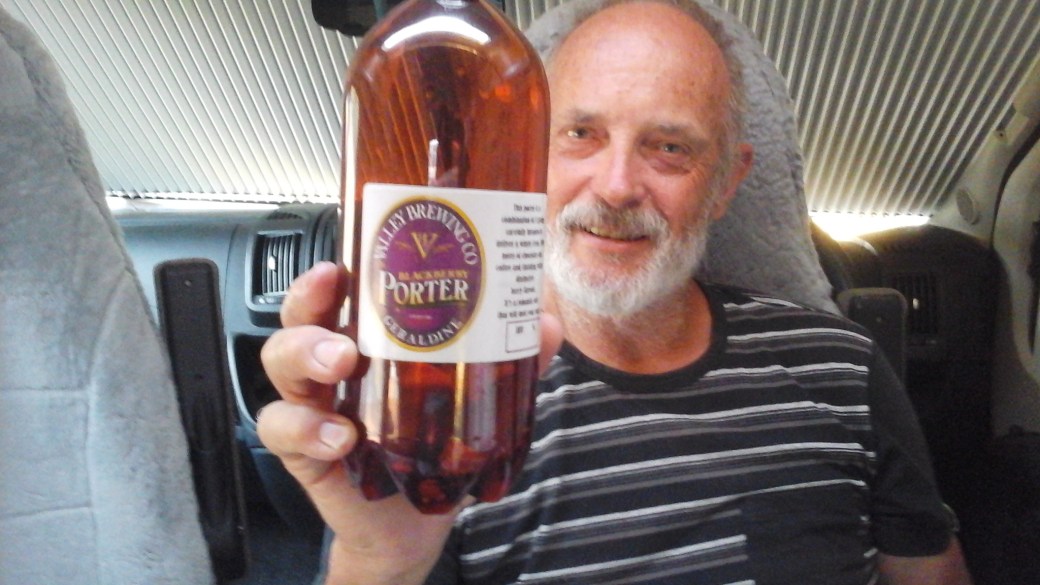
In addition, bruce was able to purchase a large bottle of black beer which he believed was the best he had ever tasted. We found out the next day it was 1 point off a gold medal!.

20170305_192819.jpg

Geraldine itself was quite a big centre that clearly serviced the rural community around it. Aside from the brewery we didn’t find anything particularly fascinating about it, so the next day we headed on to Timaru after stocking up on dark beer.


Lake Tekapo

Lake Tekapo has to be one of the most beautiful places on the planet. The lake itself is a brilliant blue as it is fed from the glaciers and it was a pleasure to wake up and be able to glimpse this lake through the trees, and walk and swim the dogs there. The other bonus of the NZMCA park at Tekapo is that there is a large off leash dog park right next door, so it made exercising the dogs so easy.

Once  that was all done, we decided we would bike into the Tekapo township for a bit of sight seeing. Unfortunately, when Bruce got my bike off the rack we found that the back wheel was so buckled it would have to be replaced. The nature of the damage indicated it was probably deliberate by parties unknown, so it was very disappointing. There was no bike repair outlet in Tekapo so we had to break camp and take the motorhome.

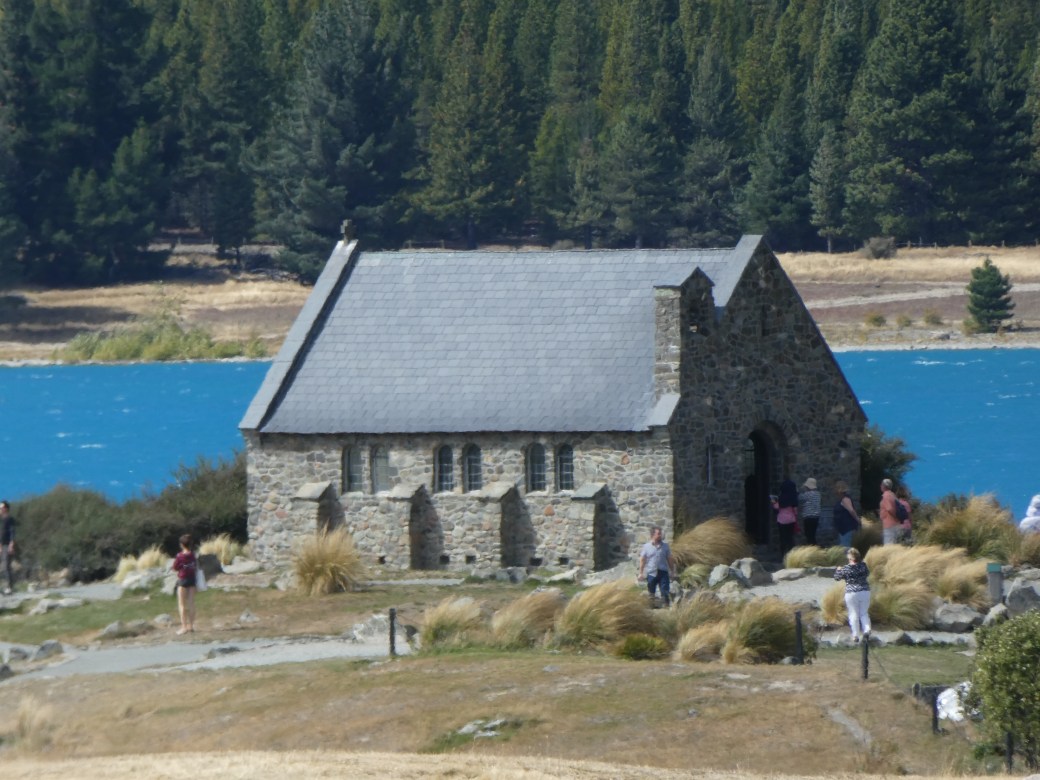
First stop was the Church of the Good Shepherd, built in the 1930’s. It was a very beautiful building, although quite a small one, and one that was over-run with tourists. Bruce and I sat inside for a while and just took it all in. The view out from the front windows, beyond the pulpit was spectacular and distracting, so I am not sure how the vicar got anyone to listen to what he was saying. Unfortunately it also interuppted our contemplation to see tourists walking in front of the window – quite intrusive.

You cannot take photos inside the church, so hopefully the photo down the side of the church should give an indication of the view.

P1010728.JPG

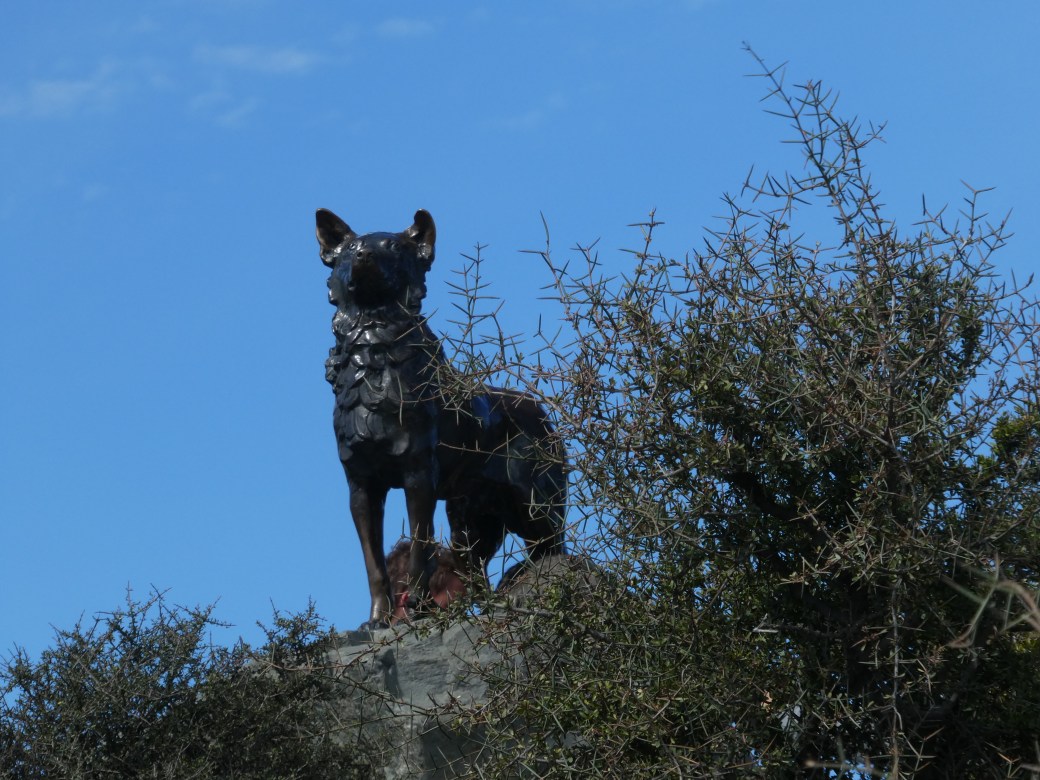
A short walk away is the statue dedicated to the working dogs of the MacKenzie country. He stands on a plinth at a level above the planting so he stands tall and proud.

P1010724.JPG

The township of Tekapo itself is small and compact and is limited to either cafes, pubs or gift shops. We stopped for a coffee and a quick wander but there was not a lot there to interest us. Tekapo has great hot pools (so we have been told) but we elected to go up Mt John before travelling to Geraldine for the night, so we didn’t get a soak.

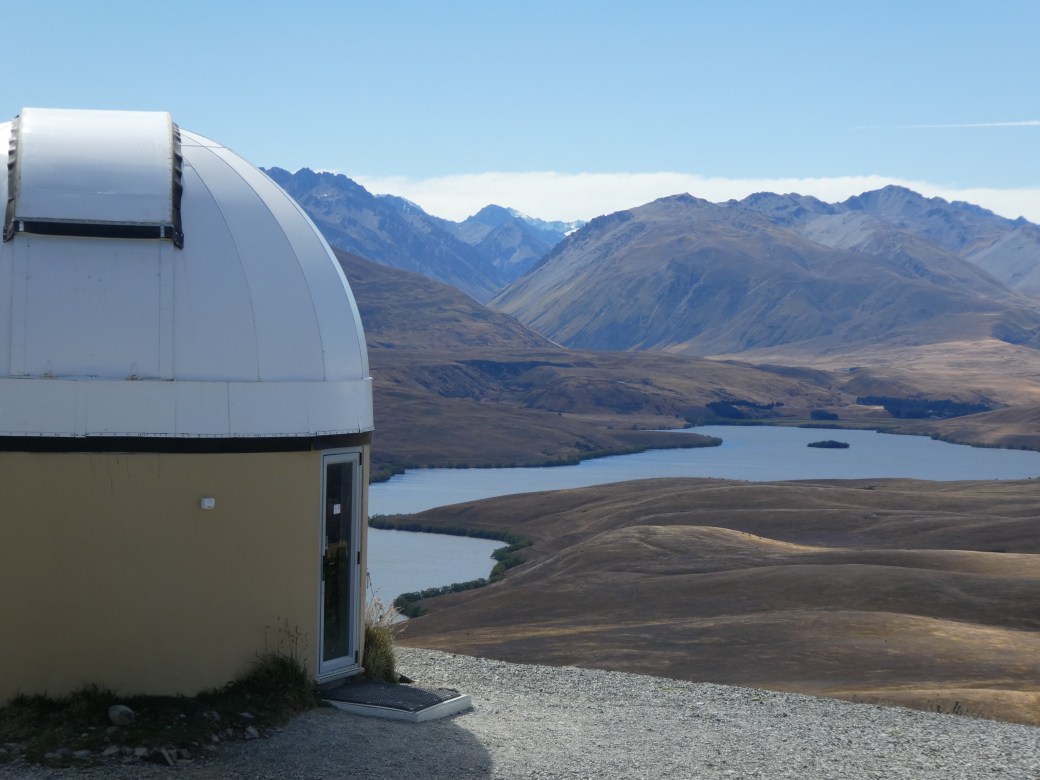
The road to Mt John is deceptive and at one stage Bruce thought we must have the wrong road as it travels on the flat around hills rather than upwards as expected. However, we soon came to a gate where we had to pay $8 entrance fee and the road from there was all uphill – very steeply uphill. It was predominantly one way with only a few places where you could pull over so it got a bit exciting at times when there were vehicles coming the other way. I have never seen a road quite like it.

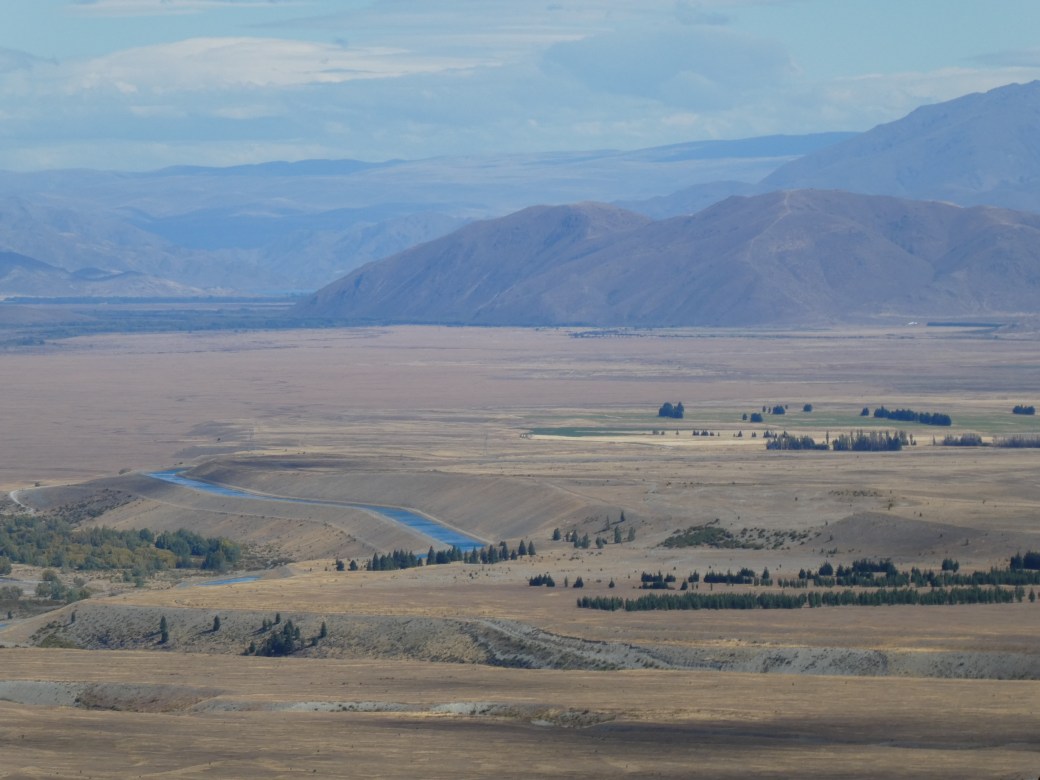
Once at the top it was very, very windy. One poor tourist had worn a dress and was having the greatest difficulty controlling it! It was also noticeably cooler up there. However the view was spectacular (there is that word again). We  would have liked to do a night time observatory tour but unfortunately the forecast was for cloud cover tonight.


Nearby is Lake Alexandrina and it has a totally different appearance to the brilliant blue of Lake Tekapo as it is a drainage lake (from the surrounding hills), so it is a grey green colour.

P1010740

The hills remain brown and barren, and even thought there is a statue dedicated to a sheep dog, the reality is we saw very little livestock of any sort, let alone sheep. If it had been there, I am not sure what it would have eaten.

We inched our way down the mountain again and hit the road for Geraldine.

P1010746