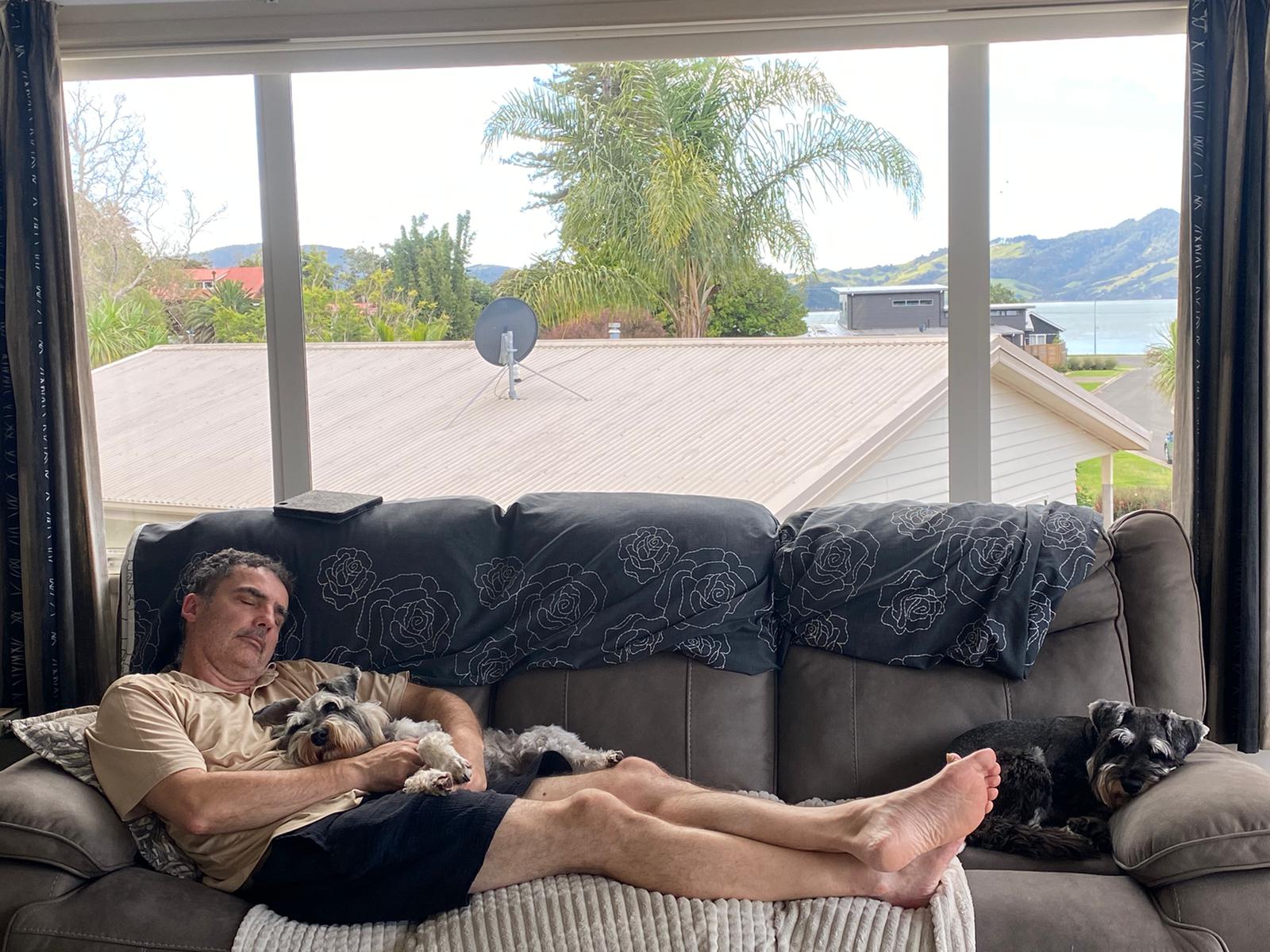
Bruce and Judy Philpott live at beautiful Flaxmill Bay, on the Coromandel peninsula of New Zealand. Whenever possible, they load the motorhome with their precious schnauzers Oscar and Hunter and go away from home to explore this beautiful country we live in
We headed away to Franz Joseph early the next morning, but the closer we got, the wetter the weather became and it was clear there would be no flights today. Regardless, we called in to their office only to have this confirmed, and they were unsure about whether flights would resume the next day, so we got our money back from that and went and had a very expensive coffee instead ($60 for 2 coffees and a small breakfast each).
We decided to go through the Kiwi and Tuatara exhibit though. In this exhibit they have the endangered Roho Kiwis, and there were 2 of them fossicking around in the darkness. There were no glass walls in this enclosure and one of the kiwis was so close we could have reached down and touched it – very special. We could have stayed in there for as long as we liked (and come back the next day) but after we watched them for 30 minutes or so we moved on through the rest of the exhibit. There was lots of information about glaciers, and finally, an enclosure, glassed off this time, with several tuatara in it.
The weather was still wet , and it was only about 2pm by this stage so we decided to continue on to Haast. We booked into a campground there for the night mainly so we could get our washing done. We were really glad though because the rain overnight was torrential. We felt quite secure where we were and by the time we woke in the morning it had all blown over, and we set off to resume our travels.
We planned to spend the next two days in Hokitika as we wanted to see if we could find a piece of greenstone on the beach. We have tried before and come up lacking, so we wanted this time to be successful.
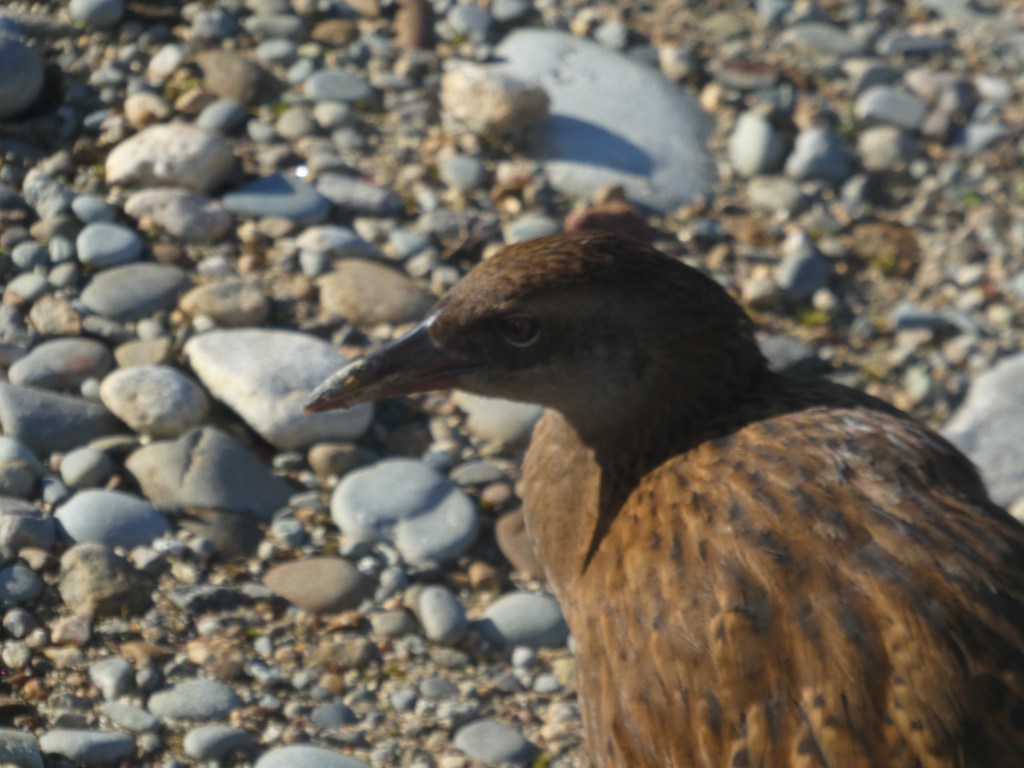
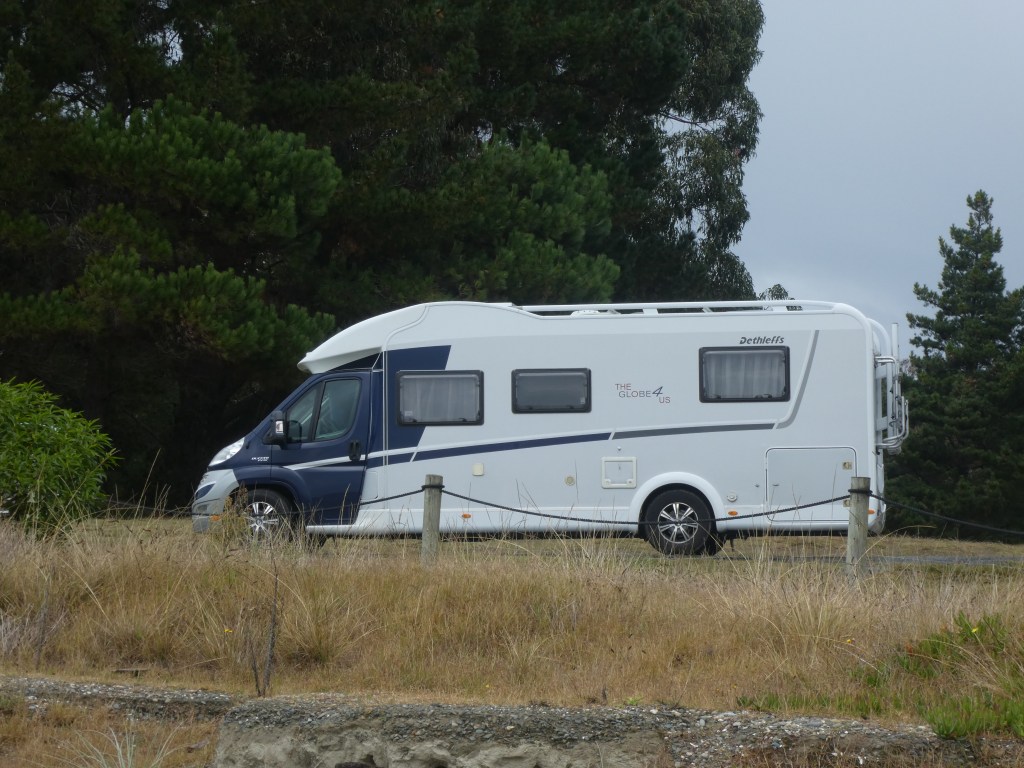
The road to Hokitika though was so beautiful we had to make several stops. First though, we had to escape the wekas in the Westport park. They are so curious that one even came into the van when my back was turned.
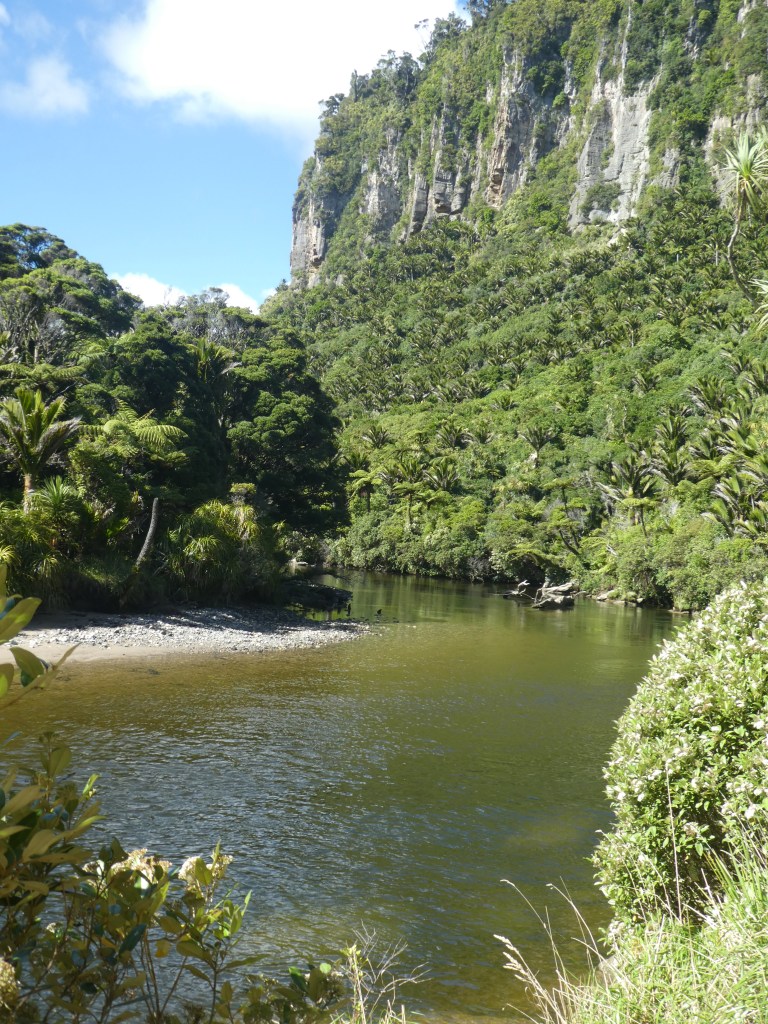
The road south heads inland for a while, and we enjoyed our views of the inland rocky rivers. We stopped to explore a little at the Paparoa Scenic Reserve, which included walking along some of the narrow, outside edge of a bridge to get the perfect shot.
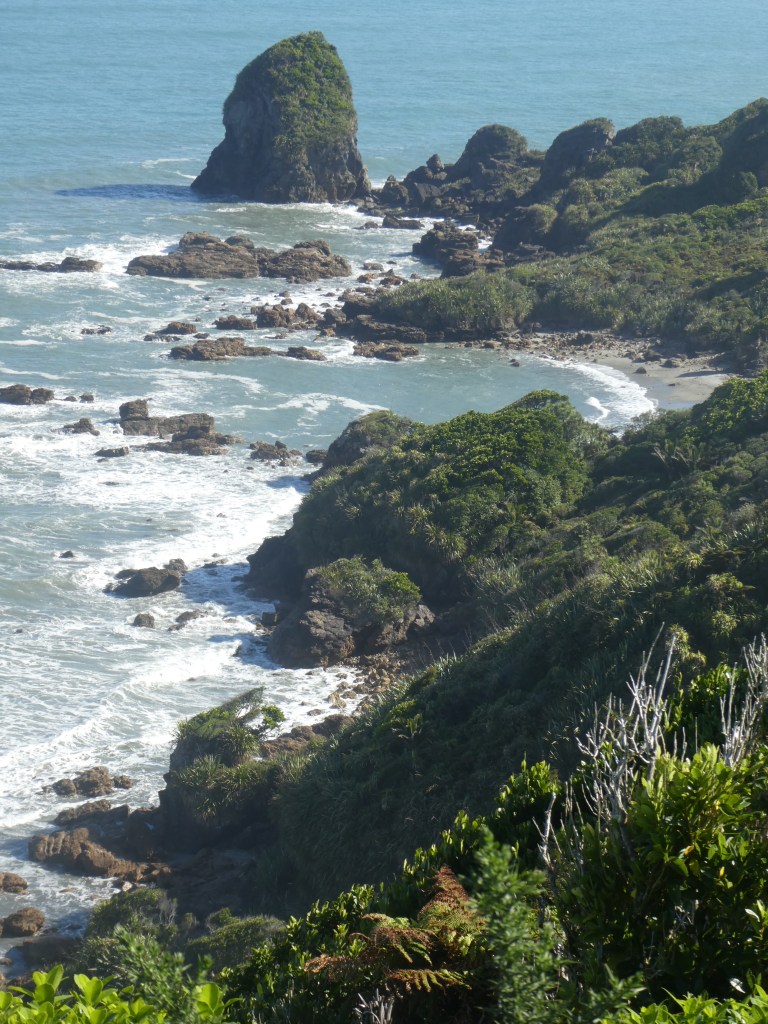
The coastline is rugged and beautiful.
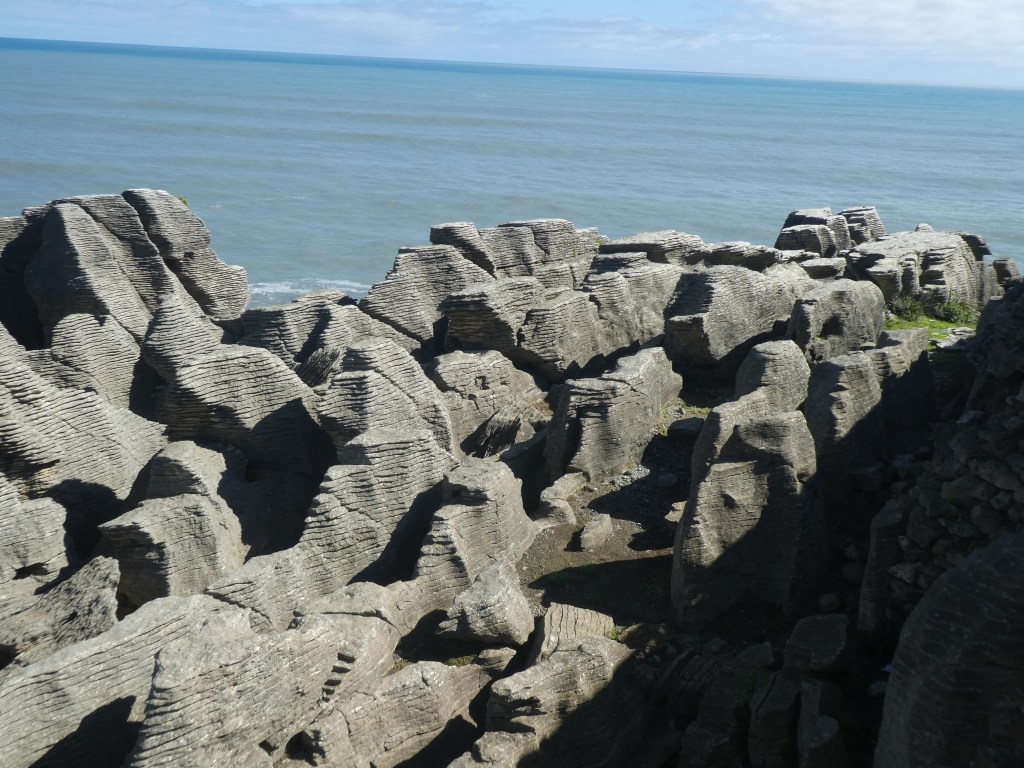
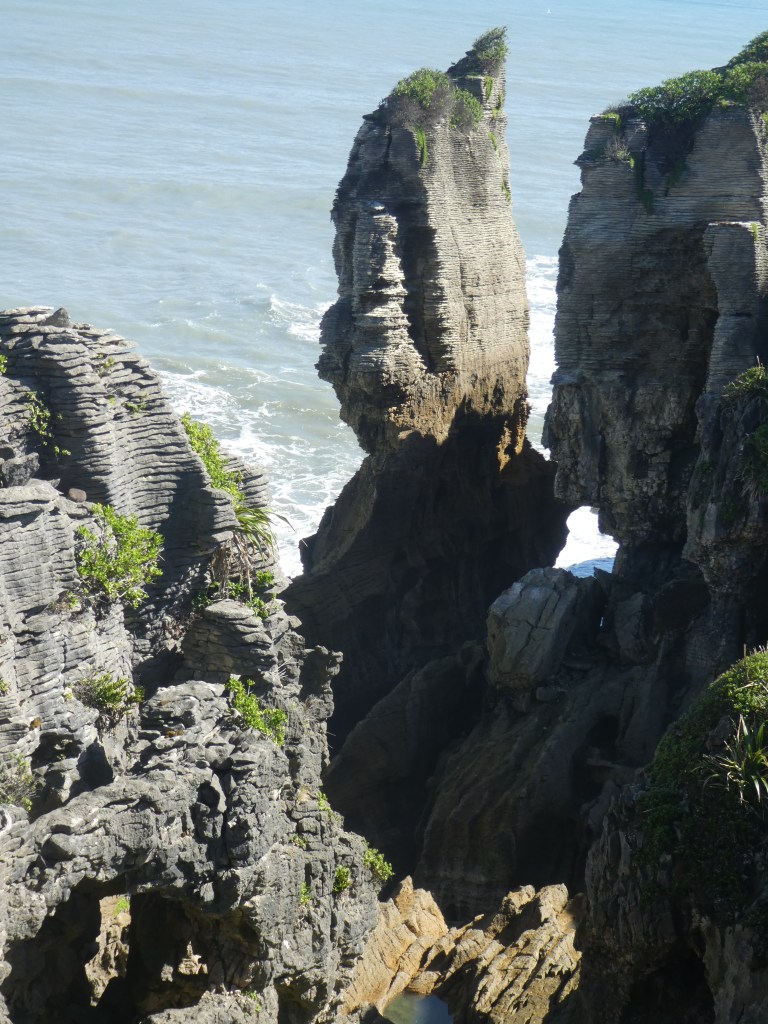
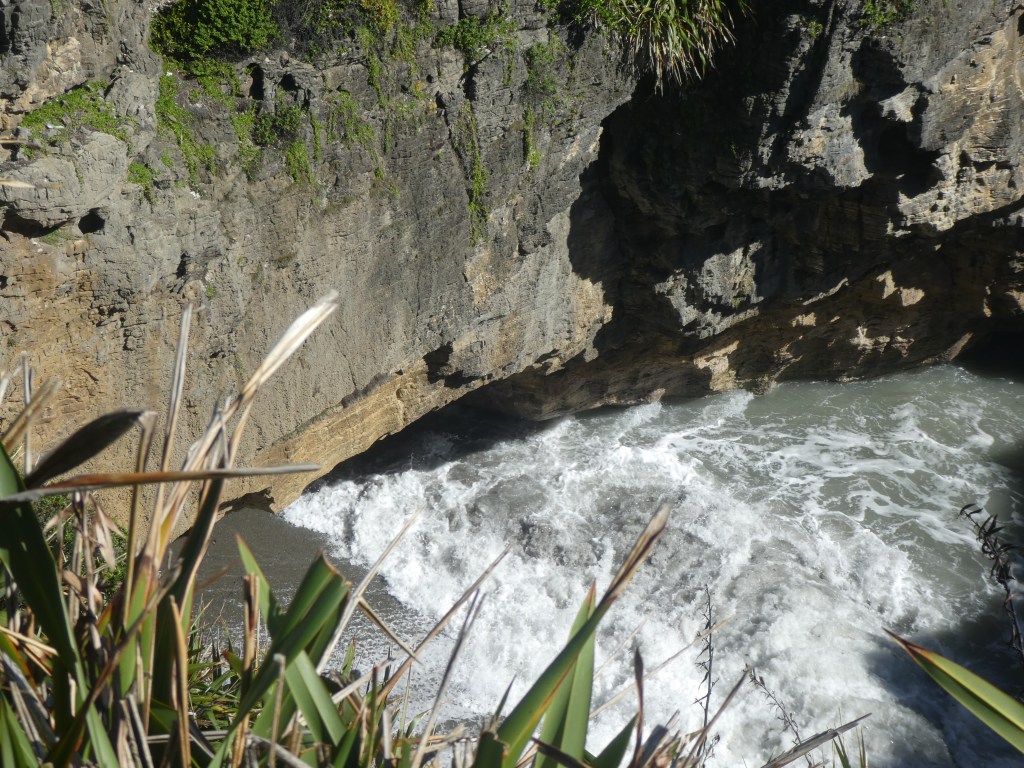
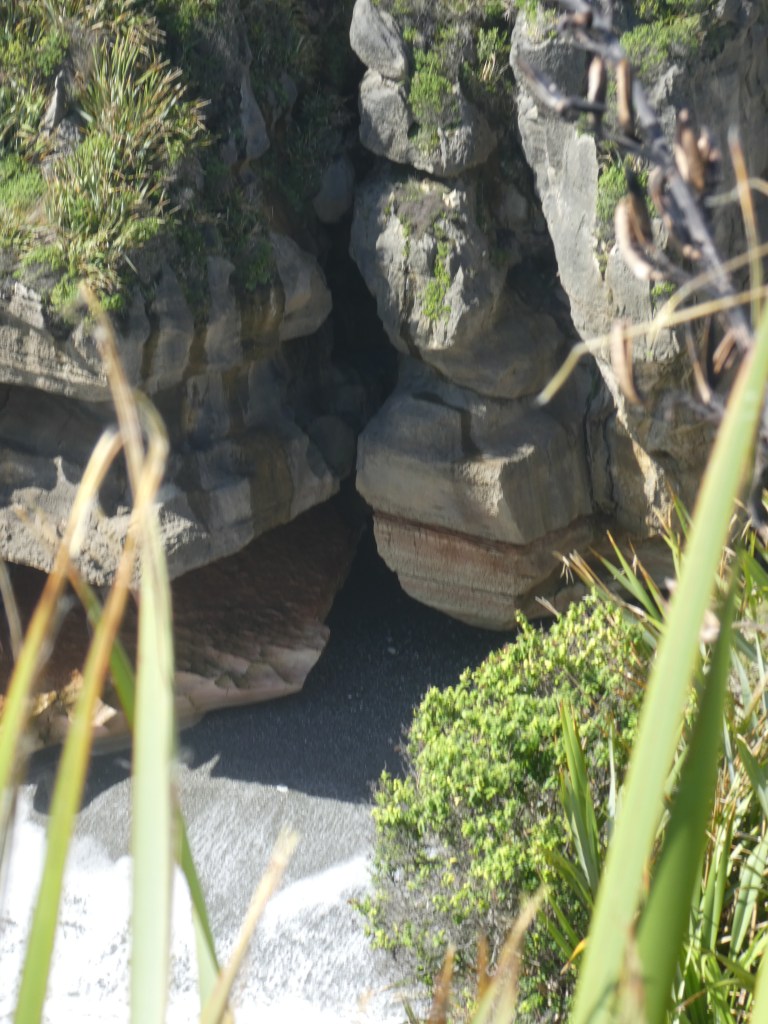
Our next stop was to Punakaiki or the Pancake Rocks. We have been there before but were still not disappointed by this visit. The noise of the waves crashing into the blowholes is just as impressive as the views.
We finally arrived at the Hokitika NZMCA Park just before 4pm, but that still left us enough time for a beach walk (along the river banks) but that offered a disappointing selection of likely rocks.
Before we went to bed we decided to use a small amount of Dad’s legacy on a helicopter Glacier tour. Unfortunately, I mistakenly booked it for the next day, so we needed to head away from Hokitika early the next morning instead of staying the second night as we had planned. We hoped that we would be lucky with the weather, as we had tried this once before and the weather got in the way – maybe second time lucky.
We set off bright and early this morning, down the coast towards Westport. Today is also our 24th wedding anniversary so we decided to spoil ourselves with a celebratory morning tea at the Factory Corner, in Richmond. We have been there before, and enjoyed it, and this time did not disappoint either. Bruce thought his cheese scone was one of the best he had eaten, and my berry brownie certainly was. We also went across to the food barn and purchased a big piece of smoked cheese.
By the time we had started driving south towards Murchison, the drizzly wet weather had cleared, and by the time we actually reached Murchison the sun was shining. We stopped at the motorhome park for lunch, and to drop off a few more travel diaries (that we are now giving away), then on to Westport.
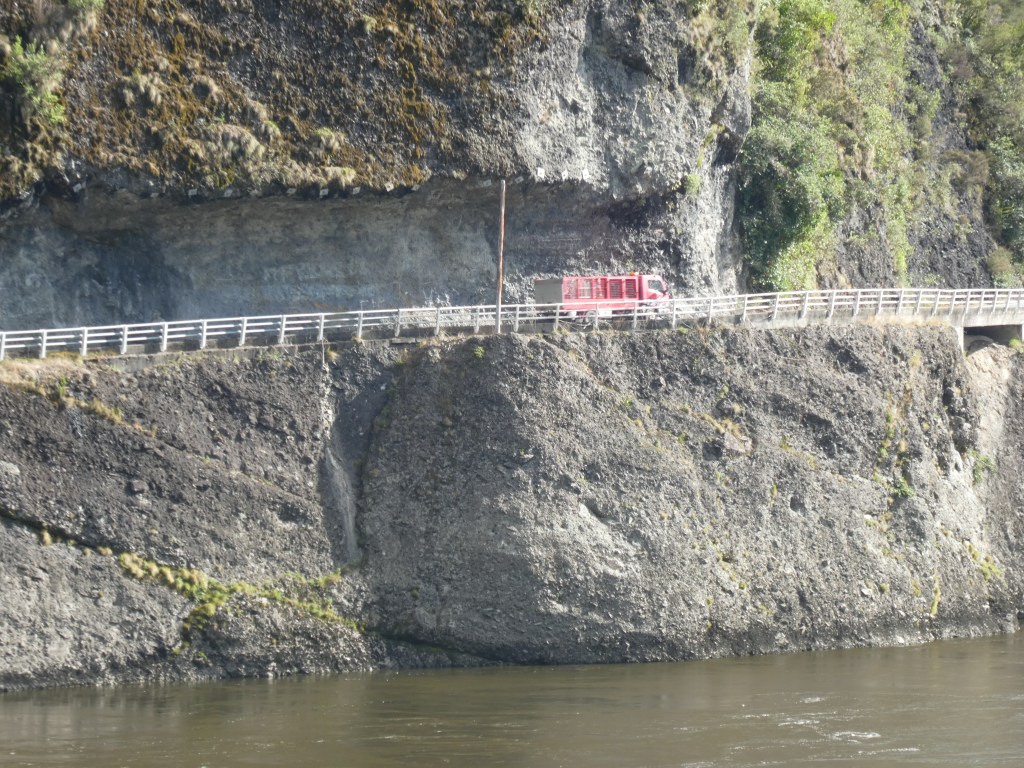
To get there we have to travel through the famous, single lane rock cutting. Bruce got a very good video of it while I was driving through, but the still photos will have to do for this site.
We arrived at the NZMCA park in plenty of time to be able to take a good long walk on the beach, doing a bit of rock collecting as we went. It was not a typical west coast day in that there was almost no wind again, so the beach was really pleasant.
We came across a beach “monster”.
Some enterprising individual had spent quite a long time painting up this log, and the result was quite impressive.
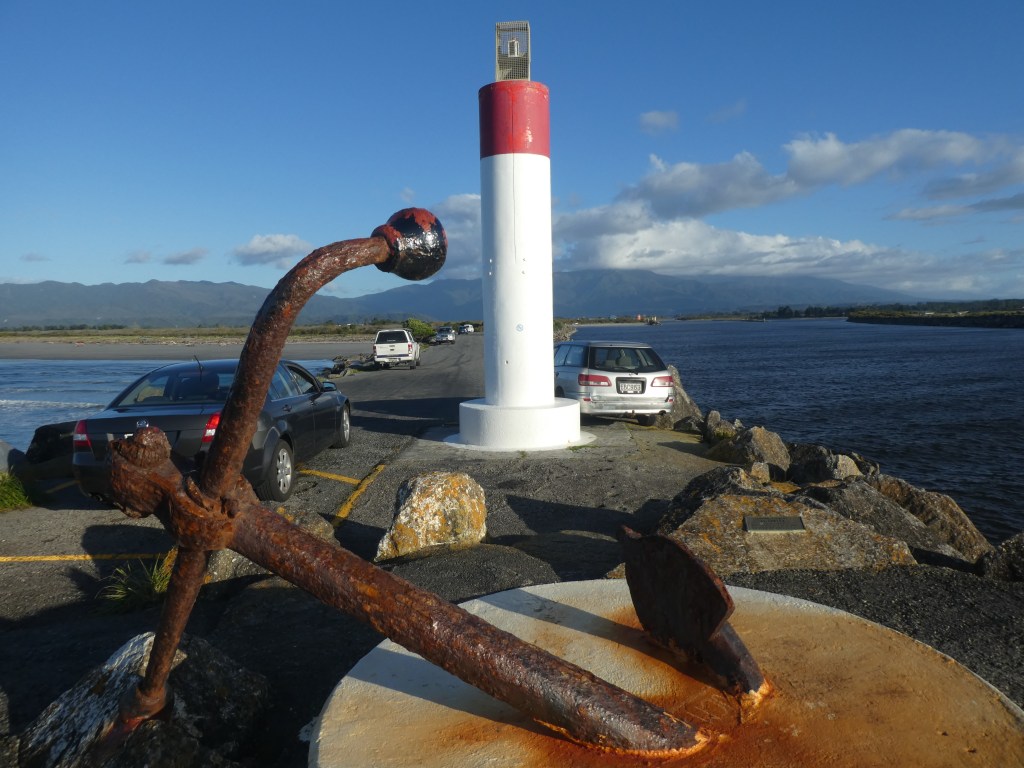
Because the sea was so calm, we did not get to witness some of the fishing boats struggling their way up the river, over the bar. There were several surfers in the water but even they were struggling to find good waves in the calm conditions.
After taking a few photos we made our way back along the beach towards camp, and to relax for what was left of the day.
There was a heavy rain warning for Nelson Marlborough so we stayed put at the Collingwood Motor Camp, and the next say dawned as if the bad weather had never happened. After completing the domestics (filling some tanks and emptying others) we made our way towards Motueka again, over the legendary Takaka Hill. This time it was Bruce’s turn to drive it’s steep corners.
Near the top we decided to have a look at the Ngarua Caves. The tour departed every hour so we signed up. The caves are on private farmland that is riddled with tomos and underground caves, but we were told that the cave we were taken through is the only one that has an accessible entrance.
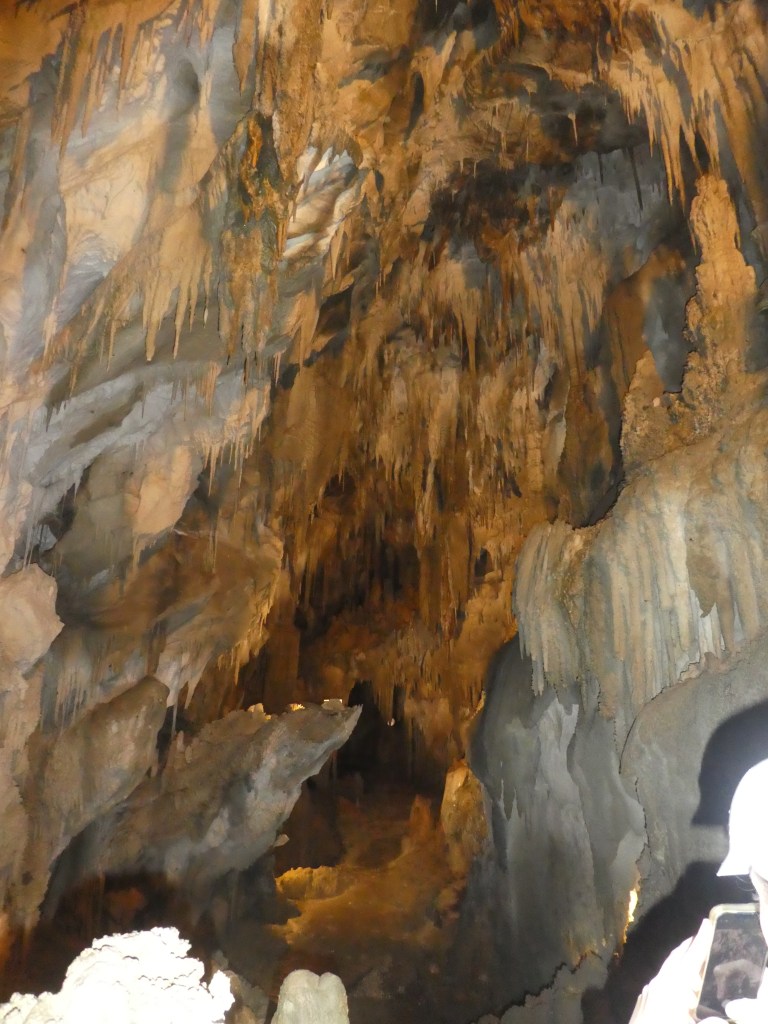
We were kitted up with helmets and led into the cave that is apparently more than 30 million years old.
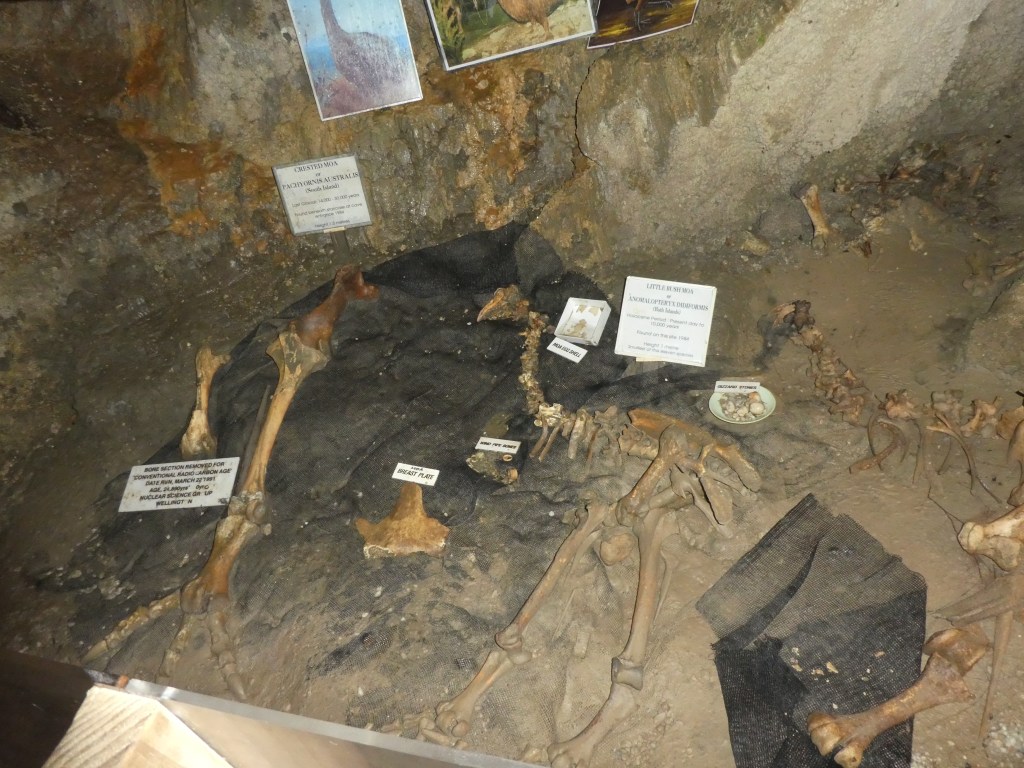
The temperature underground is a chilly 11 degrees, all year around, and there is next to zero humidity. Apparently, if you hung wet washing out in the caves it would take many years to dry. We were also told that you don’t feel and earthquake if you are in the cave, which I thought defied logic. The paths were narrow, and the cave itself featured 18 full moa skeletons (the smaller bush moa). Apparently the government has removed most but left a couple of skeletons for exhibition. It seems the moa fell down a tomo and either froze or starved to death.
The “Cathedral” of the cave was magnificent, with superb acoustics. The guide encouraged us to sing but there wasn’t anyone taking up his offer.
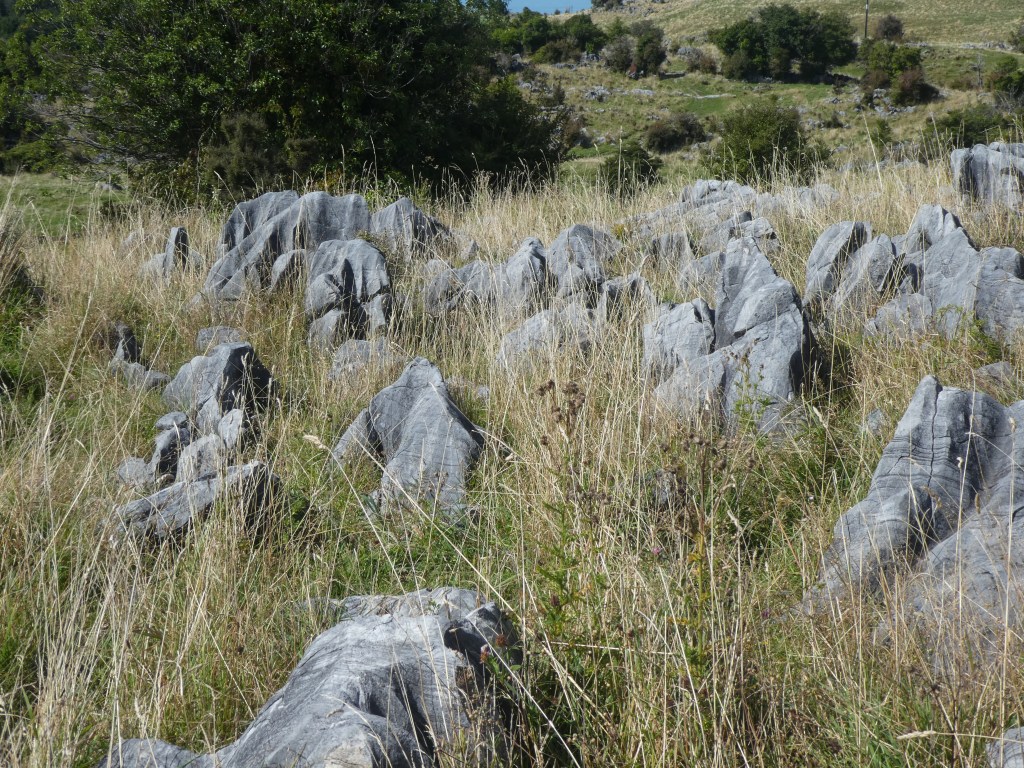
Apparently this piece of land, with its craggy rocks, was used for shooting part of the Peter Jackson Hobbit film. We were told they took 4 days to shoot just a few minutes of the movie, and no-one in the film took the opportunity of visiting the caves.
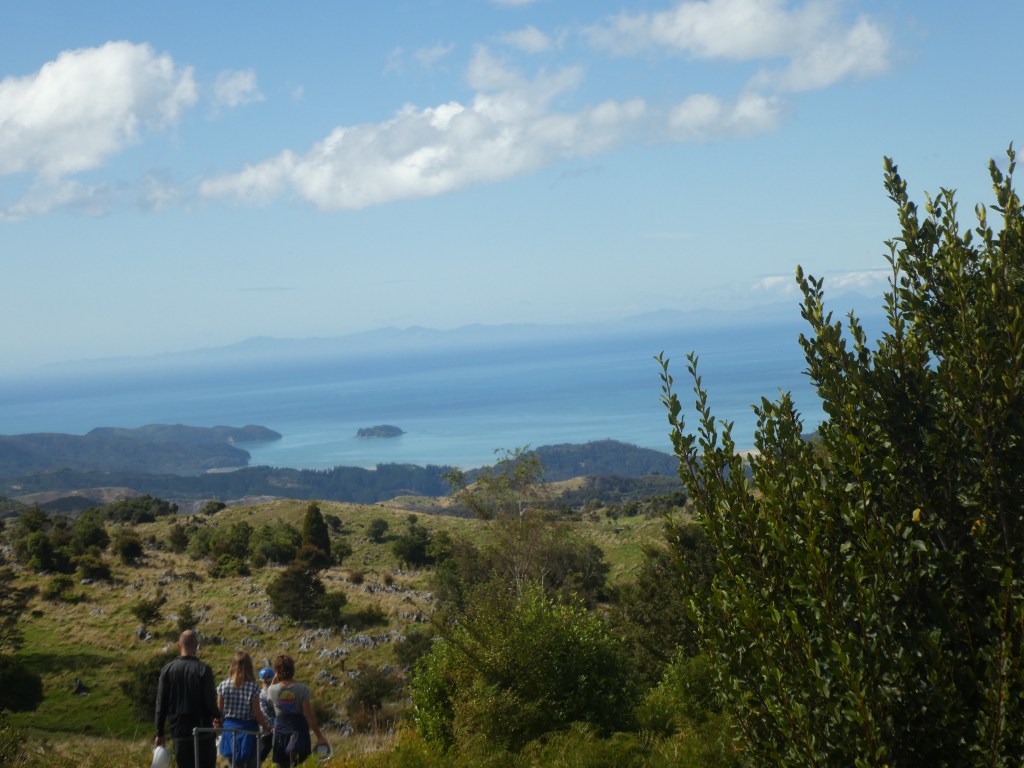
The grounds of the caves also offered a great view of Golden Bay.
Before long we were on the road again, heading for Motueka. My cold had gone so we called in to see Auntie Ellie, who has clearly deteriorated since we were here a year ago – so sad. Then we spent the rest of the afternoon at the Mapua Wharf having a few drinks and chips with my cousin Dee and her husband David. They are a great couple and we thoroughly enjoyed our time with them.
To finish the day we headed back to the NZMCA park, with plans to travel to Westport the next day.
Before we even left home, we decided to do the Farewell Spit tour, as we were leaving the dogs at home. Today was the day, and we could not have had a better day for it – almost no wind, which is a rarity on the west coast. The end of the spit is only able to be visited using the official tour, and they are the only ones with permission from the Conservation Department. We had to be at their offices at 8.30am and I was a bit surprised at the number of people there – two 4 wheel drive buses and 60 people. I had collected a brochure the day before and was pleased to see that some of the places to be visited today were places that we had decided against visiting the other day.
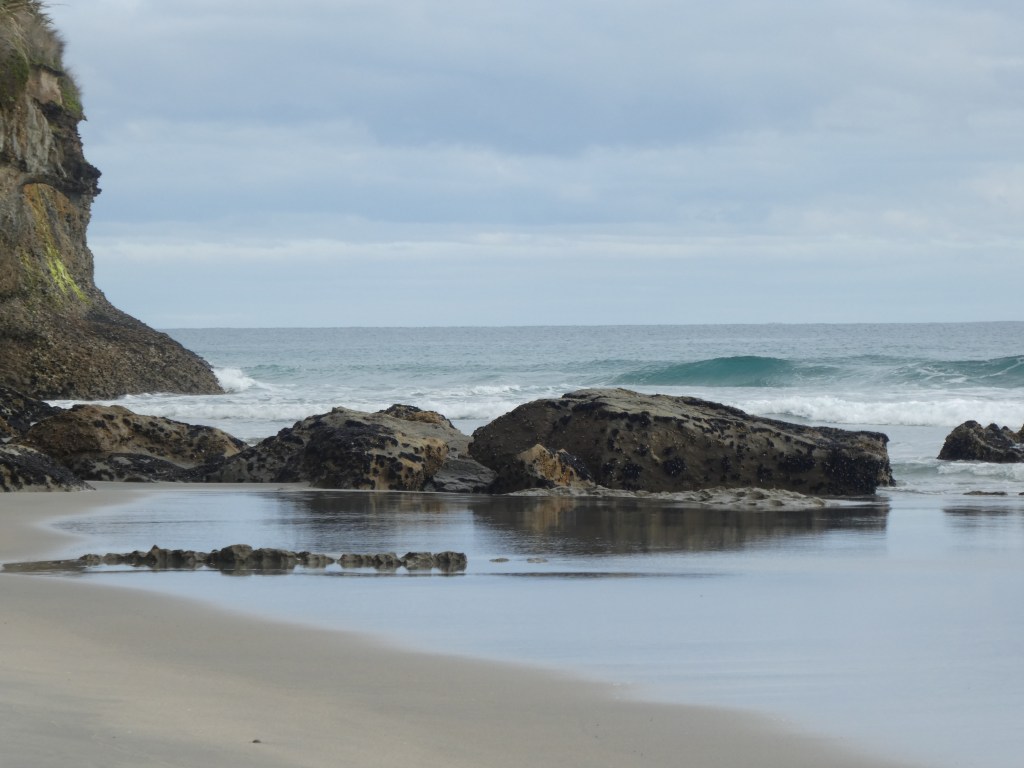
The first stop on the tour was to a place called Fossil Point. There are supposed to be fossils there that are 70 million years old, but to be honest, Bruce and I struggled to find any. However, we enjoyed the chance to stretch our legs and look around the beach.
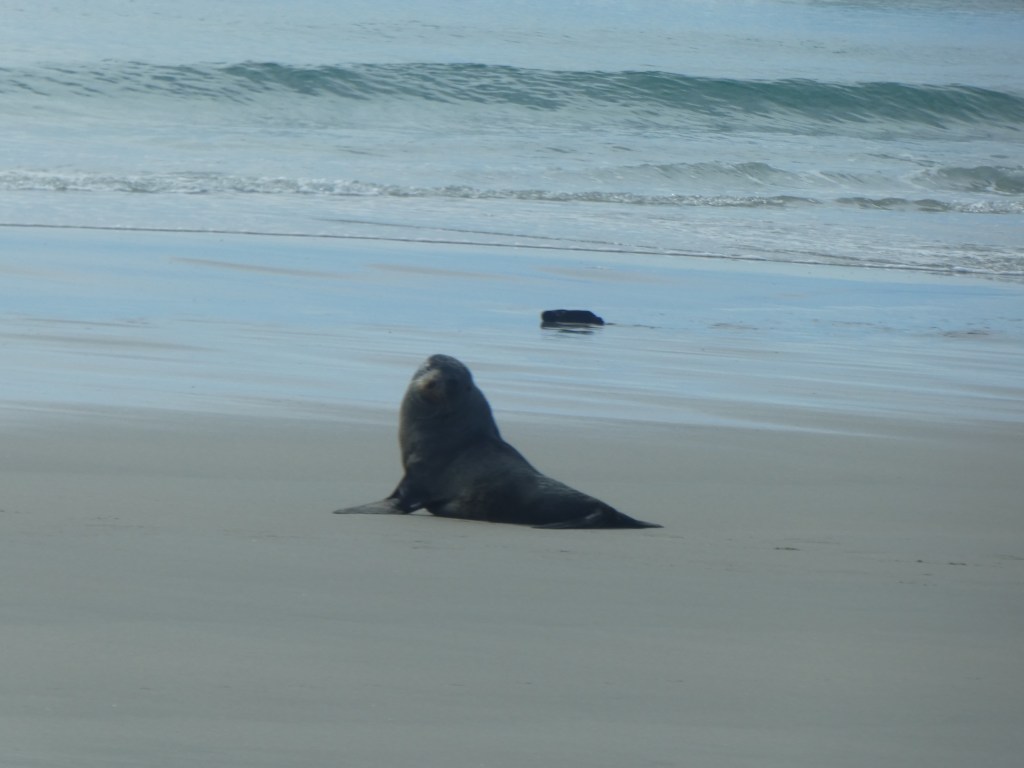
As we made our way along the Spit we had our attention drawn to the birds – terns (White Fronted; Black Fronted and Caspian); dotterels and gulls – all of which we have seen at home in our little bay. There were a couple of seals today though
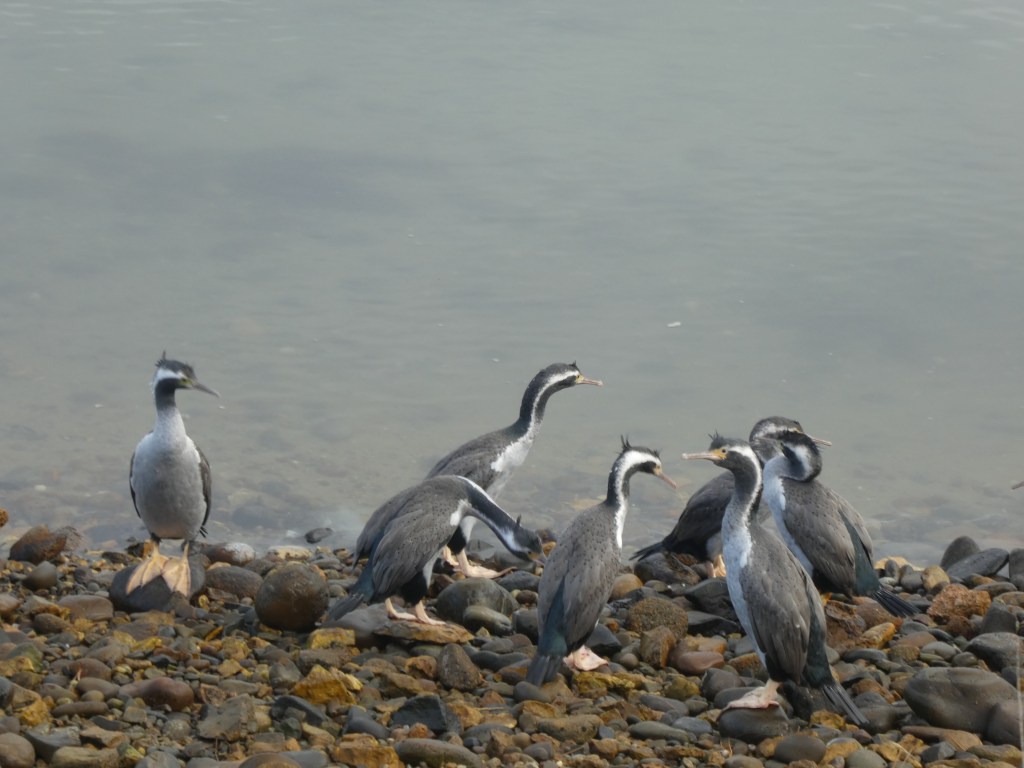
and more unusually, some Spotted Shags (which are fairly rare)
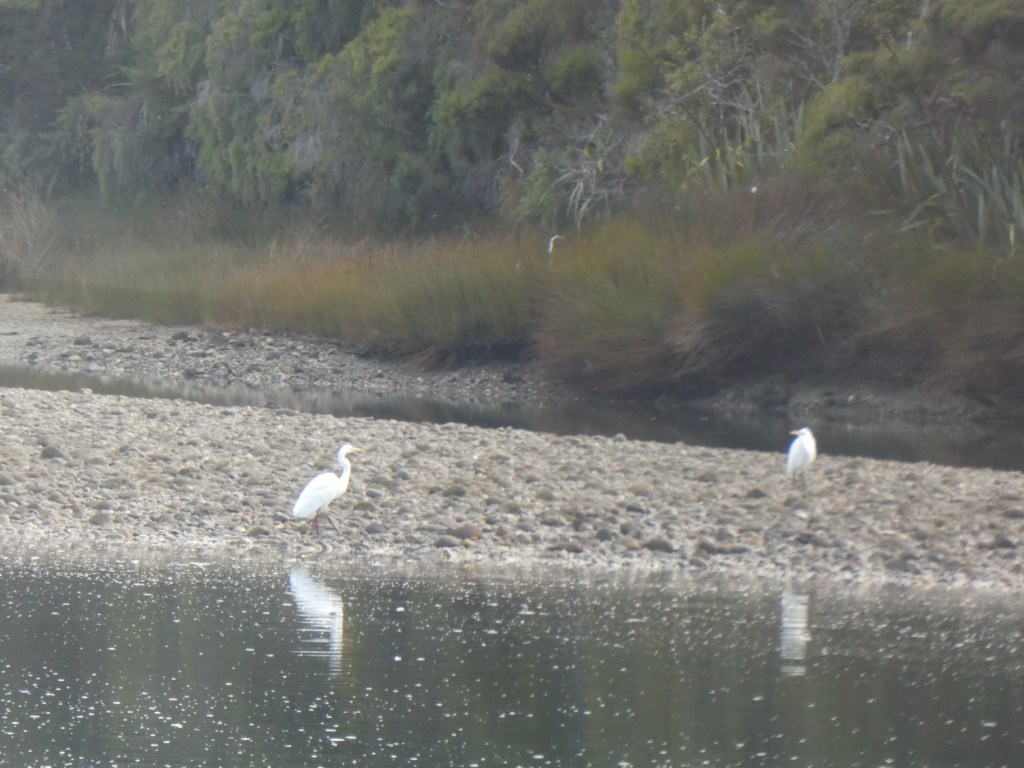
and some white herons
We also saw a flock of Spoonbills but they were too far away to see clearly; and there was a nesting site for gannets also too far away to see clearly.
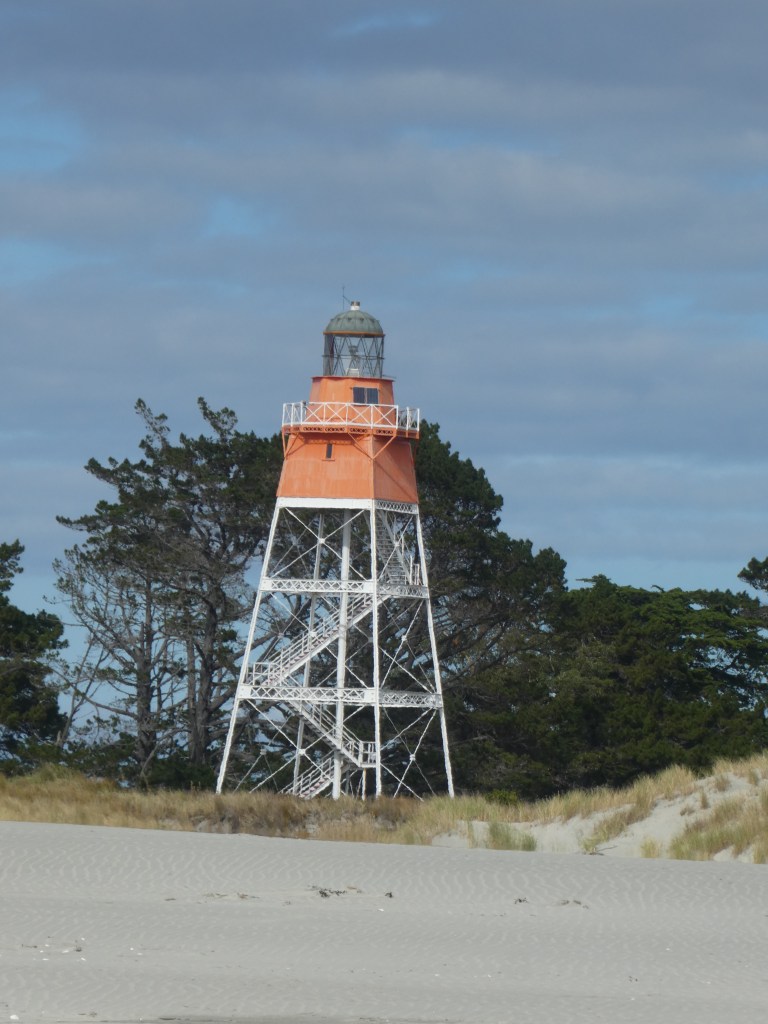
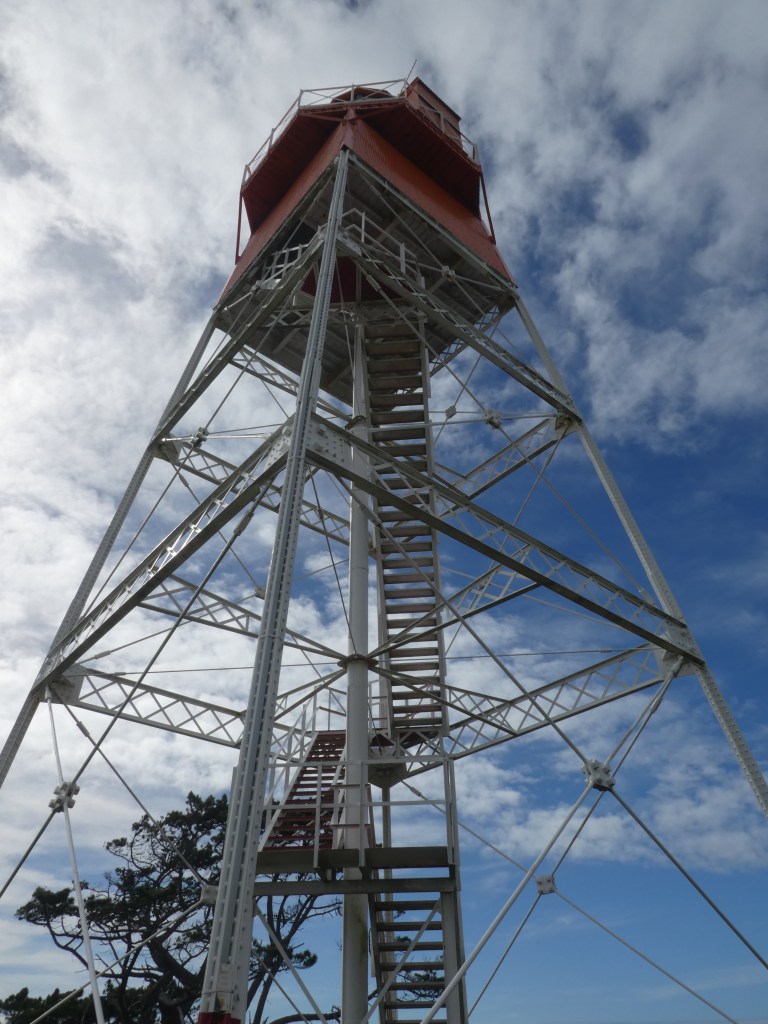
The next stop was to the lighthouse out on the Spit. This was originally built in 1869, but was rebuilt in the 1890’s as the original timber base did not survive the elements. It was manned until 1984. One of the original light house keepers planted and nurtured some macrocapra pines here to provide some shelter from the incessant wind and sand, and they have done an amazing job.
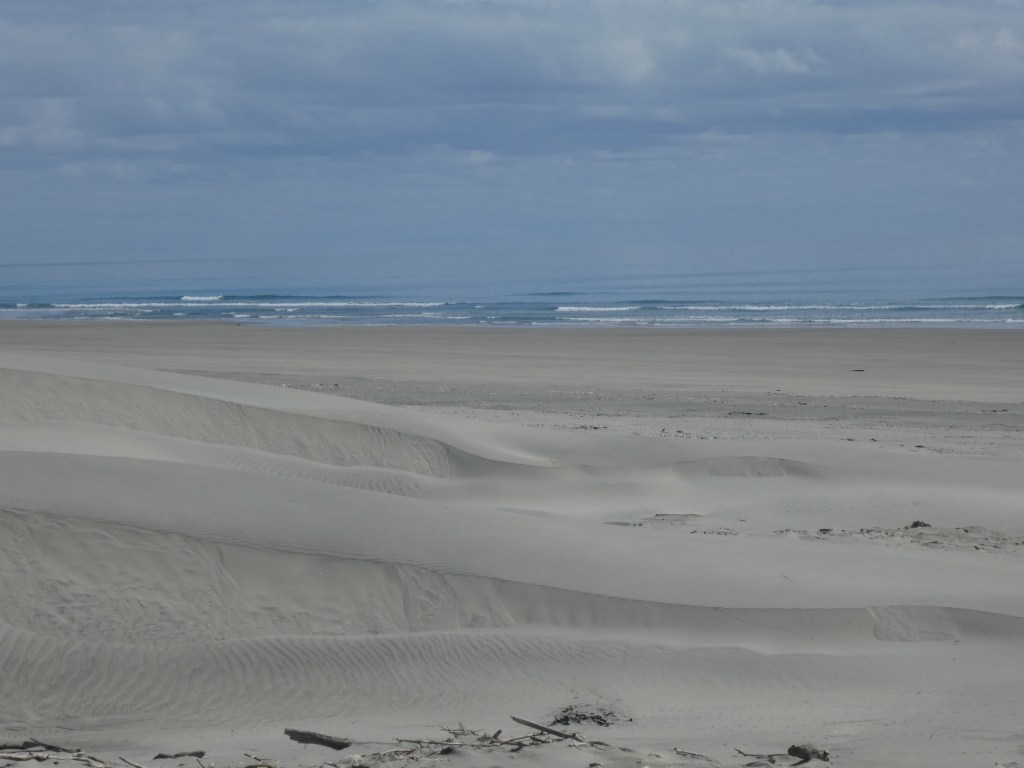
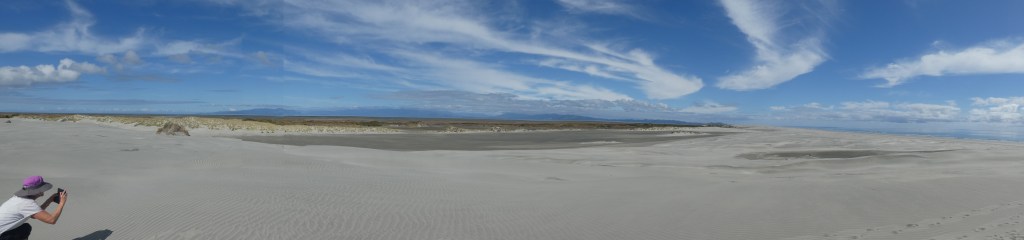
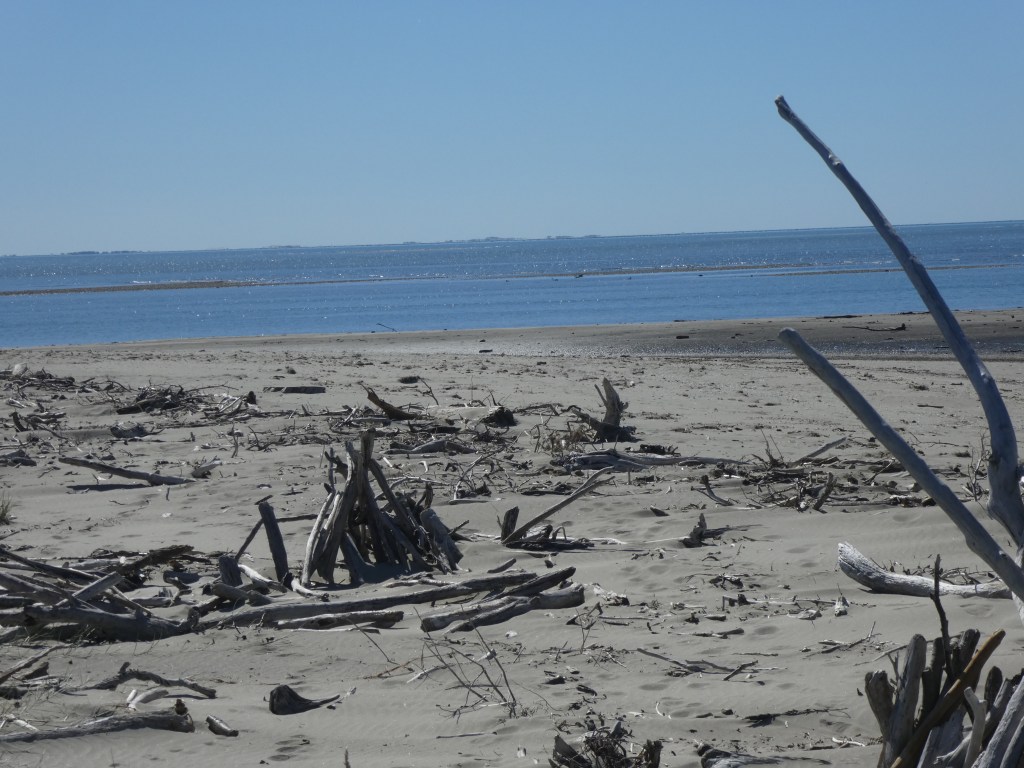
After a coffee and a muffin we drove a little further out to the end of the Spit before back tracking, and making a stop at a large dune. The landscape here is much like a desert – sand everywhere.
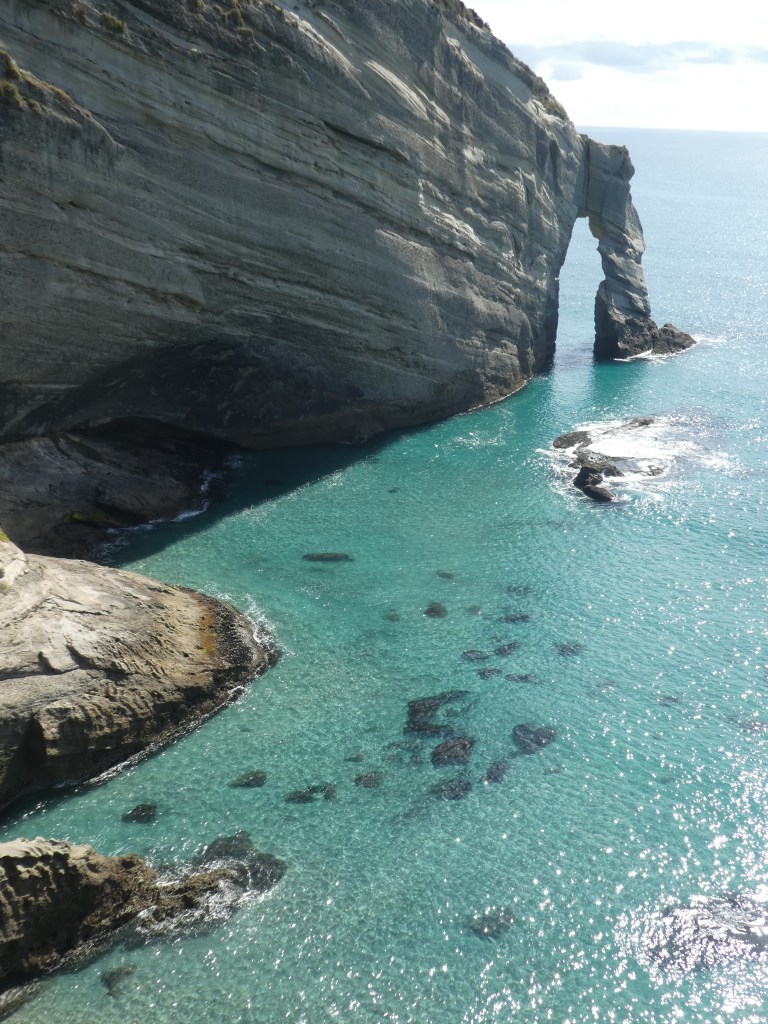
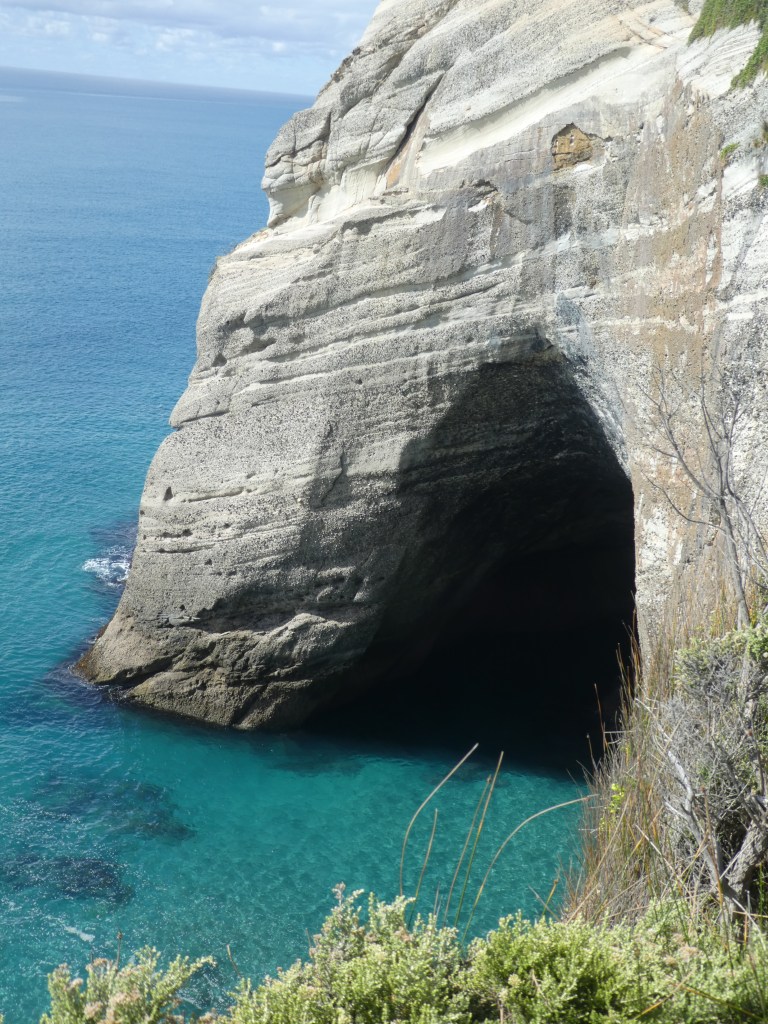
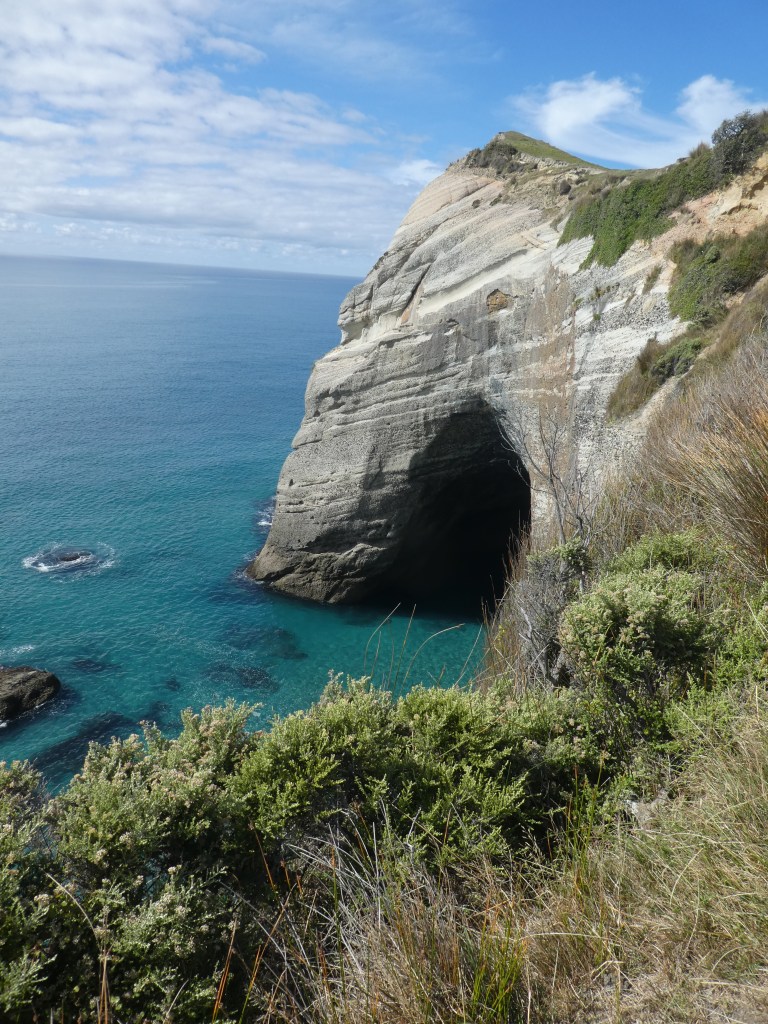
Before long we were off again, making our way to Cape Farewell, which is the most northern part of the South Island, and bout 30kms north of Wellington. this was a truly spectacular place. The colour of the water was amazing, and the cliffs very steep. What was notable was the lack of barriers – people were trusted to keep a safe distance from the edge!
We were then brought back to Collingwood, and we came back to camp. The weather today has been great but the forecast for tomorrow is anything but, so we elected to wait out the weather here.
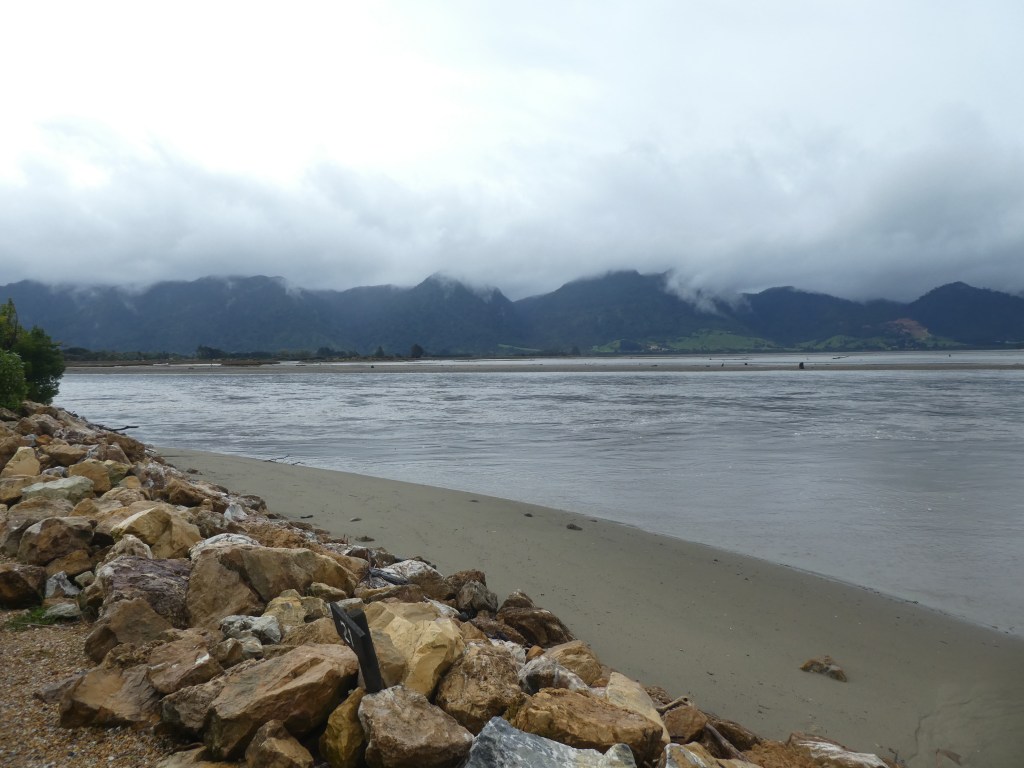
What a difference 24 hours makes. The rain started at about 11pm, and continued until 2pm the next day. The river now looks like this
We could not wait to get away from the camp at Wharariki, so left as soon as we could and headed back to civilisation. We meandered our way up the coast, and finally came to Collingwood.
Collingwood is a very small town, but also a very old one. We were told that Abel Tasman was the first explorer to come here, although he never actually landed because his long boat was attacked by Maori as soon as it hit the water and 4 of the 5 crew were killed. For that reason, Golden Bay was originally called Murderer’s Bay. Gold was discovered here in 1856 but it was alluvial gold, and not in great quantities, so the gold rush only lasted 3 years. Since then the area has been mined for coal, for magnesium, and for flint.
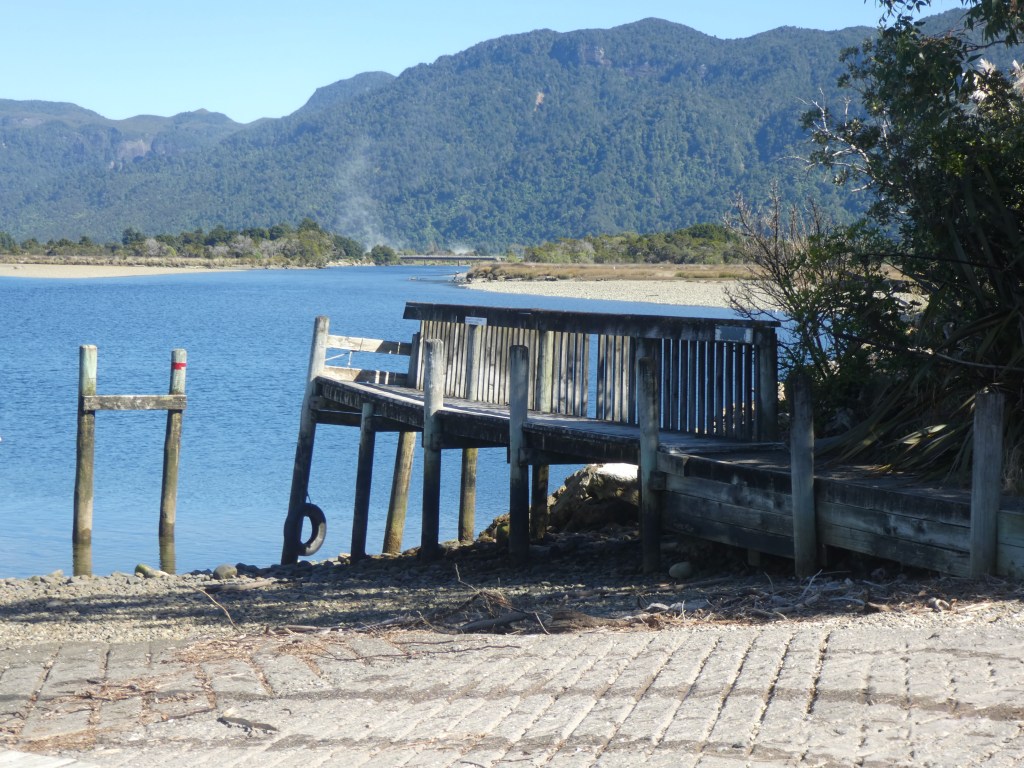
We parked by the boat ramp and walked the town, which did not take long.
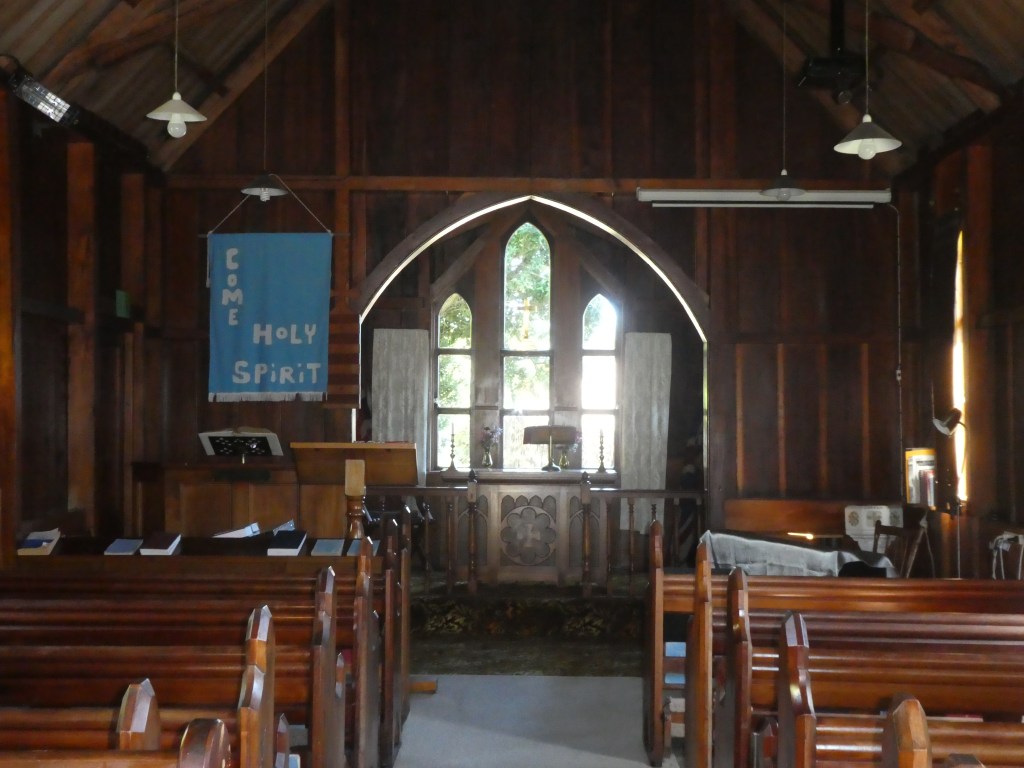
However, the place was really well looked after, clean and tidy. We discovered the original church built here in 1873, and it was really well preserved and still in use today. It is the oldest surviving building in Collingwood. Apparently there have been at least 3 fires in the town that destroyed a lot of the original buildings, but the church, being up a hill and a little away from the other buildings, survived.
We had a coffee in what was once the courthouse, and probably the only cafe I have been to where horses are tethered outside.
The town is on the meeting place of the Aorere River and the sea, and the beach is sandy; the river abundant with sea life.
We discovered the Collingwood Holiday Park and booked in there. It is probably the best complex we have been in. It is small, immaculately clean, and we have a park right on the river front. It costs the same amount as that horrible place at Wharariki. There is fresh water available and a dump station just out the gate!
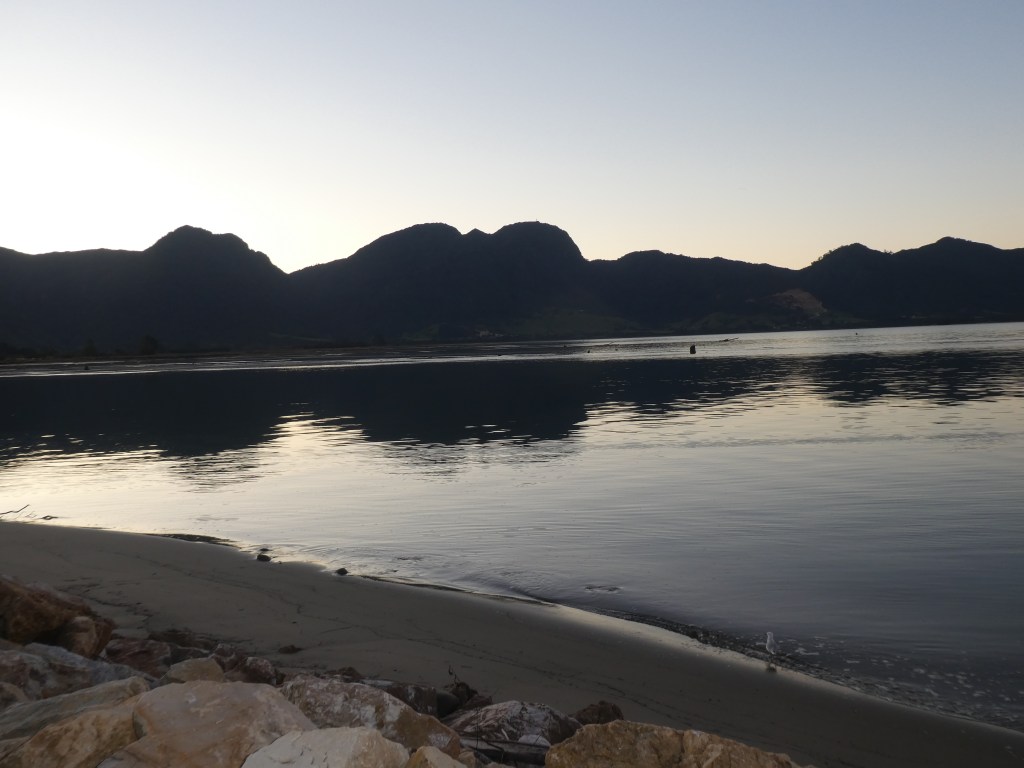
We were able to relax on seats beside the van, watching a beautiful sunset, and the splashes if fish jumping in the river.
Today we left Motueka and headed towards Farewell Spit. I was driving today and the first obstacle was meeting a big truck on a narrow two way bridge. Unfortunately, I had not seen it coming before I entered the bridge. I had to stop, pull my mirror in and we squeezed past with cms to spare. Some self entitled man in a car a few behind the truck yelled out “idiot” to me as we drove past him. I stopped on the other side of the bridge to collect myself again, and also to let other cars pass, but it was a bit unnerving.
The Takaka Hill is no less steep or windy than it was the last time we travelled it. we had a brief stop for lunch in the township of Takaka itself before carrying on. Bruce wanted to spend a couple of nights at the Old School Cafe Park Over Property, and we arrived there at about 3pm. However, we could not see the point in sitting there looking at a paddock of cows for a couple of days so we carried on.
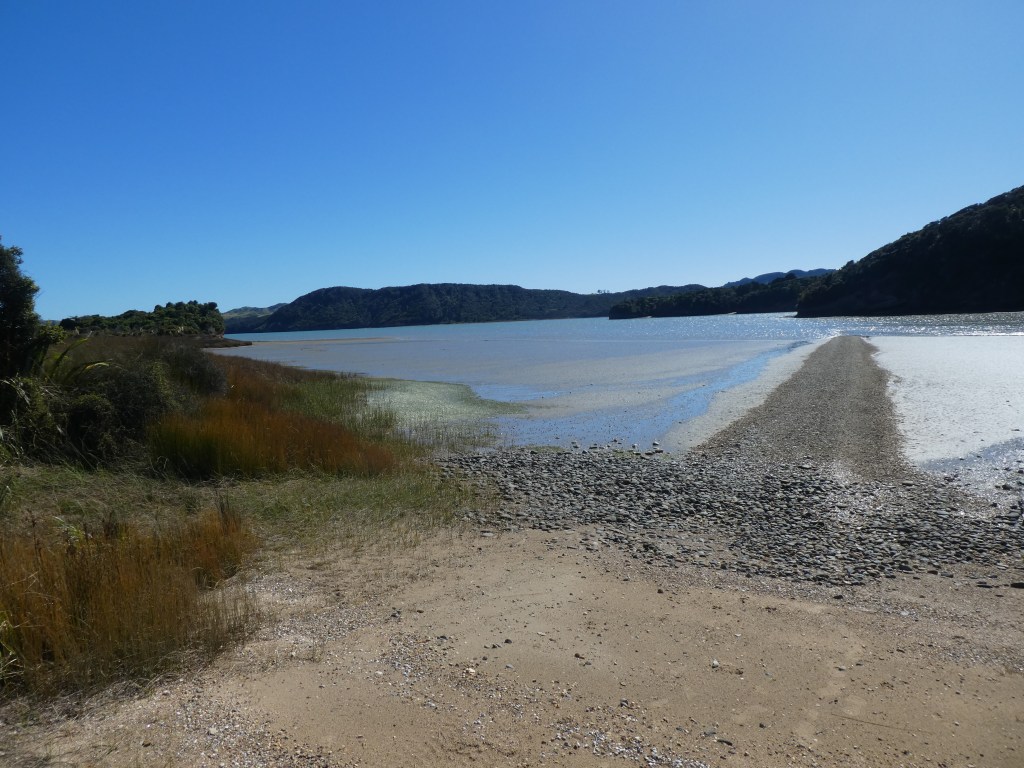
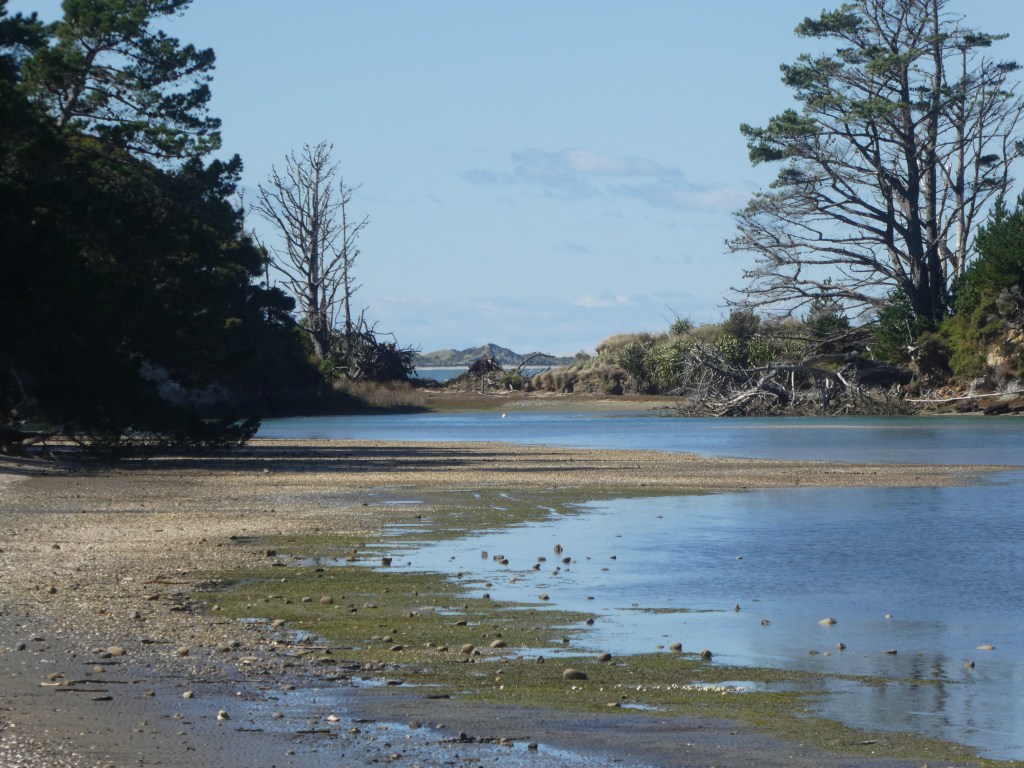
First we headed out to the Whanganui Inlet, which comes off the West Coast side of the spit. We could have gone around it for abut 40kms on a metal road, but figured the scenery would not be much different, so after a quick look we came back again.
Next we headed towards the Puponga Farm Park.
There was a small rest area just at the entrance to the park and we stopped there for a look and a coffee before deciding our next move.
We read about the Wharariki Arches, and decided to head that way. There was a motor camp there so I rang and booked us in – big mistake! The service at the front counter was brusque, to say the least. There was no internet, no water, no rubbish disposal and long drop toilets that had never been cleaned. Had we realised there was a big carpark area for the Arches, we would not have gone into the camp.
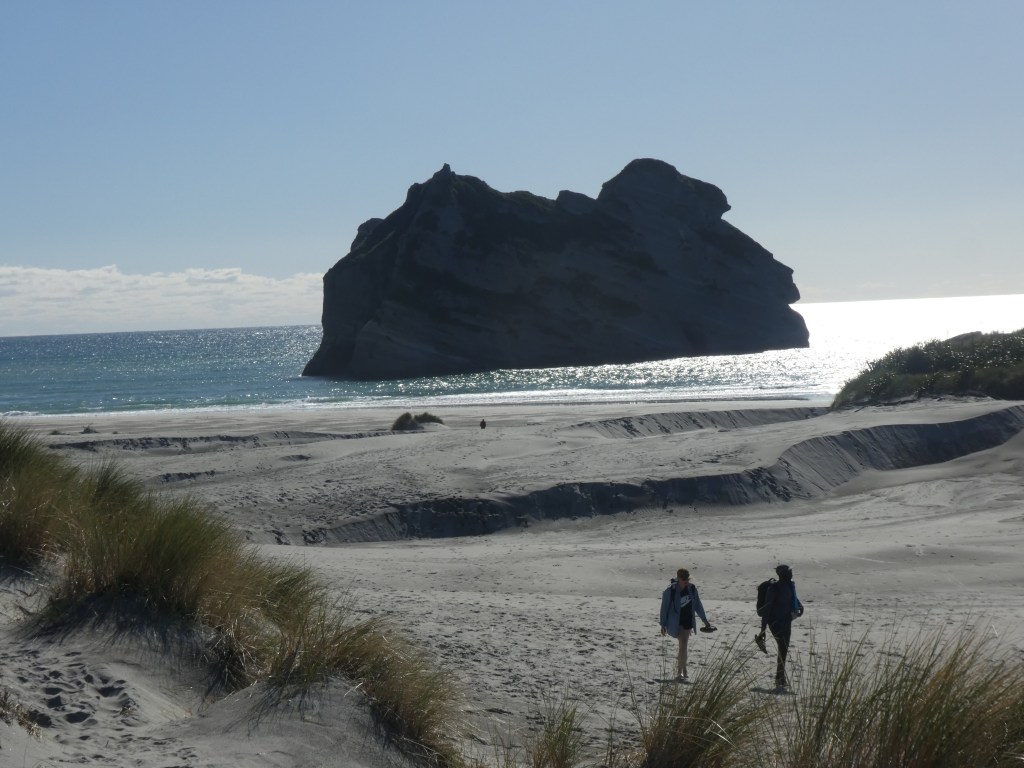
Anyway, after setting up camp we put on our walking shoes and walked the one km track to the Arches. You go over a private sheep farm, and through a bit of scrubby bush, to reach the massive sand dunes at the beach. The walk was very popular, and the carpark was fairly busy. Unfortunately, the tide was coming in, so not the ideal time to visit the Arches, but it was spectacular just the same.
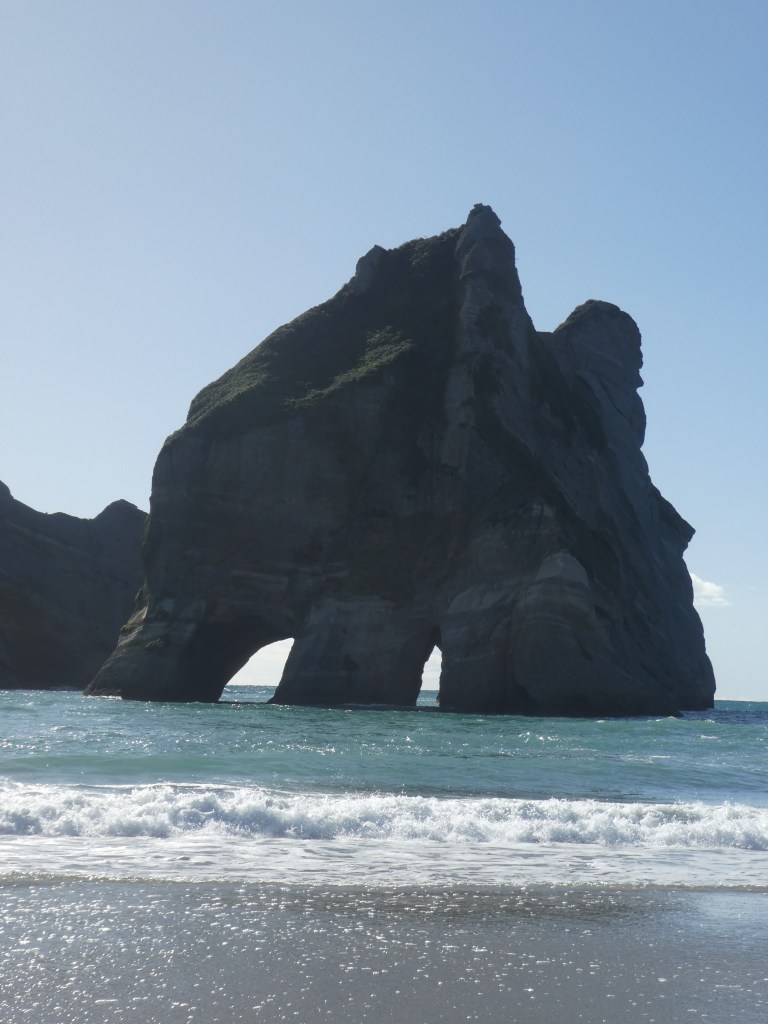
Apparently there are frequently seals in the area, but none today. The beach is wide, with clean white sand. The islands are made of a sandy, gravelly conglomerate type of rock, so there were several areas where the sea had worn a channel through the base, hence the formation of the arches.
In the distance we could see Cape Farewell, which also has an arch. We read that these arches are the most photographed arches in NZ and are often seen on calendars and even as an image in Google.
We enjoyed exploring and as the sun was getting lower in the sky, the light patterns around the islands were beautiful – it looked like the island was sitting in a pool of glitter.
We meandered our way back to camp, and although we had a peaceful (but cold) night there, we could not wait to get away from this particular camp.
Overnight was a bit chilly in Motueka, but the park was quiet and we had a good rest. We took the opportunity of getting a few groceries, and a bit of van maintenance, and then went out to Rabbit Island for the day. It was somewhere we had not been before.
Rabbit Island is accessed via a cycle ferry from Mapua, but as we did not carry our cycles this trip, we accessed the island by the causeway that comes off near Richmond. The whole Island is set up for camping and day trippers – no overnight stays and no dogs.
We parked up in one area for coffee, lunch, and a walk on the beach.
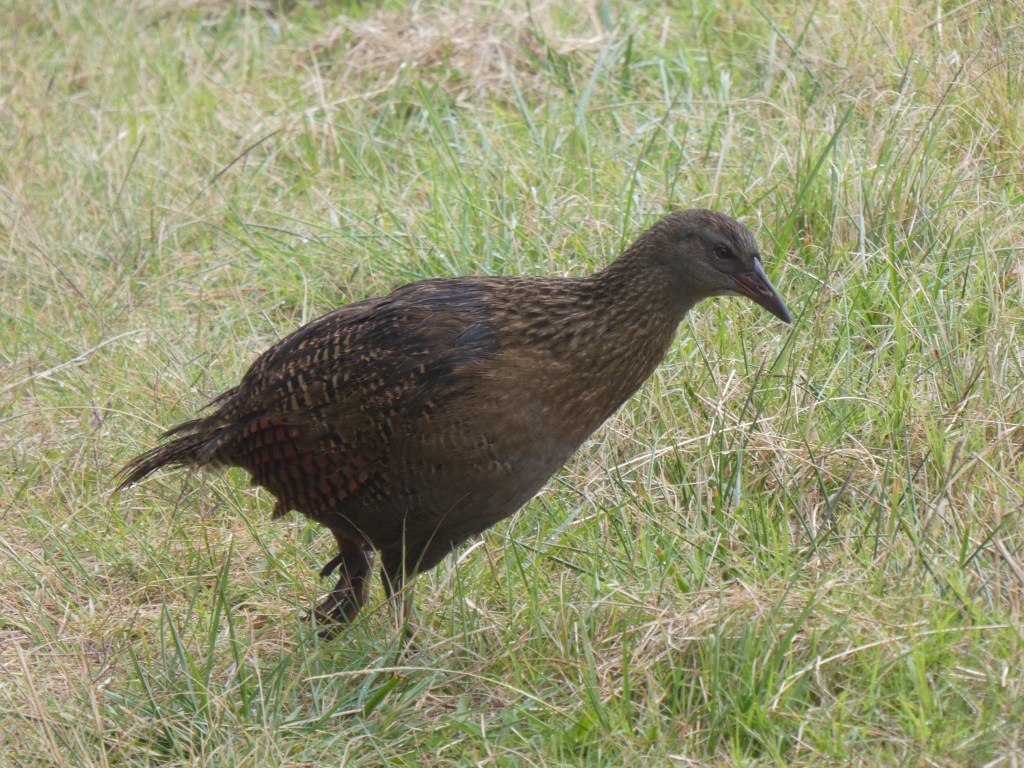
We had to watch out for wekas here which was a bit of a surprise.
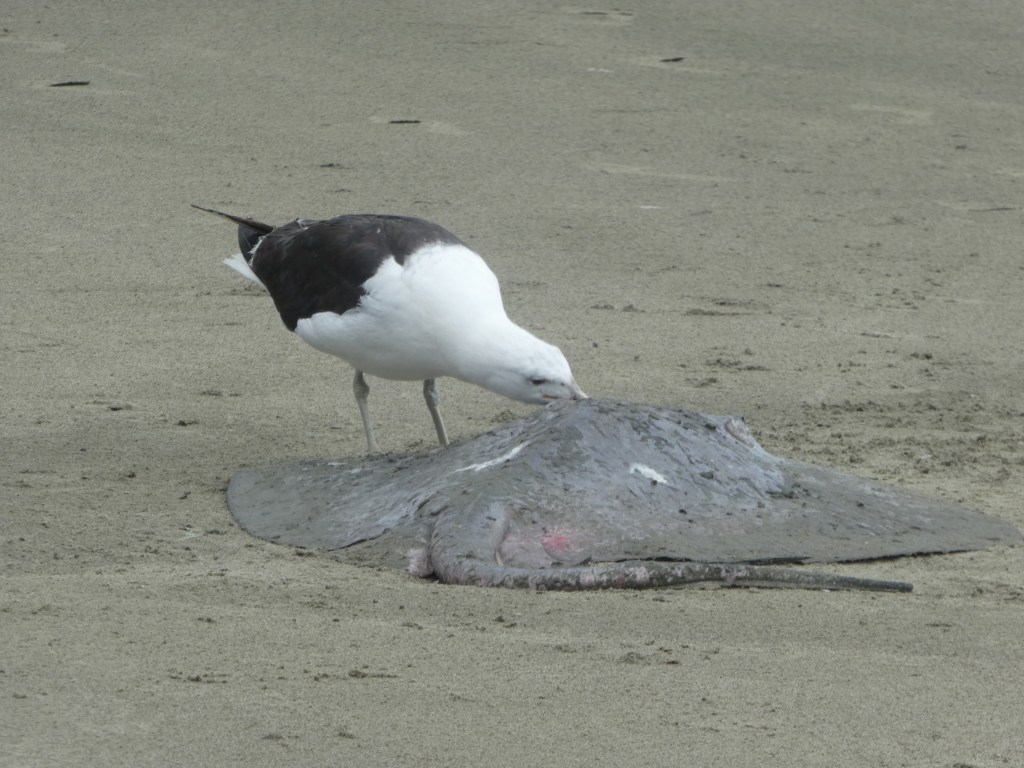
The beach was long, with white sand, and not many shells. we came across a dead stingray that a black billed gull was feasting on, but not much evidence of sea life apart from that.
This was essentially a lazy day for us as we could not go and visit relatives because of my cold, which continues to linger on.
We had a leisurely departure from Koromiko, and part of the reason for that is that we did not have two schnauzers to wake us up – we miss them a lot but they seem to be quite happy with Stephan and Sandra.
We had noticed that we had a bit of a wheel “shimmer” so our first stop was to a tyre place in Blenheim to have that looked at and corrected. While we were waiting for them, we took a walk along the river, which was crystal clear. we had a coffee and a cheese scone, and then the truck was ready.
We headed then towards Motueka. Unfortunately, I finally succumbed to Bruce’s cold so our plans to go and visit Auntie Ellie and cousin Dee had to be placed on hold.
On the way to Motueka we decided to take a lunch break at a place called Pelorus Bridge. It had extensive parking areas (in the shade for Bruce’s benefit), with several walks through bush. We decided to stroll through the “Totara” bush walk.
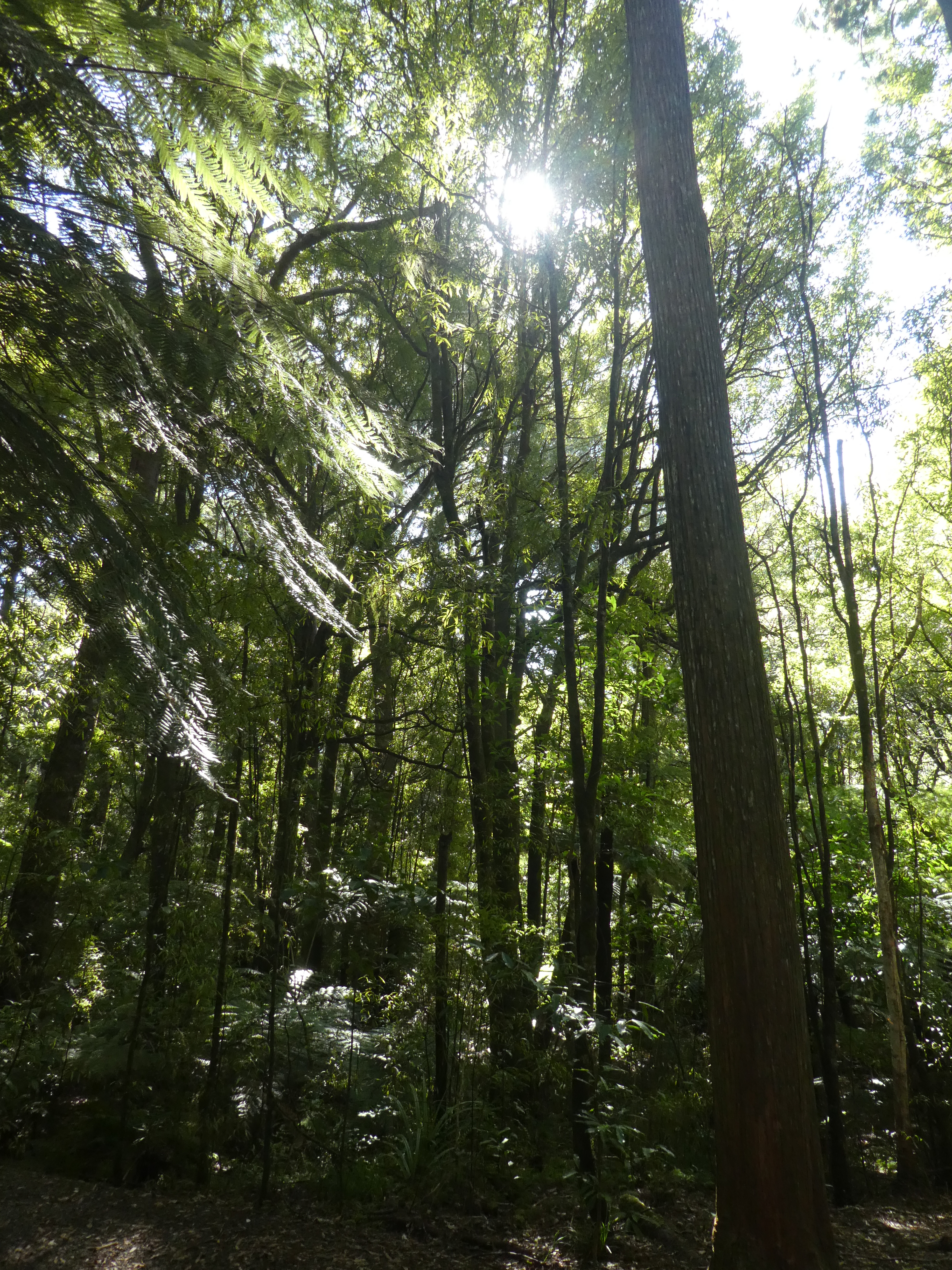
The totara trees were very large and fallen logs were covered with soft green moss. The light filtering through the tree tops gave the walk some magical silhouettes.
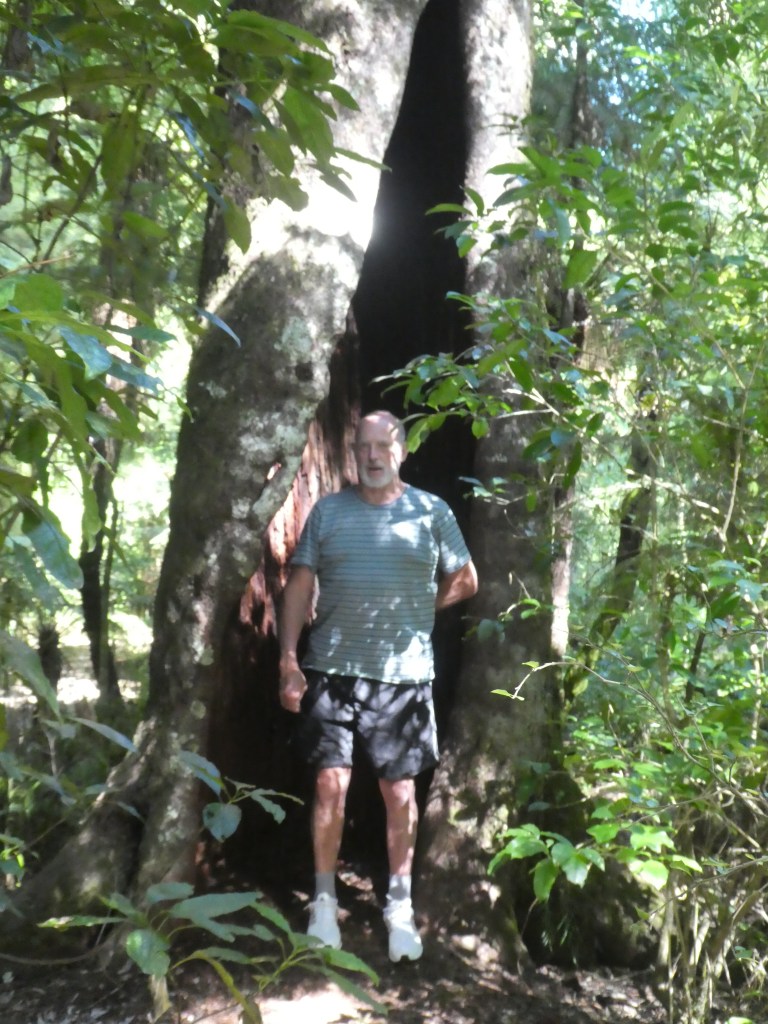
One particular tree was so old its trunk was all hollow .
The path meandered its way down to the river where some walkers took the opportunity to have a quick dip to cool off.
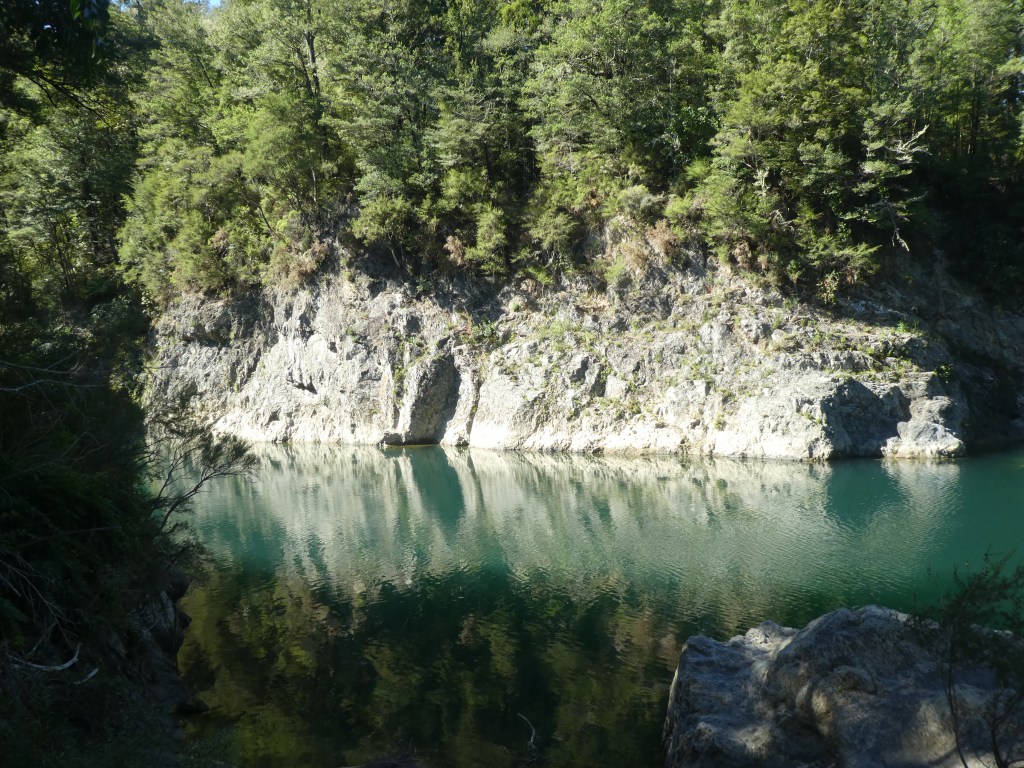
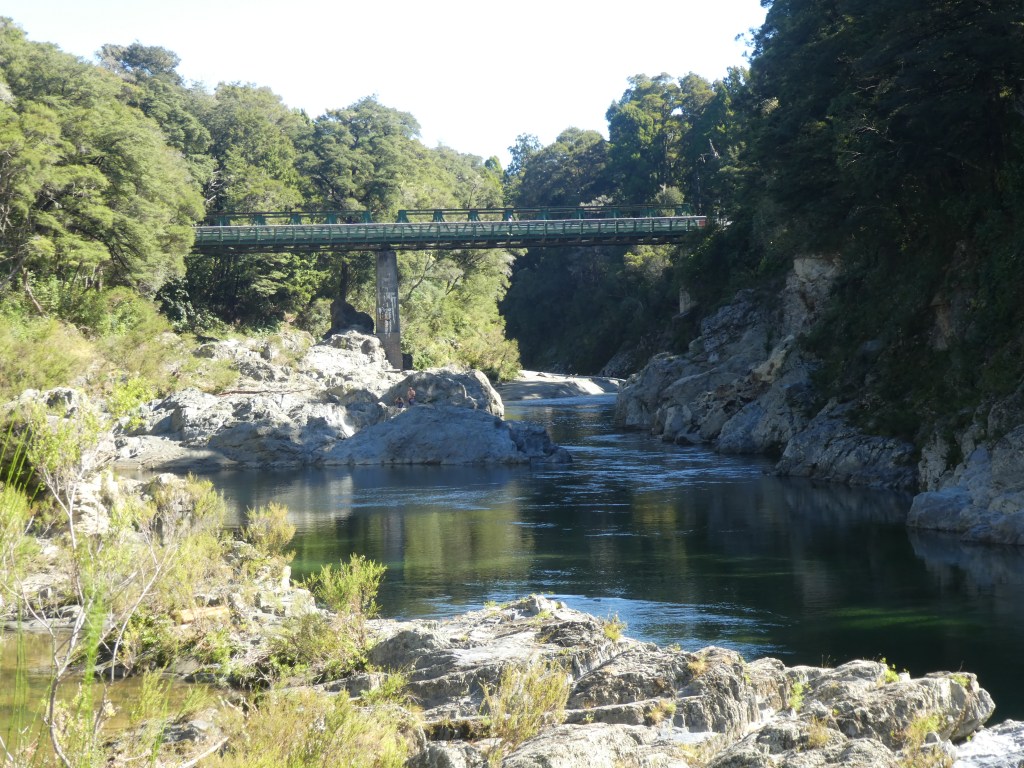
There were some magical reflections, and the view towards the bridge that we would soon have to drive over was quite pretty.
All too soon we were back on the road, arriving at Motueka to a fairly full NZMCA Park.
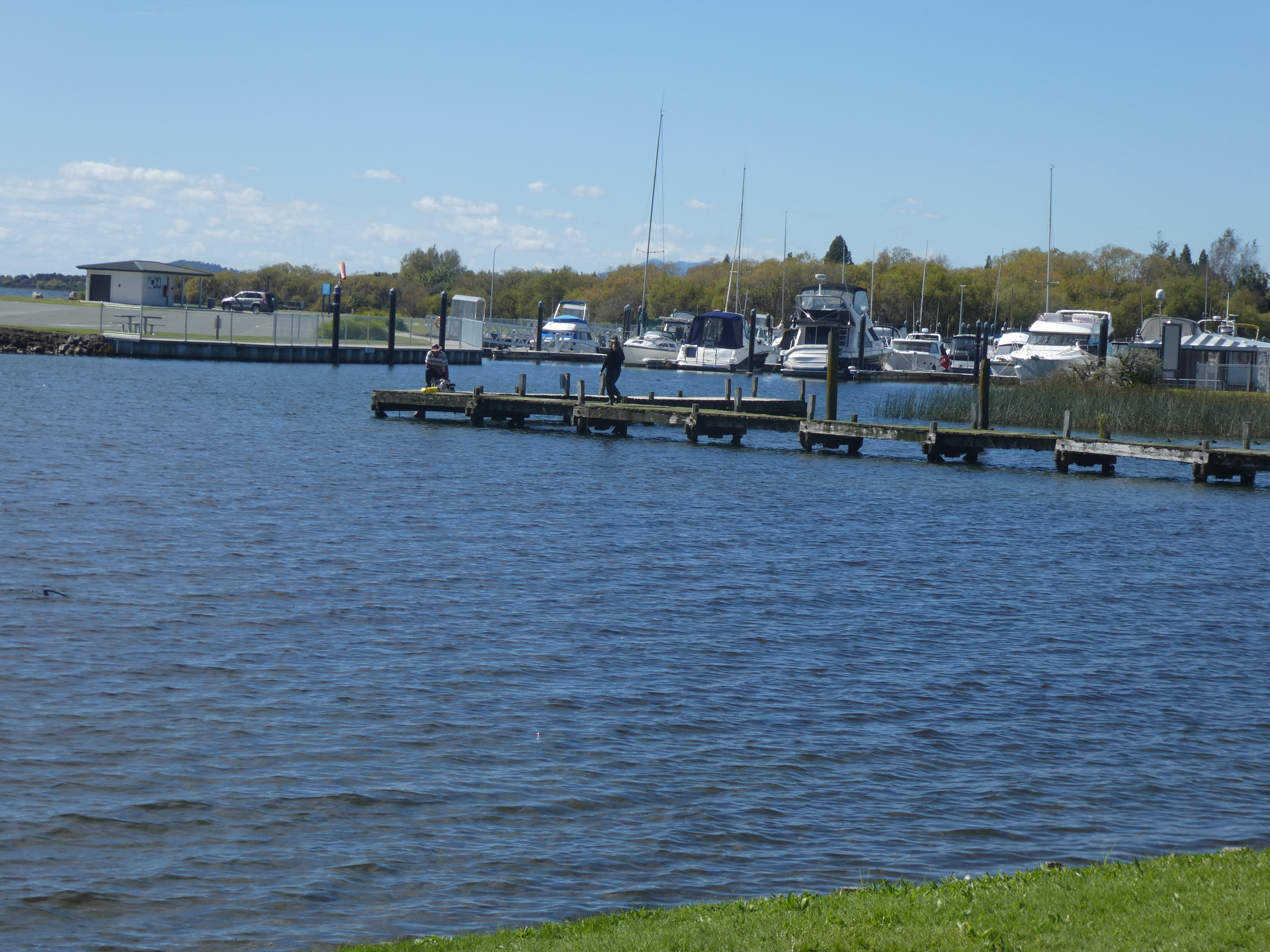
Bruce and I were excited to head off on Friday, having decided to start early with a goal to arrive in Whanganui the same day. It is unfortunate that the trip had to take that much longer due to the demise of the Kopu Hikuai road. We had decided to drive an hour each, but that was a little unrealistic. However, we swapped drivers as needed, and stopped for a good lunch break on the shore of Lake Taupo.
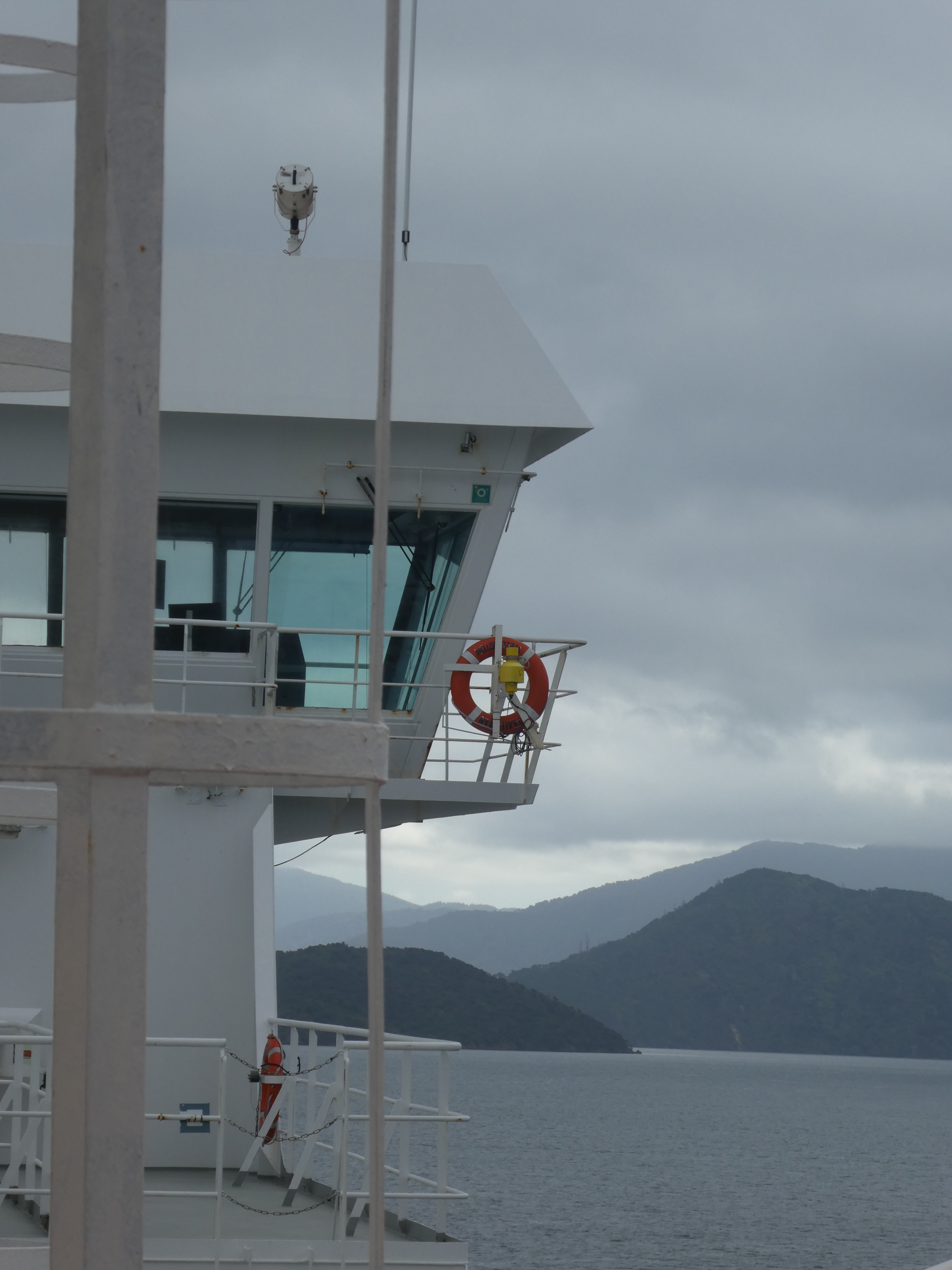
We finally arrived in Whanganui at 6pm and enjoyed a precious day and two nights with best friend Jenny. That time was all too short before we had to leave early on Sunday morning for the ferry. There were a few anxious moments when various sailings were being cancelled, including the ferry that our friends Ruth and Ron were due to come back to the North Island on. However, our ferry left on time, and we had the smoothest crossing we have ever had.
We spent some time on board chatting with a delightful man, Omar, from the Phillipines. Hopefully we will be in contact again in the future.
Once we landed in Picton, we headed straight away for our Park over Property at Koromiko. It is a peaceful spot, but quite a lot of motorhomes there this time. The ground is surrounded by mature trees so it was nice to be woken by the sound of bellbirds and tuis in the morning. We only wanted to overnight here, so our plans were to head to Blenheim in the morning.











 Away From Home NZ