Blog

Mount Maunganui

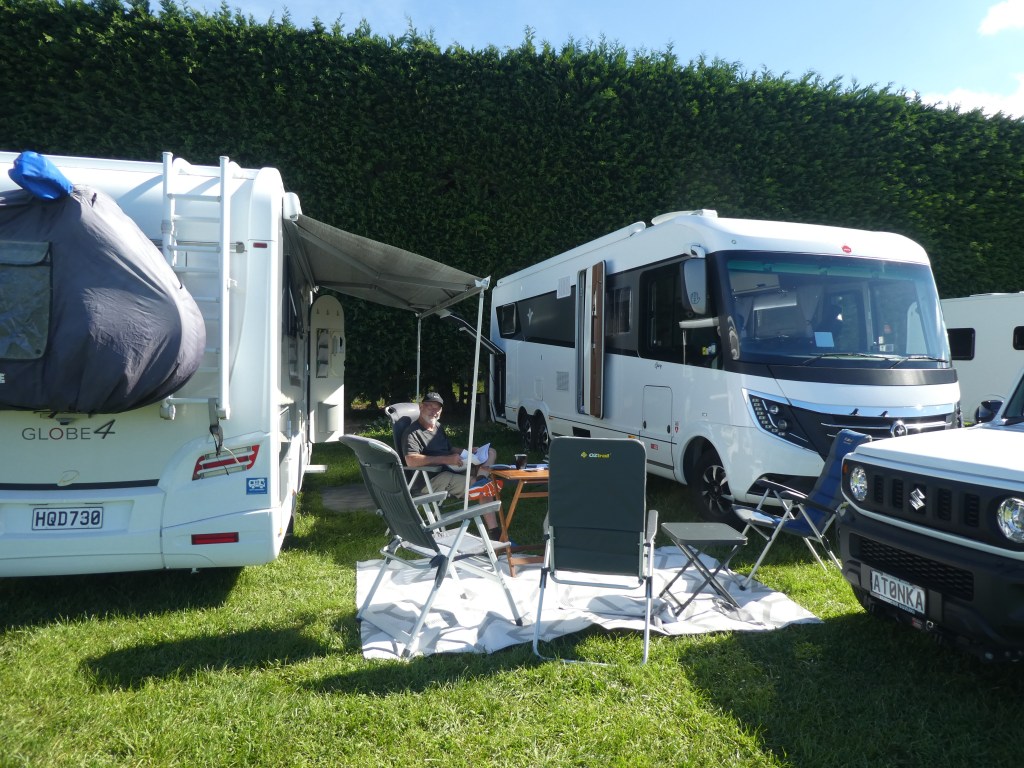
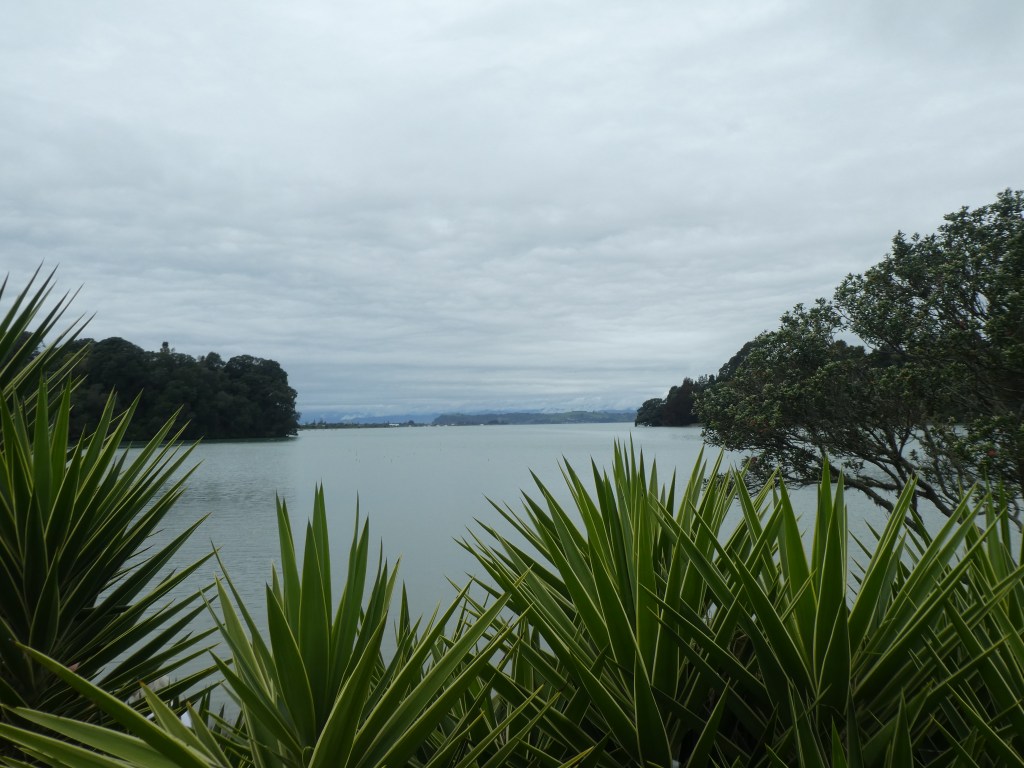
We were not sorry to leave a soggy Awakeri, and our next stop was to be the Mt Maunganui Holiday Park, right at the base of the Mount. Gary had booked us prime spots, and the camp was absolutely beautiful and the facilities pristine. Nothing could beat the view from our front window.
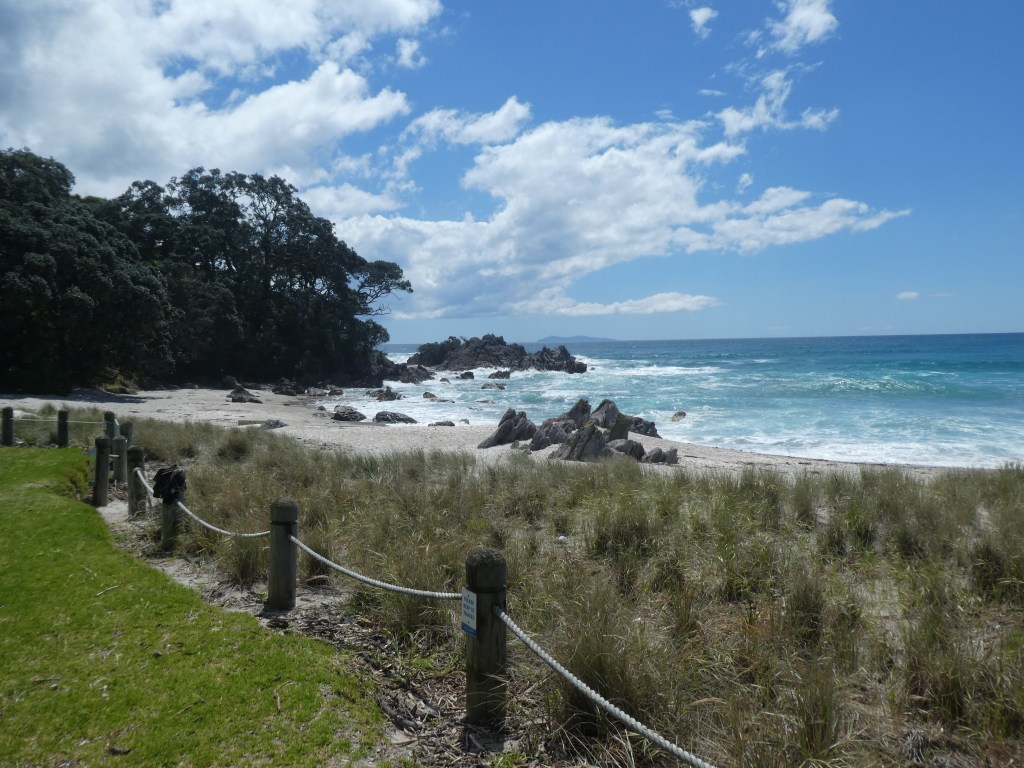
It was wonderful to see all the people out there being active, and we particularly enjoyed watching the juniors learning to be surf life savers. Bruce and I went for a walk around the Mt but that did not last long as the rain came down and we had left the hatches open on the motorhome so we had to scurry back, getting quite wet in the process. It cleared up later in the day so we tried again with a walk to and around Leisure Island. We weren’t used to walking over soft sand so it gave our legs a workout, but well worth it. The island itself (although it is not really an island anymore) was rugged and beautiful, and we were treated to the music from a lone trumpeter who had gone up there to practice.

The next day was Dianne’s birthday so she got to choose what we did for the day. On the agenda was a brunch at a local cafe, and then off to do some shopping. We got back in time for Bruce and I to try again to walk around the mount, more successfully this time. It was a pleasant walk, and very popular with the locals so a bit difficult at times to keep our distance. The rocky pools and the sandy beach leading out to the statue of Tangaroa (the Maori God of the Sea) made it a pleasant and picturesque walk.
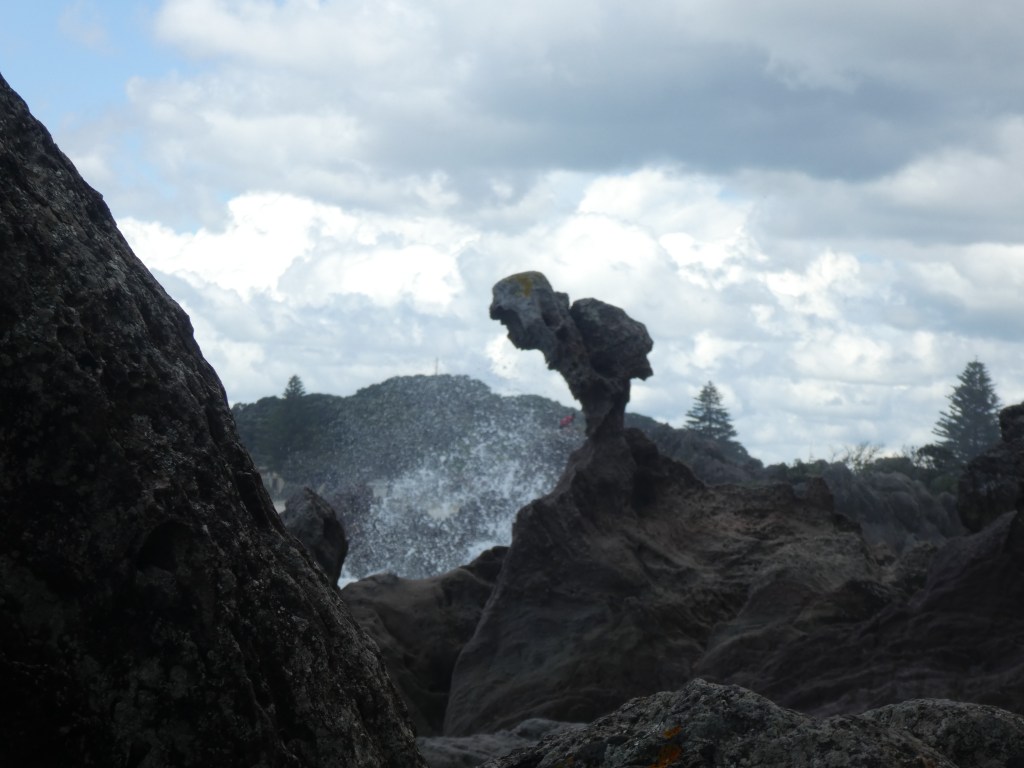
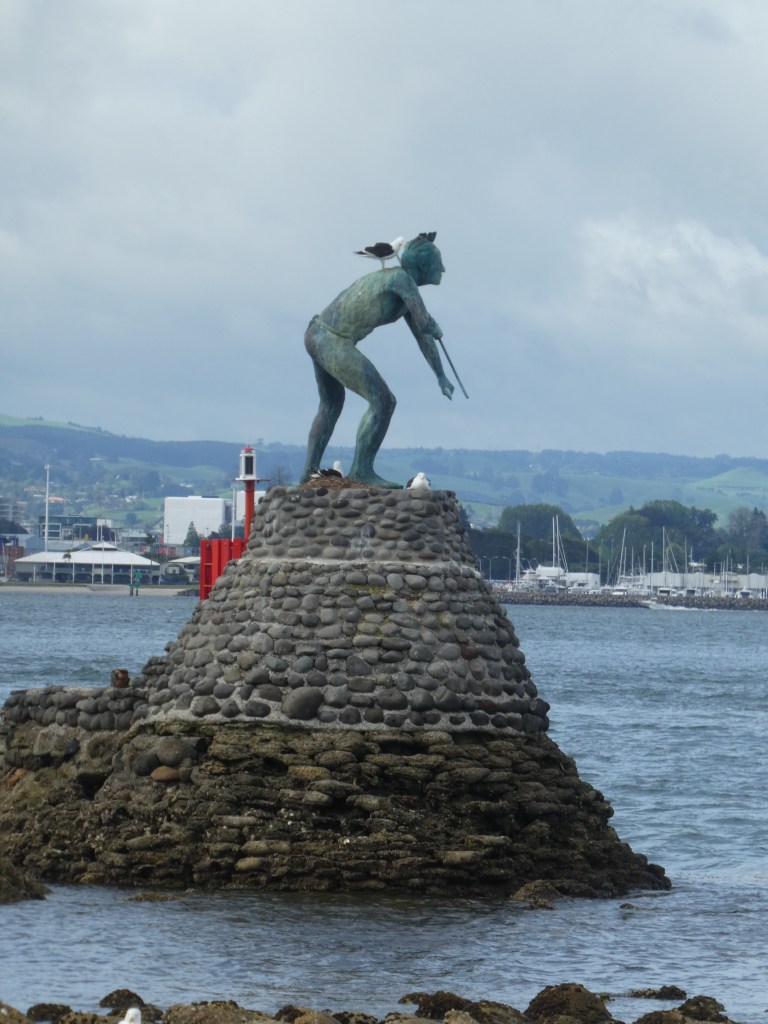
Tangiroa

Dianne and Gary headed out to their romantic birthday dinner, while Bruce and I headed out to Aunty Lesley and Uncle Peter’s for a dinner there. Also joining us were my cousin Anne and husband Chippie. Cousin Janey also came by for a while so it was a lovely family time.

That theme was continued with a visit by our niece Jessica and her daughter Izzy (my great neice) the next afternoon.
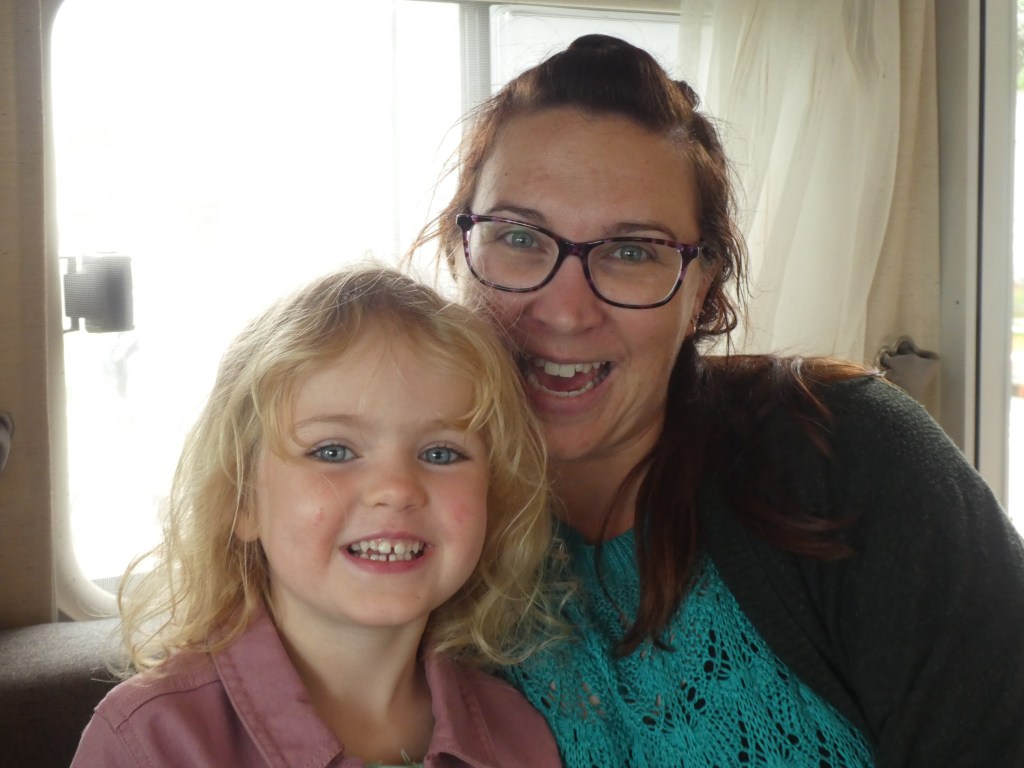
Jessica and Izzy

That was a lovely catch up. The rest of our time in Tauranga was relaxation, with a bit of shopping thrown in, and all too soon our three days were up. It was sad to part ways with Dianne and Gary who were staying on for one more day, while we were headed for Thames and beyond.
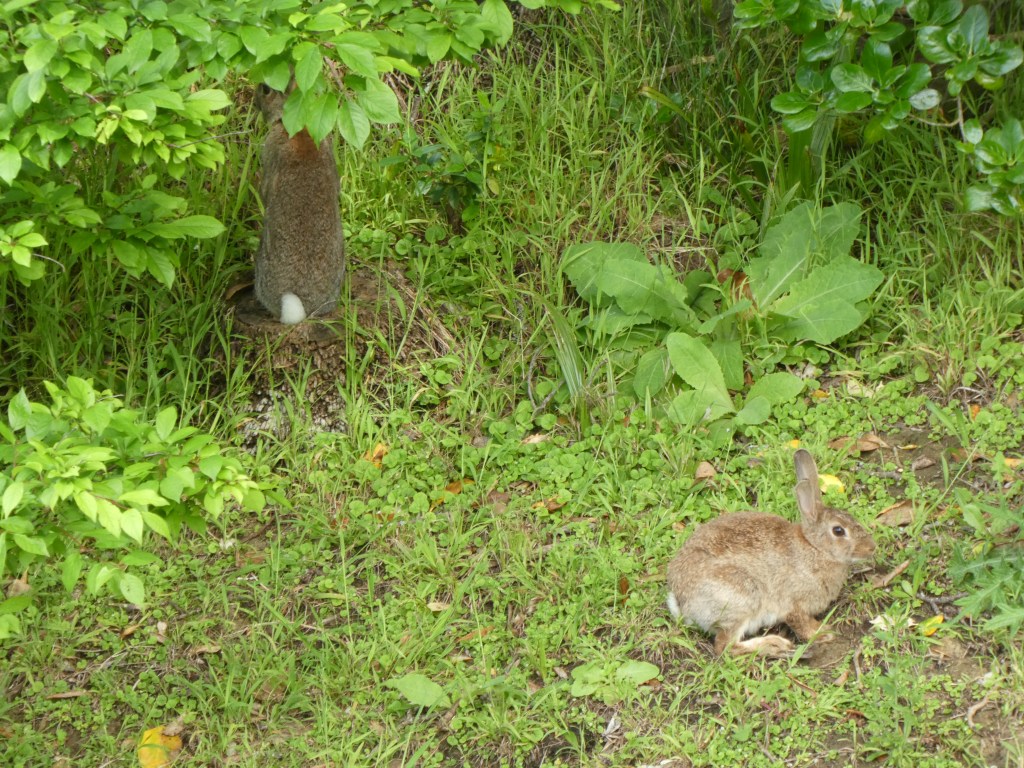
Rabbits hiding at the Mount camp

Awakeri and Whakatane

There was plenty to do in Napier and we could easily have stayed longer but the time had come to move on. Napier had blessed us with lovely weather and the temperatures had warmed up before we left so we left with pleasant memories.

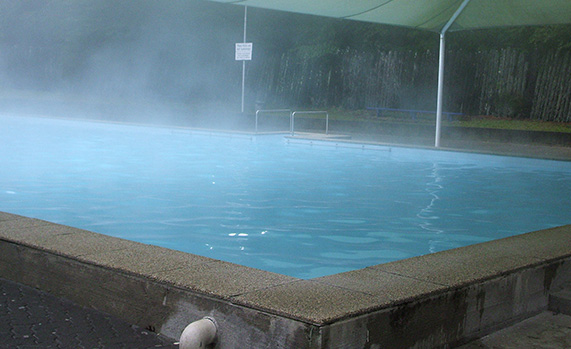
The next stop was Awakeri Hot Springs where we planned to spend a couple of days. This place had an amazing hot water pool but the other facilities were pretty basic, although adequate. One of the great attractions of the area was Julian’s Berry Farm, and that warranted two visits from us. The berries were fantastic, but the cafe food was amazing.

The day after we arrived my sister Deborah arranged to take us on a tour of the Essity Paper Mill where she works. We all really enjoyed that and learned a lot about the process of paper towel making. What we noticed was: the heat; the amount of water needed; the large degree of automation; and the speed of the process – one operator told us that if there was a problem they had 30 seconds to sort it before it became a major. The mill makes a big effort to conserve – both by recycling any reject material and by using steam rather than electricity. Certainly an interesting place and it was lovely to see how well respected my sister was with the workers there, and the to see the project she is working in at present.

After another delightful dinner we had a good soak in the hot pools. The pools are well maintained and and a lovely temperature, as well as being quite large.

Awakeri Springs Hot Pool

The next day we headed into the town of Whakatane to have a browse through the shops, and also drove out to the Whakatane River mouth just for a look. The last time we were here there had been a big storm and the whole river mouth was choked with logs. This time the conditions were calm and there was very little debri around.

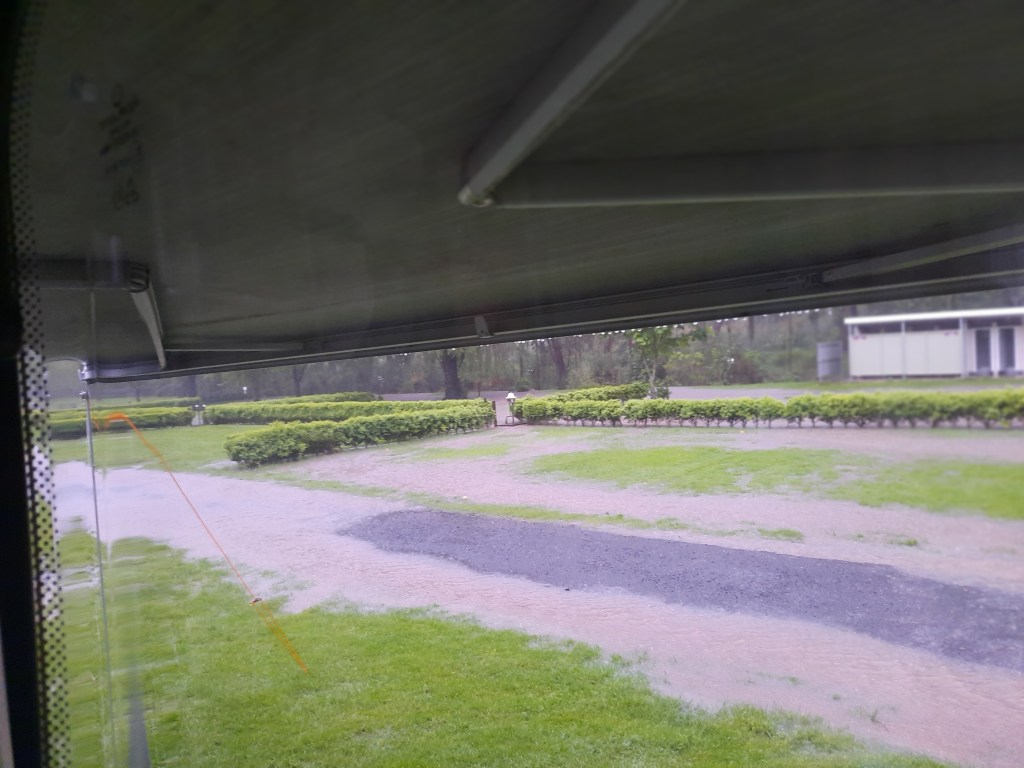
That evening we had a delightful dinner at my sister’s. By this time the rain had started to fall and we took it in our stride, not realising that there was a weather watch for the area in force until 11am the next day. That only held significance for us when we looked out of the window of our van the next morning to see rivers and lakes where motorhome and caravan parks should have been. The little road leading to the parks was also inundated in places.

We decided we would lay all the mats, as well as the two planks of wood that Gary travels with, in front of our front wheels before we set off in an effort to try and prevent ourselves getting stuck, or the wheels from digging themselves into the mud. Turned out it was a good plan and we drove out without any trouble. Meanwhile a couple of the roads in Awakeri were closed due to floodwaters but the road to Tauranga was clear so off we went. Flooding was certainly evident in the fields around Awakeri as we headed away.

Here’s hoping there is better weather ahead!

More Fun in Napier

We were looking forward to Market Day in Napier, so we got up a bit earlier than usual and headed towards the Havelock North Showgrounds where the markets were set up. They were quite extensive and very well attended. It was great to see almost every person attending obeying the rules, wearing their masks and making an effort to keep their distance from others. There were a few renegades though who avoided both mask use and signing in.

Somehow we manage to buy ourselves some treats including some custard danish pastries; great looking breads for Bruce, and some amazingly healthy looking Black Krim tomato plants that are in for a cross country ride.

After the markets we headed out to try and find a coffee but it was a bit hard to find. Eventually we found a place in the town where we had some lunch and then headed back to camp. We had a quiet afternoon of reading and knitting (Dianne and I) and a nap for Bruce.

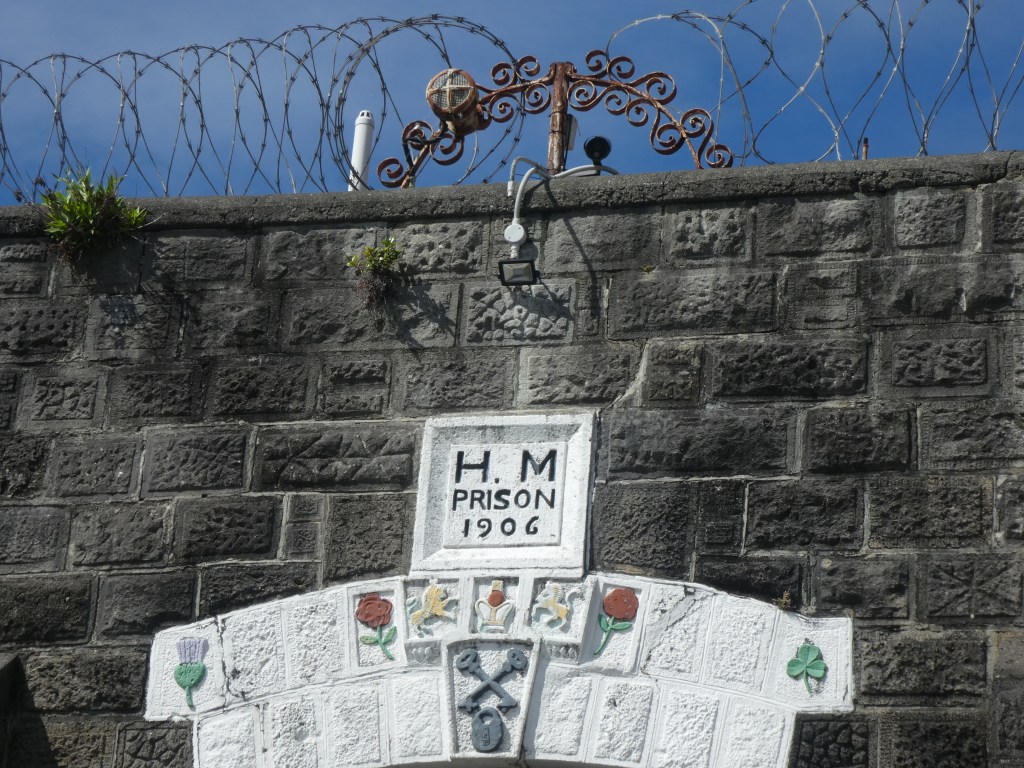
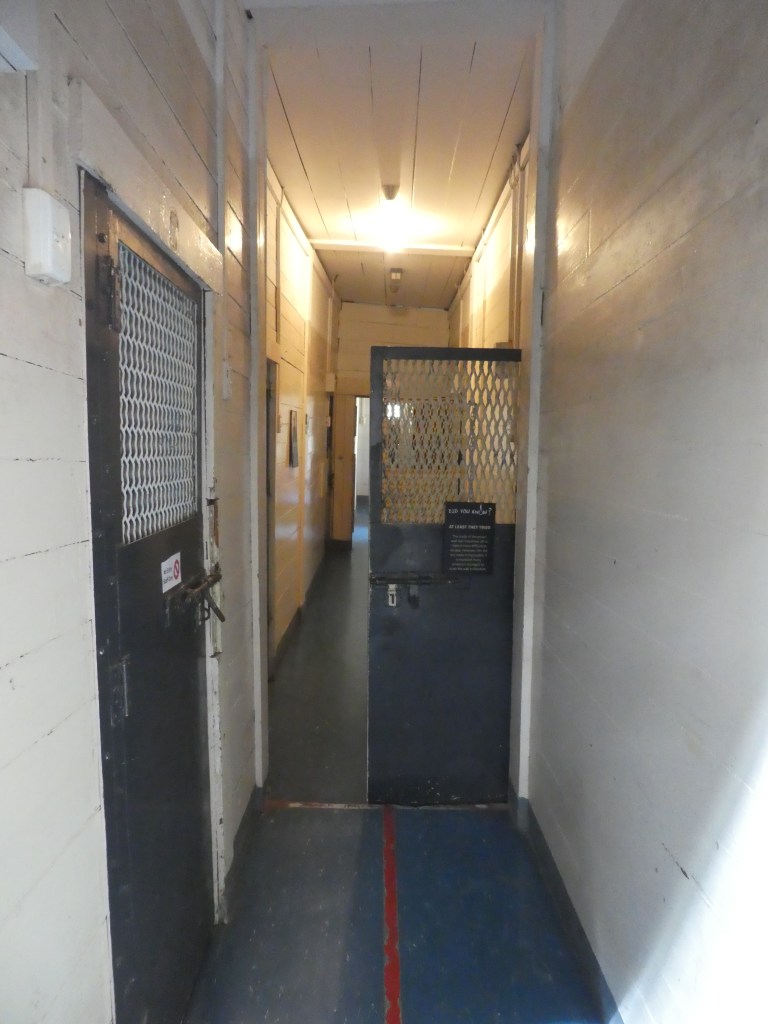
This morning we decided to visit the Napier Prison – NZ’s oldest penitentiary. It was set up in 1903 and not closed until 1998. Many of New Zealand’s most notorious criminals have been held here, and more troubling, many 13-15 years old children who made some bad choices. Hangings were also conducted there until they were stopped in 1957. However, the death penalty itself was not stopped in NZ until 1989.

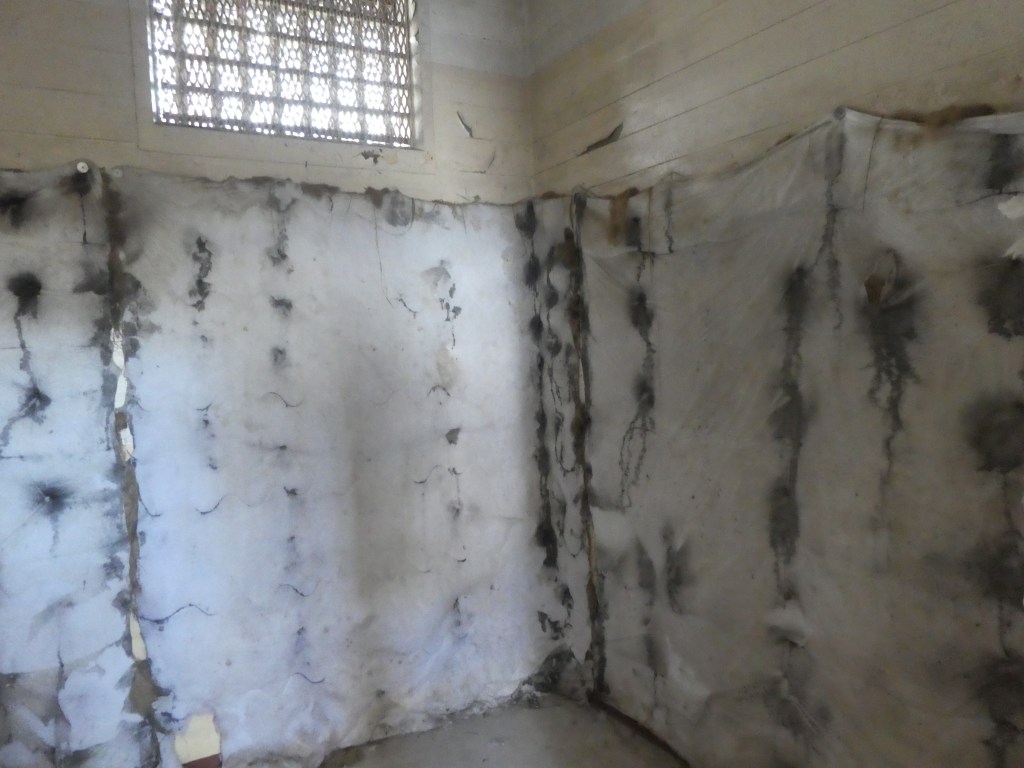
We opted for the self guided prison tour and while it was interesting, and we learned quite a bit about the facility and how it was run, I was somewhat disappointed with the lack of effort made to keep the premises maintained, clean and tidy. We were going to to do the Escape room, where they lock you up for an hour in a room, with clues, and you have to try and break out of it. However, just looking at the way things were looked after elsewhere in the prison, I felt the room would likely be in a similar state and being there for an hour (if we did not manage to make our way out) would be a bit much.

A padded cell

We had a good look around though and then made our way back into town for lunch.

The remainder of the day was spent doing practical things such as refilling the vans with water, emptying the tanks, and preparing to move on tomorrow.

Gannets Galore

What a magical day we had today. We booked for the Overland Gannet experience this morning, and it was worth every cent we paid.

We arrived to the tour in plenty of time and were loaded aboard a 4wd minibus and we were driven over the vast Cape Kidnappers Station, a sheep and cattle farm of about 2500 hectares. Parts were very steep, and the terrain seems very friable and chalky. The owners have put a considerable effort into pest eradication, with some success – all possums gone and 85000 rabbits culled, and an ongoing program to control rats, stoats etc. A lot of native birds, lizards, tuatara and even wetas have been reintroduced and are now thriving.

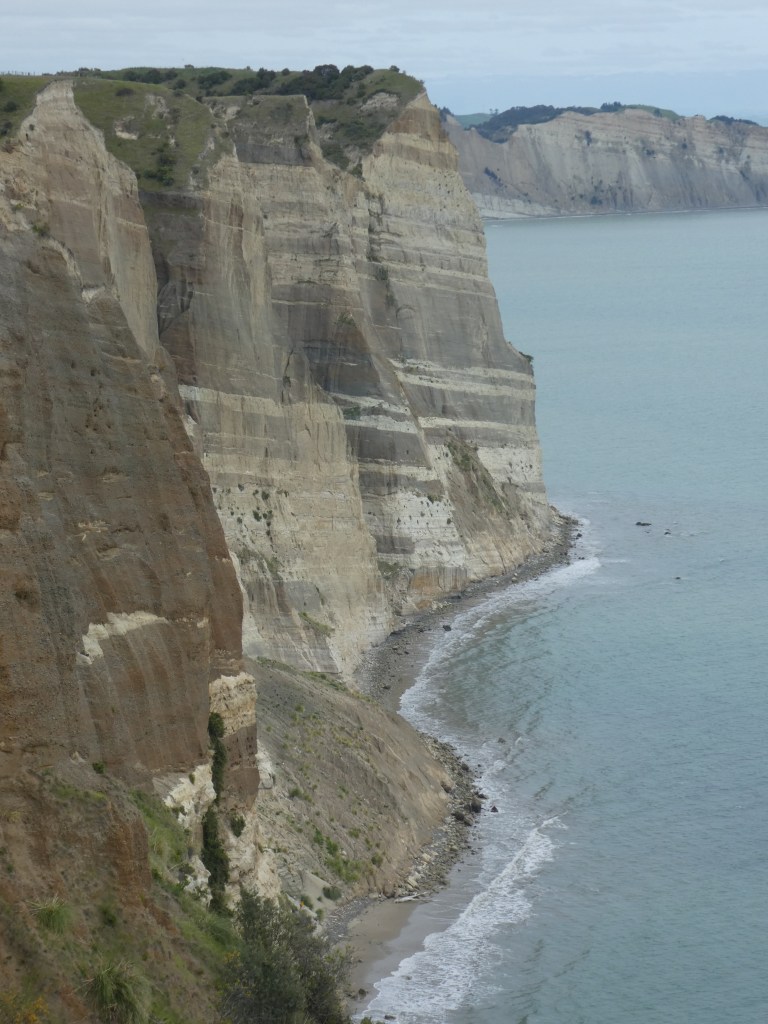
The drive of around 30kms took us to Cape Kidnapper’s gannet colony, but on the way we had a couple of stops to look at the scenery. In the distance we could see Mt Ruapehu (about 90km as the crow flies) and the steep cliffs of the coastline where you could see the fault lines in the rock patterns. There had been a slip here a few years ago which temporarily halted tours to the gannets, and we were shown photos that were taken as that slip happened.

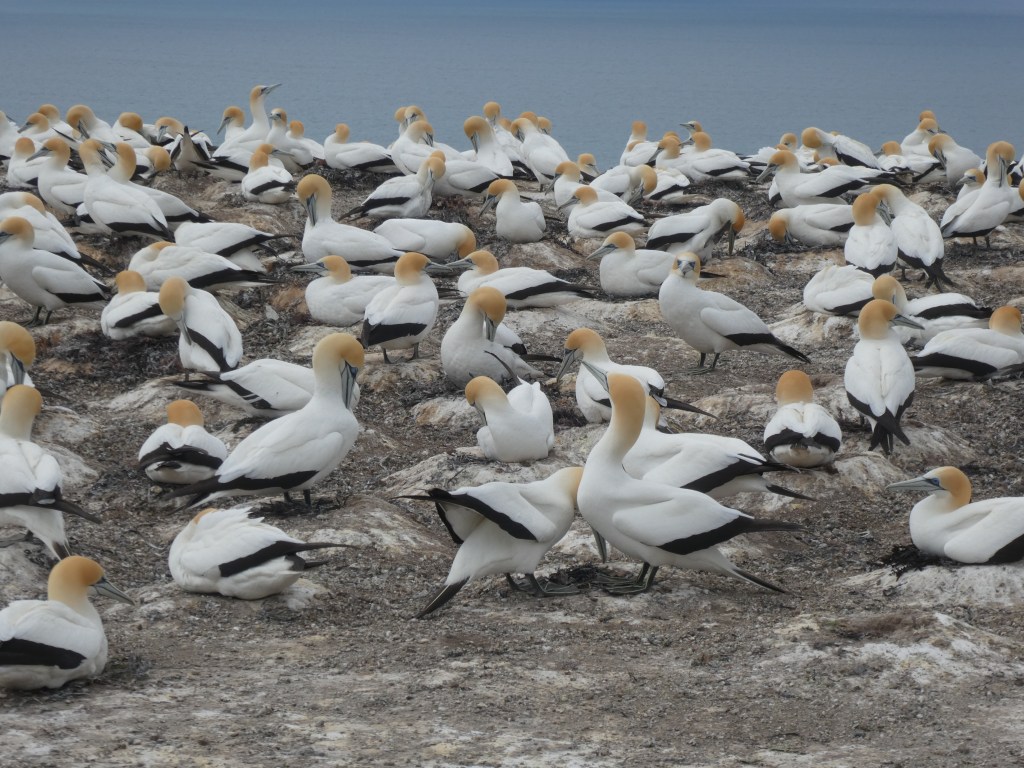
We were traveling around a windy and hilly metal road when we came around a blind corner and there were thousands of gannets – just right there! Oh Wow. We stood no more than 3 metres from the birds who seemed unperturbed that we were there. At times they were coasting in to their nests flying over our shoulders, so close that we could have reached out and touched them.

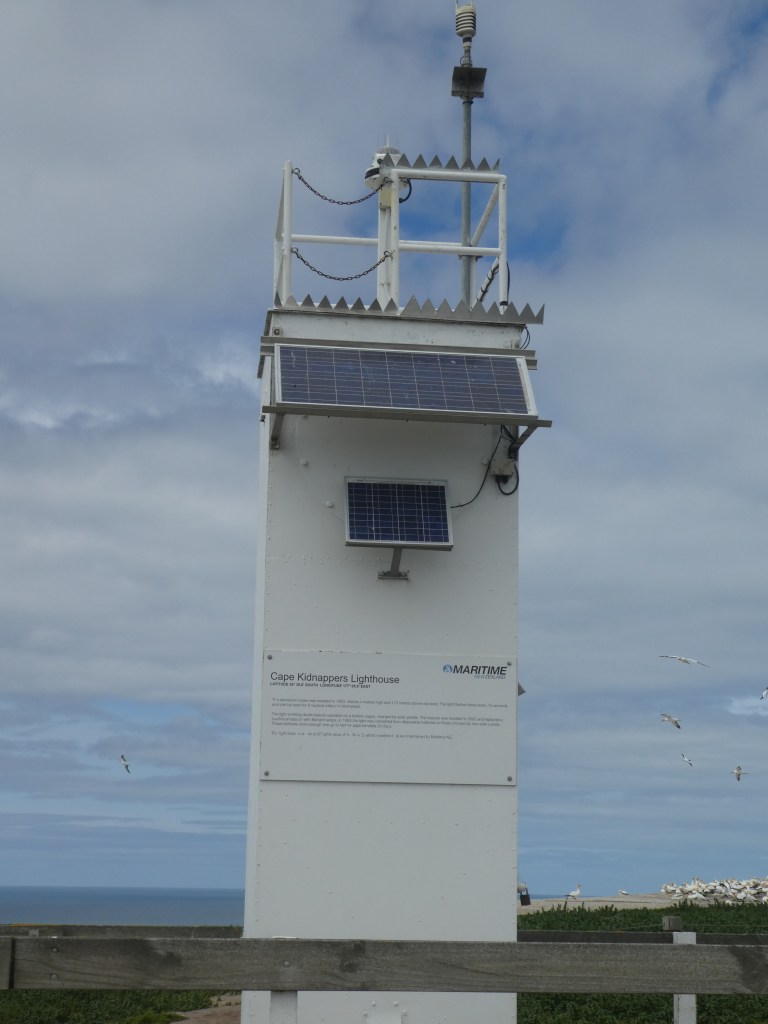
There were three colonies in this area. The one we were next to were on a plateau at the top of a cliff, near the Cape Kidnapper’s lighthouse. This allowed the birds a bit of wind current to help them become airborne.

Cape Kidnappers Lighthouse

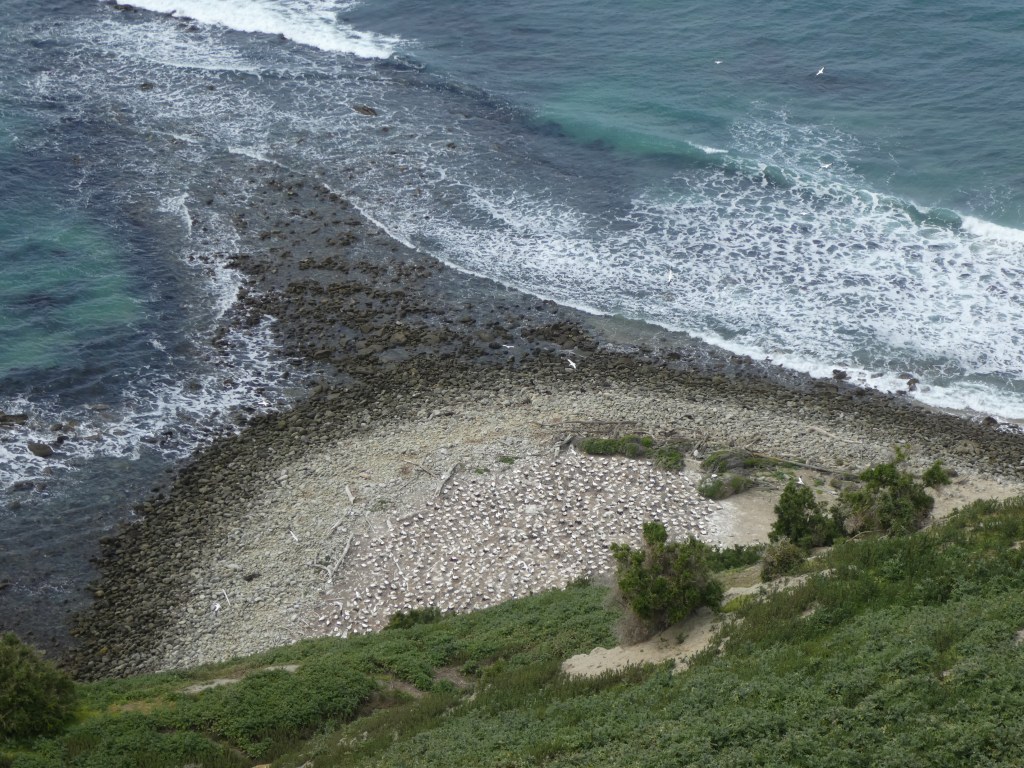
But there was also a colony on the rocky beach below

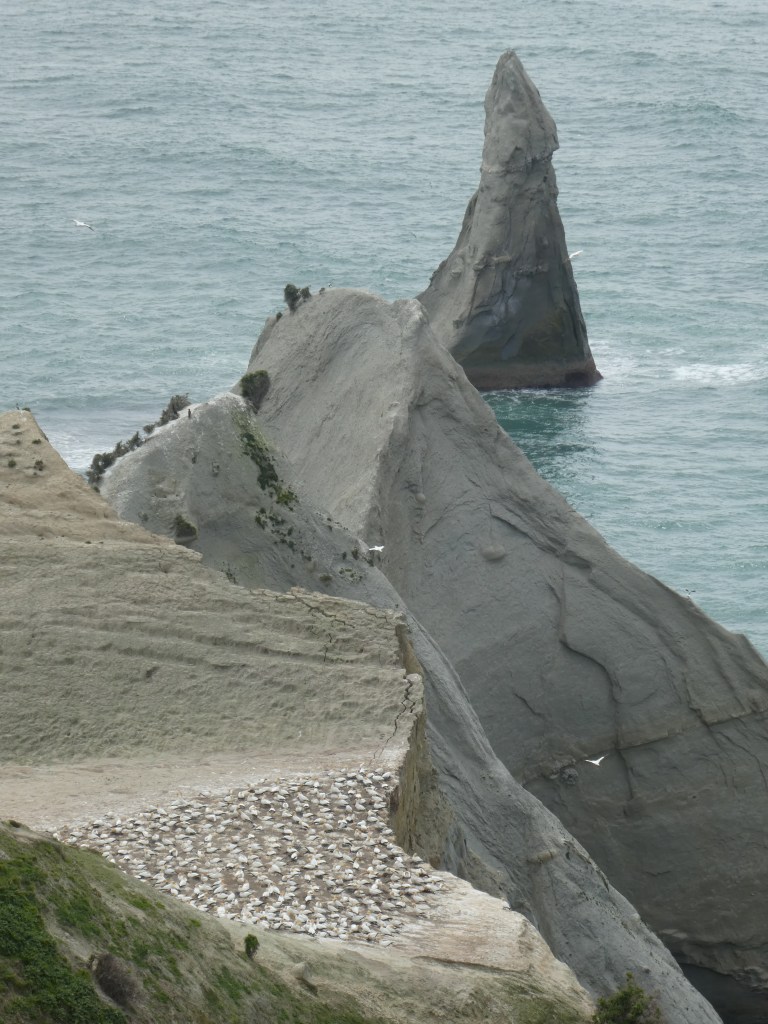
and another one on a flat rocky area of an outcrop, called the Saddle Colony.

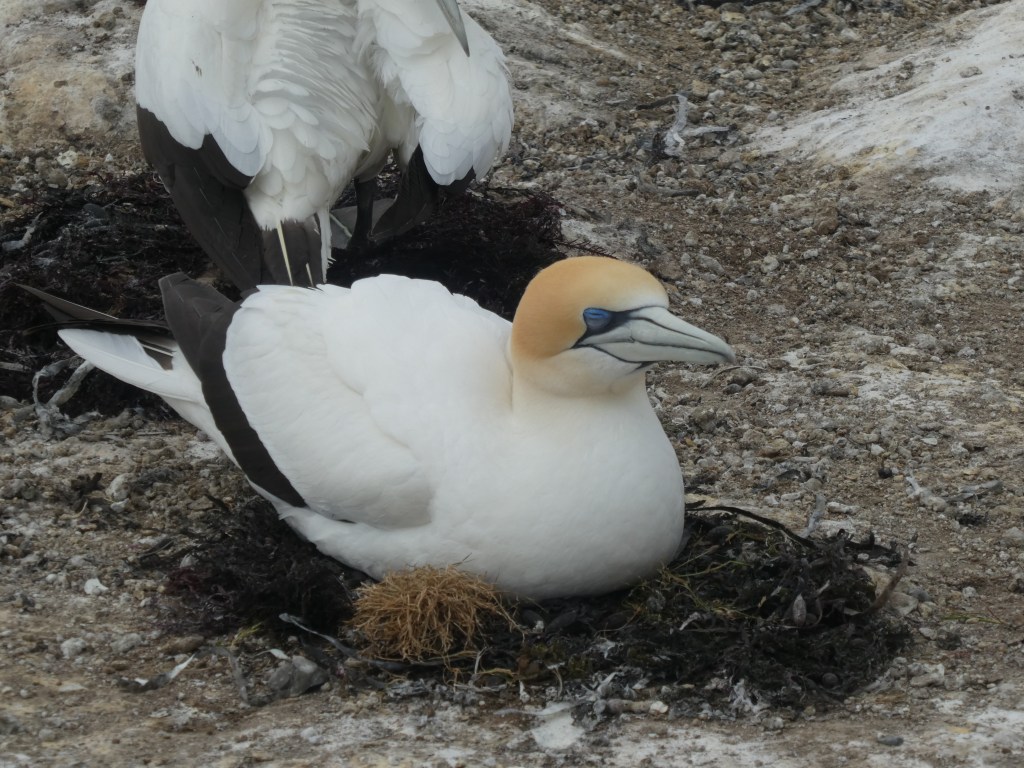
The nests are little more than a small mound of seaweed, weeds and gannet poo, and the birds are very territorial of their patch. They can be quite vicious if another bird lands too close to their mound.The male birds are the ones who forage for seaweed to bring back to their mate. We watched as one poor male, with a beak full of seaweed, had to circle 8 times before he found his girlfriend and their nesting site. Pairs of gannets mate for life, and produce only one egg. The egg is incubated under their webbed feet which have blood vessels near the surface making the bottom of their feet nice and warm. We occasionally got a glimpse of an egg when a bird was changing position.

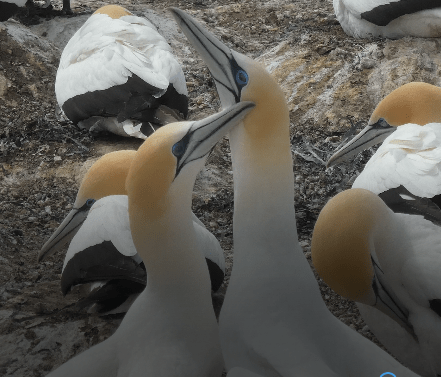
When the male comes back to the nest there is an affectionate welcome dance the two of them perform before they get down to business.

The tour went for 3 hours and by that time we were a bot hungry so we went to visit a cafe down the road. It looked lovely but was booked out – we had forgotten to account for the holiday weekend. It was the same story when we visited a place called Birdwoods, so we finally drove into Havelock North and found a lovely cafe there to have a bit of lunch.

It was then off to the chocolate factory, Silky Oak Chocolates to purchase a treat or two before heading back to the motorhome park. Overall, a lovely day.

Napier Ramblings

Bruce and I had a really peaceful night and woke refreshed this morning. Apparently the dogs are coping with us being away, so we did not lie awake worrying about them. Somehow though, the motorhome just does not seem the same without them.

Diane and I started the day off well by doing half an hour of Pilates in the common room. Apparently a few of the locals thought it was an interesting spectacle, but I had my back to them so I was blissfully unaware.

All four of us then piled in the little Jimny and went off to meet my cousin Anne for a coffee. Of course the place she suggested we meet (to help with motorhome parking) was identified the night before as a place of interest for Covid 19, but that had been visited a week before with nothing since so we figured we would be safe. Well, that was one hazard avoided, just to be met by the next one – an earthquake! Fortunately, although it was a 5.8 magnitude, it was based in the Taranaki area so it was just a gentle shake for us.

After the coffee with Anne we headed into town to browse the shops and look at the beautiful buildings.

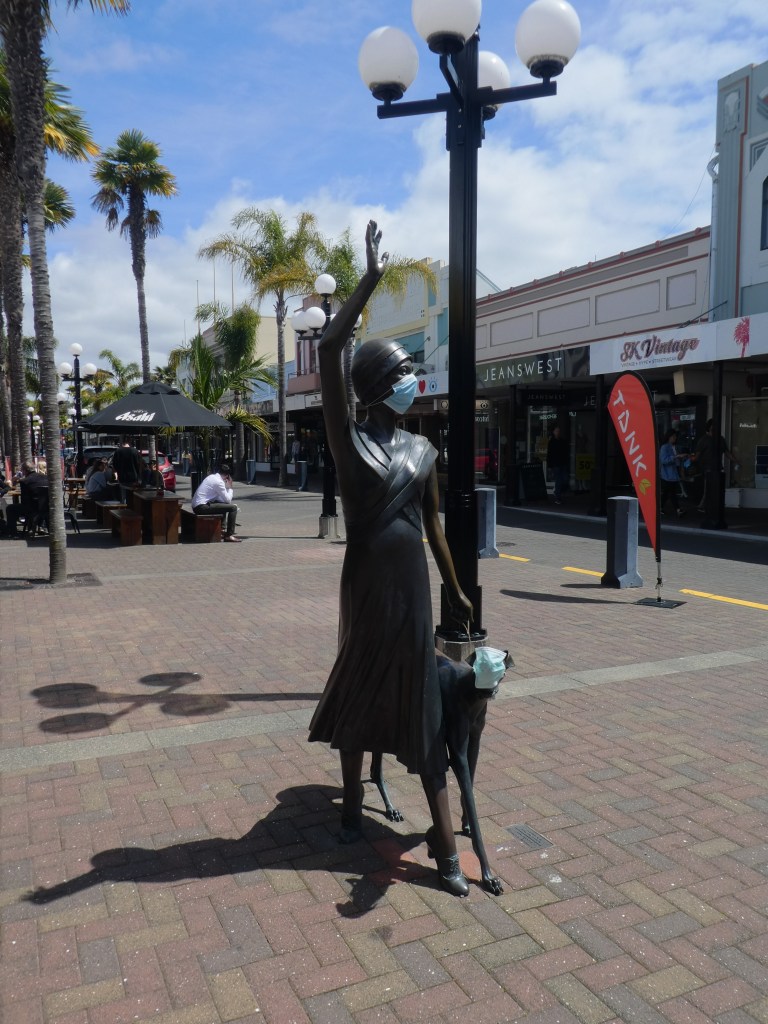
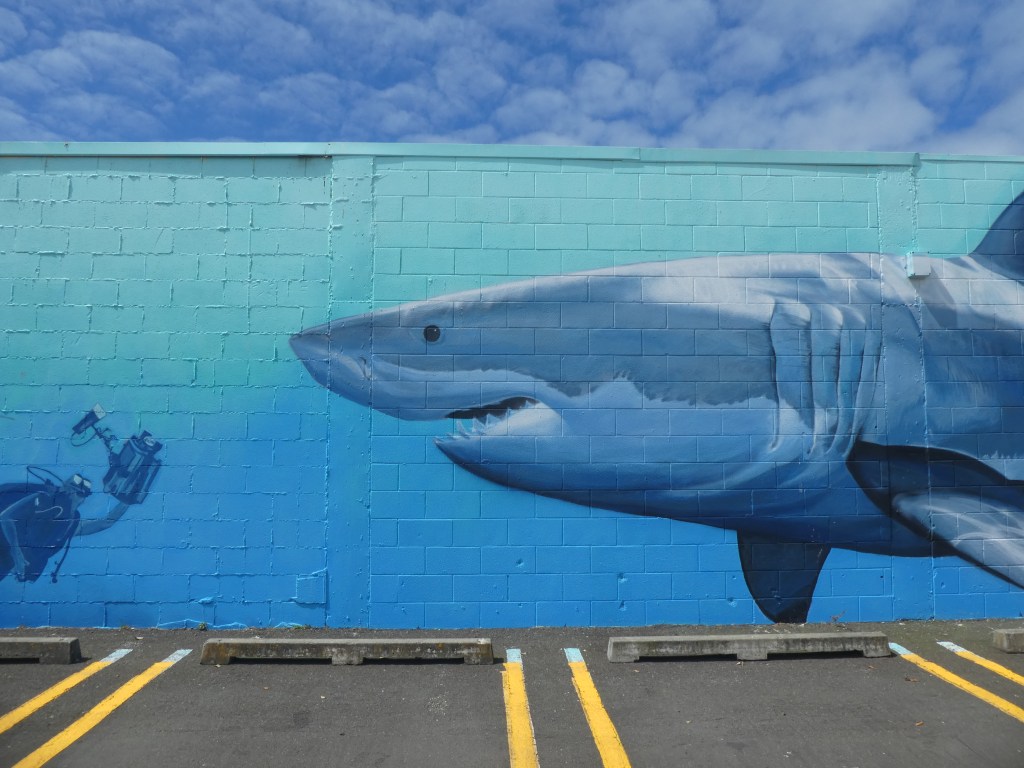
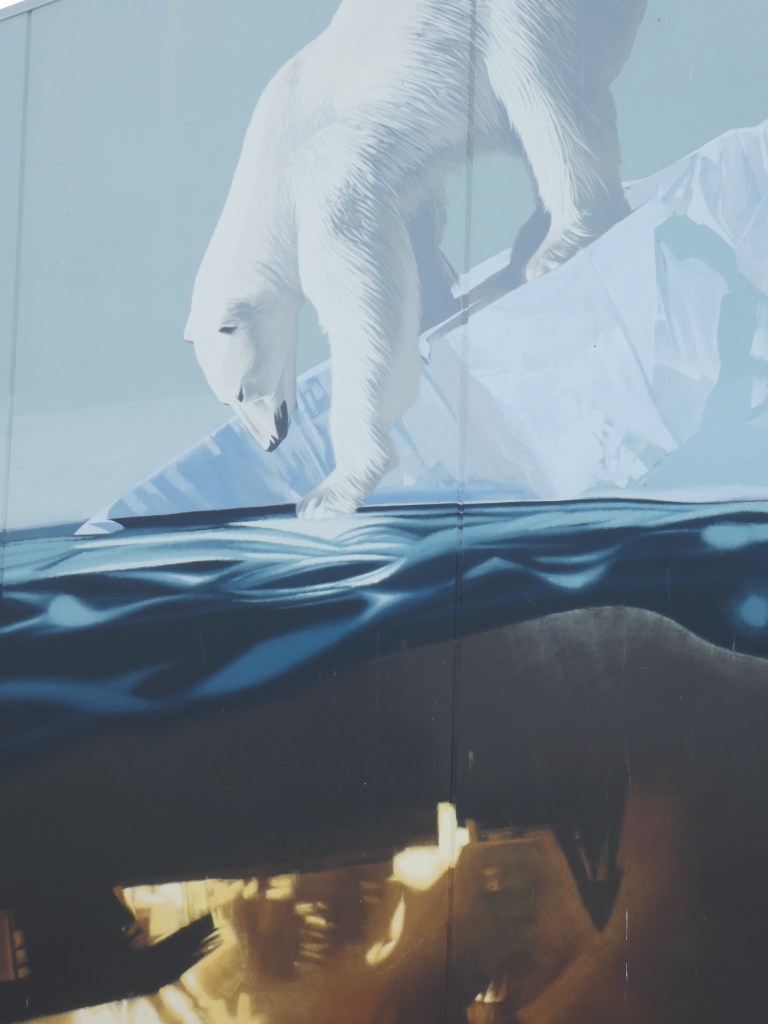
We were not exactly big spenders but the ambience was very pleasant, and it was great just ambling along. We particularly enjoyed the murals.

The amount of details on these paintings was amazing, considering the size of them.

We headed for home then after a quick trip to the vege shop. Lucky us, Diane is cooking tea tonight so we are looking forward to a delicious chicken curry and a pleasant evening with friends. An early start tomorrow to go and see the gannets.

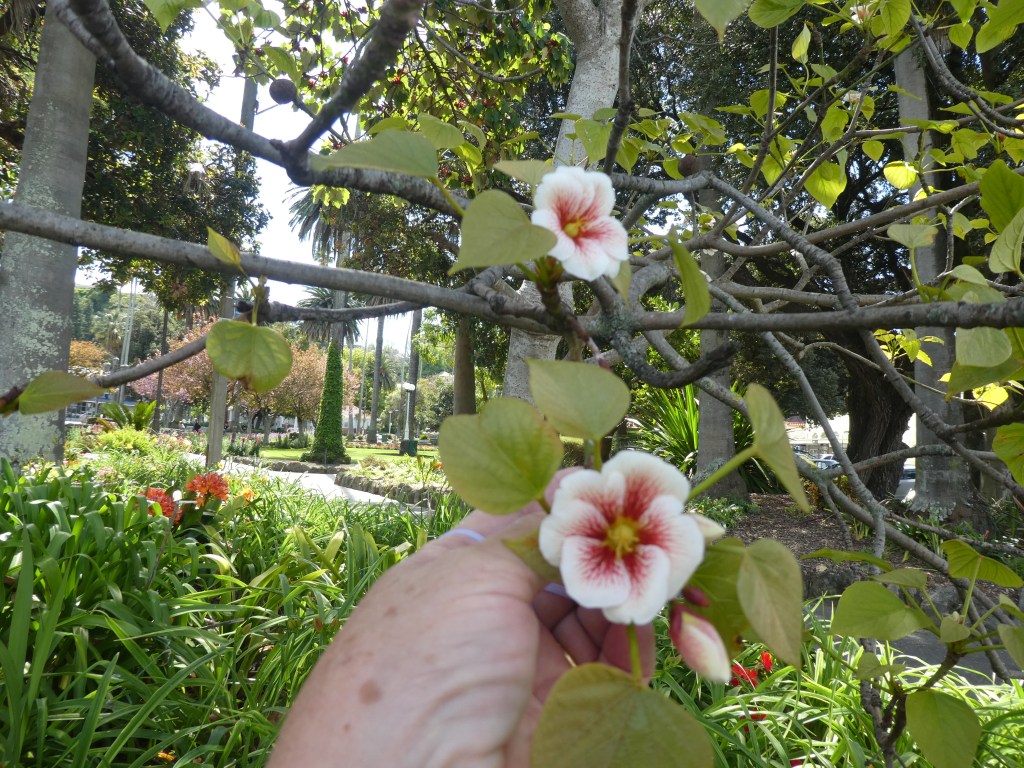
Lovely flower found in the Clive Gardens

On the road again

It seems to have been a long time since we had a real trip away in the motorhome. We had a trip planned to Northland with our friends Dianne and Gary, but with the latest outbreak of Covid 19 this was not possible, so we about turned and decided to head to Napier. This time we are dogless! The original intention was to stay in DOC camps in Northland and therefore, no dogs, so we had arranged for house sitters to come in a care for the boys. We decided to stick with those plans, also giving consideration to Oscar’s advancing age in increasing frailty, so the lovely Stephan and Sandra came to care for them.

The packing up of the motorhome went smoothly this time and we actually left at the scheduled time, with the first stop being Taupo to catch up with Dianne and Gary.

The roads were remarkably quiet without all the traffic from the Aucklanders and the Waikato people. The large number of trucks became very noticeable though.

We were treated to a delicious dinner and headed off somewhat early to find a park at the Taupo NZMCA park. It was pretty busy but we settled in for a quiet night.

After a leisurely start we hit the road headed for Napier, on a day that was still a bit cool, but grey and hazy. Certainly no mountain views today.

First stop on the road was to see the Waipunga Falls, about halfway to Napier. They are beautiful, but can only be seen from the carpark – no track to the base of the falls or anything. They were beautiful though – there is something quite calming about watching a waterfall.

The drive along State Highway 5 was an interesting one. It was spectacular at times, with steep hillsides covered with pine forests, chalky cliffs falling down to the Mohaka River, and beautiful farmland far into the distance. The views would have been even more spectacular if it wasn’t for the persistent low cloud and haze.

However, it was very evident in some areas that human-kind has done the landscape no favours at all. There were acres of gorse in bright yellow flower, and lots of scrubby growth when once there would have been native bush.

It was an easy drive to Napier and the NZMCA Park here is large and there is plenty of room to park up without being on top of anyone else’s bumper. It will be a leisurely afternoon for us – time to plan the days ahead.

On the Road again

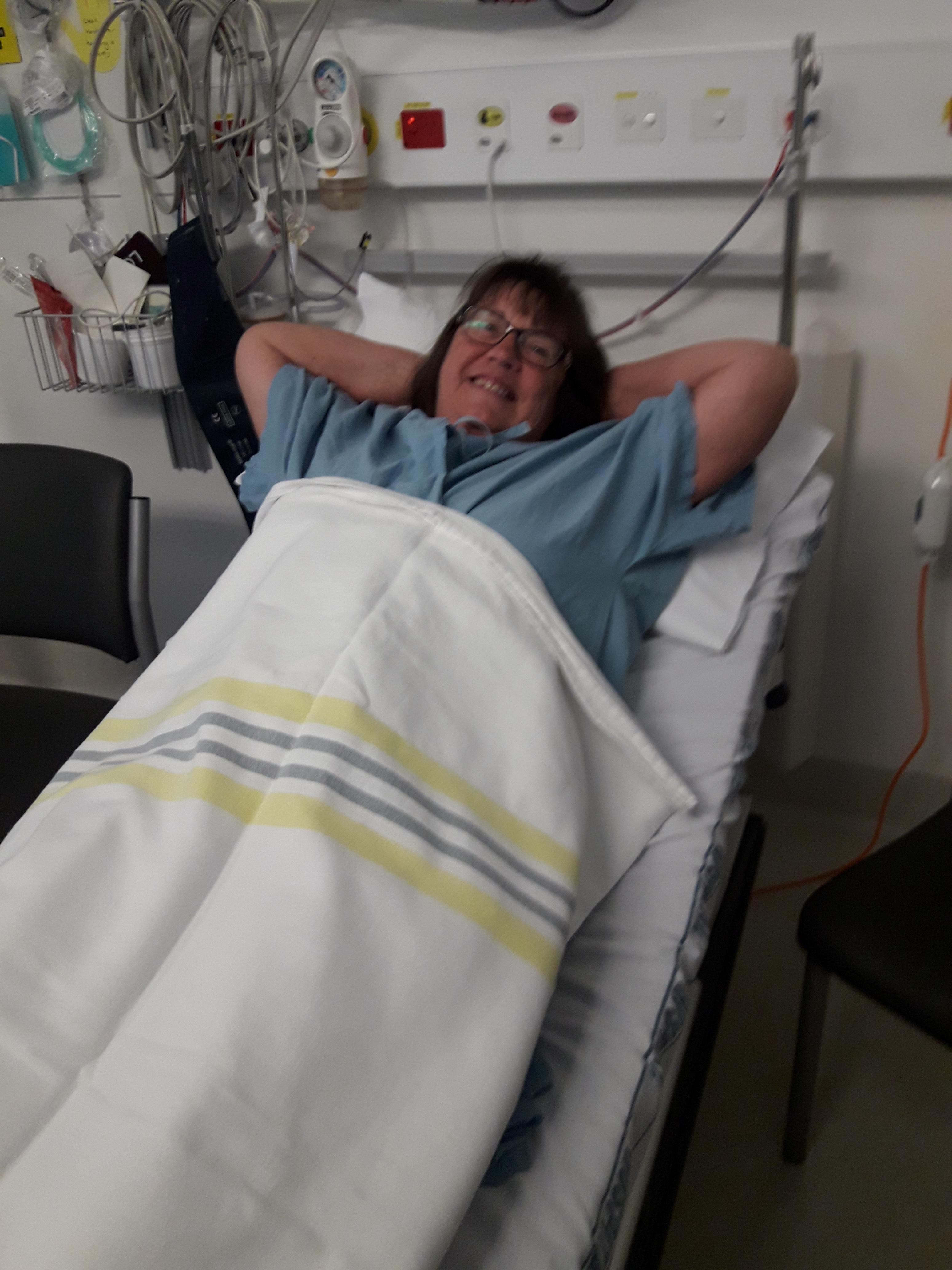
Our friends Di and Gary, Lynda and Ian had been talking to us about travelling together around the Coromandel, and then heading northwards, and we jumped at the chance to take to the road again. The trip was to start with a visit to our place which proved very convenient as Judy was called up to have her pacemaker replaced and our guests were able to dog sit for the time we were away. It was such a relief to get that device changed and to know I will be all good for another  10 years or so.

20200615_075732

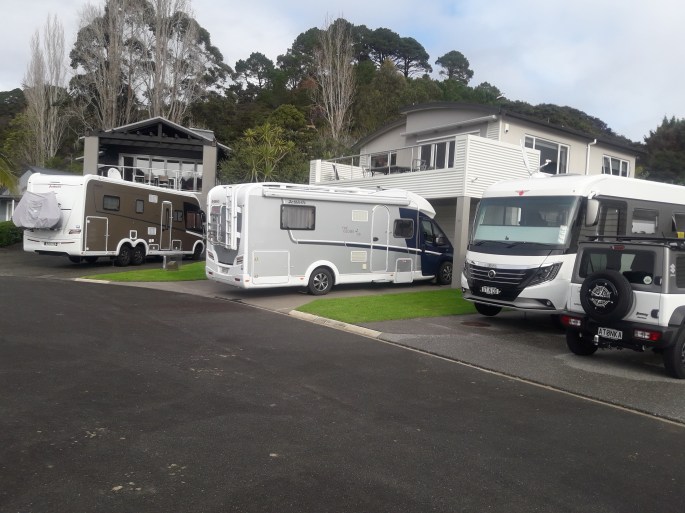
The end of our cul de sac looked like a motorhome park, with ours being the poorer cousin of the three. We were grateful to our neighbours for permitting our friends to use their driveways, Given a few days to recover, we hit the road hoping that the weather forecast would not be as bad as predicted.

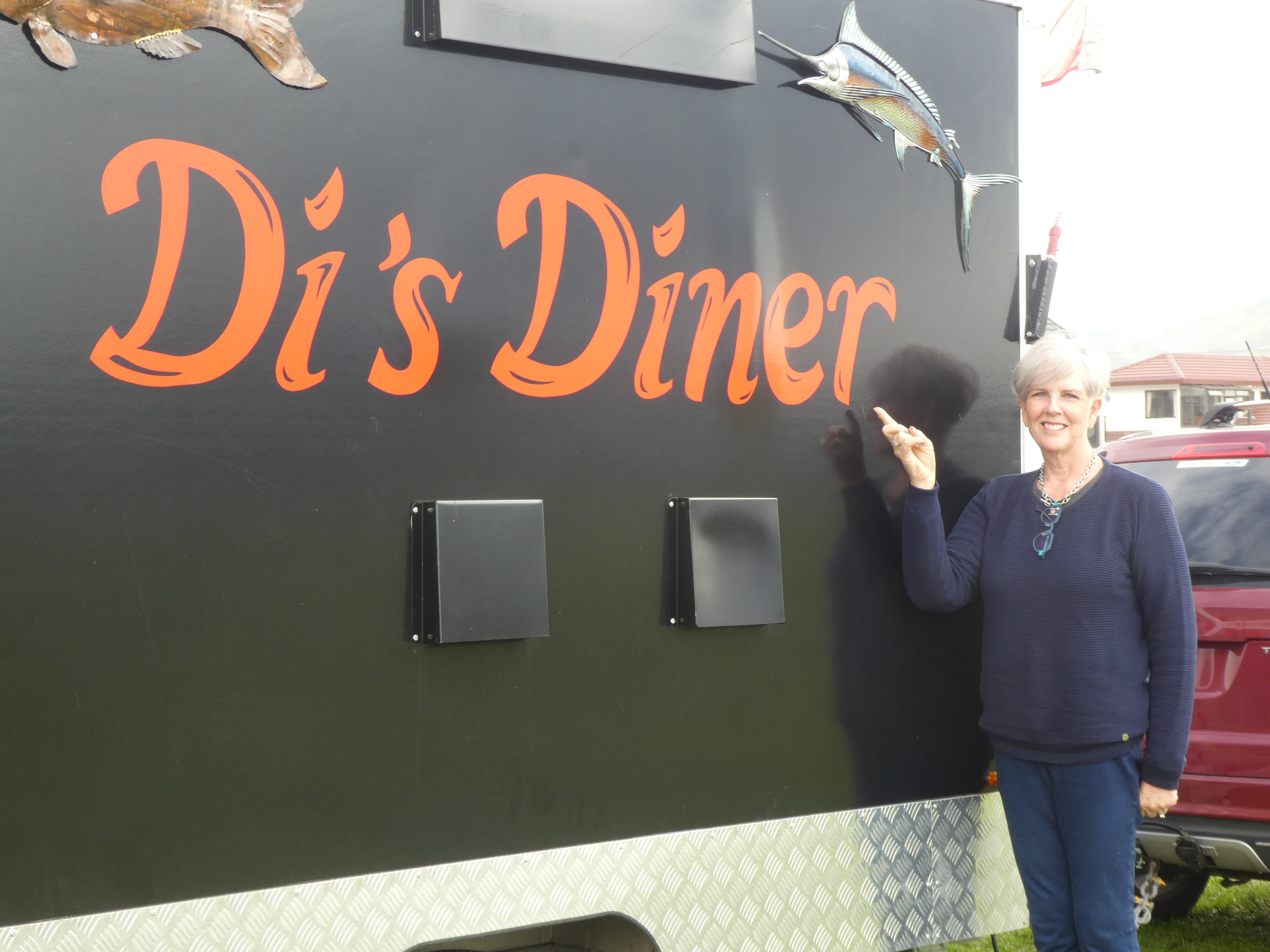
The first leg was a very short one –  a trip to Buffalo Beach to have a coffee and a mussel fritter at the aptly named Di’s Diner, followed by a stay at the NZMCA Park in Whitianga, with the objective of being able to visit the first winter market the next morning.

P1020944

We were intrigued to have our happy hour disturbed by the sound of a helicopter directly overhead. It landed just across the canal from us, the garage door of the house opened, the the helicopter was pushed inside to join the BMWs and Merc’s.

The rain arrived as predicted and the morning markets were a bit of a soggy affair, although well attended. We were pleased to see the smoked mussel company there so we had to have some of those!. Then it was pack up time and we headed off to Kuatounu (an equally long journey).

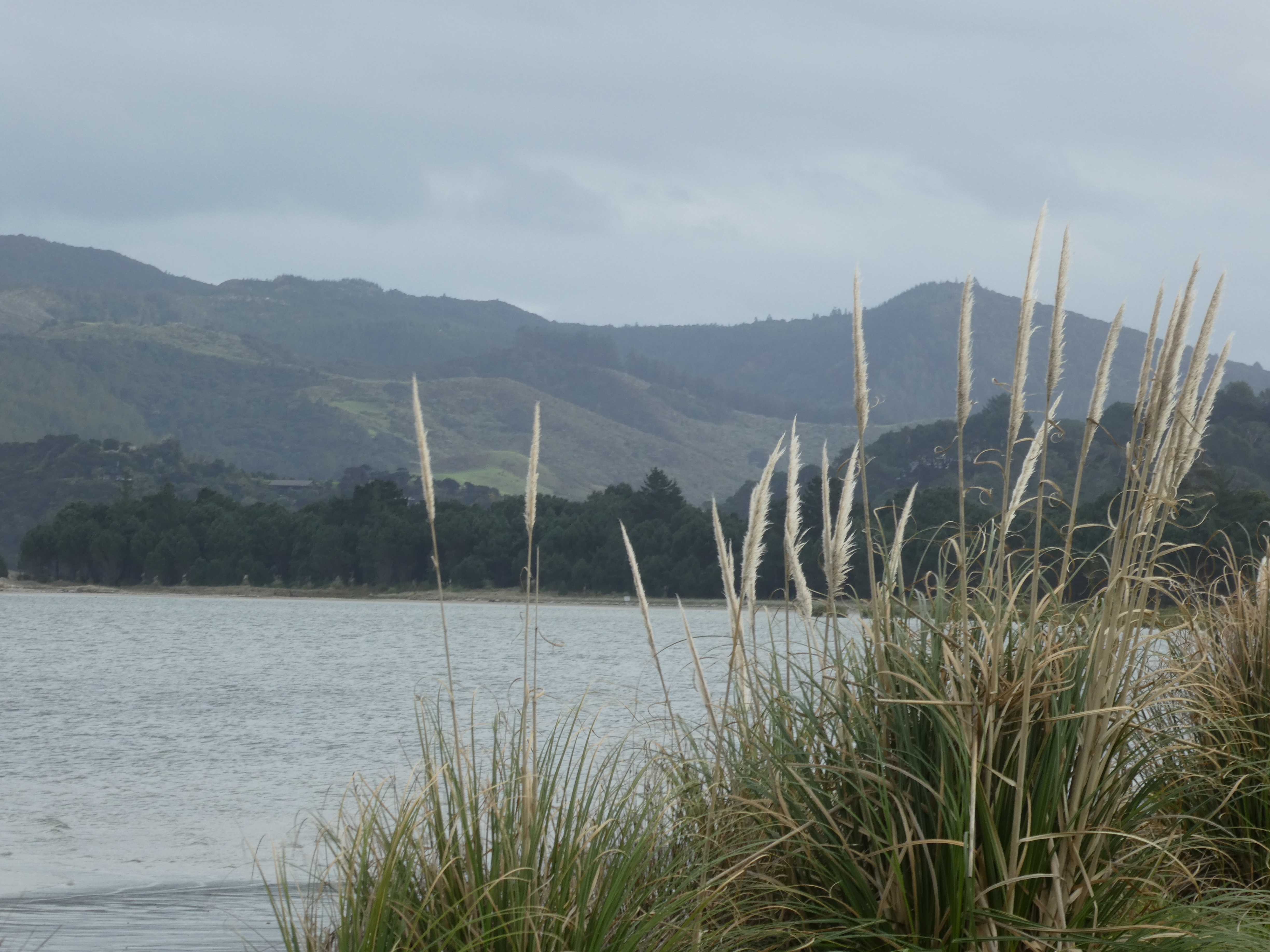
Luke’s Kitchen is a famous rustic surf scene pizza Bar at Kuatounu, and we decided our visitors needed a taste of that. First up though was to take the boys for a quick walk on the beach, between showers. The beach is pretty, with the Kuatounu River running through it, and some interesting rock formations at the end,

Lunch was as great as expected, even though we were huddled around outdoor gas fired heaters to keep warm, but we all enjoyed our pizzas and then headed off to the camp. The rain and wind had well and truly set in by now, and Judy did not sleep well fearing that the river would flood, and it was just alongside our parking spot. Of course it never happened and the next morning was a much sunnier, drier day.

We had arranged to stay just the one night here and we were off to Coromandel the next morning, but Bruce and I decided to take the dogs on a long walk.

Kuatounu Beach is pretty but not very long, so we had a quick look and then drove on towards Matarangi.

Matarangi is a surf beach but it is long and sandy and easy walking. There were lots of dunes for Hunter to explore and some big shells for Bruce to throw for Oscar to chase.

Once the dogs had run off some steam we headed around to the boat ramp to make ourselves a coffee, and also to inspect the freedom camping area that we had heard was here. This was also a lovely spot and we would be very happy to camp here at some time. Judy was especially thrilled when a flock of about 12 white spoonbills flew overhead and landed not too far away in amongst the mangroves. What majestic birds they are.

P1020963

Now that we were all refreshed it was off to navigate the hills and bends to Coromandel Town.

Glacier Country

Once the weather cleared in Hokitika we travelled south. We had plans for a hot soak at  Franz Joseph, followed by a helicopter ride around Mt Cook, over the glaciers, complete with a glacier landing, so we were pretty excited about this leg of the trip.

We had been told about road damage from friends who had already travelled the route, but we were not prepared for the extent of the damage, particularly when going over the roads of Mt Hercules. It seemed that around every corner was another huge slip. The amount of money spent on this area of the country must be colossal.

Before we got into Franz Joseph, we took a short detour out to the coast to visit a lagoon called Okarito, apparently home to the White Herons, although we did not see any. However, the area was spectacularly beautiful.

We found out from the information boards that the herons have a nesting colony further round the lagoon and you have to kayak to get to it.

The area was originally a rich source of gold, with nuggets bwing found on the beach of the lagoon. In 1866 no less than 2000 ounces of gold was shipped out of Okarito. However, the prosperity was very short lived.

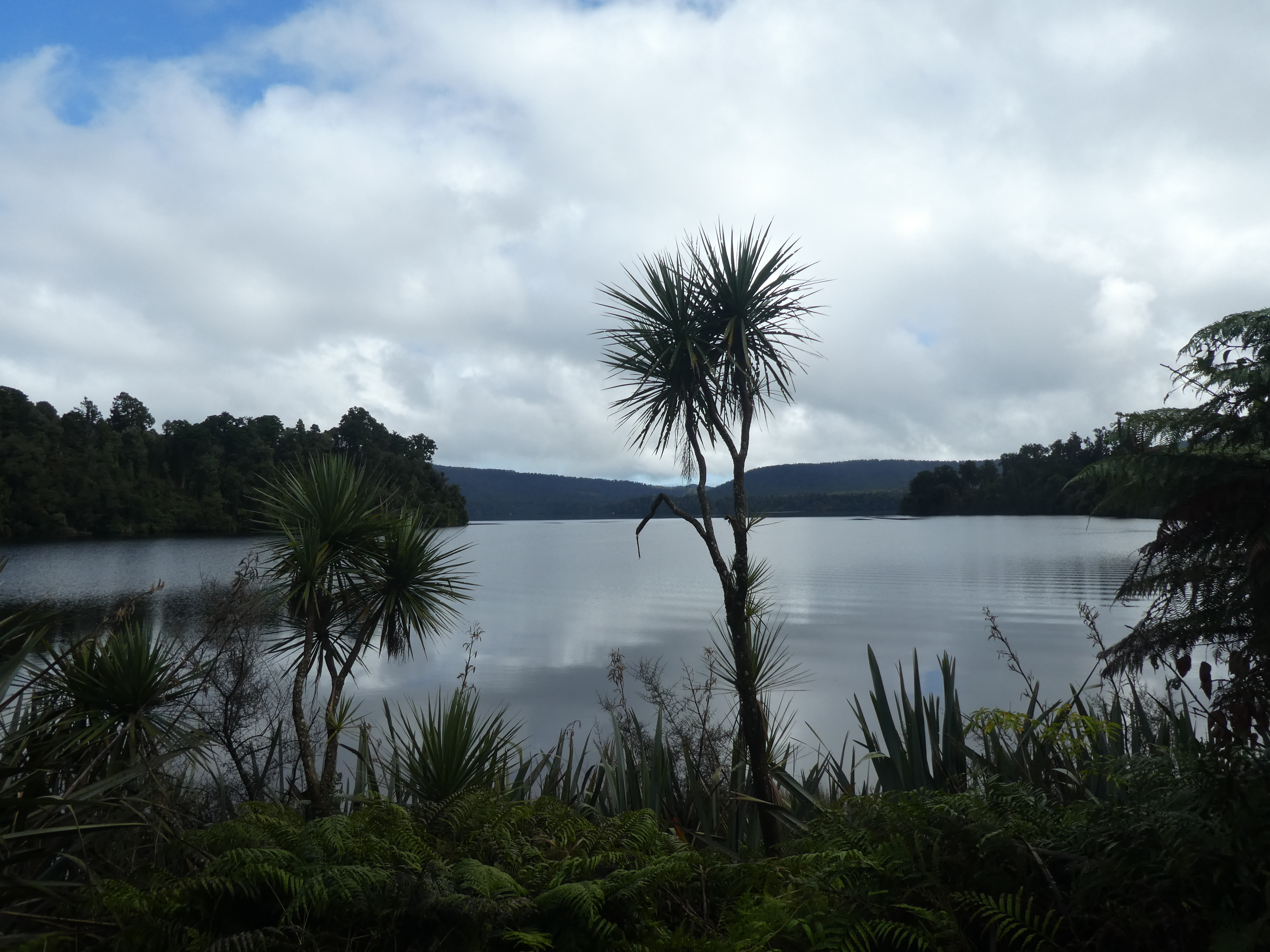
We headed back to the main road, past Lake Mapourika, towards Franz Joseph. There are lots of lakes (some small and some not so small) but Lake Mapourila is, in my view, the most scenic.

P1020476

Further down the road a little is Lake Paringa, which is a popular freedom camping spot but not for the likes of us who have dogs though. Because of this we had a quick look and moved on.

We reached Franz Joseph in time for a nice hot soak, and also a birthday lunch given to us by Catherine and Blair. As we remembered from 3 years ago, the place was packed and it was hard to find a parking spot, but we managed. However, we decided not to go up to the glacier this time, as we had walked up there previously. We decided to leave that for Fox Glacier, so we headed on down the coast to our parking place for the night, ready for our chopper ride at 10am.

P1020507

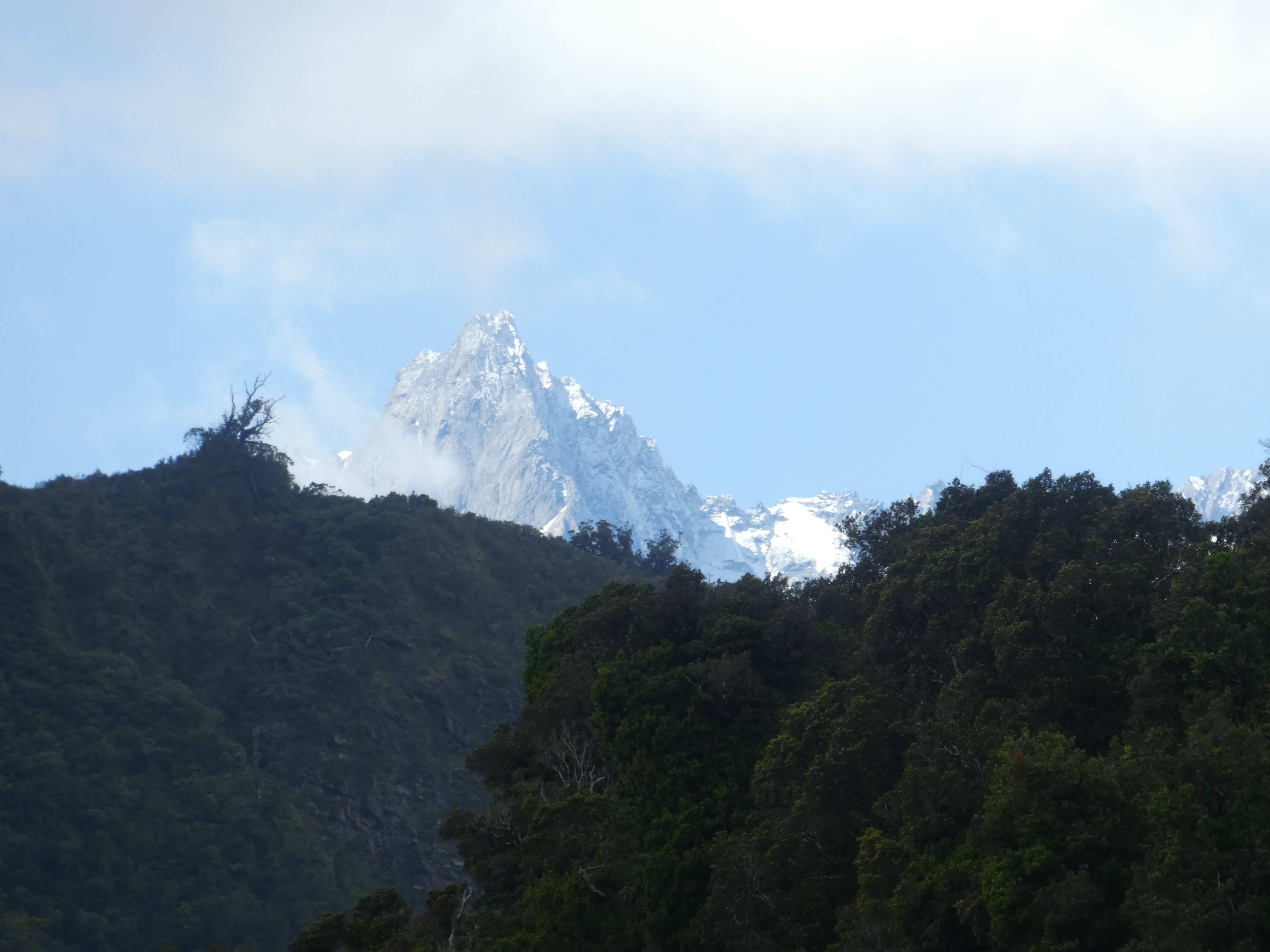
As it turned out, low cloud obscured Mt Cook so the helicopter ride was delayed for two hours. While we were waiting we drove out to the Mt Cook Viewing point getting just a brief glimpse before cloud moved to cover it, and we never got a look at it again. The chopper ride was cancelled. The road out to the lookout was charming though, with some quintessential NZ scenery, with Fox Glacier as a backdrop.

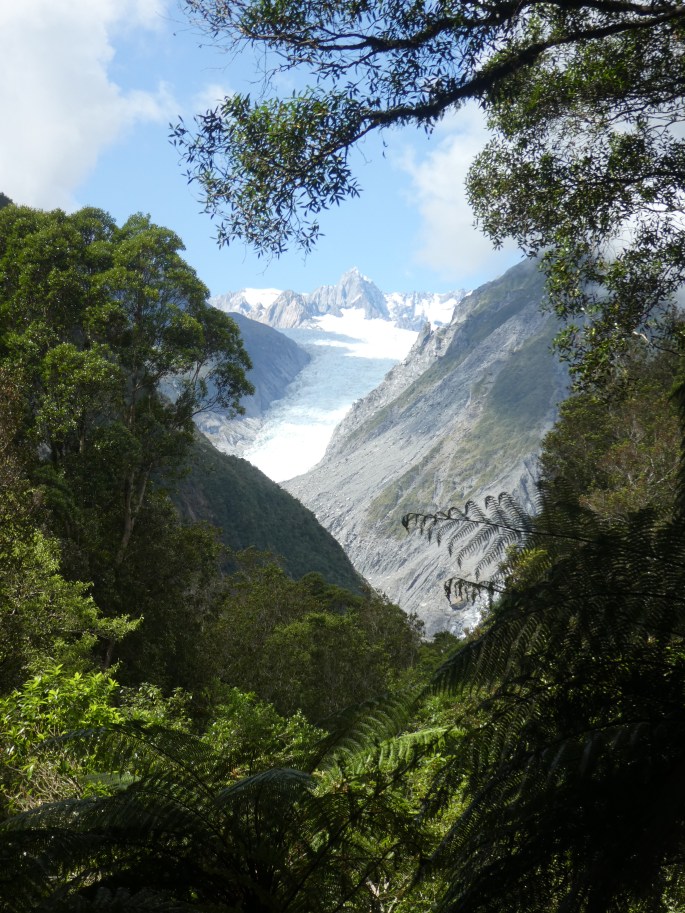
We decided to walk the track to the glacier, knowing that this had also been damaged with the recent bad weather as well. From the track we got some great views of the glacier and the river coming from it. Again, a lot of work had been done to repair the track, but access to the swingbridge is no longer available.

The following morning we headed down to Hass, for a couple of nights there as a base to visit Jackson Bay. Jackson Bay is the last bay on the west coast coast road and we had heard great things about it. First though, we called in to Ship Creek.

This is a beautiful little bay that got it’s name because the wreck of a ship was found here in 1867. Apparently it took some detective work in Scotland to find it was the wreck of the clipper Schomberg.

We loved this little place which also had a wetlands walk that we did not go on.

Tomorrow we are headed for Jackson Bay


Hokitika

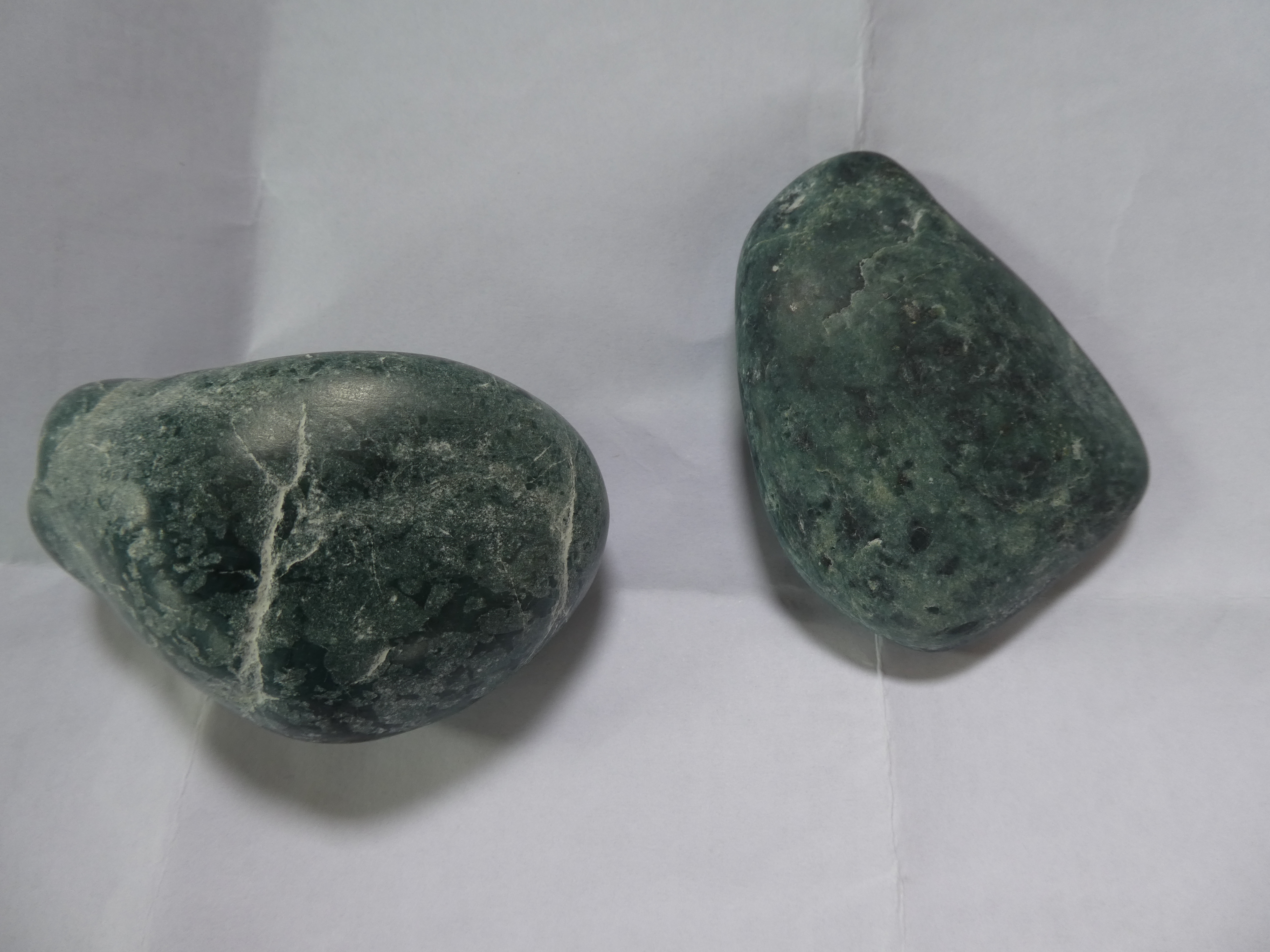
All 8 motorhomes/caravans gathered at the pre-agreed meeting place in Hokitika ready for us to enter the grounds of the high school where we had paid for parking. The tickets had a printed entry time of 2pm but when we all rocked on up there, we were told it was a mistake and entry was at 4pm, so our procession moved away and parked up down the road for another couple of hours. Most of us went fossicking on the beach to try our luck at finding a piece of greenstone. None of us really knew what we were looking for,  despite having read an article on the internet beforehand (complete with pictures), but we all came away with samples we knew had to be real thing. Once we were finally settled on the school grounds we all got to work with our wet and dry sandpaper to try and take off the top layer to reveal the green magic layer underneath.

This is what we were doing when the mayor stopped by to say hello, and video recorded an interview with us while all the time we were sanding away!.

P1020455

We took our treasures to a Pounamu Gallery a couple of days later only to be told they were “serpentine”. Although disappointed we were determined to try again.

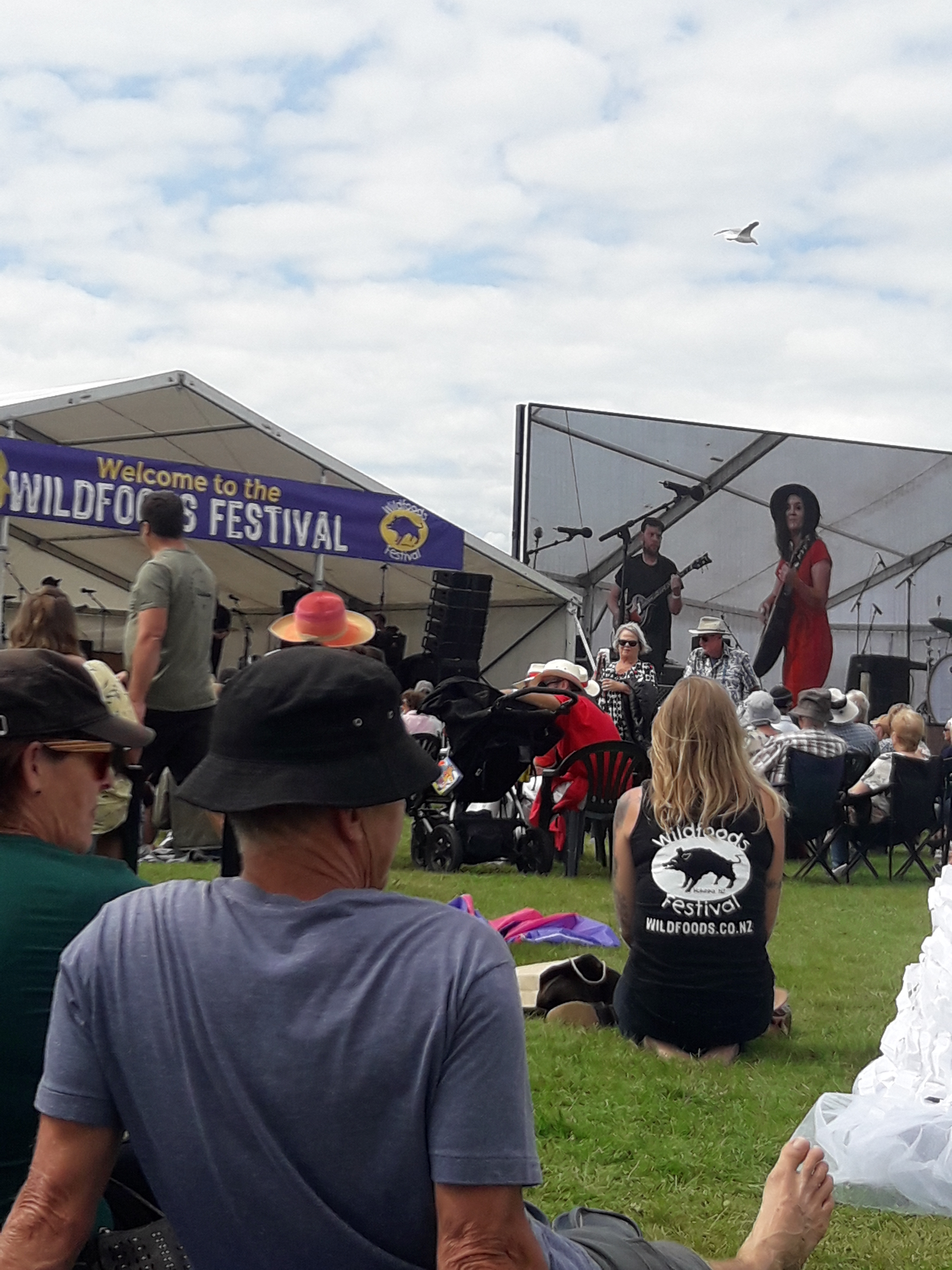
The next morning we all set off for the Wild Foods Festival, just a short walk away from the school where we were parked. Today was also auspicious because it was Bruce’s birthday, so many of our team promised to buy him all sorts of  wonderful (i.e. hideous) things to eat. We resolved to try a few things on offer, but Dearne set an early pace as she ate huhu grubs, a chocolate coated cricket and a cupcake with a wire worm on top.


Bruce and I decided we had better keep pace a tried a snail each.

I think it is safe to say neither of us were too impressed, although how Bruce would know I am not sure as he admitted to swallowing it whole! We also tried honey roasted crickets (OK I suppose) and kebabs made of a piece of rabbit (tough), wild pork (nice), wild venison (also nice), goat (also a bit tough) and wallaby (OK).

We then tried the different foods that were not so controversial – a waffle with wild blackberry consomme and cream (yum) and a Dutch donut (very yum).

There were several bands playing at the concert but the two acts that we particularly enjoyed were Katie Thompson, a local singer song writer, and the NZ Army Band. It was great just sitting on the grass, relaxing, and enjoying the music while looking at all the outlandish costumes that people wore for the occassion.

20200307_121500

We finally headed back to camp to take the dogs out and have a bit of a relax before all getting together for a final happy hour before we all dispersed for various places the next morning.

Bruce and I decided to stay on for a couple of days firstly because the weather forecast was not flash, but also because we wanted to have a look around town a bit more, and do some shopping and laundry.

The NZMCA Camp is right on the banks of the Hokitika River, so it was a pleasure to be able to take the dogs down onto the river shores for a walk. The real bonus was that there were White Spoonbills enjoying feeding in the shallows of the river, as well as NZ Dotterels. I could not see if the dotterels were the rare banded ones that are supposed to be in the area, as they were too far away and quite shy.

Needless to say we did some more fossicking and came away with more samples – the van will go slower from now on because of the added weight.  I don’t hold out much hope that any will be genuine greenstone, but we had fun just the same.

unnamed[1]

The final quote of the day was seen at the Wild Foods Festival. It was quite good I think.

20200307_102517

The Goldfields of Ross

If you are looking for evidence of the hard working pioneers of New Zealand, then Ross is one of the places to find it. Gold was discovered in the area in 1864, and there was a rush of people to the area which had previously been sparsley populated. The population was limited though by the shortage (and expense) of food supplies because there were no roads into the area. Early miners almost starved to death. However, once the supply line was secured, until 1872 the Ross area was the country’s most productive gold field, producing around 14,000 oz of gold per year.

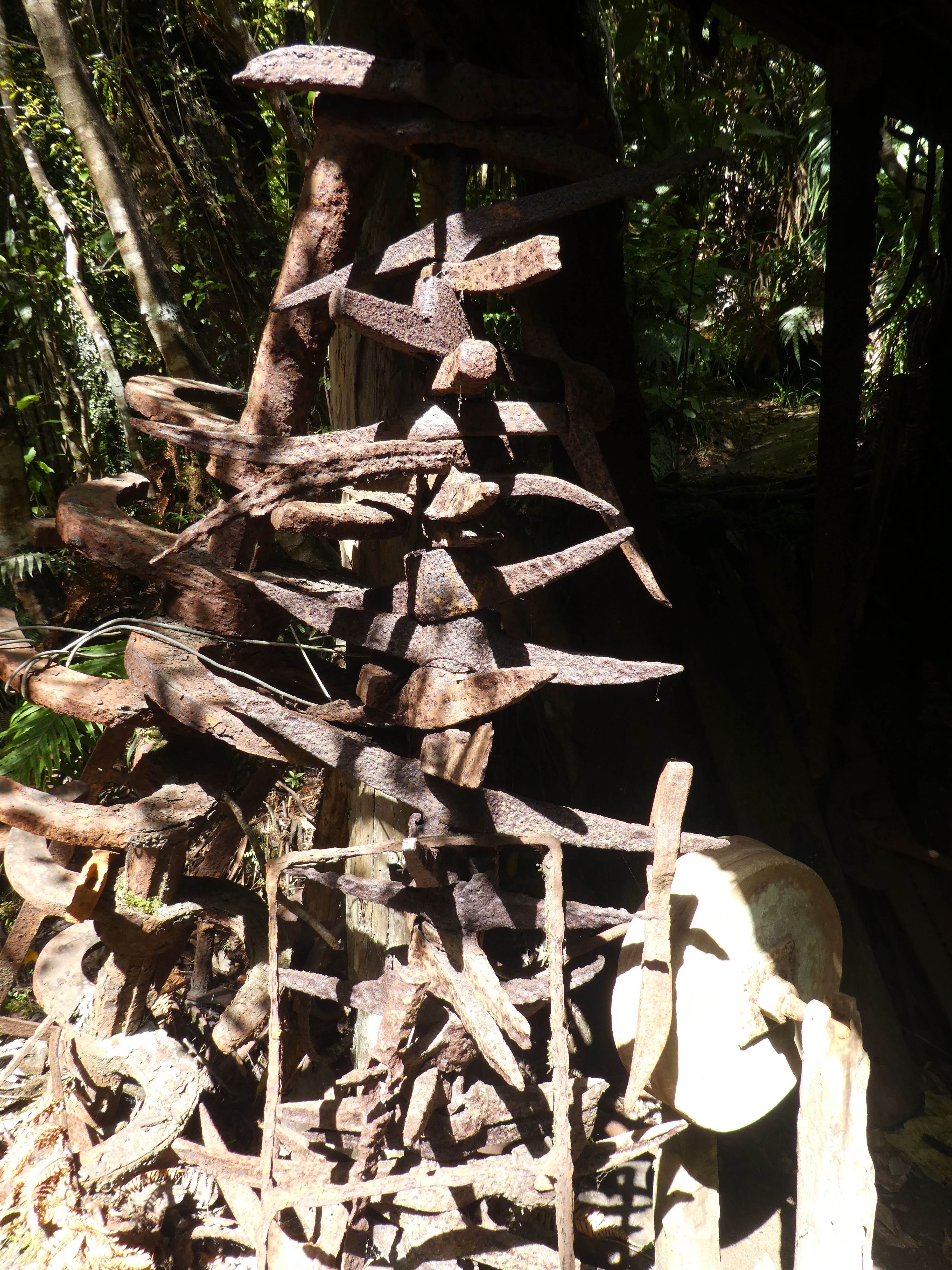
Evidence of these mines are everywhere and our first visit was to Mitchell’s Gully Historic Gold Mine, between Westport and Hokitika. We were greeted at the gate by towers of pick axe heads, and the significance of these was soon apparent.

P1020314

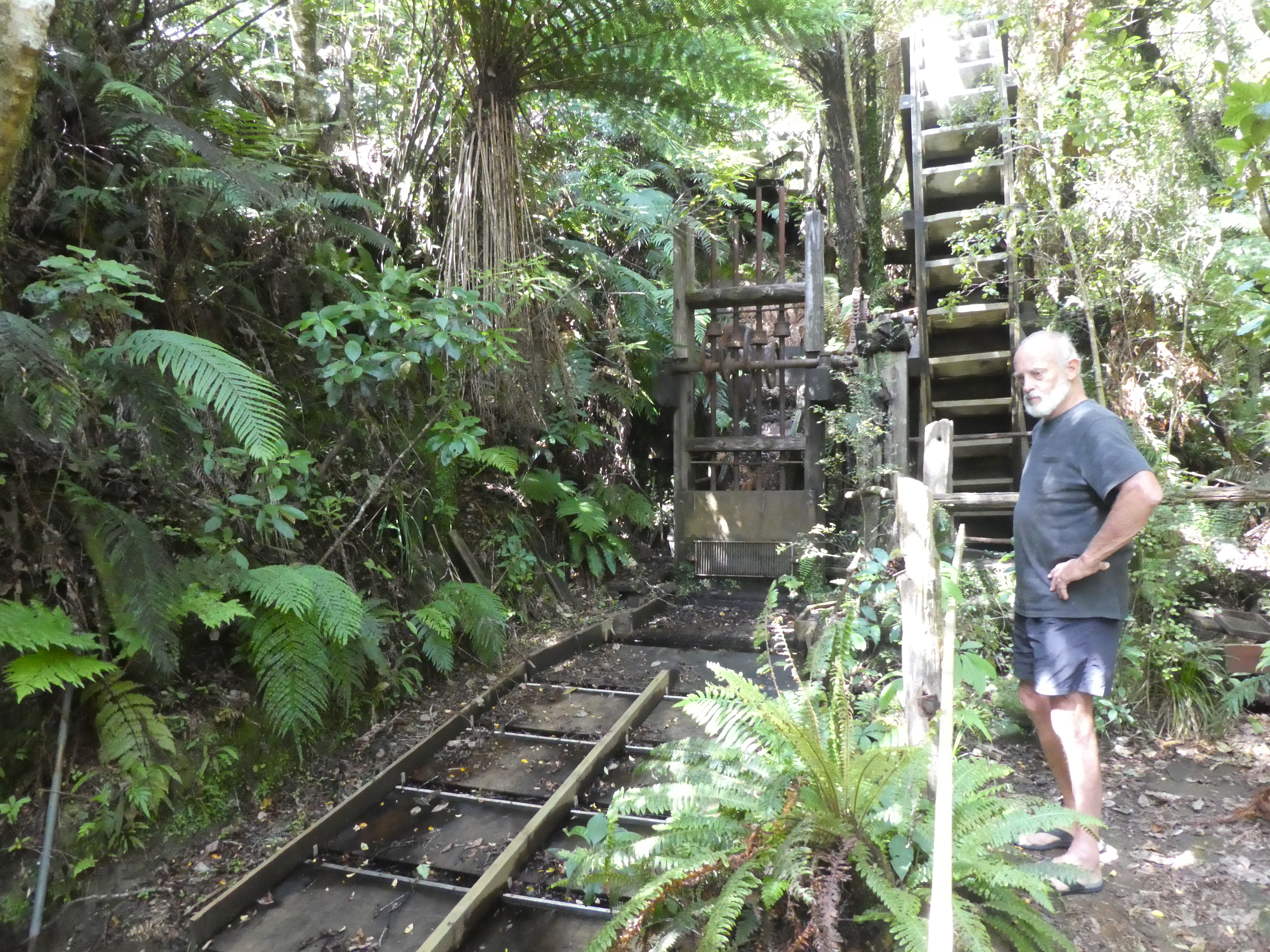
The tour of the old gold mine, which was established in 1866, took us along very old tram lines, and there were still the old trolleys in evidence that were used for transporting the ore.

The gold that came out of this mine was dug from rock (hence all the pick axe heads). The tram lines went through tunnels that were dug, but there were tunnels in all directions, some adjoining and some in new areas altogether.

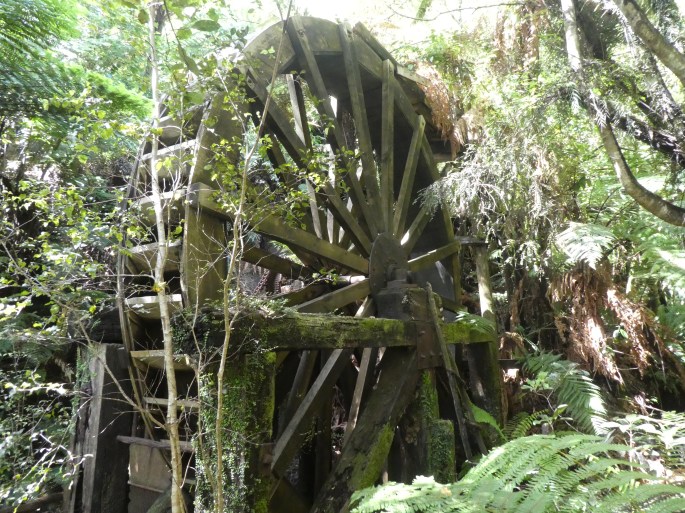
This mine produced an estimated 4 million ounces of gold in total before it closed down. The mine relics come complete with a stamper and water wheel, but apparently, at its peak, it had more than 300 stampers and was working 24 hours a day.

P1020311

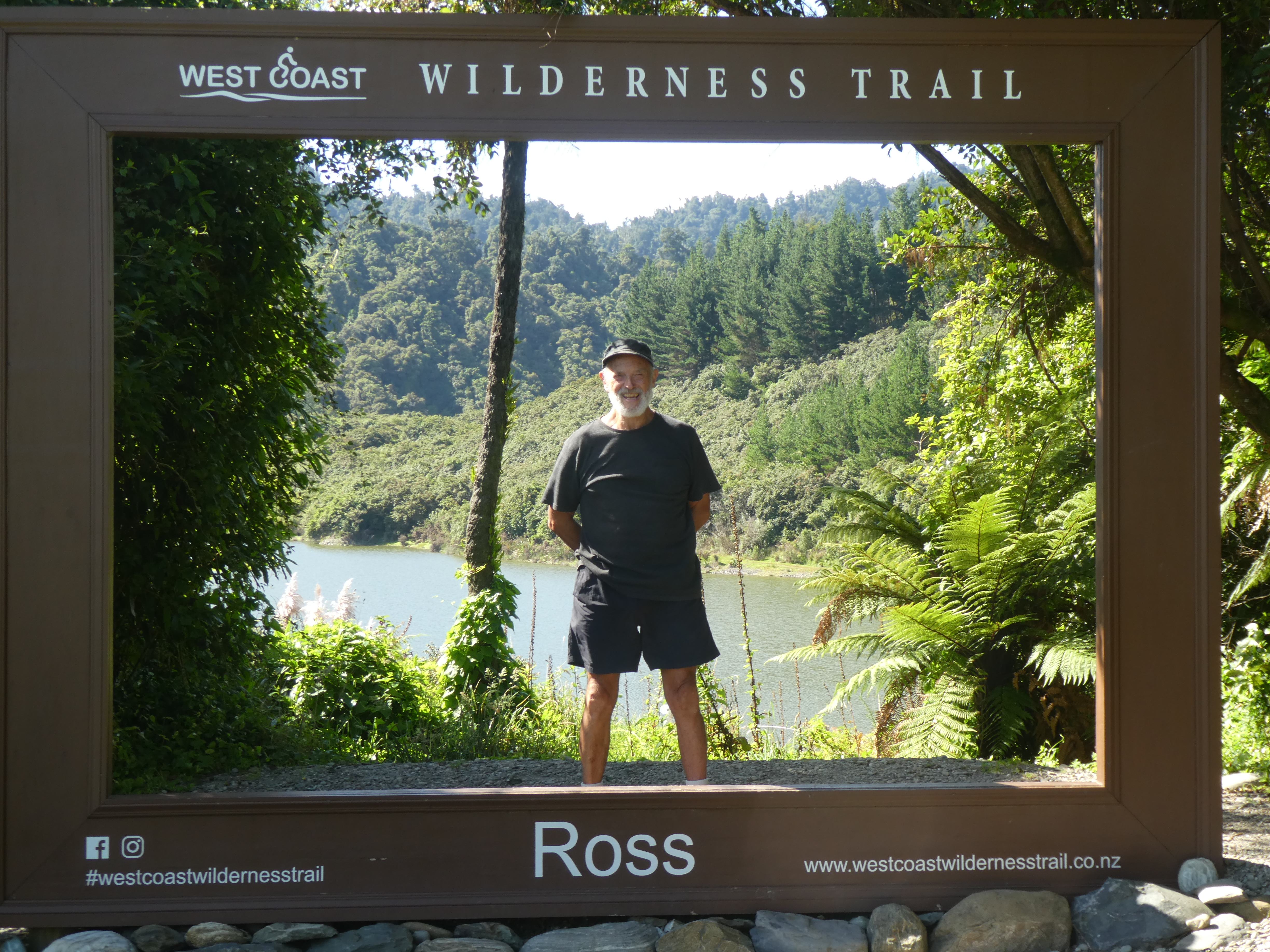
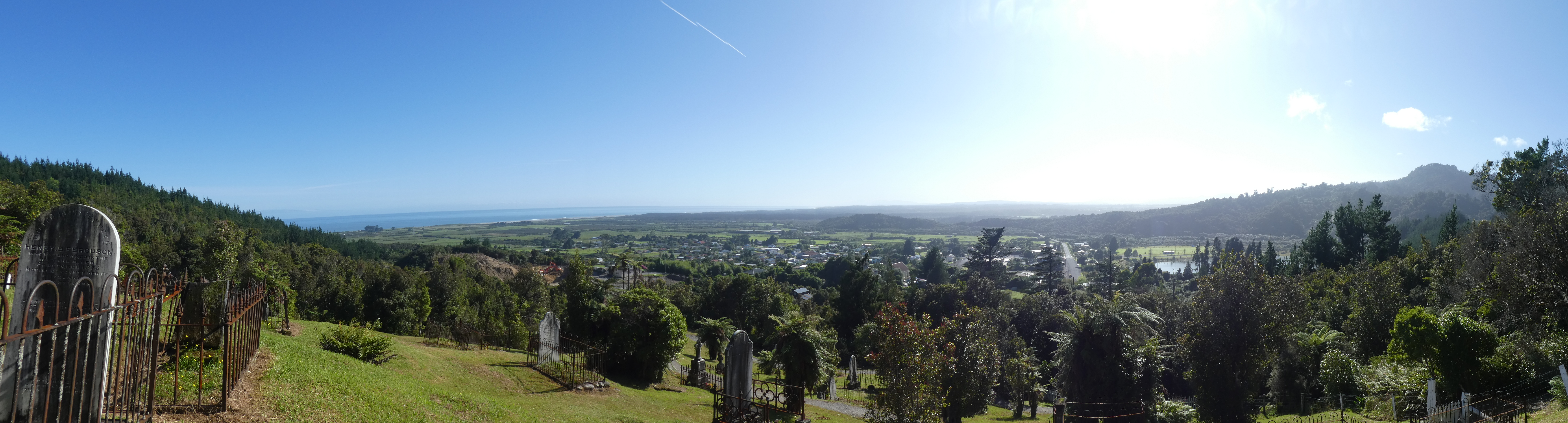
Further along the road is the town of Ross which was to be our resting place for the night. We were totally unprepared to find that our park over property was bordered by an active gold mine. It was hard to see the scale of it until we hiked up the hill behind camp the next day and got a good view.

Up behind the property is a historic cemetary. I had thought the graves at Tapu were among the oldest I had seen, but these ones were definitely older, and these people certainly did not reach old age. One gravestone had inscribed that the gentleman had died “in dispair” which is further testament to the toughness of life as a miner.

The track continued through the cemetary following an old water race, and comment was made on the sign board that those who built the water races made more money than the miners digging for gold did. The type of mining done in this area was by using water canon to spray the hillside and then passing the resulting material through sluices and stampers. To get enough water to the area there are dams and kilometres of water races. The path we took followed one of these lines of water race, complete with the remains of an old water canon.

The track was pretty steep in places, but well maintained, and though lovely bush. Some of the walls of the old races had been taken over by moss and fungi, which were rather beautiful.


The track also led us to an old miner’s hut that has been partly restored but with materials as similar to original as possible.

We carried on the track for quite a way but decided not to go to the end, so made our way back to the motorhome and headed into town to have a look there.

The museum there is well set out and is situated beside quite a large lake that was the site of an opencast goldmine. Now it has become an area of beauty.

P1020404

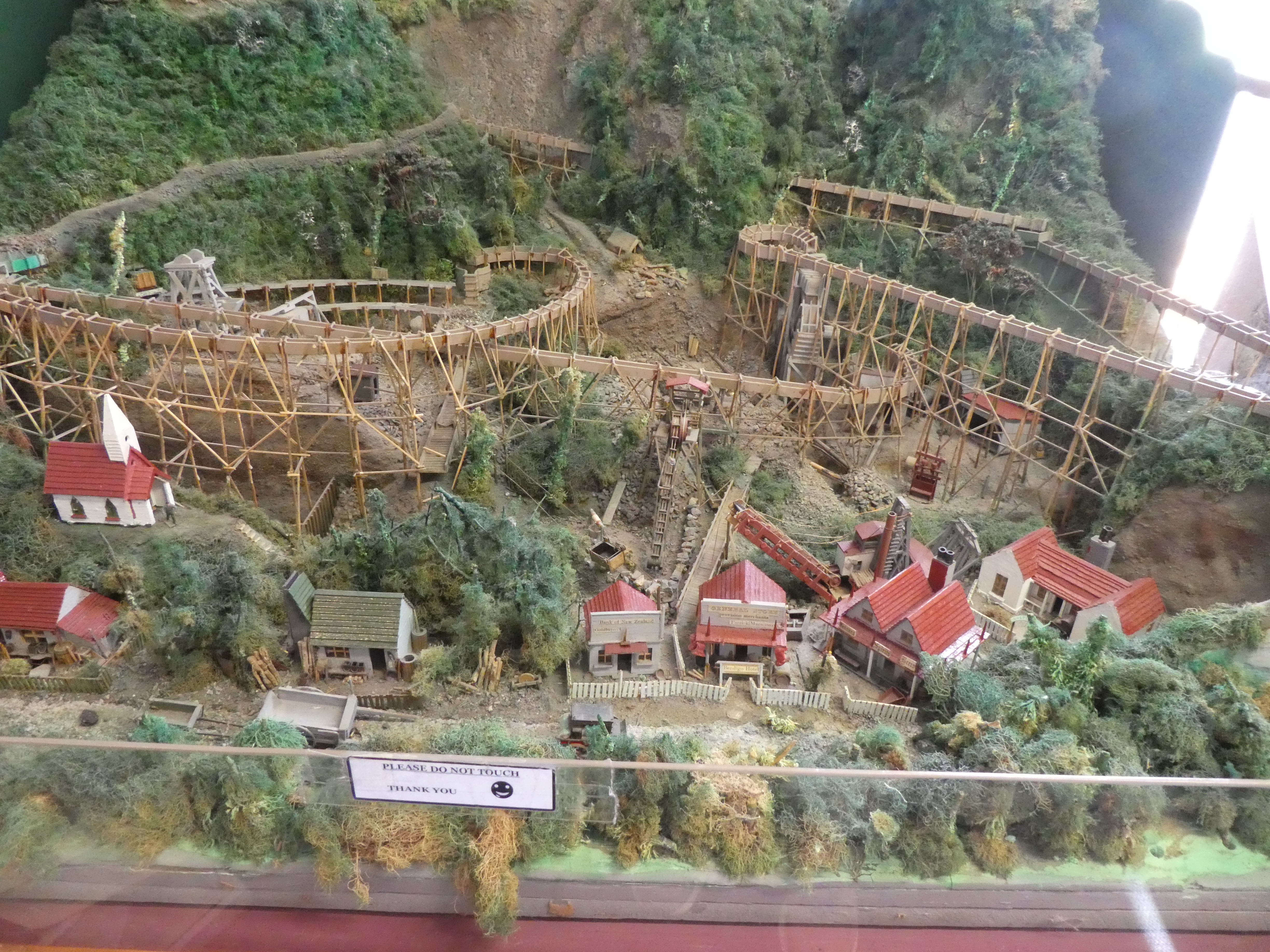
The museum has models of the mining operations that had been active in the town, as well as the opportunity to pan for gold yourself.

P1020387

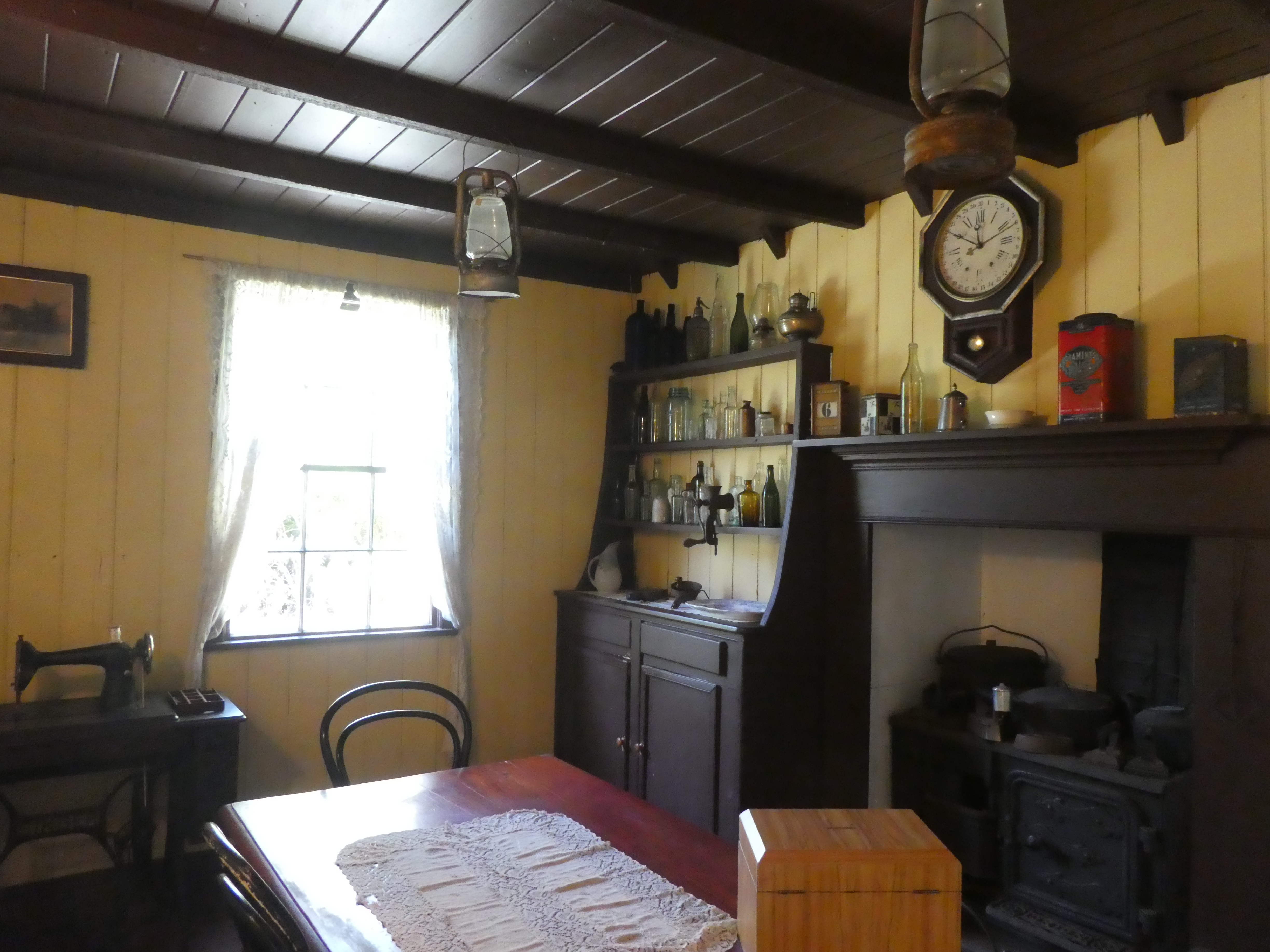
Also in the town centre are examples of the buildings that were around in those early days, such as the old hotel (I couldn’t get a photo of this because there was an asian tourist bus parked in front of it); a settler’s cottage:

P1020421

the town gaol;

and the beautiful Catholic church, opened in October 1866. It is still original, other than the roof, and is the South Island’s oldest timber church.

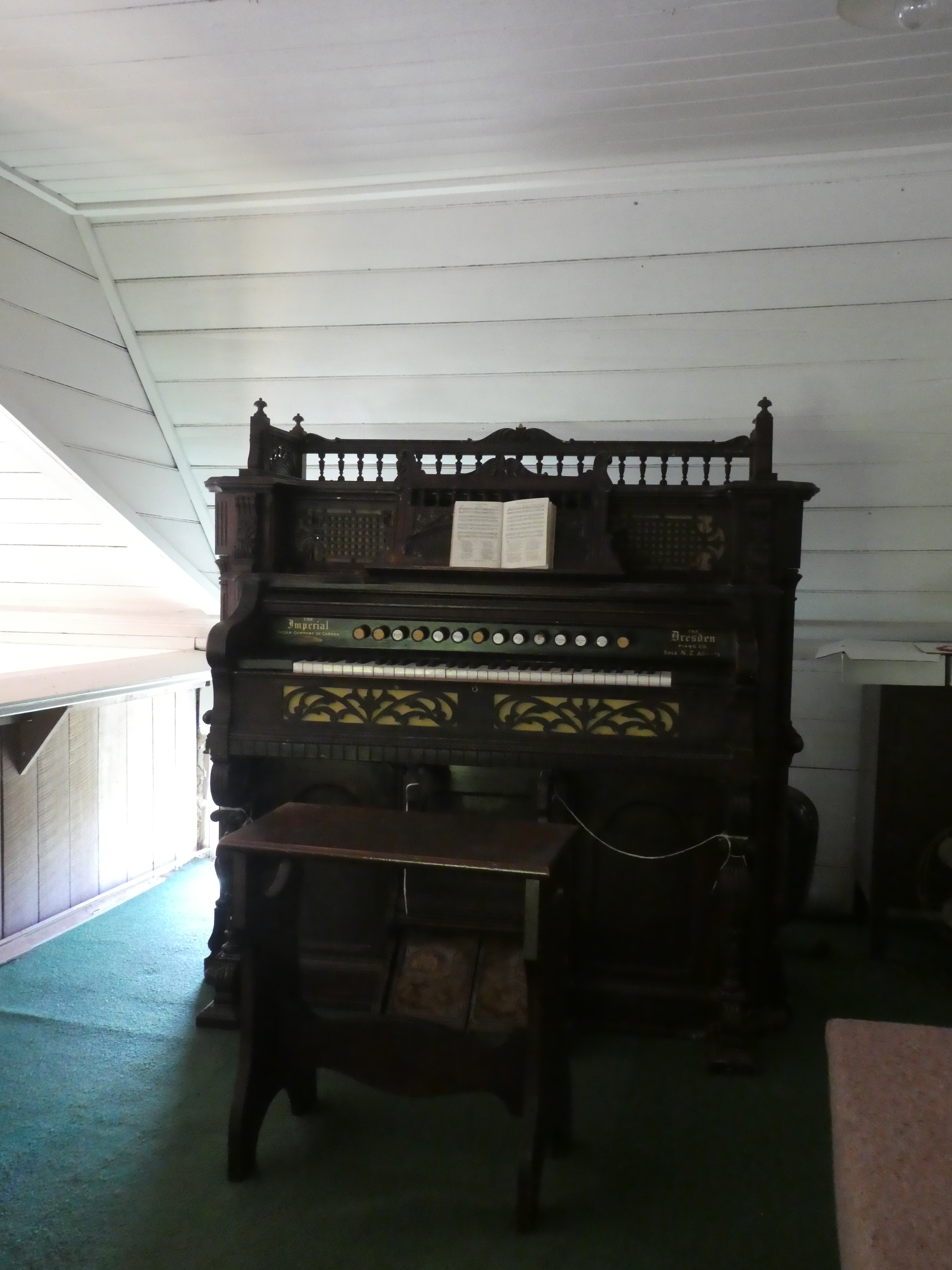
The old organ was also a thing of beauty:

P1020434

We had to leave Ross, evven though there were more places we could have explored, but if you have not been there yourself, it is to be recommended.

P1020359