Timaru and Tekapo and return

We had to proceed onwards from Oamaru as time is running out for our time down south. Our best man, Bob Woods, lives in Timaru and we had made arrangements to catch up with him.

We met him for lunch, and then headed off to take the dogs for a walk and to check into our lodgings for the night – another castle. This time we were to stay at Claremont Castle which is a Park over Property. We headed there, following Google maps and it seemed to take us a long time to get there. All the time we were driving, our next meeting with Bob (to his place for dinner) was getting later and later.

We finally got to the Castle and the instructions were to go around the back and park.

Well, Bruce carefully drove around the back and decided to take a sweeping turn over the lawn (instead of doing a 3 point turn on the driveway) and promptly got stuck! We had some traction mats in the back but that meant half unloading the boot, which Bruce did, retrieved the mats, and then put it all back again. Fortunately the mats worked but we made a bit of a mess of the poor owner’s lawn.
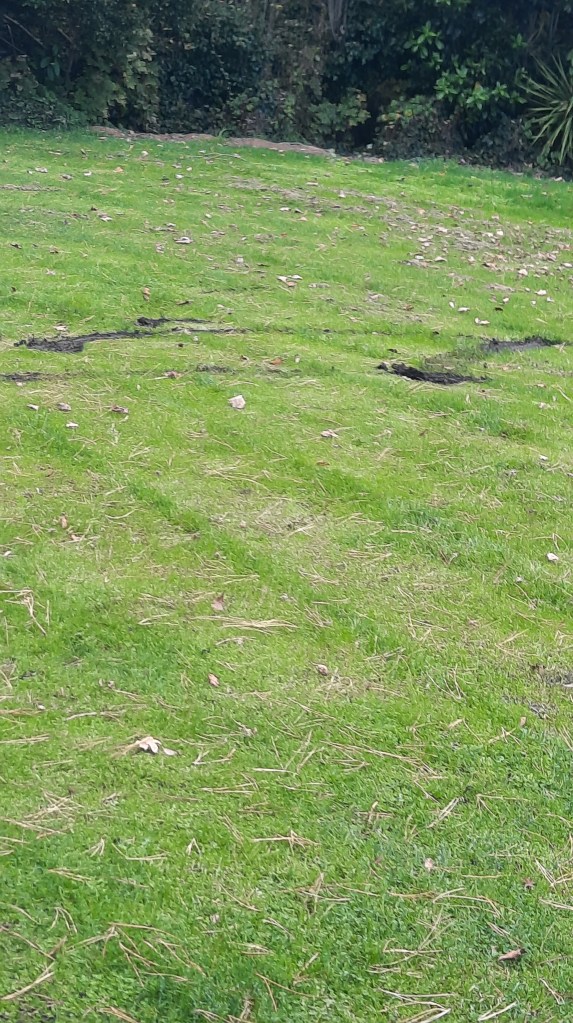
In addition to all this frustration, the place looks pretty run down, so we decided to let the owner know that in addition to us tearing up his lawn, we would not be staying as it was too far out of town. He looked a bit surprised but said OK, and we headed off again.

The reality was that google took us a different route into town and it was not far at all! We arrived quite late for our meal with Bob though, and when we left his place that evening we headed for the free parking at the Caroline Bay wharf area. That was another mistake. Firstly, it wasn’t free – it was $20, and the container port was very noisy. The container cranes, and the containers they carried clattered and banged profusely. The noise stopped at 1am and started up again at 5am so little sleep was had that night, and Beau was not very happy about the noise either.

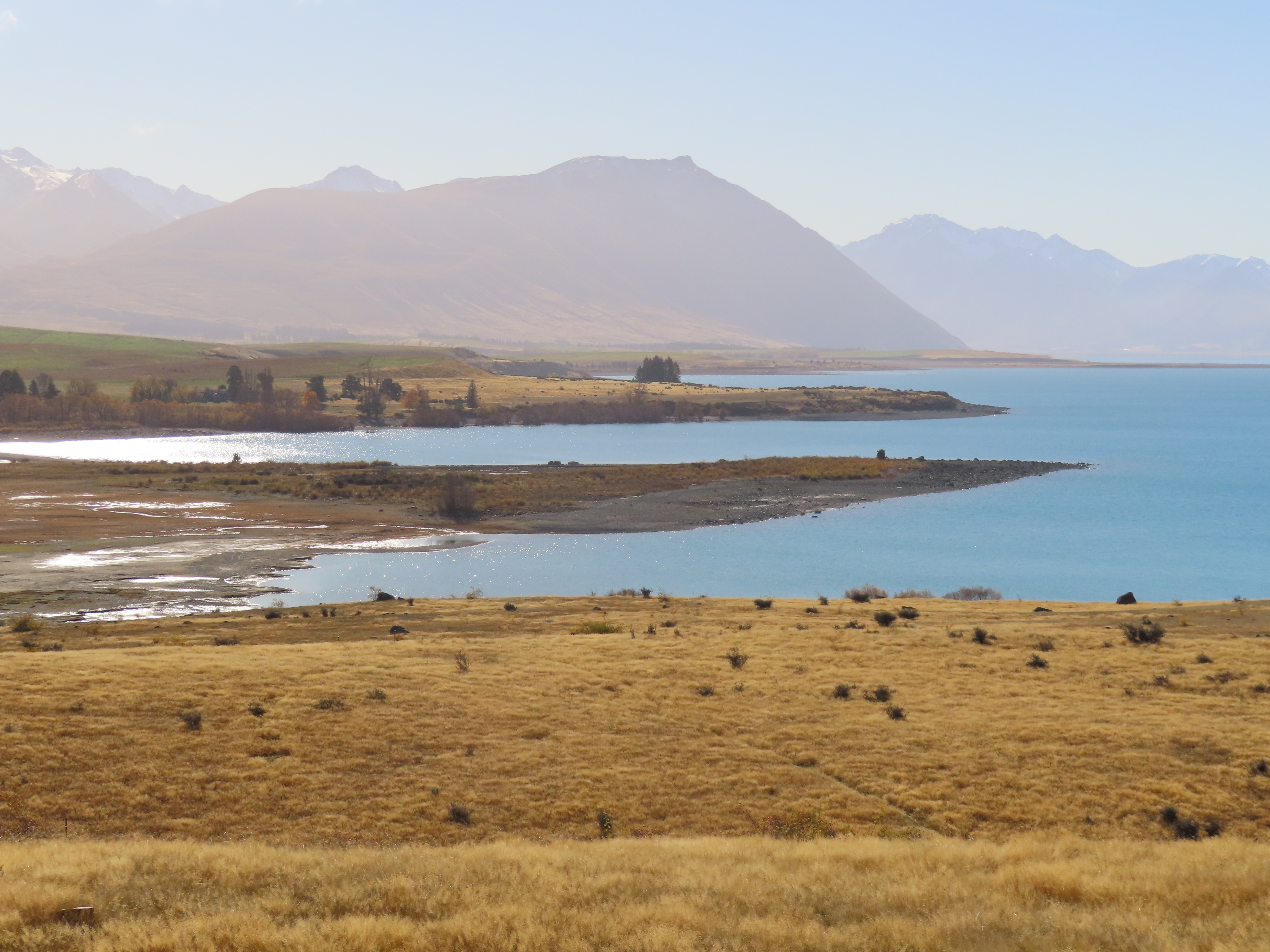
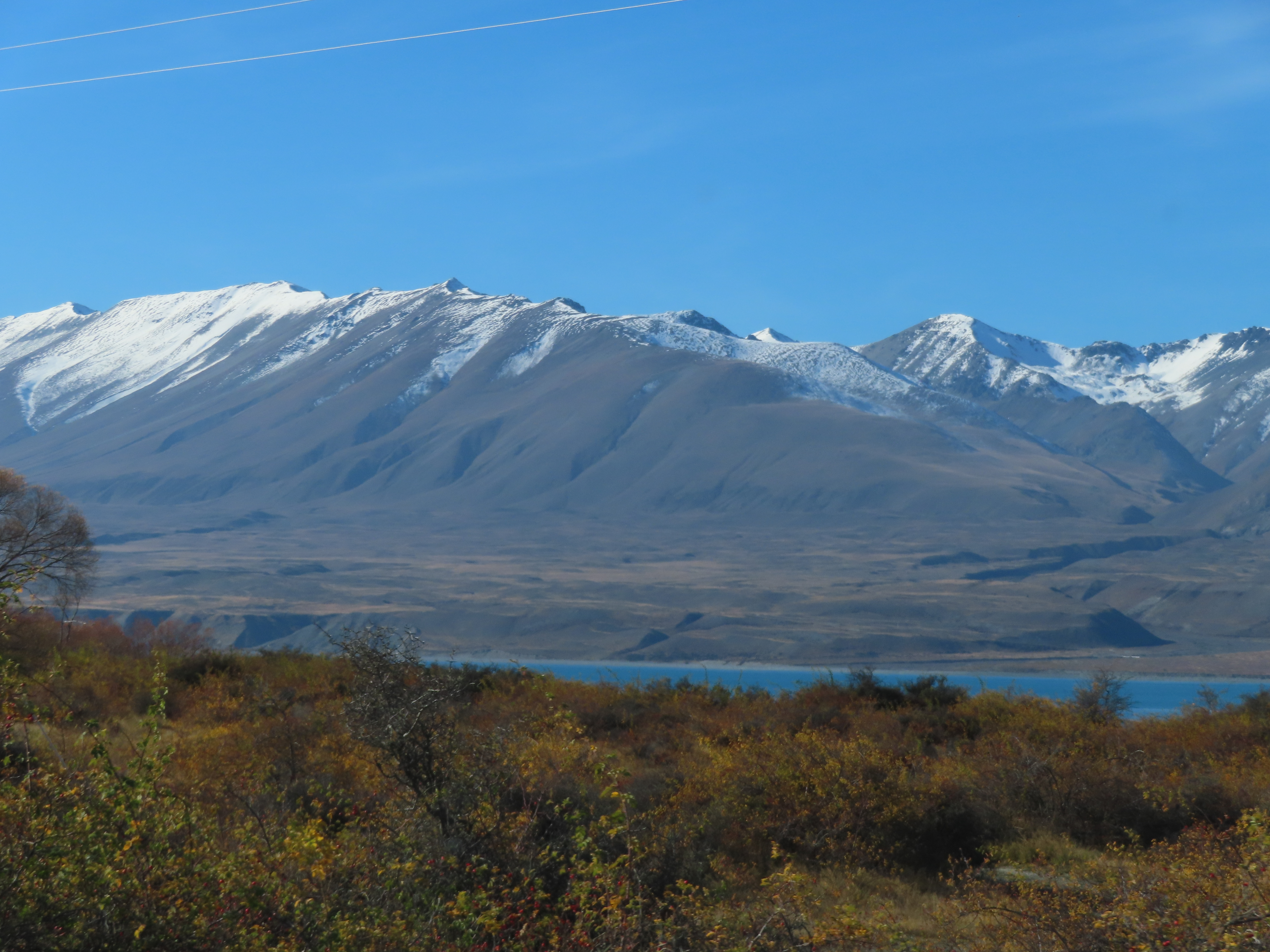
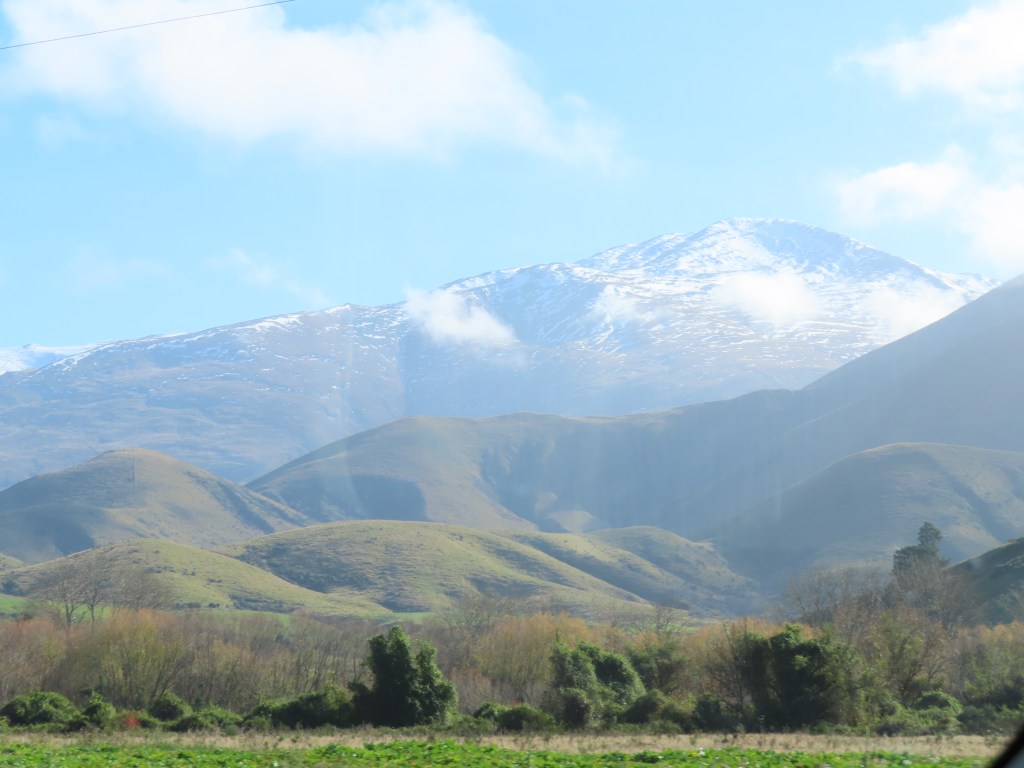
The weather was looking good for a few days, and there was a possibility of snow in the highlands in about 3 days time so we decided to head back to Tekapo and experience it. I was so glad we did. The day was clear and there was already some snow on the hills that wasn’t here the last time, so the scenery was amazing, and a lot of photos were taken.
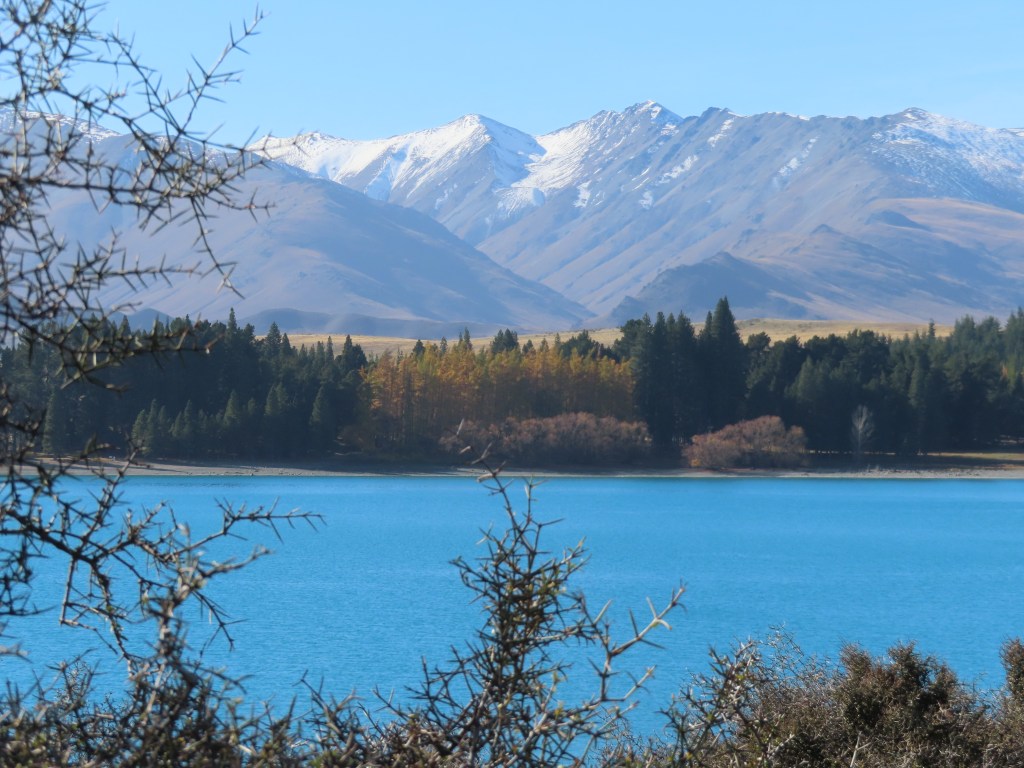
After visiting the usual places Bruce drove us out on a minor road on the western side of Lake Tekapo. It went for a long way, and was clearly a farm road, albeit a public road as well, but it was narrow and tricky to find a place to turn around when we eventually wanted to head back.

The scenery was out of this world.
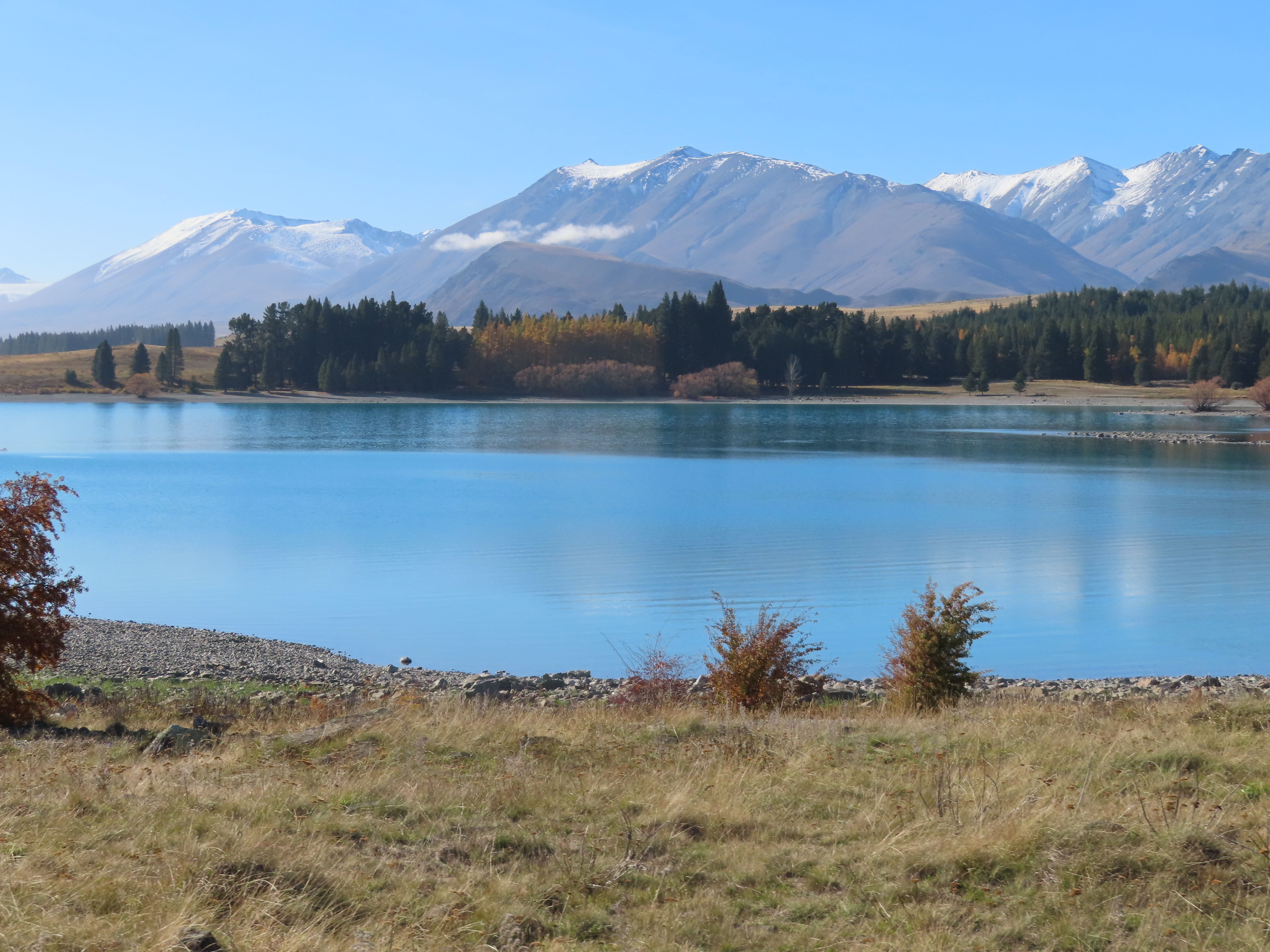
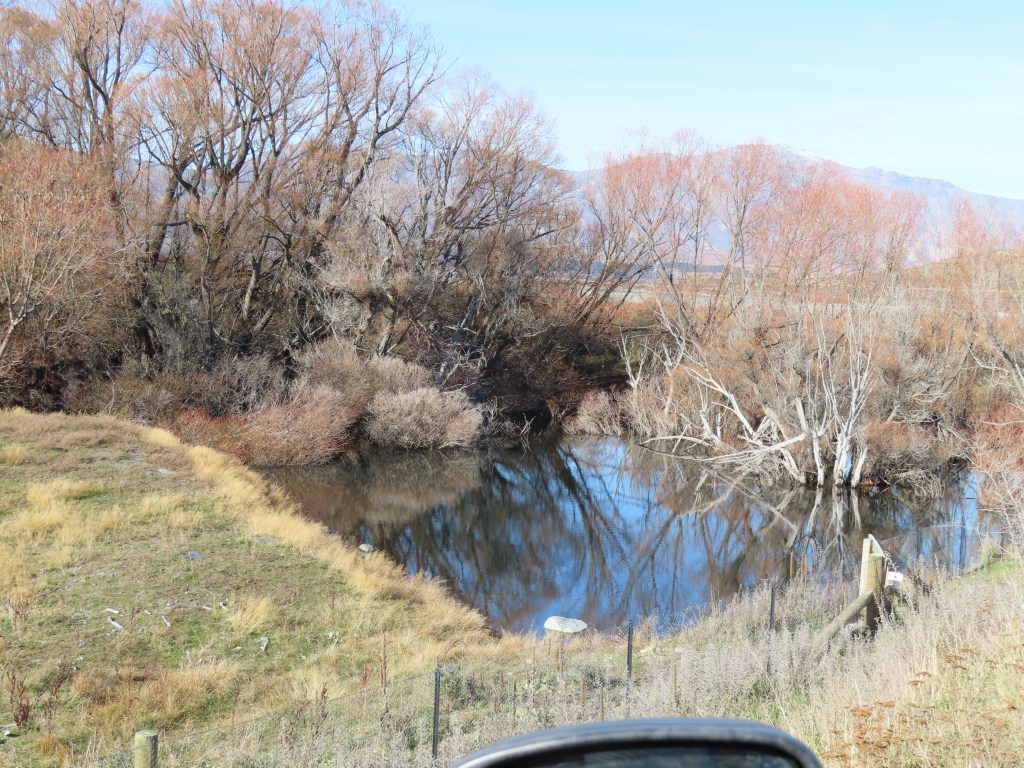
Up that road is Lake Alexandrina and Lake McGregor. Lake McGregor looks a bit on the stagnant side.
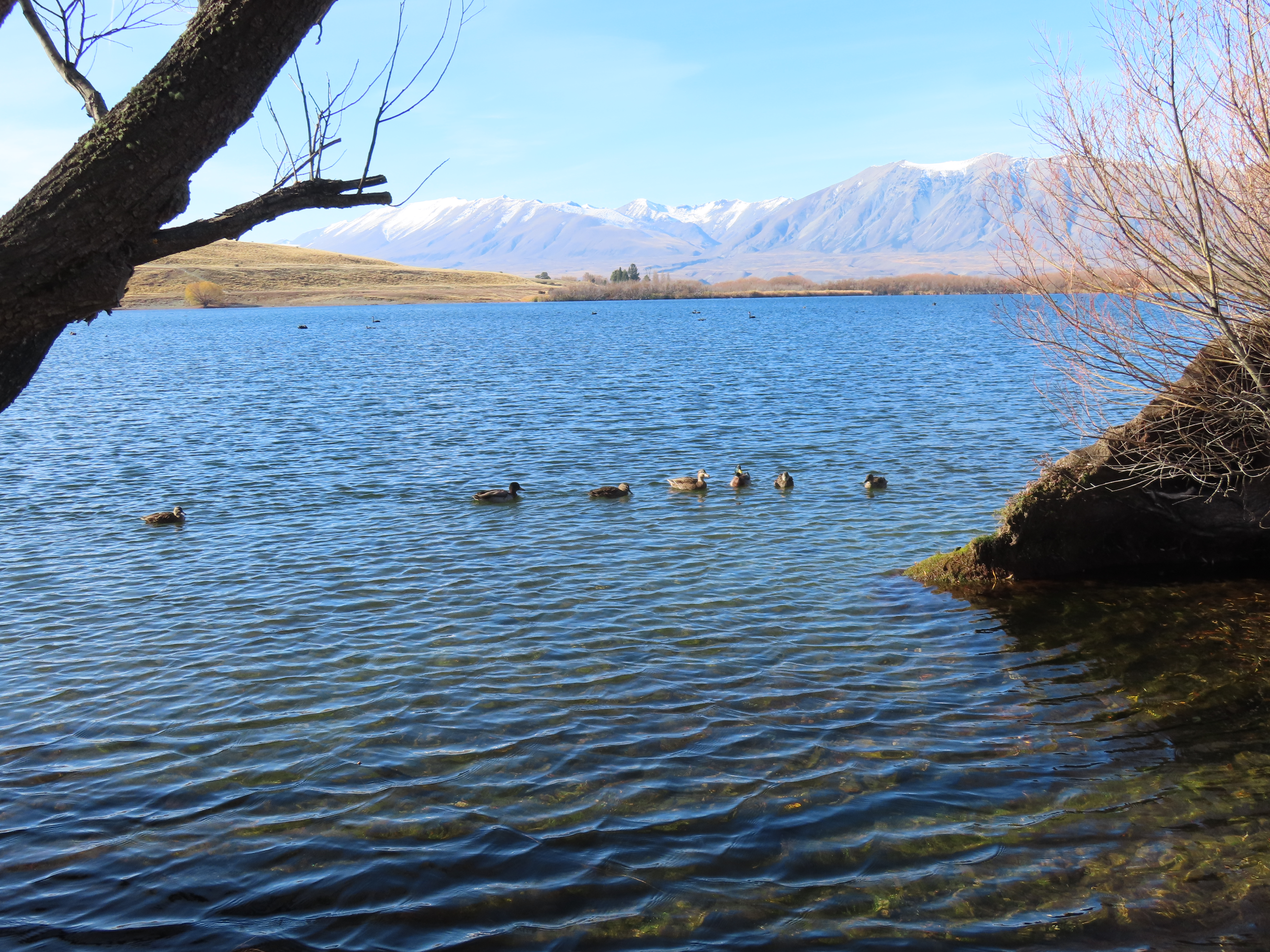
Lake Alexandrina was bigger and had a camp at the side of it. There were lots of aquatic birds (not natives though) and dogs were banned, so we had a look but did not stay.
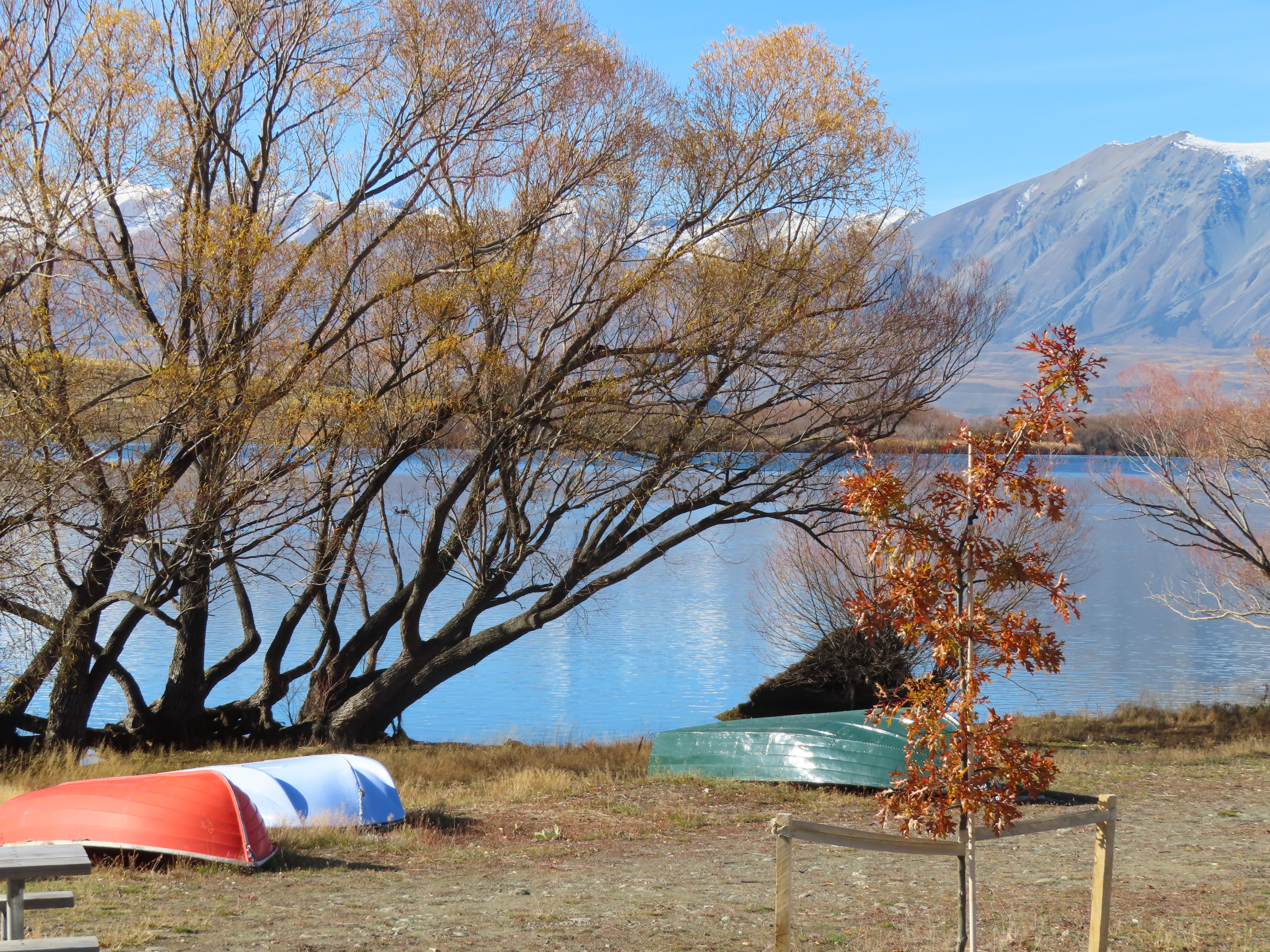
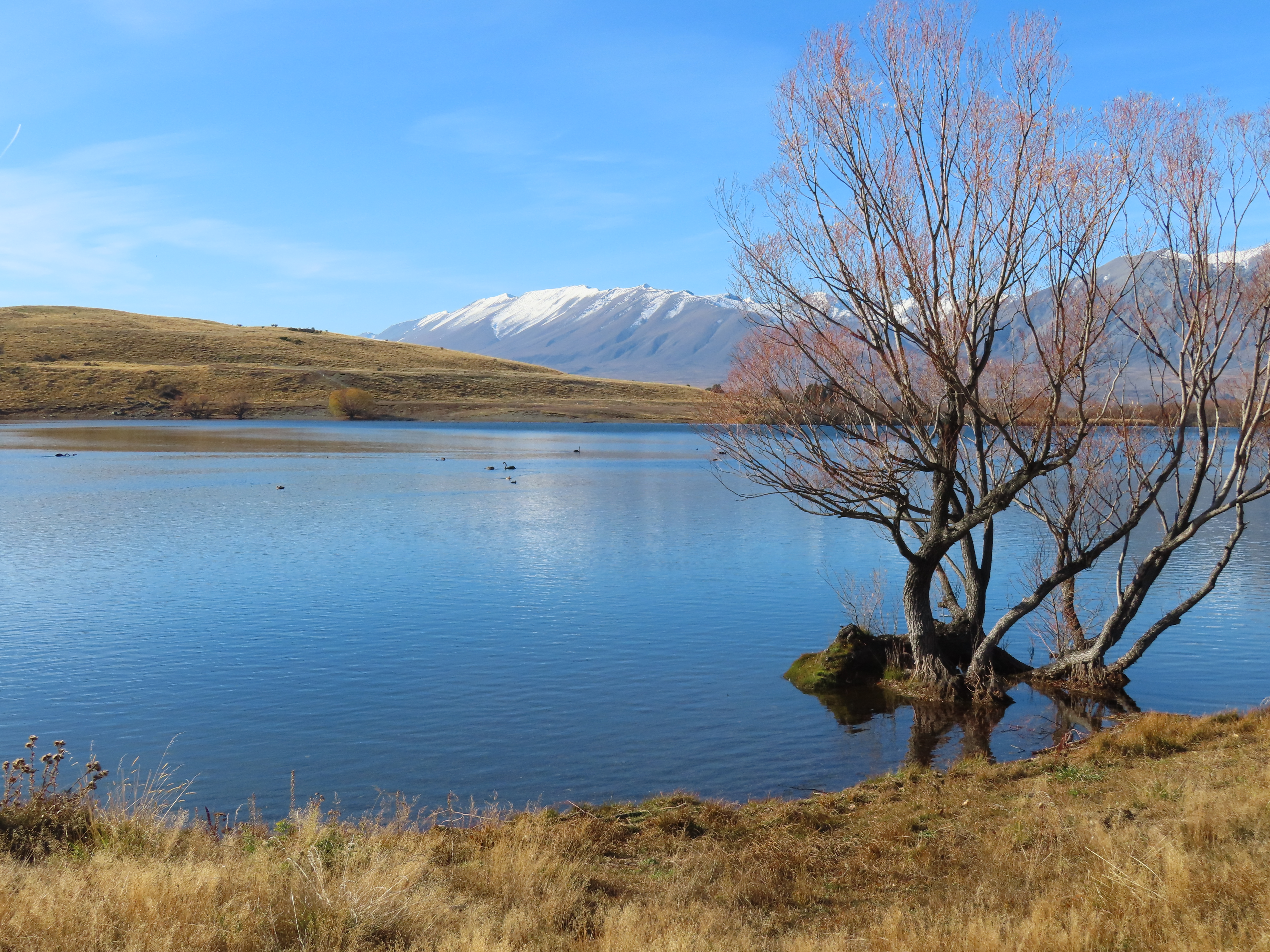
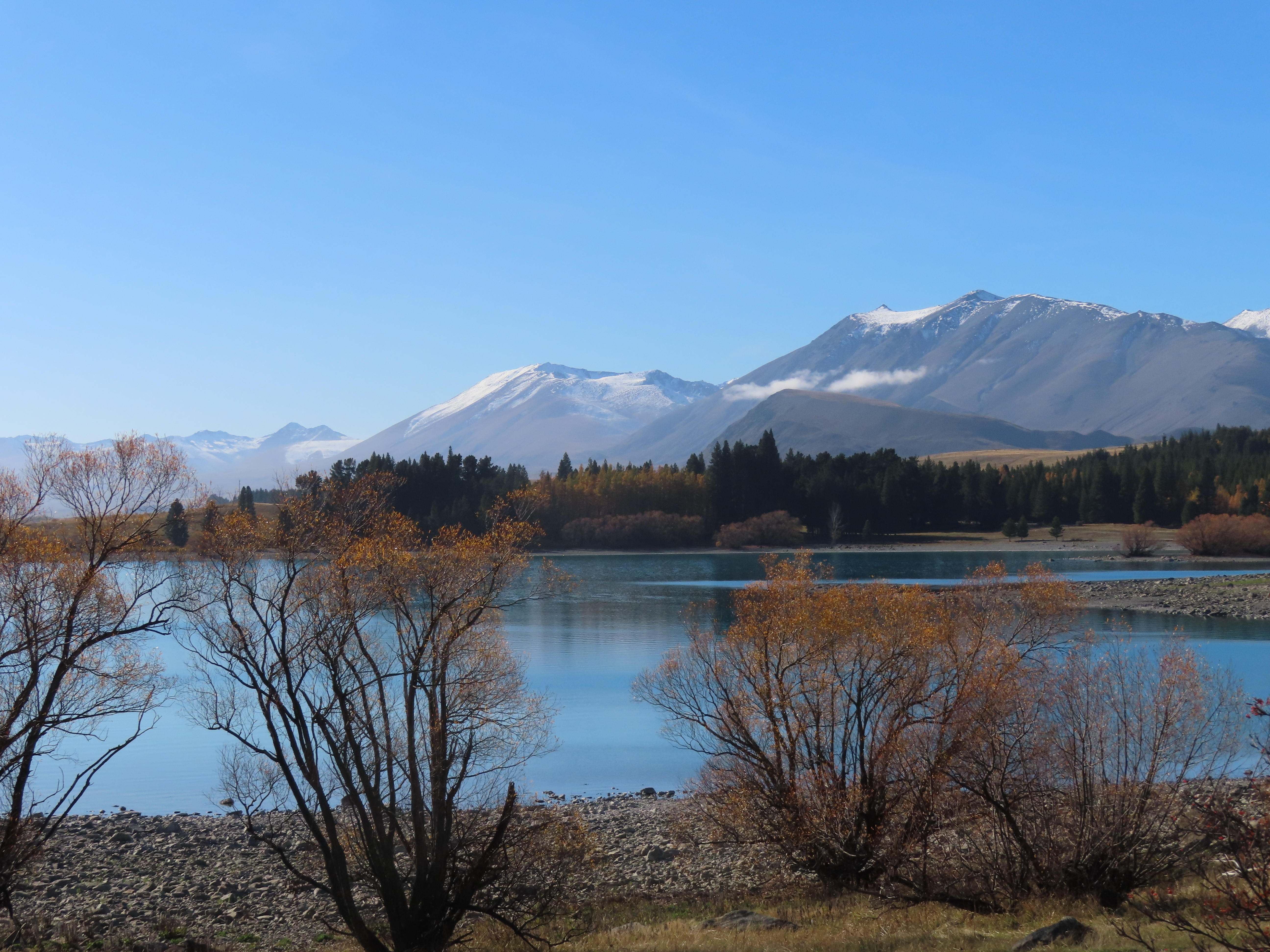
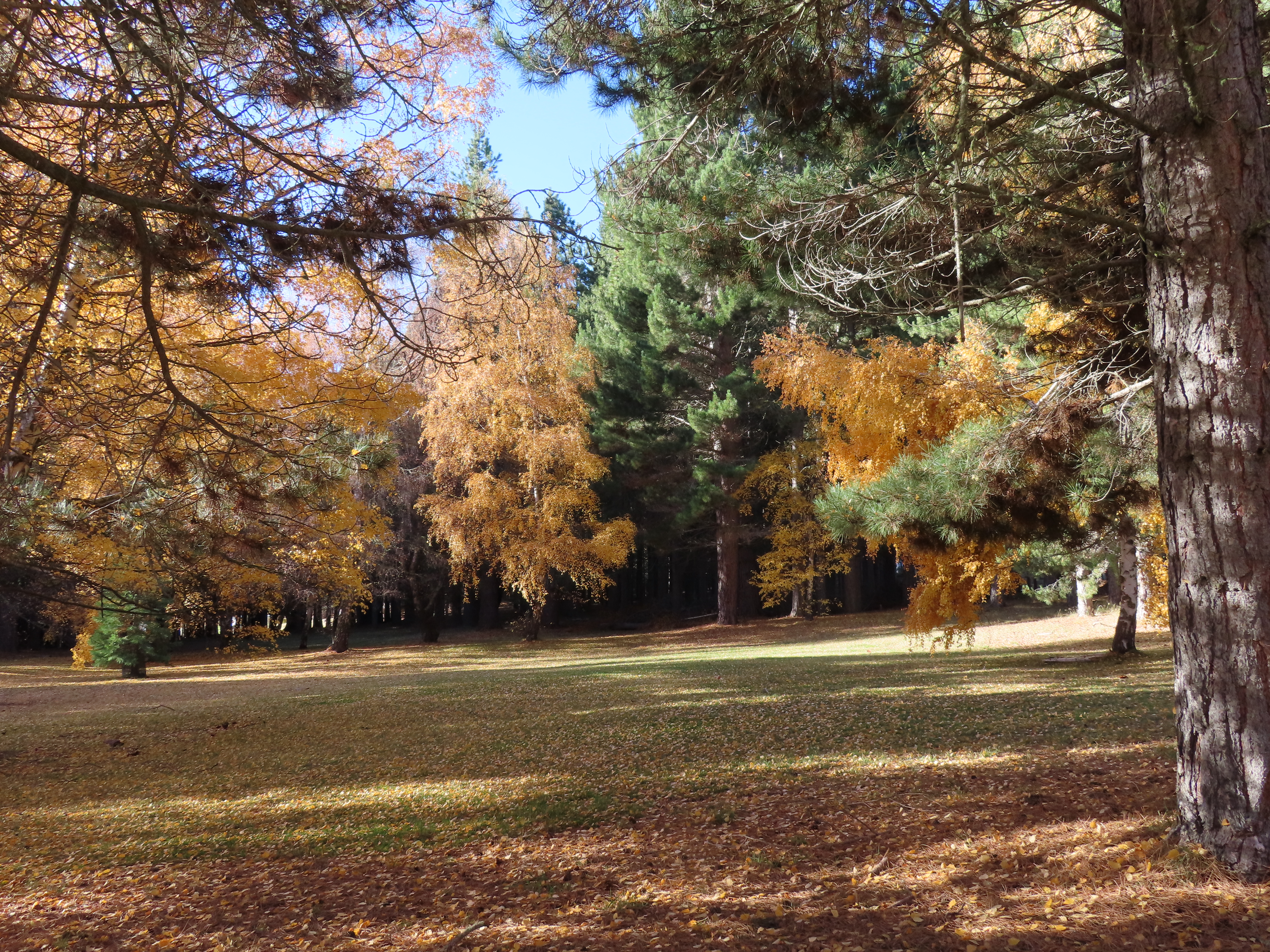
We had a slow drive back into town because the scenery was just as spectacular on the return trip, but we felt the dogs needed a spell in the dog park. This time the autumn foliage was there and it was lovely as well.

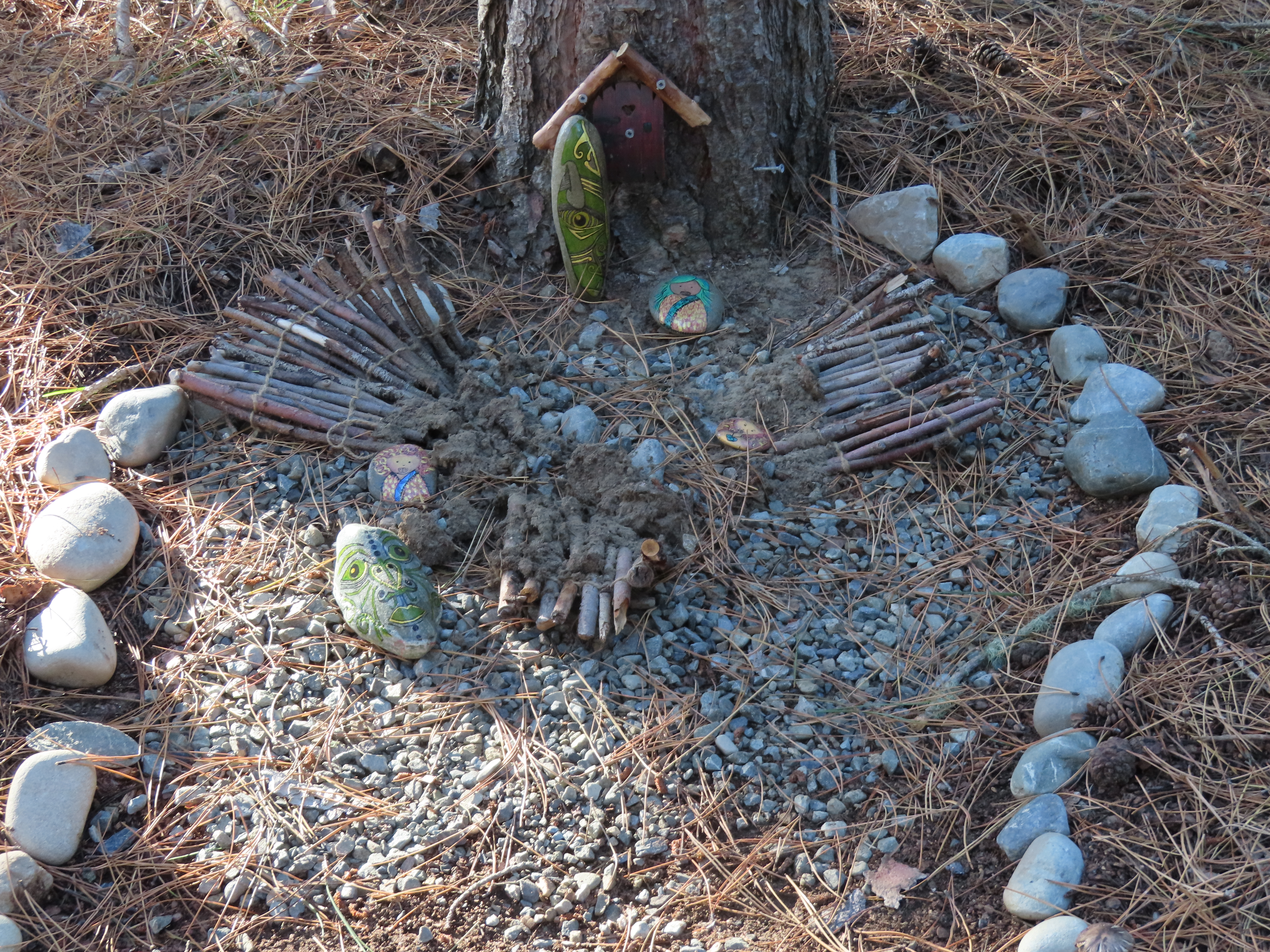
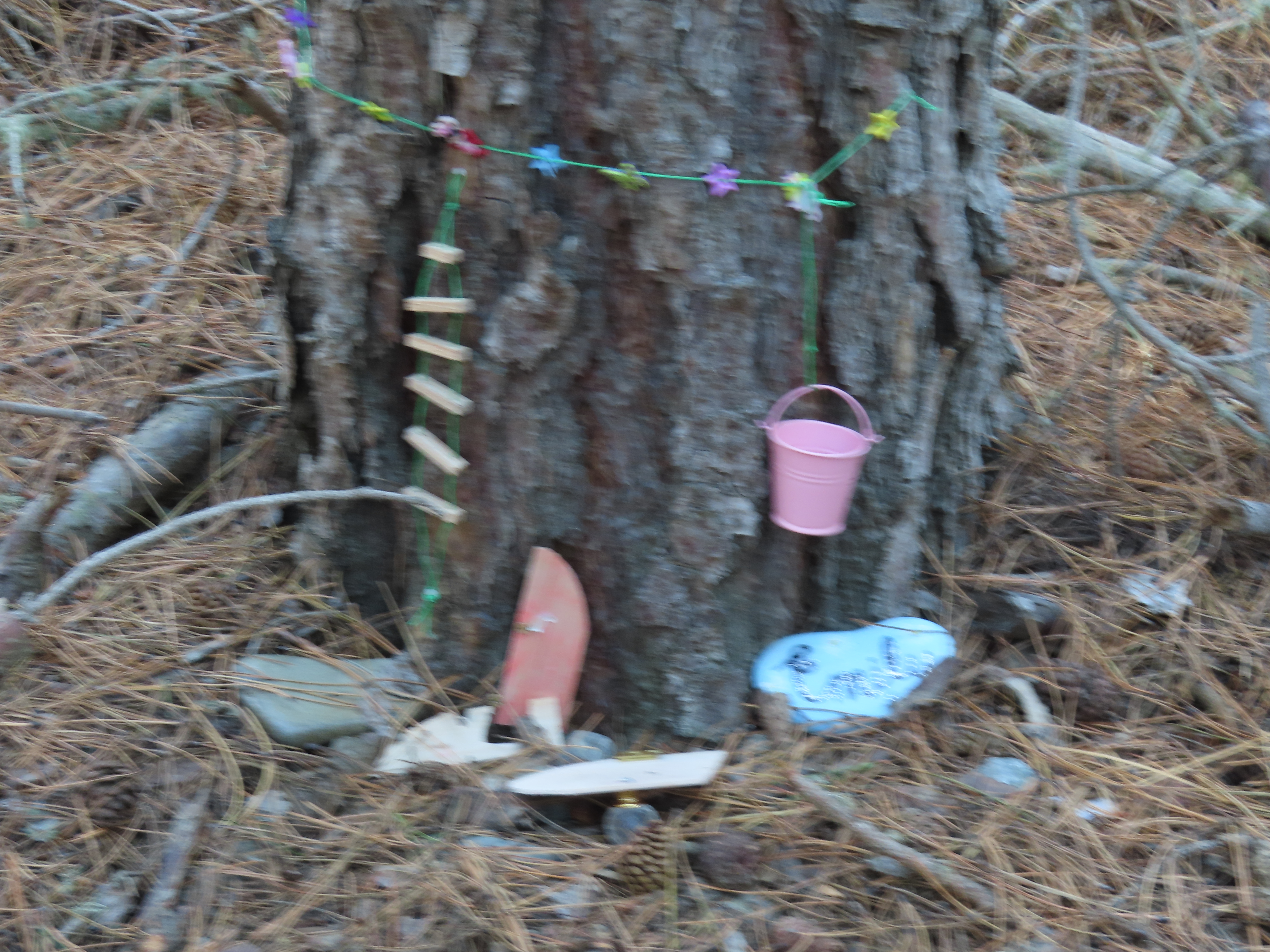
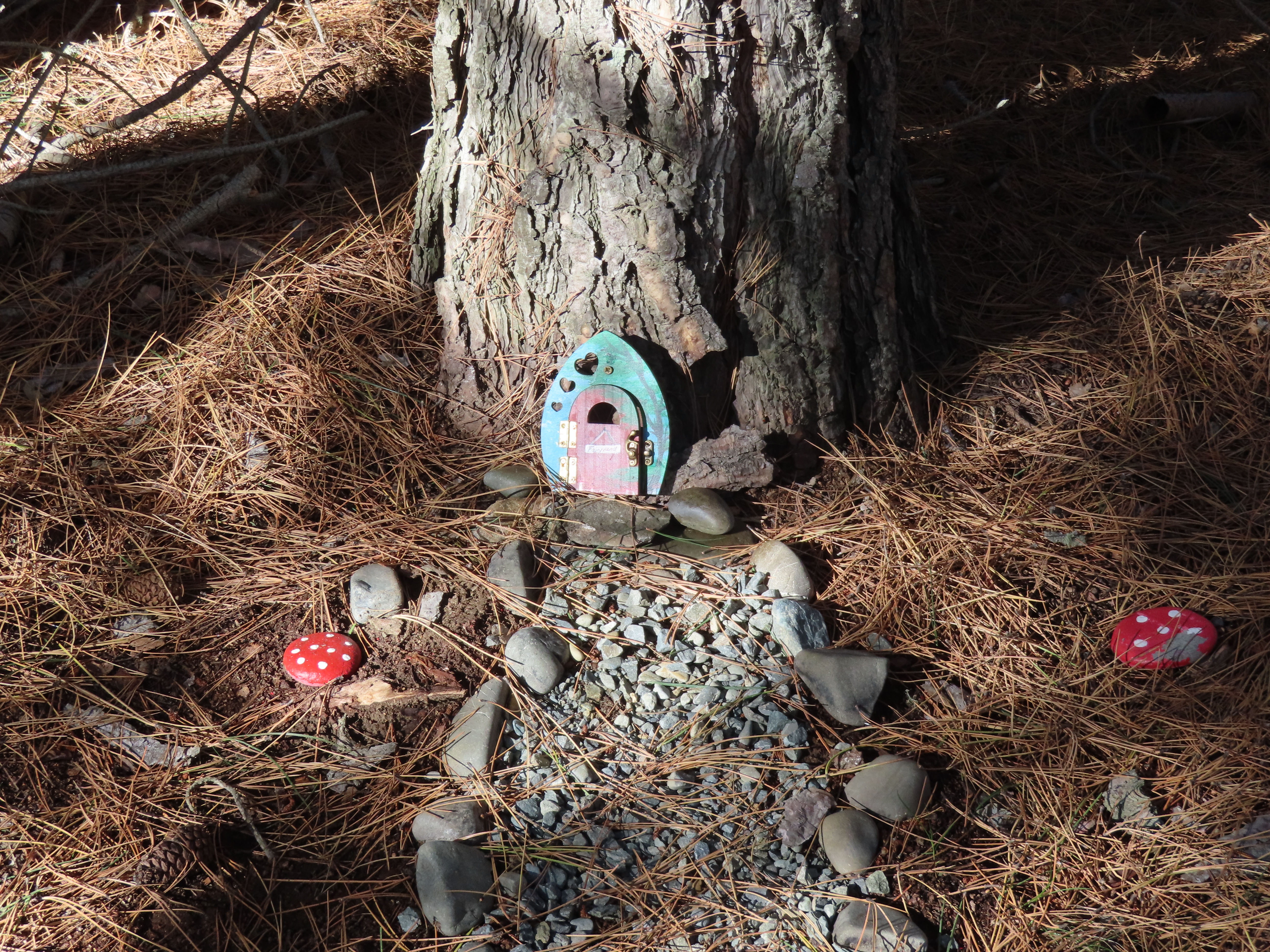
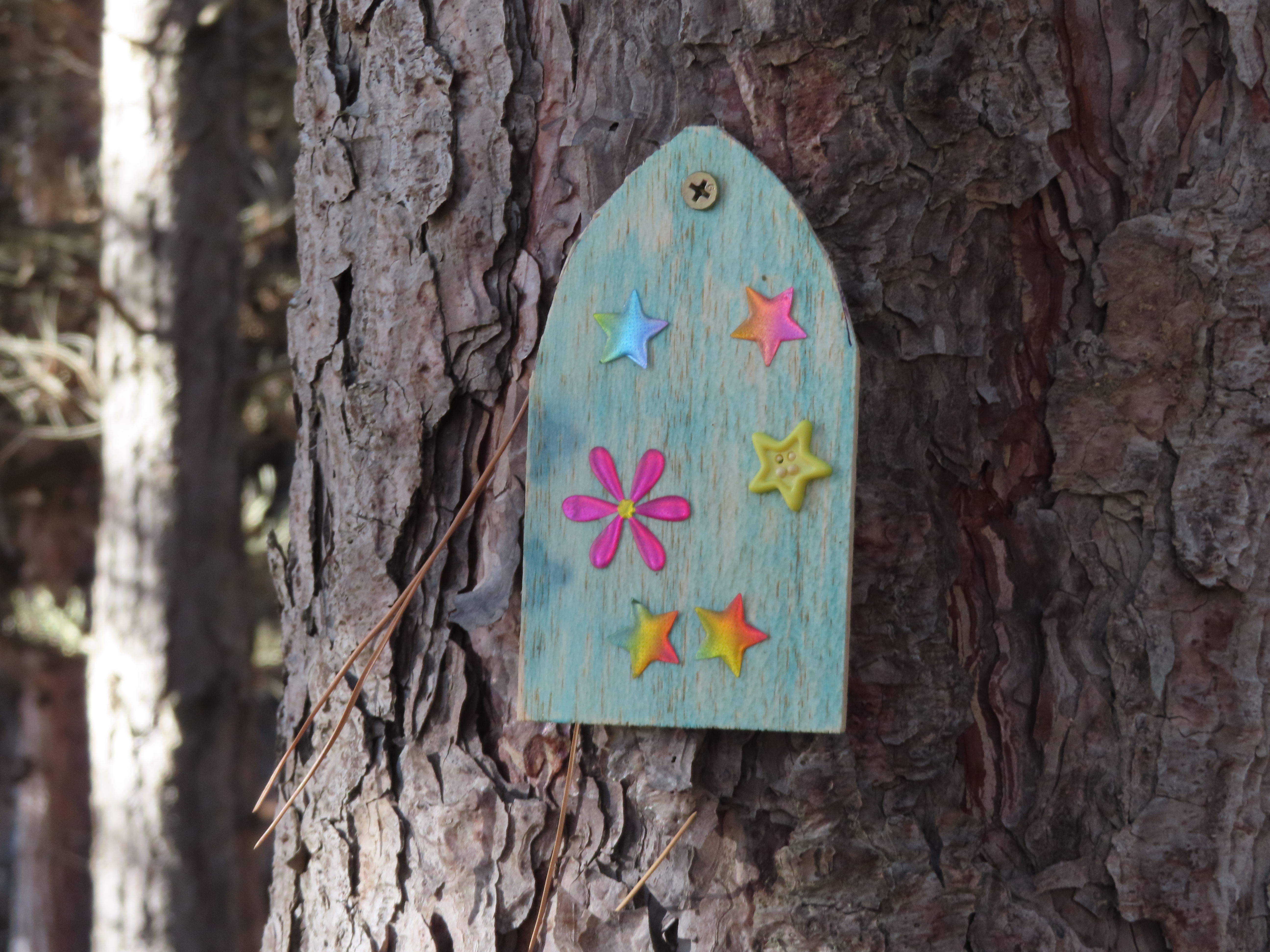
Our final visit for the day was to the fairy forest across from the dog park. People have gone to a lot of trouble on this little section of the forest, and we knew that Maia and Elodie would have loved it.
We settled in to camp for the night and planned another day of exploring tomorrow.

Fate had other ideas. Bruce got up and put his shorts on the couch. He noticed they were wet when he went to put them on, but assumed he must have dunked them in the dogs water bowl when he went to put them on. He laid them out to dry, and put them on later on. I later put my clean socks on the same piece of couch and when I picked them up they were also very wet. That was when I realised one of the dogs had had an accident during the night – the first time in all the years we have been travelling with them. When Bruce realised he was wearing “dog pee” pants he was pretty quick to change them.

Then came the problem of how to fix the mess. The squab underneath the covers was quite wet, and while it was easy to wash covers it was not so easy to wash the squab, so we headed back to Timaru, with a few grumbles from me.

The laundromat at Fairlie was on the way and was well set up so we washed the covers there. On the trip there we noticed that the scenery here was also pretty spectacular.
The way we decided to wash the squab was to take it into Animates in Timaru. They gave us permission to wash it in their dog wash – the bonus was that the dogs got a wash too. The problem now was how to get it dry. We gave it a couple of rounds in the dryer at the laundromat, but it was still very wet so I realised this was going to be a longer term project. We stood it up in the shower until we came up with a better idea.

This time we spent the night at the Golf Club at Timaru, which was a charming stay, and then we had to decide on what was next!

Oamaru and Mother’s Day at Riverstone Castle

After leaving Moeraki, we continued up the coast towards Oamaru. Needless to say we have been here a couple of times, but the last time we were here we both had covid, and I was very unwell, so not able to enjoy it. This time was different.

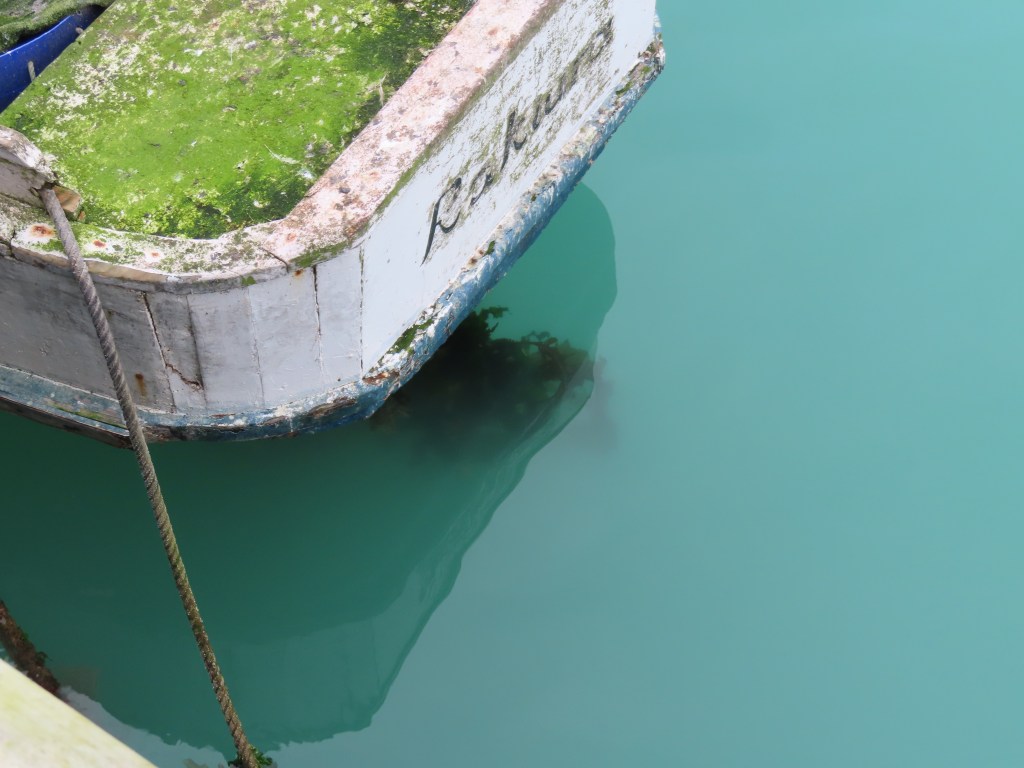
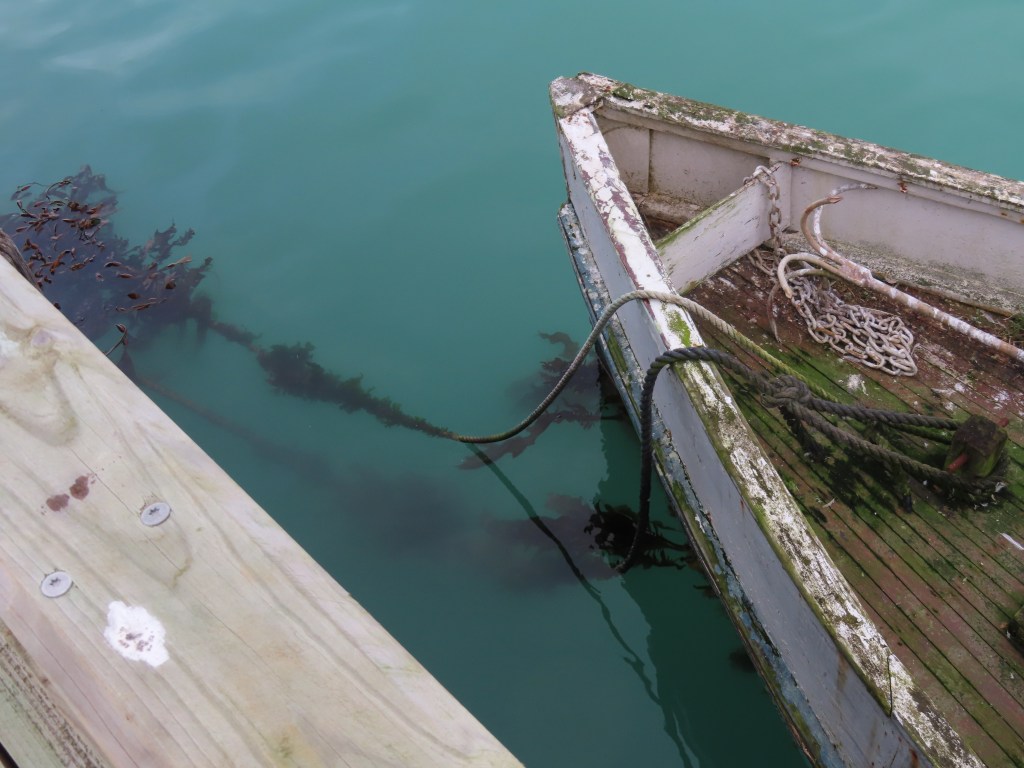
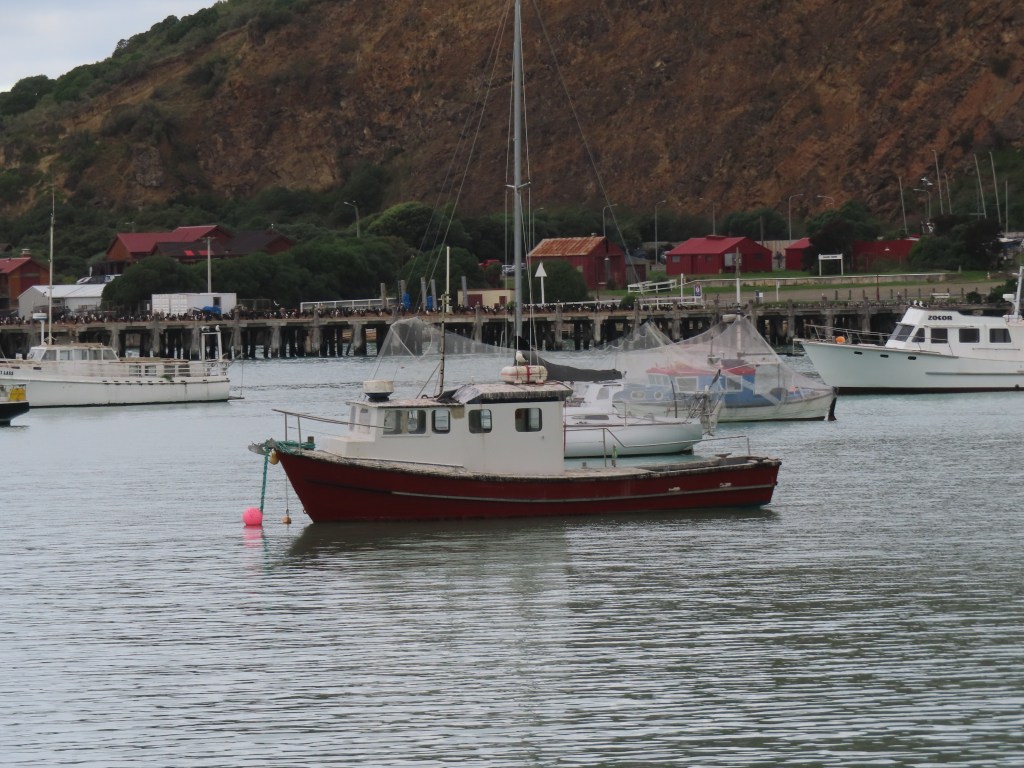
When we arrived we went for a bit of a stroll along the wharf which we had not done before. The views across the harbour were lovely with some of the boats there being pretty old, but well looked after.

Some of the boats tied up to the wharf were a different story – they clearly hadn’t been used for a long time.

You could see all the seaweed growing on the ropes tying them to the wharf, and one boat had grass growing on it.

Oamaru is known for its old buildings made of local sandstone. The buildings downtown are restored and well looked after.

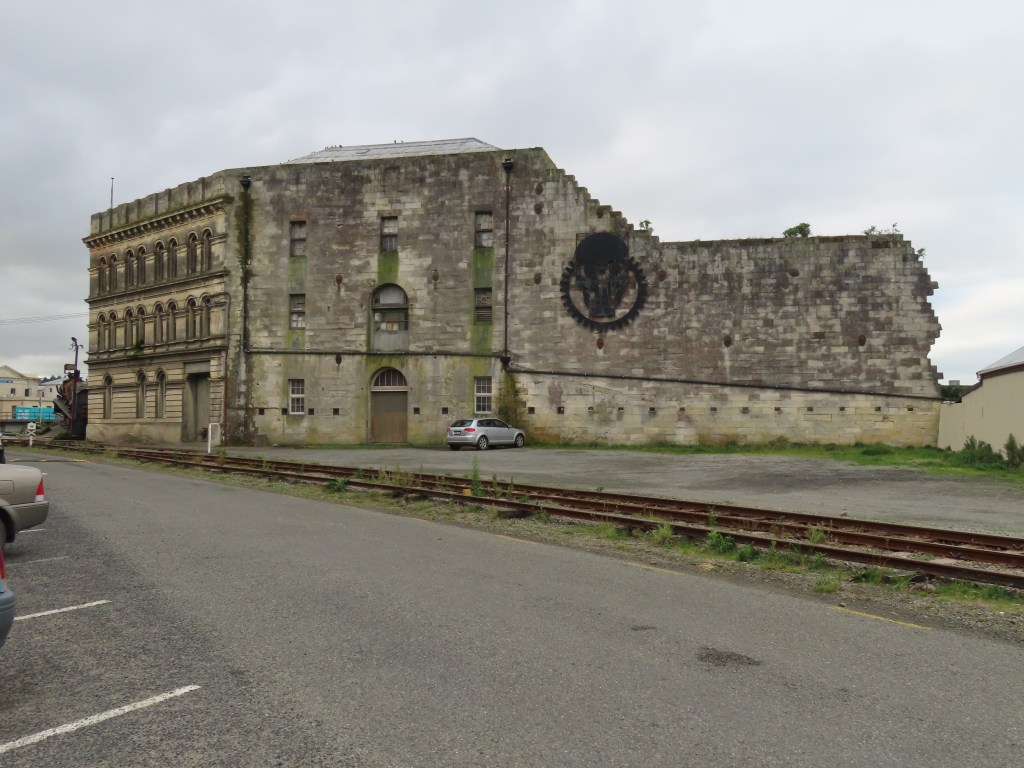
However, some along the wharf area are less cared for and could really do with some love.

The next day was Mother’s day and we drove a bit north of Oamaru to visit Riverstone Castle. The last time we were here the castle was shut, and I really wanted to go through it. This time it was going to be open.

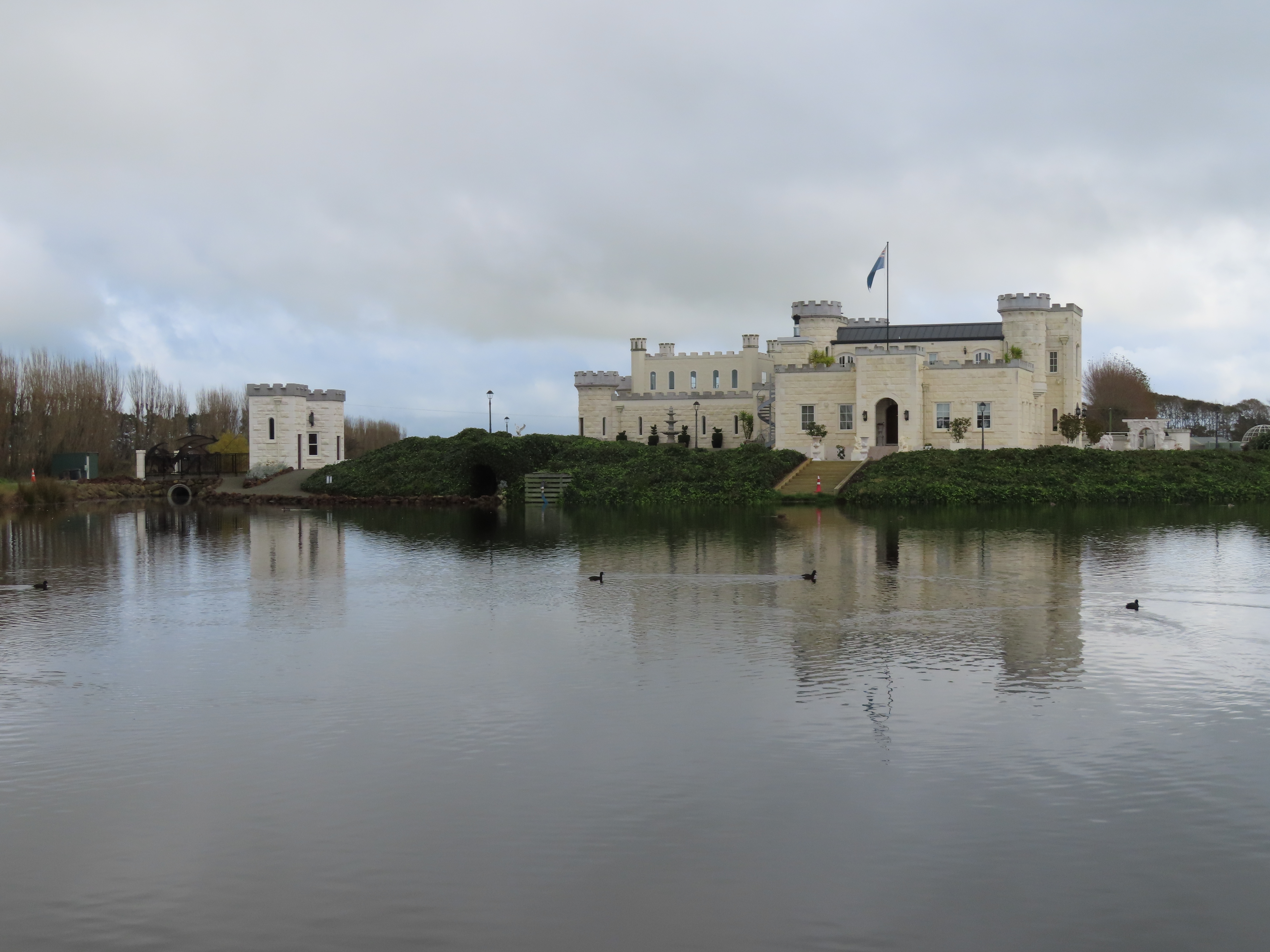
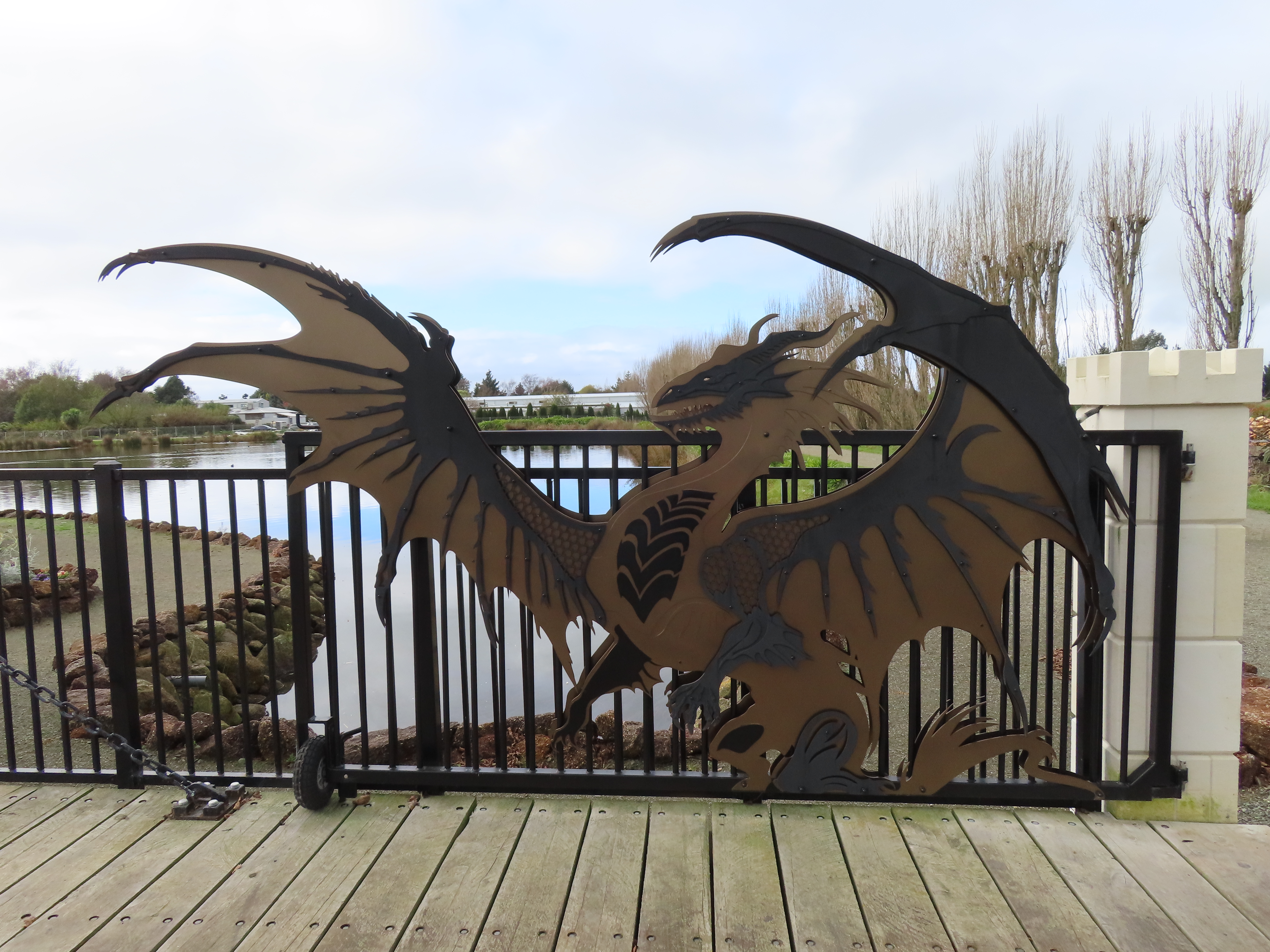
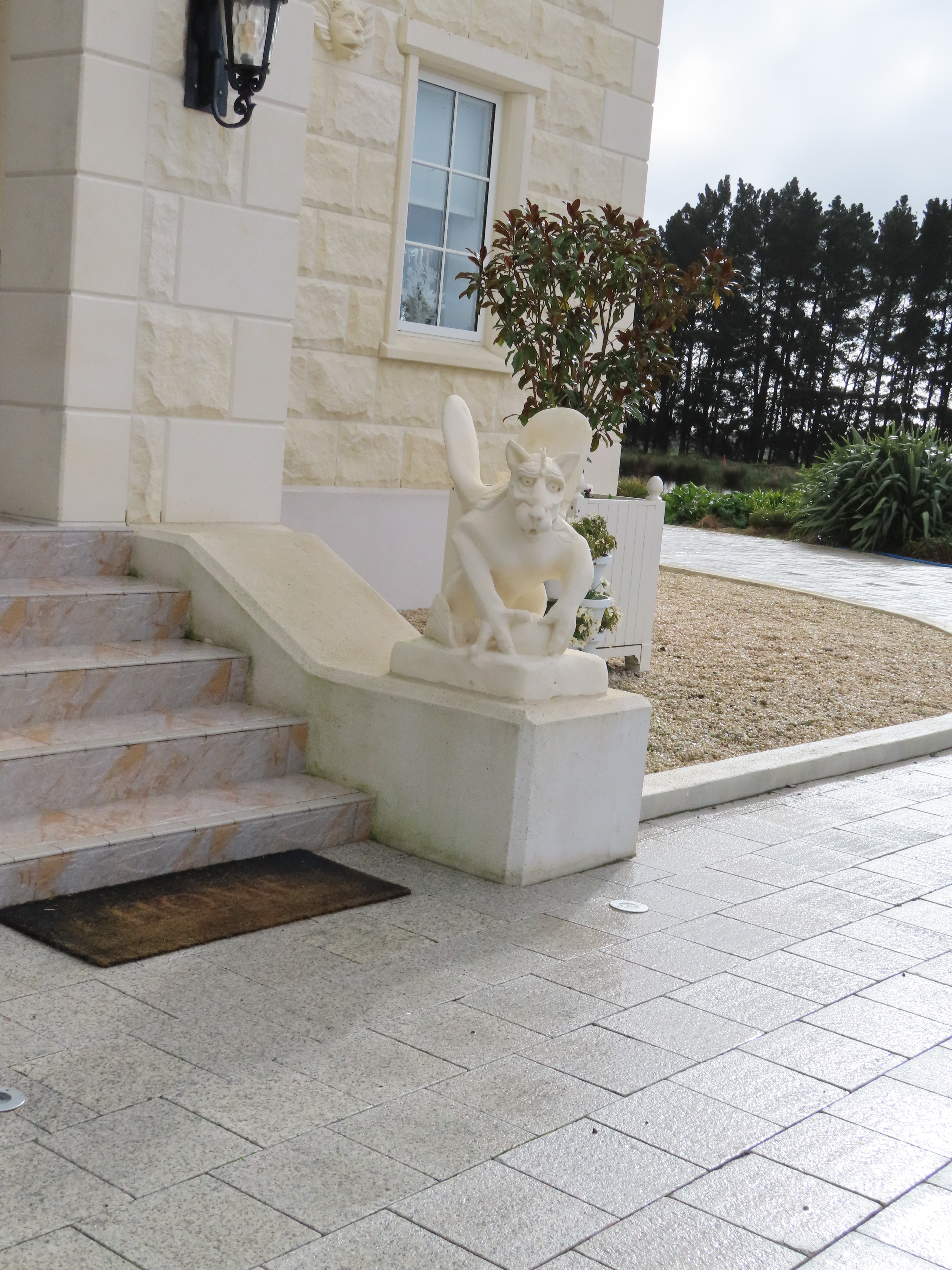
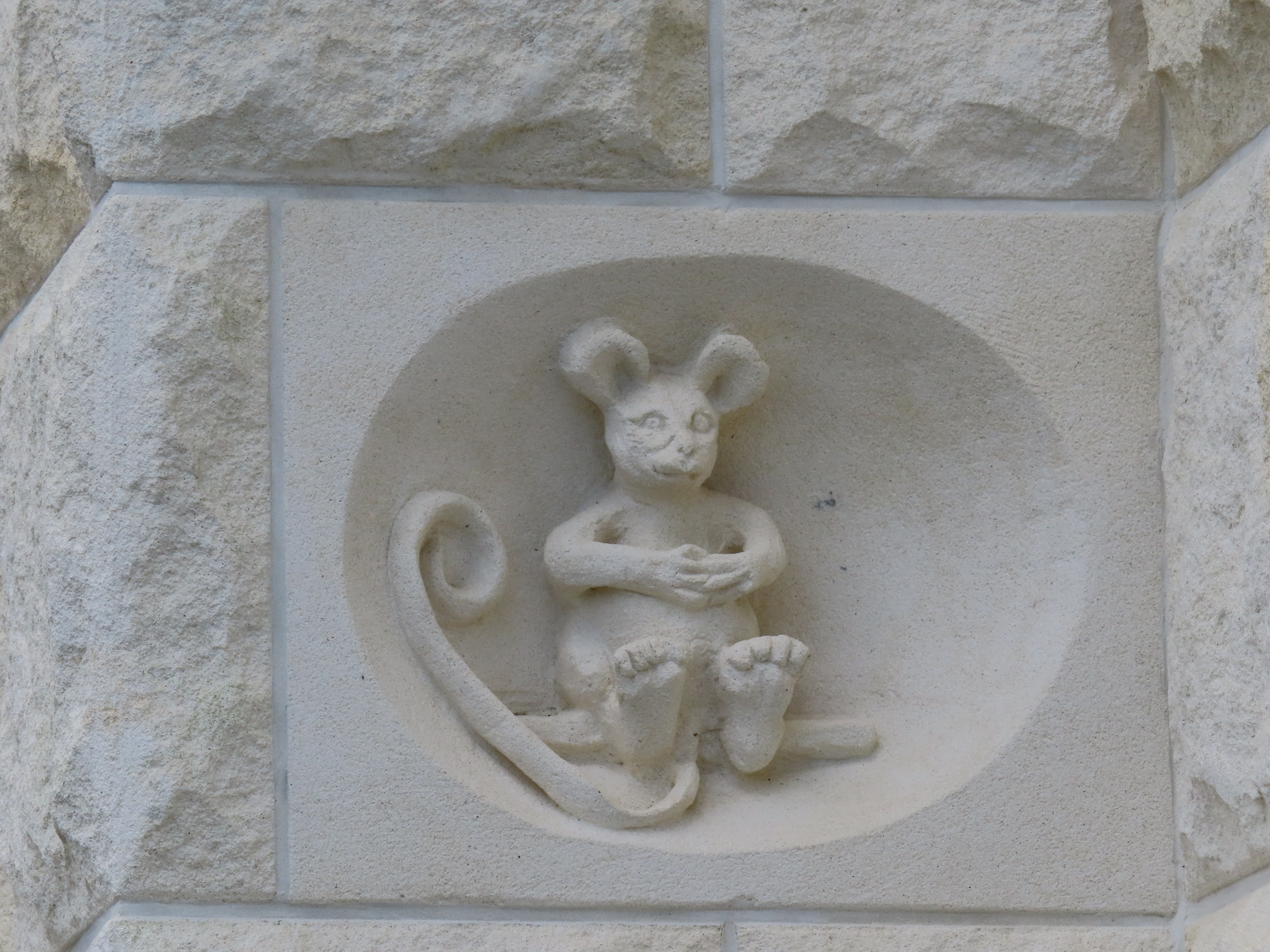
The castle was a recent build, taking 8 years to complete, and was the dream of Dot Smith and her husband. Dot has dreamed of castles since she worked in one as a teenager. The castle is built of local Oamaru stone, and macrocarpa from their farm. However, doors were imported from India and the marble floor tiles from Italy. The castle is surrounded by a moat, complete with a drawbridge, and the castle walls are adorned with gargoyles also carved from sandstone.

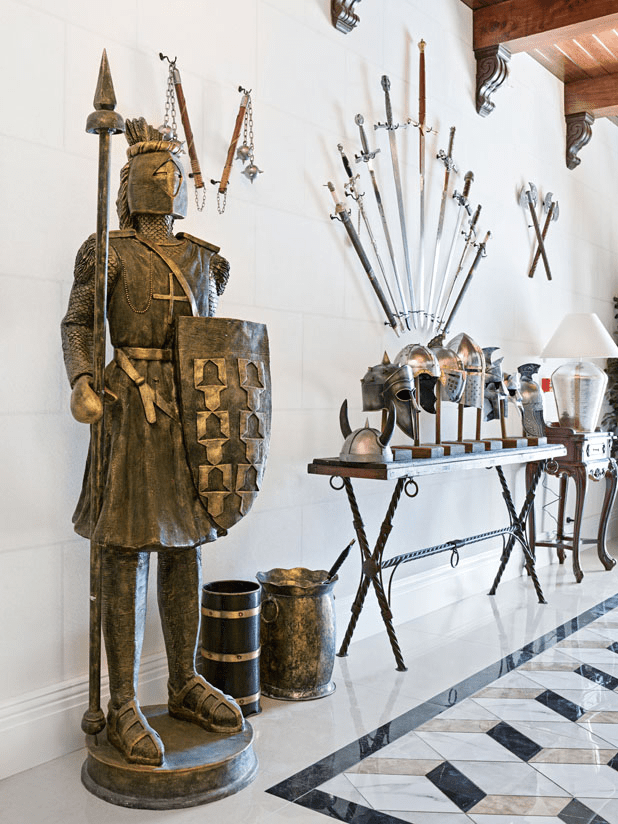
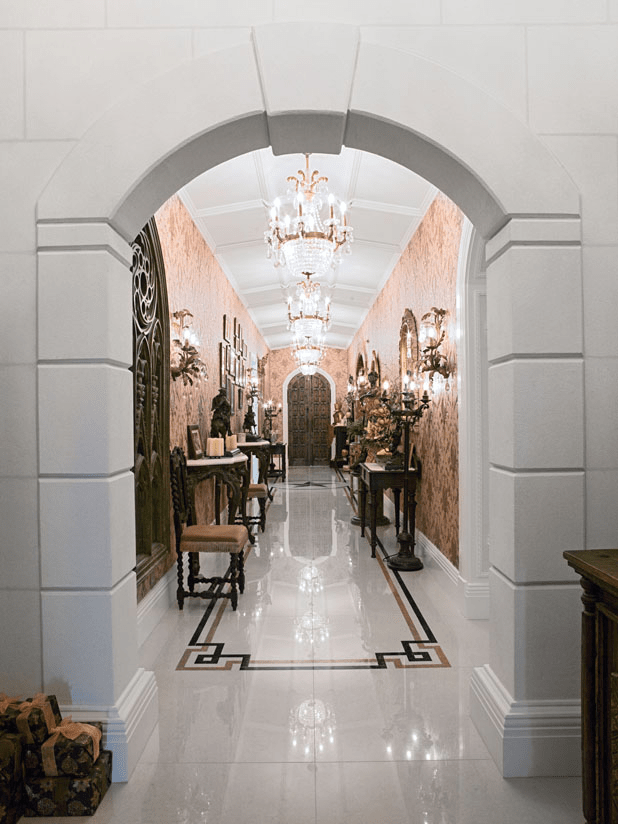
We were taken inside through heavily carved doors to a hallway that was not like anything I had ever seen before. The floor was highly polished marble tiles grouted in gold. There were suits of armor, antique carved hall tables and a huge antique tapestry hanging on the far wall

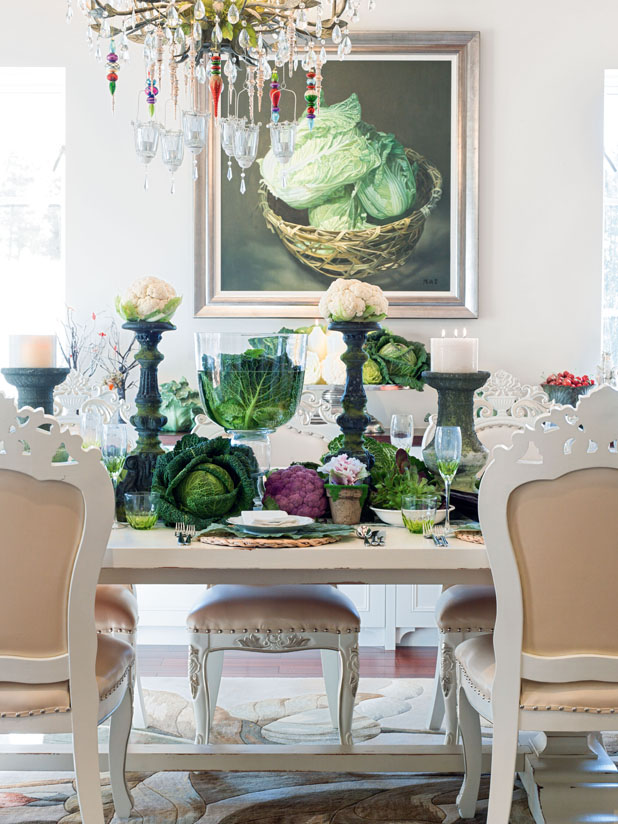
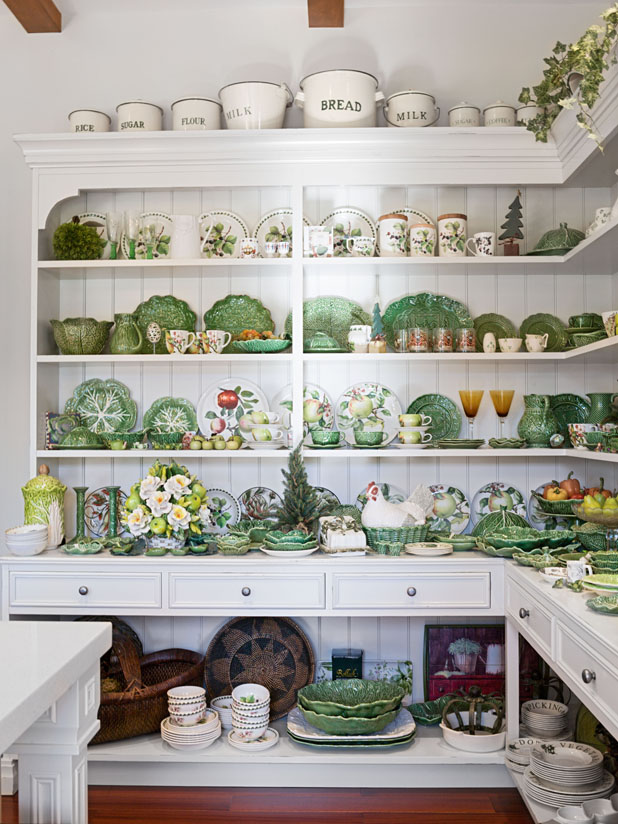
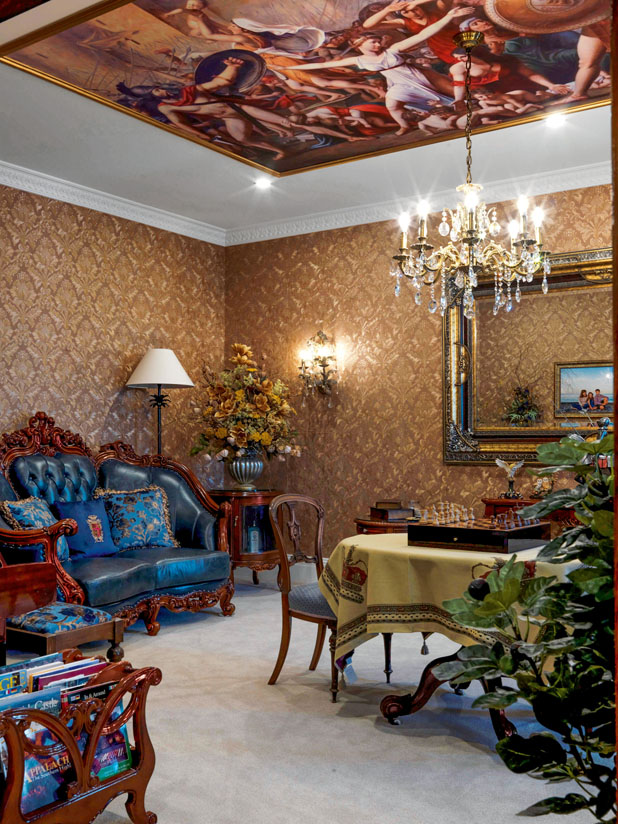
We were not allowed to take photos, so these photos are from a news article about the place. Every room seemed to have chandeliers and opulence was everywhere.

The kitchen was huge, but every surface was covered with china and artifacts she had collected from her world travels. There was not way you could have cooked in there.

The master bedroom had every surface covered by tiaras and crowns, and every bedroom had ensuites with exquisitely tiled showers.

All in all it was a look at how someone with too much money lives.

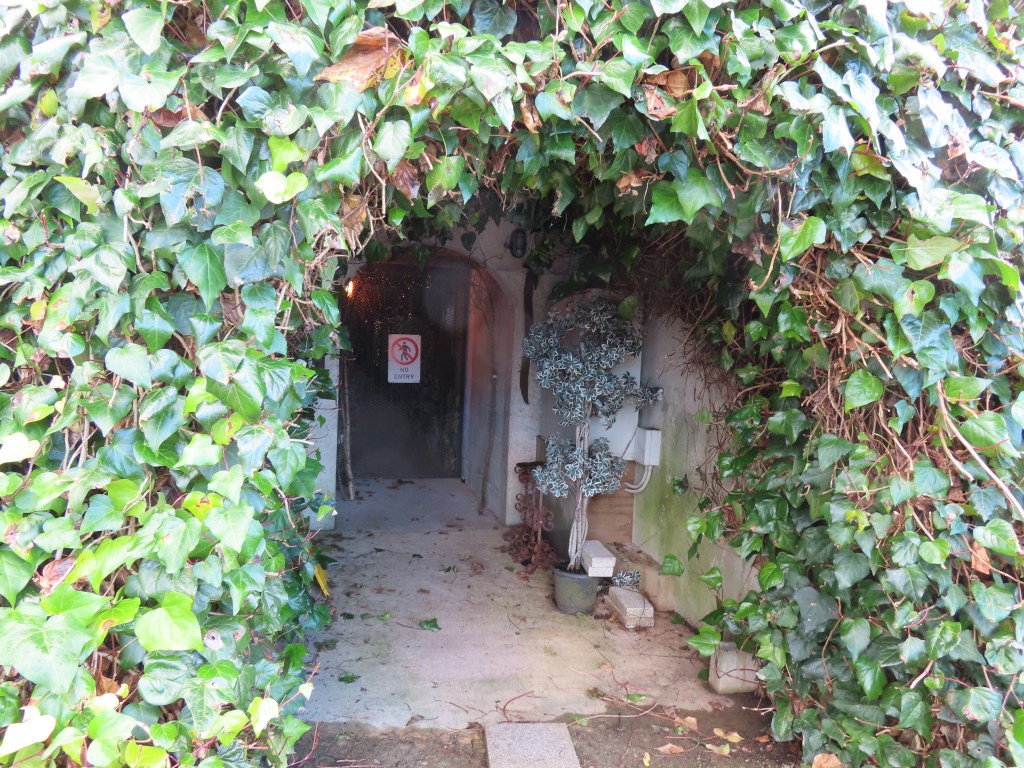
We exited the castle through the dungeons – yes, they built a dungeon as well!. The dungeon is actually a games room, with a long tunnel leading away from it. The entrance to the tunnel is hidden behind a bookcase with a secret latch that hinges to reveal the door.

The couple have two sons. One is a farmer and runs the family farm now. The other is a chef and he runs the restaurant on the grounds. We were wanting to have lunch there but it was fully booked out so we wandered the grounds instead, and Bruce made me a coffee in the van. There are many raised vege gardens, all producing, and what they grow is used in the restaurant.

There is also a gift shop on site and we had a browse through there. Prices were pretty steep, so the handbag remained closed.

It was a lovely way to spend half a day, and while we both enjoyed it, neither of us has any ambition to live in a castle!

Moeraki

After leaving Alexandra we ambled out towards the coast again, spending a night in Ranfurly along the way _ there is not much in Ranfurly. There was a good frost on the ground when we woke up but clear blue skies, so a good omen for Moeraki.

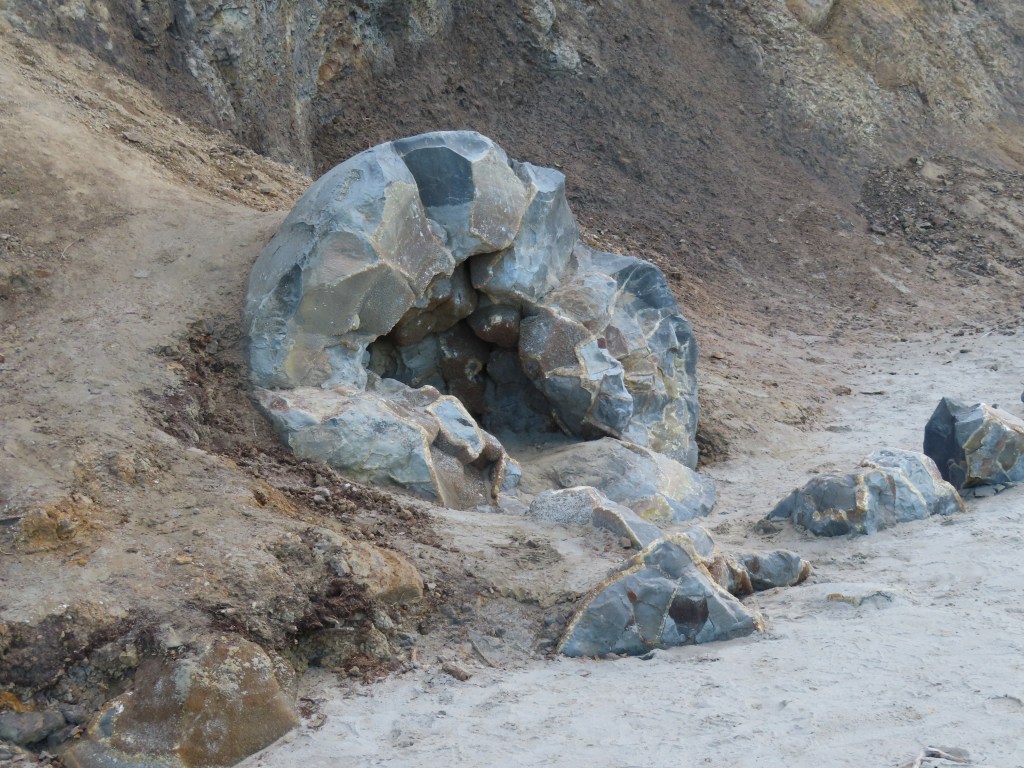
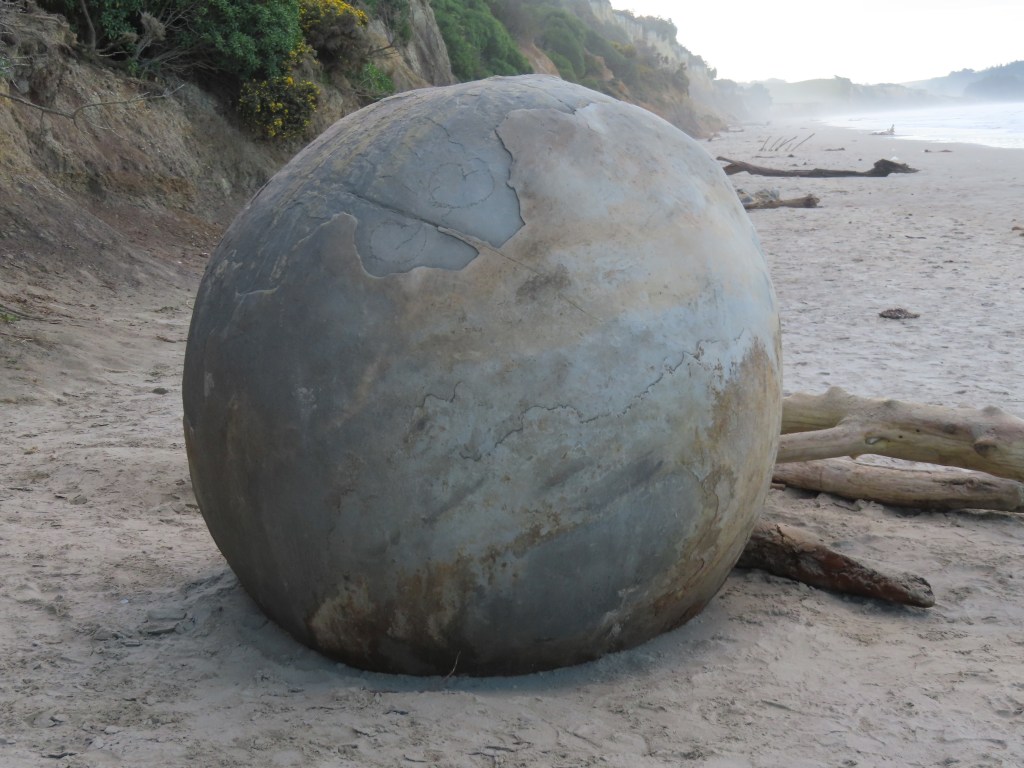
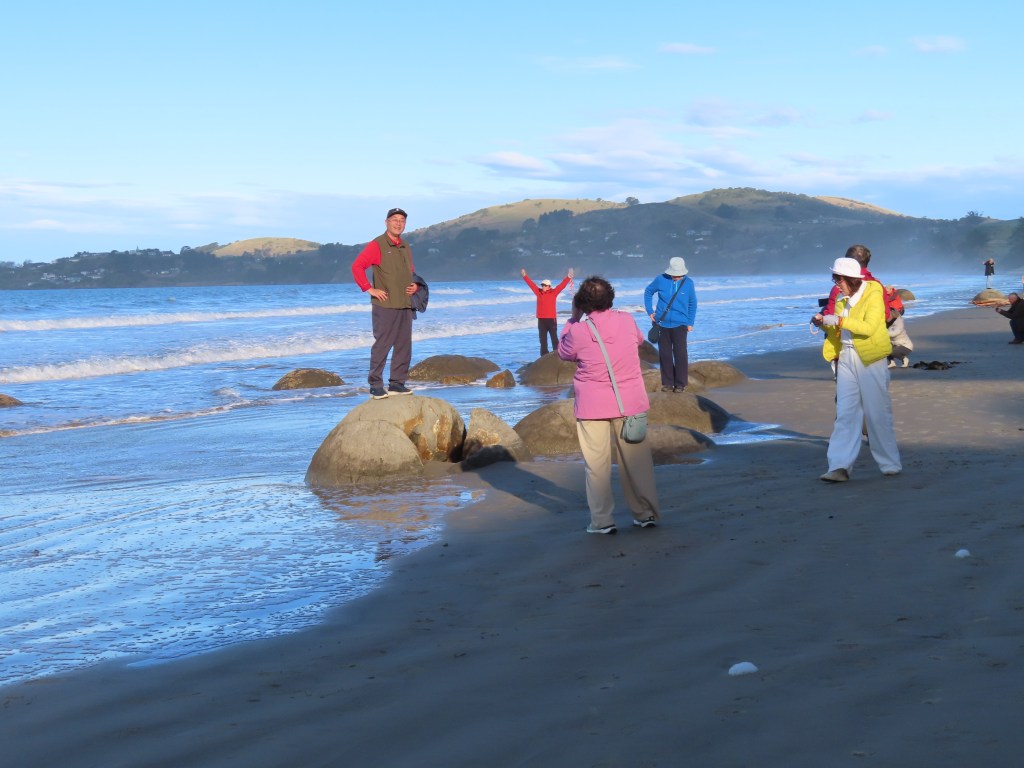
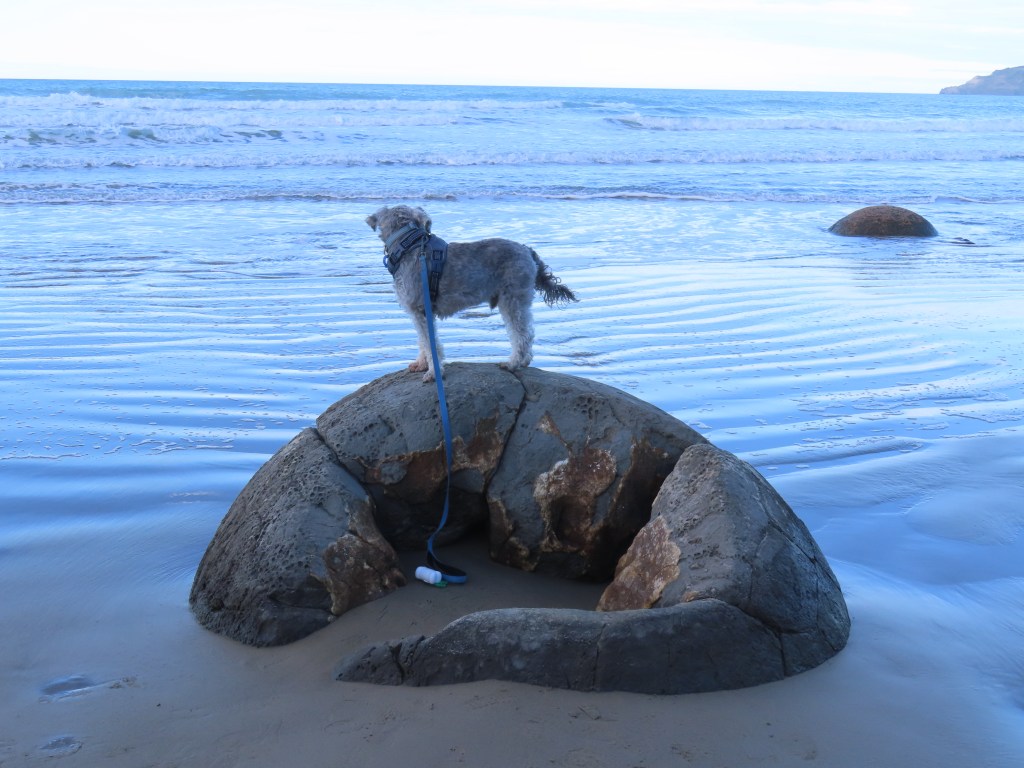
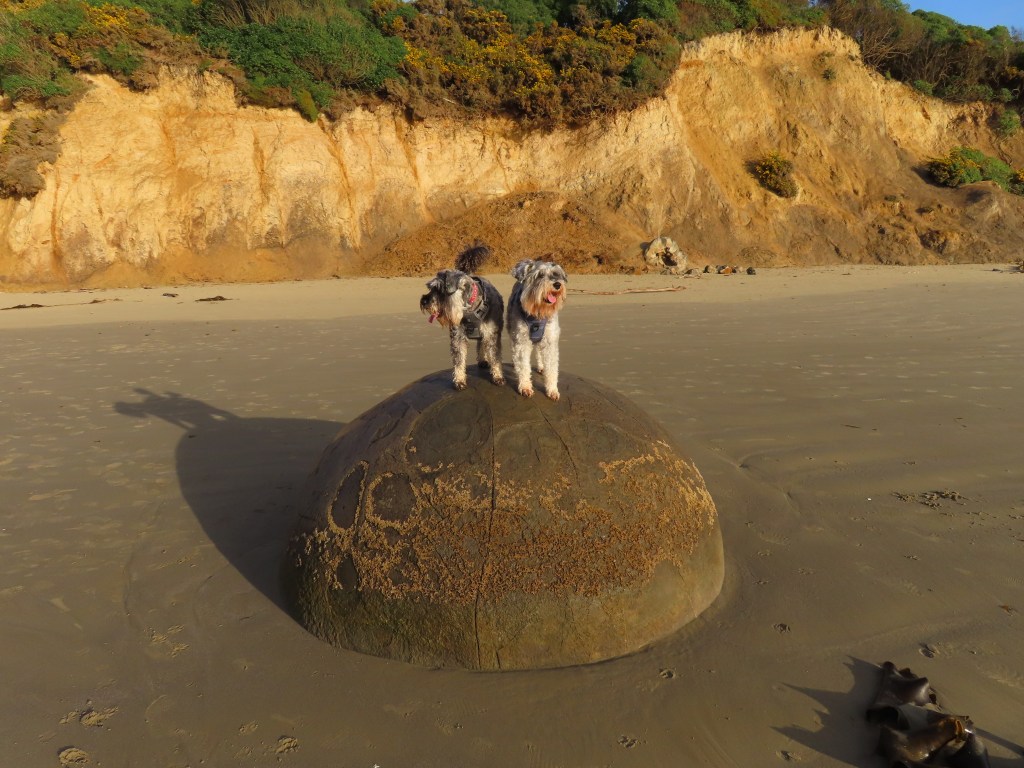
Moeraki is special because of the boulders, and we are seeing less of them every year which is a real shame. The boulders are said to be formed between 33 to 56 million years ago when shell fragments were rolled in a limestone mixture (which acted as a cement) with silt stone and mudstone. They were formed into a round shape and eventually spat out of the hillside as it eroded. Over time they become buried in sand, or broken apart.

Unfortunately the boulders are also on the tourist route and we had to share the beach with a group of tourists from Singapore and Malaysia. While these people are all very nice, they have no concept of sharing spaces – being polite is also totally lost on them. They individually posed on the rocks, adopting one pose after the other so they could be photographed, before the next one took their place and so on. It was difficult trying to get a photo without them in it. They all loved the dogs though.

The tide was half in so that also restricted the photos a bit – or maybe just gave a different perspective.

The next morning we set out early because the tide was out, and I mistakenly thought the tourists might not be there early – Big mistake. We faced the same battle as yesterday. This time Bruce tried to tell them to get out of the way – no result. Instead they shoved their phone into my hands so I could film them with our dogs!

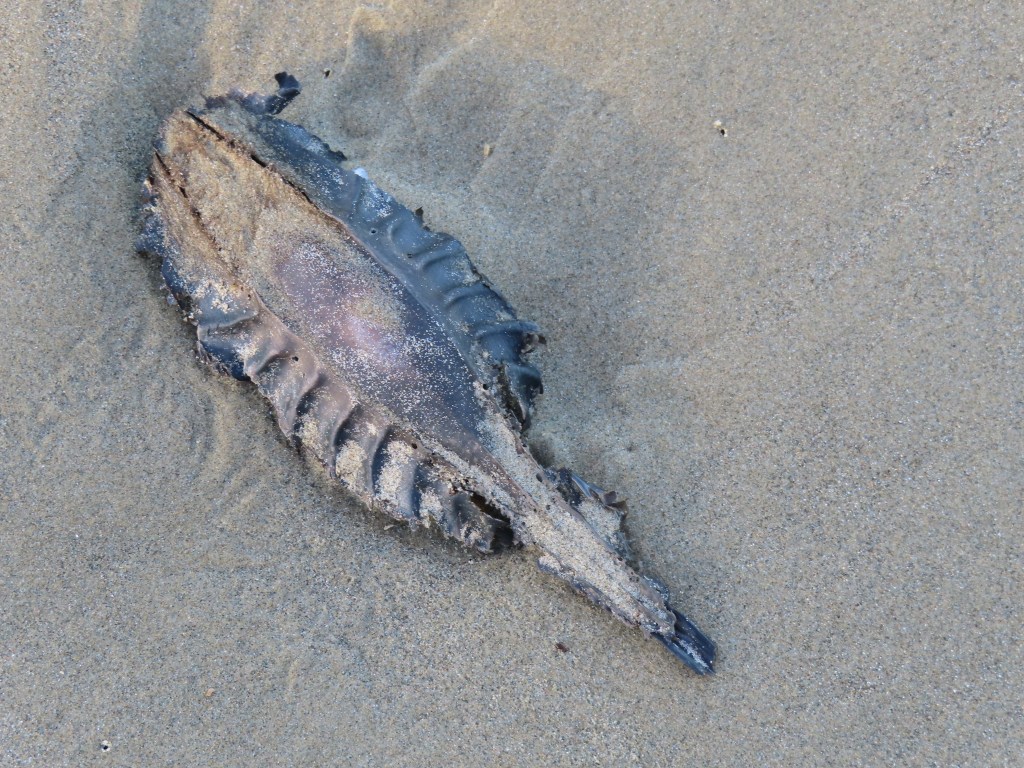
When we finally got some photos we took the dogs off leash to explore the beach. We found several of these…

These are apparently the egg cases of Ghost Sharks, and they are known to wash up on Moeraki Beach.

Ghost Sharks were not discovered until 2002, and they are actually more of a ray than a shark. They do not have teeth, but have hard mouth plates for crushing us shellfish, and they do not have bones – only cartilage.

The egg cases house the young until they hatch and the cases then float away and are washed up on beaches.

It was lovely being able to walk on the beach again, and we thoroughly enjoyed our stay. We remember Emma and Justin gifting us a dinner at the famous Fleur’s restaurant at Moeraki. That has now closed down and the building is for sale – the end of an era really.

We are off to Oamaru next as we journey slowly towards the ferry and home.

Alexandra and Clyde

We were expecting a bit of bad weather, so when we moved on from Roxburgh, it was with the intention to find somewhere that wasn’t going to get water logged. We had not stayed in the NZMCA Park in Alexandra before, but we were pleased with the look of the place so we booked in.

We also used the opportunity to get our washing done in the local laundromat and to do a bit of grocery shopping.

The park in Alexandra was right next to the ice skating rink. I was keen to have a go but Bruce would not be persuaded. I have not skated since I was about 18, when my Aunty Kate took me skating on the Manorburn Dam in the middle of winter. That dam does not freeze enough these days to skate on, and I guess my balance probably isn’t what it was then, so maybe not going skating was for the best. I notice quite a few school kids going in there though, presumably as a part of their phys. ed. programme.

On the other side of the park was the Alexandra Swimming Pool and I was amazed at how many cars of people came to swim – at all times of the day. Again, Bruce could not be persuaded to go for a swim.

We were treated to a brilliant sunset, and only a couple of showers overnight, so not as bad as was expected. It was windy though.

The next morning we headed off to visit Clyde – a vast distance of 8 kilometres away.

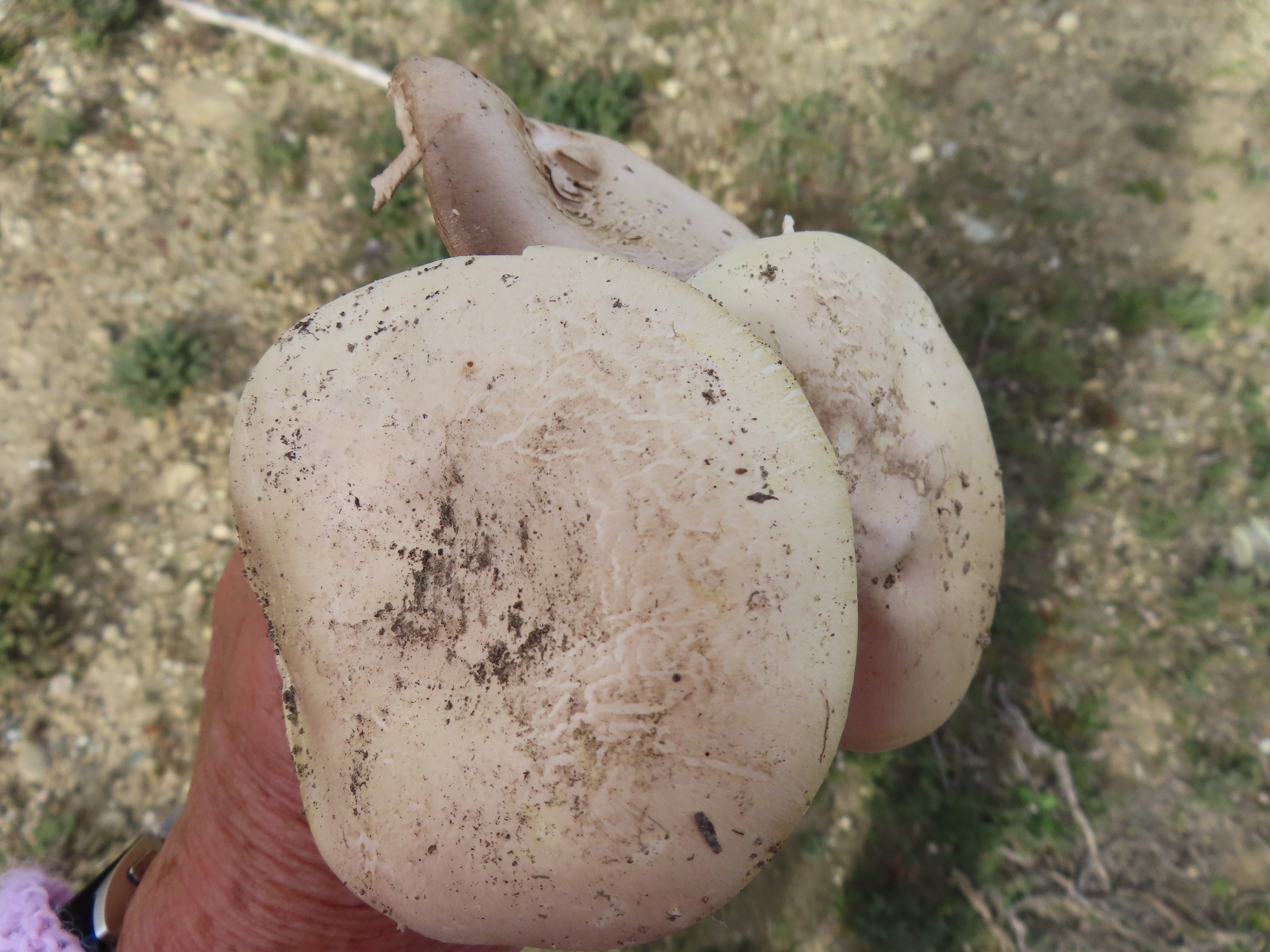
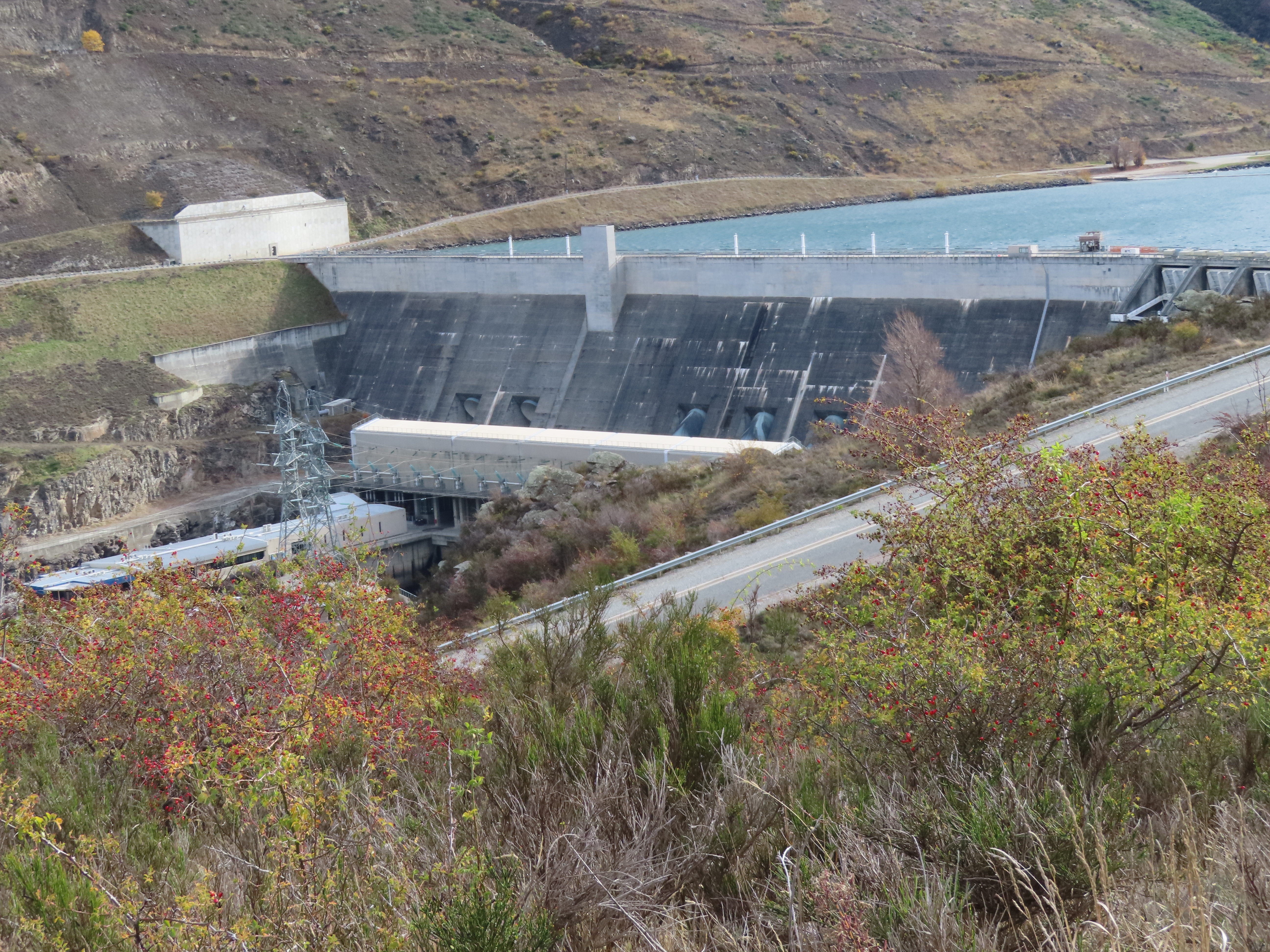
Our first stop was to the lookout over the dam, and I almost got blown away. The wind was certainly strong up here. The bonus was that I found some big mushrooms that we had for tea the next night.

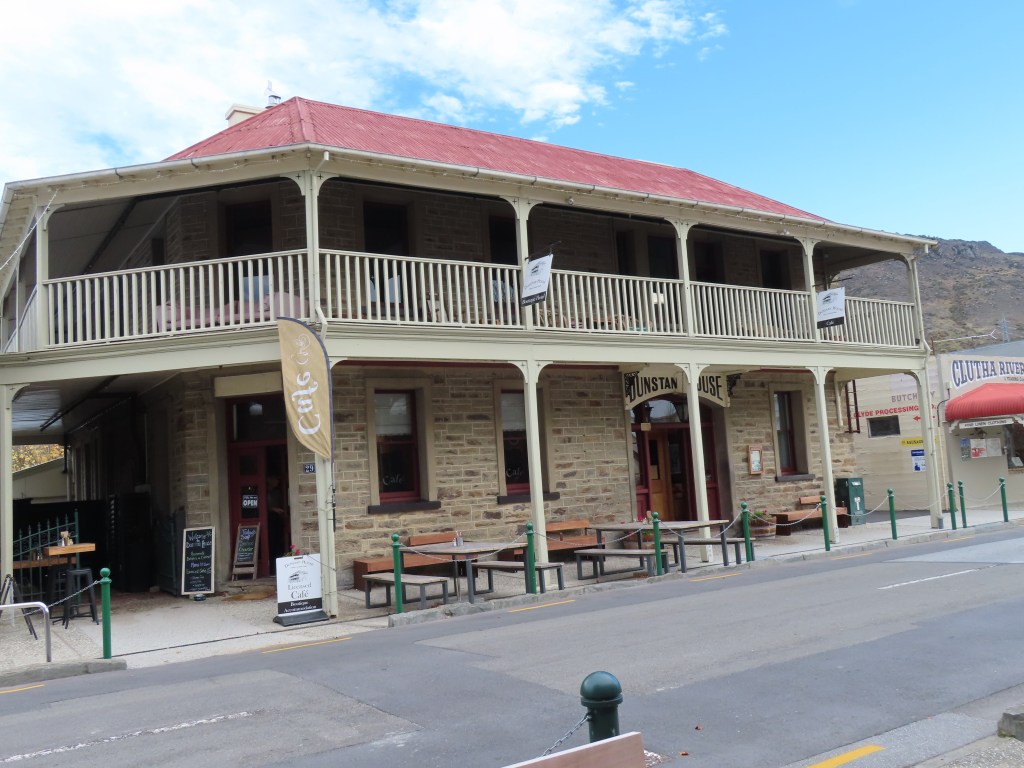
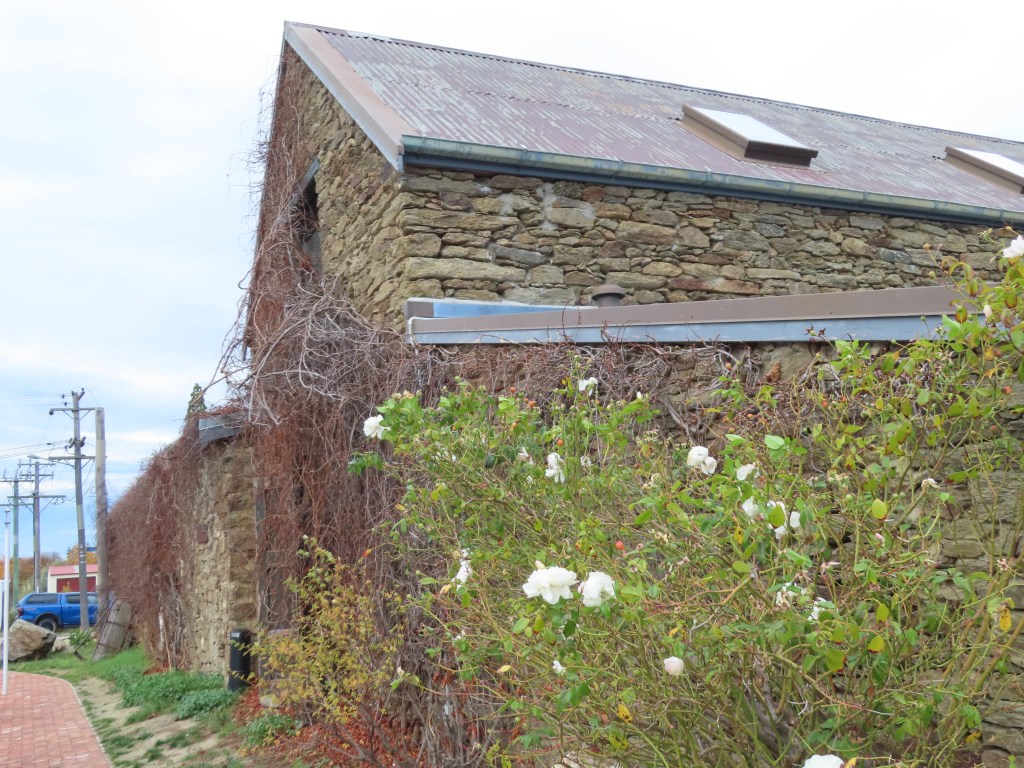
The township of Clyde was as quaint as ever, but certainly not very busy

We called in to the compulsory stop of Oliver’s Bakery for lunch, and to Touch Yarns before heading back to Alexandra for the final night of our stay.

The next day we took a visit to Hayes Engineering, which is somewhere Bruce has wanted to go to for a long time. Last time we were down this way they were closed. The trip was a bit slow for a while as we had to wait for some cattle to stroll down the road ahead of us.

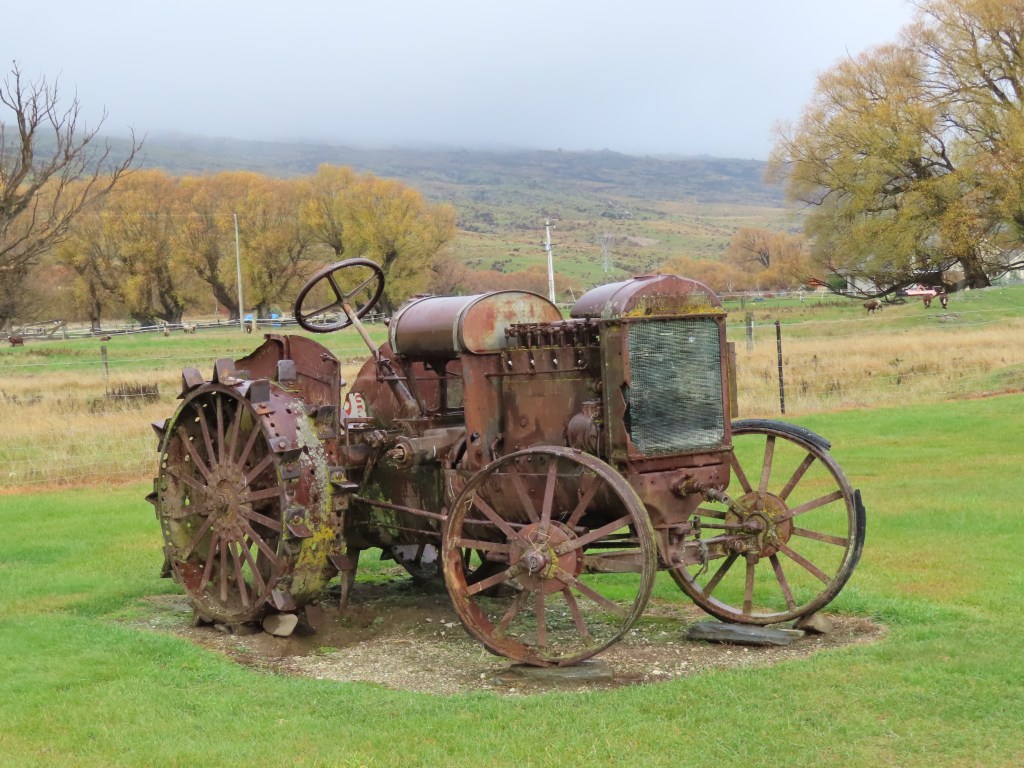
The first thing we saw when we got to Hayes Engineering was a tractor even older than Ruby.

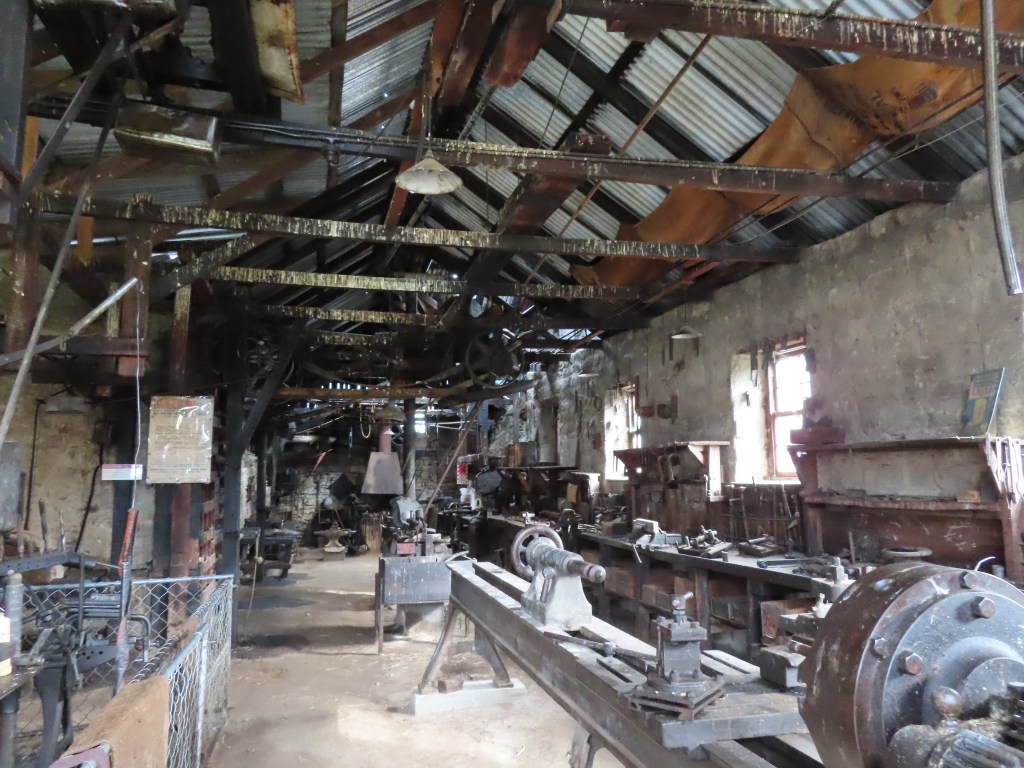
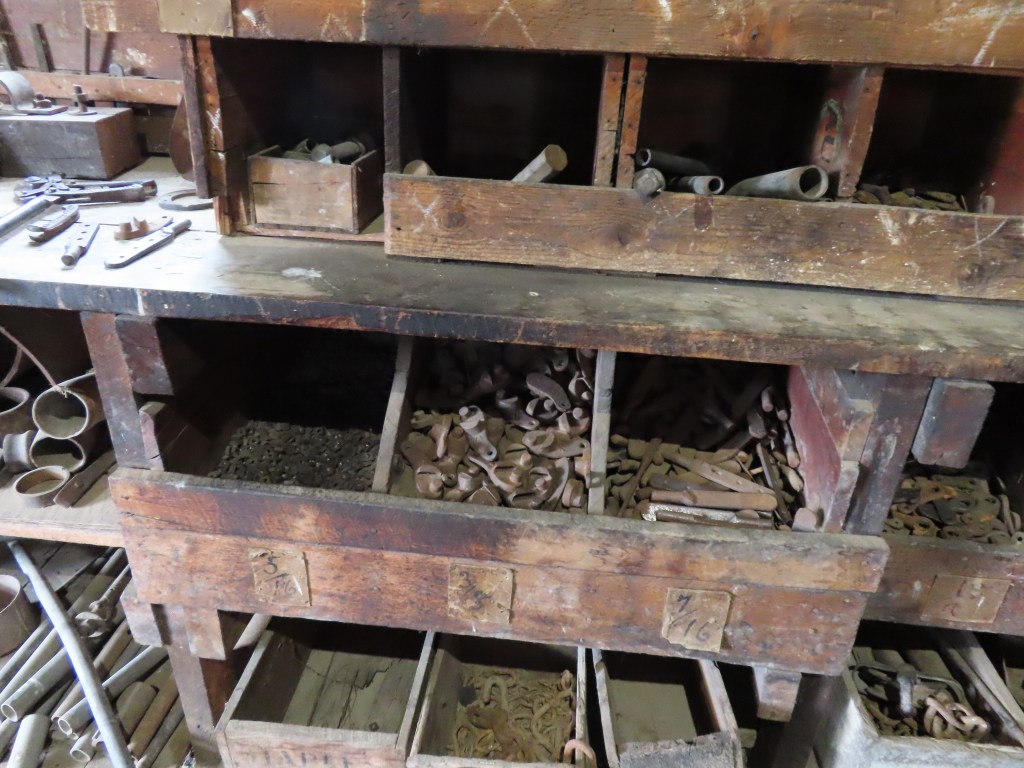
Robert Hayes was important to New Zealand because he invented the Hayes wire strainers which are now used by fence builders throughout New Zealand. Our friend Mike has a pair that he used on his farm fencing. The factory was pretty basic, with a rammed dirt floor. Everything was exactly as it was left, including bins of nuts and bolts.

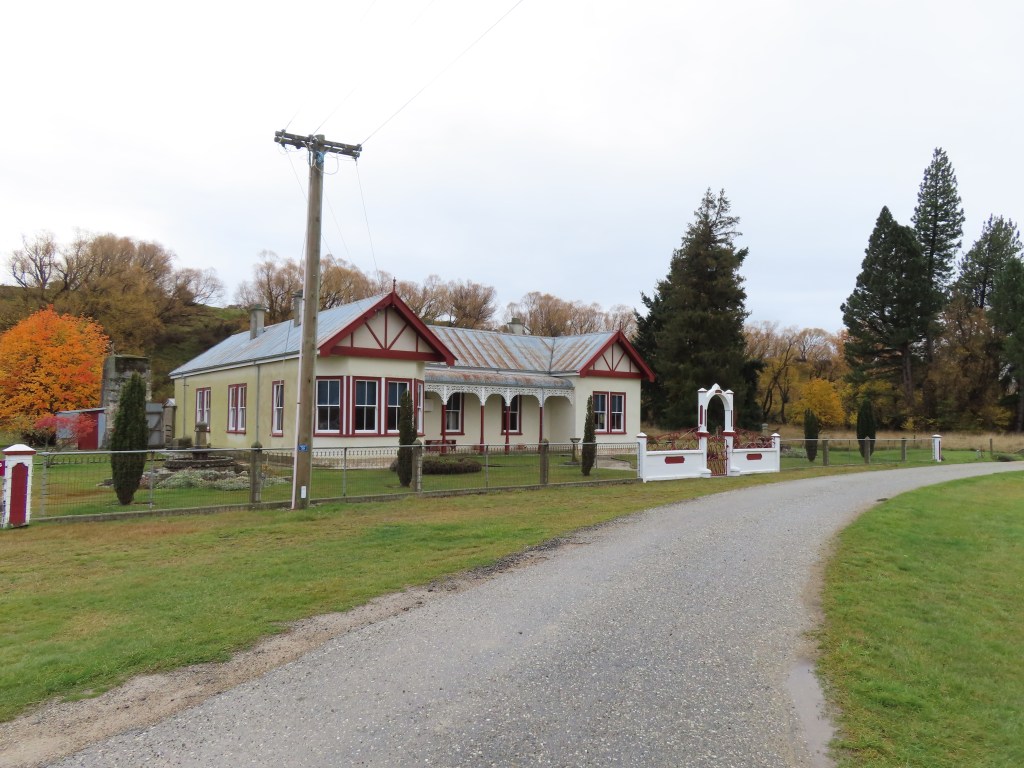
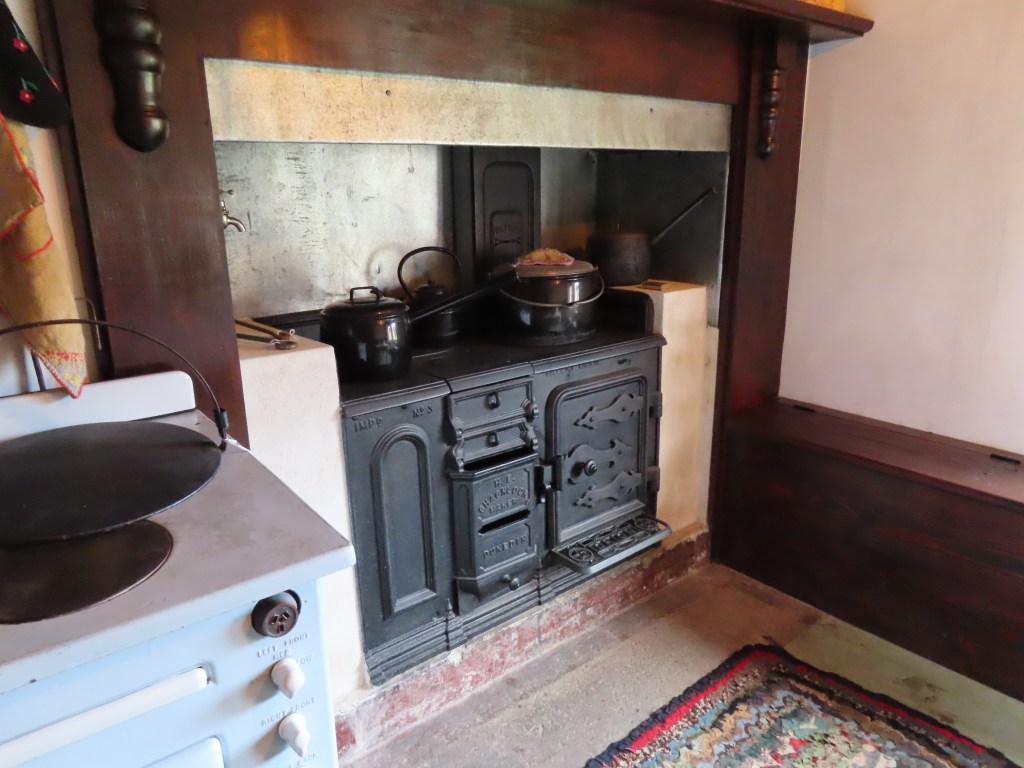
The cafe was the original farm house, and was also built of rammed earth (walls and floor). The later farmhouse was built in 1920, but the rammed earth blocks for it had been made several years before and hidden under tussock while the first world war was on. Only after the war was over were the bricks retrieved and the house was built.

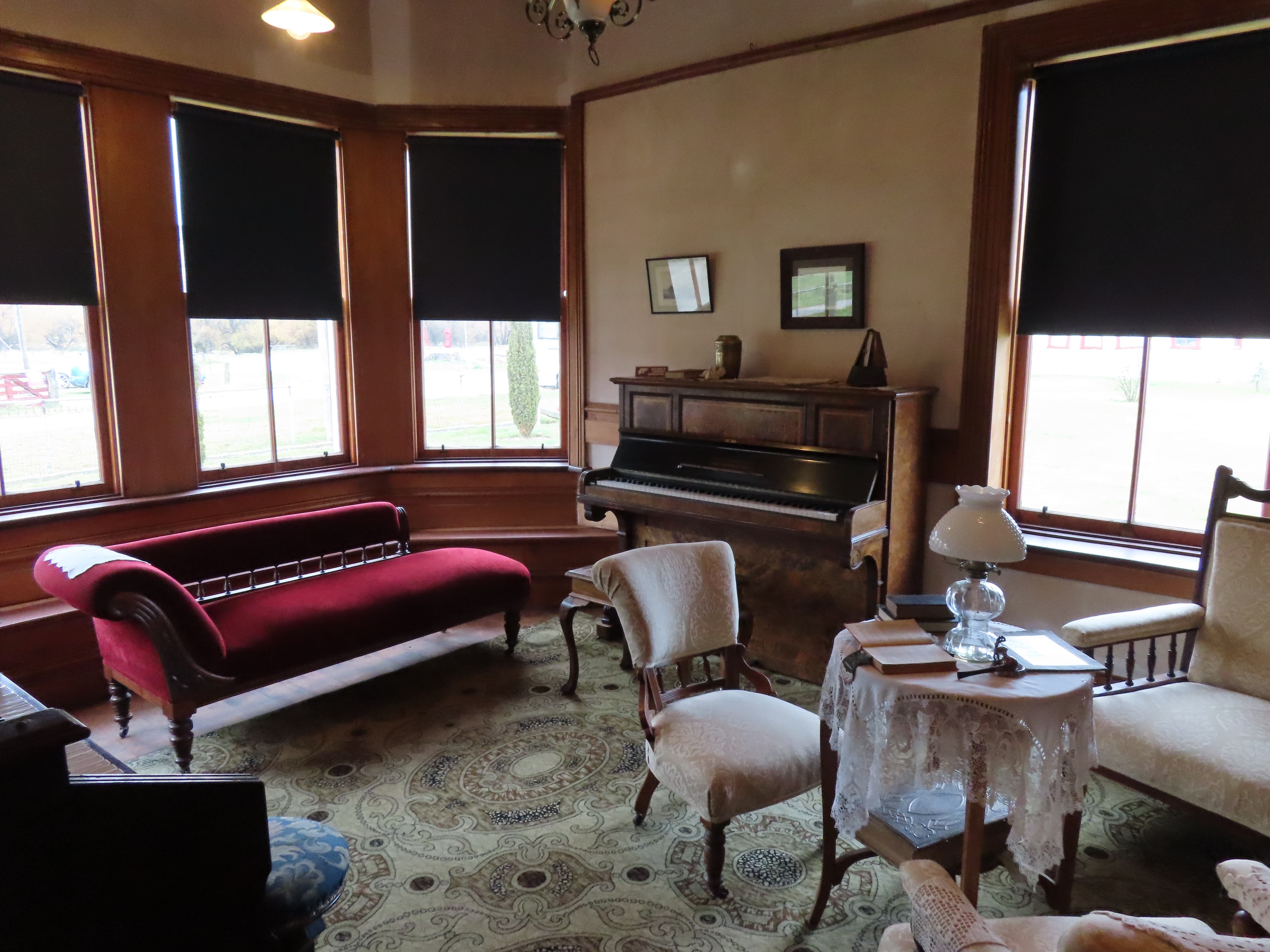
We were able to go through the house which had an internal shower and an internal toilet which were rare in that time.

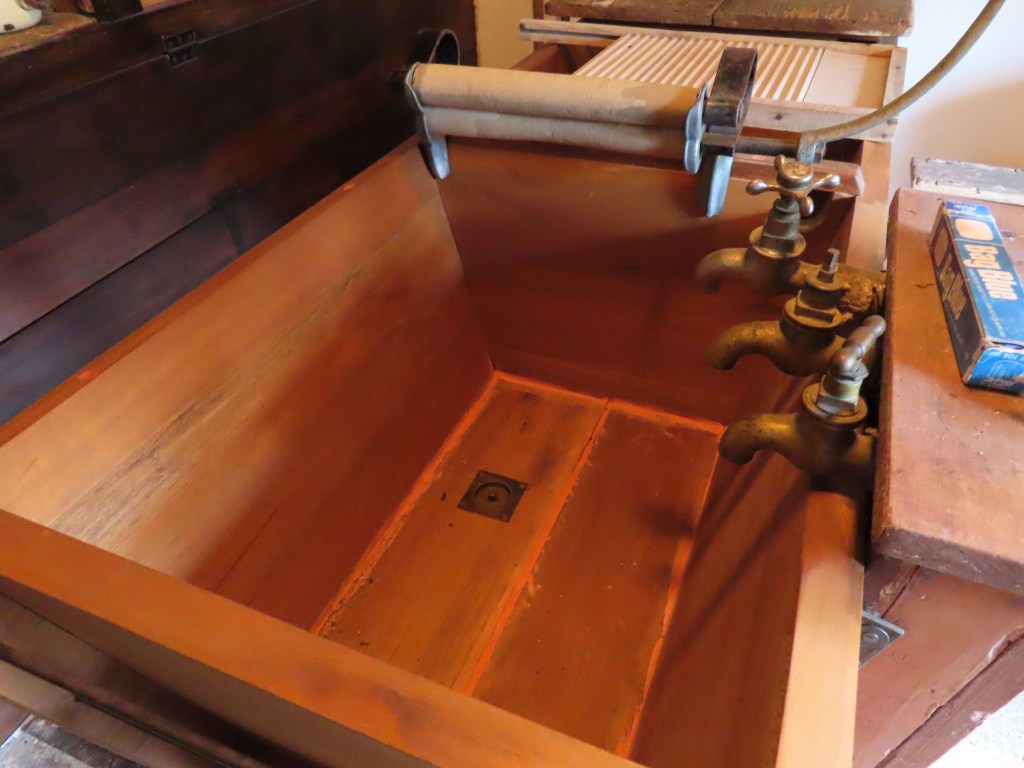
The wash tub was kauri.

Overall, it was a great place to visit, but not at all what we expected.

Pinders Pond and Roxburgh

It was with some regret that we left Gabriels Gully and Lawrence and headed towards Pinders Pond and Roxburgh.

The last time we were in this area we had the drama of a flat tyre, so it was really nice to enjoy it this time without the drama.

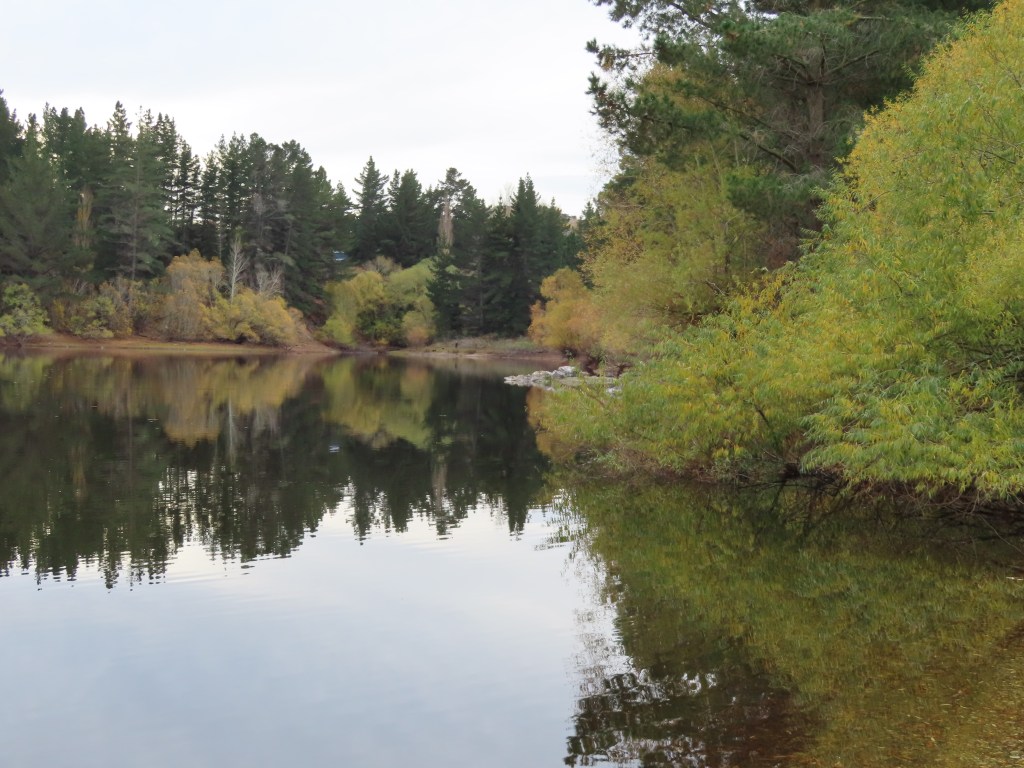
Pinders Pond is also a gold mining area, alongside the Clutha River. The pond is where diggings once were. In the autumn colours it is very pretty and a lovely freedom camp.

As it happened, the van parked next to us also had two schnauzers, as well as a black lab cross. We had met them before at Waipapa Light House where I had the run in with the sea lions. Princess Di (as she calls herself) and Dennis arrived the day before us and the schnauzers enjoyed a bit of a play.

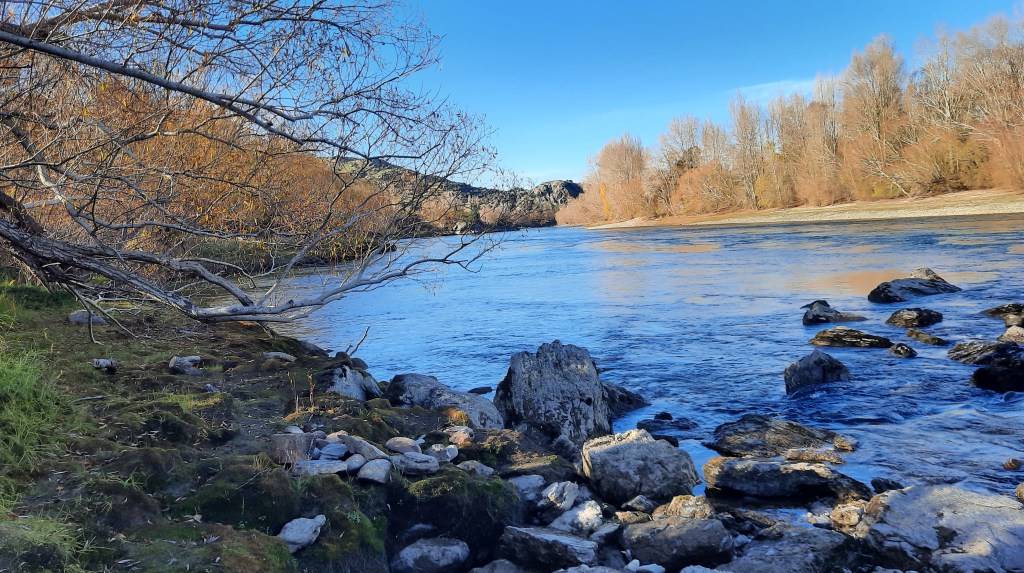
It was a quiet night, and the next morning we were able to make use of the cycle track alongside the river, which was pleasant for both the dogs as well as us.

After the dogs were a bit tired we headed into Roxburgh for a look and gravitated towards Lake Roxburgh and the power station. The only place we could drive to for a look had a big sign that said “Danger – for people with implanted medical devices”. That was enough for me, and we were off pretty quickly, and too quickly for Bruce to get a photo.

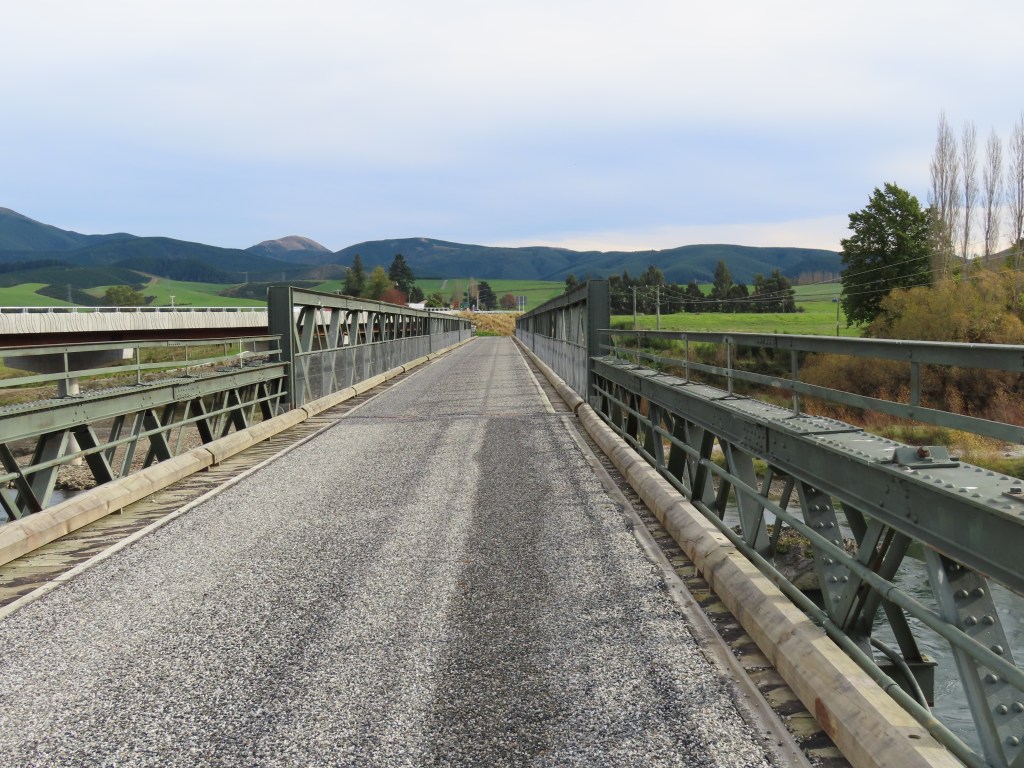
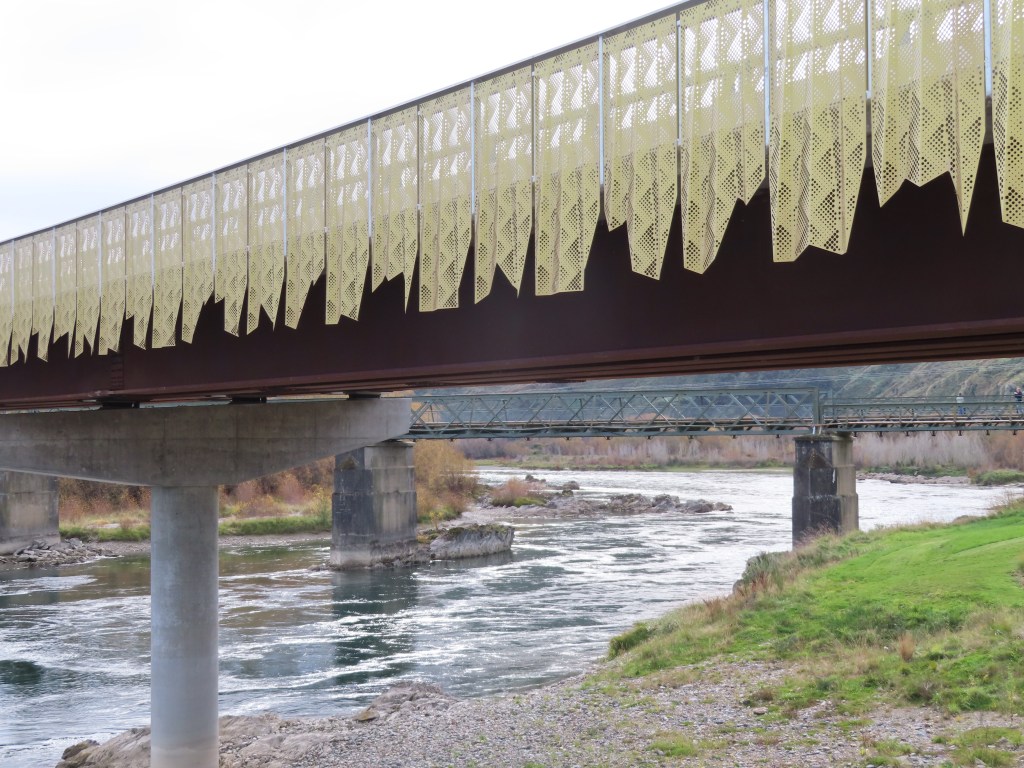
Just outside Roxburgh was a sign saying “Historic Bridge” so we went to have a look. It was an interesting place as the old bridge was a wooden structure that still looked pretty sound, although it was apparently built in 1887. The new bridge is alongside it, and if you stand in the right place it almost looks like they intersect (an illusion). The new bridge is pretty flash though.

The area is prettily landscaped and made a nice stopping place for lunch.

Roxburgh was a pretty enough town, with dramatic hills alongside the Clutha River, but there wasn’t enough to stay on for, so we headed on down the road towards Alexandra.

Gabriel’s Gully

After leaving Kaka Point and Nugget Point we headed inland again, and had a one night stay in Balclutha so I could buy a couple of balls of wool – I wasn’t happy with the ones I had purchased in Ashburton. From there, the next morning, we headed further inland towards a place called Gabriel’s Gully.

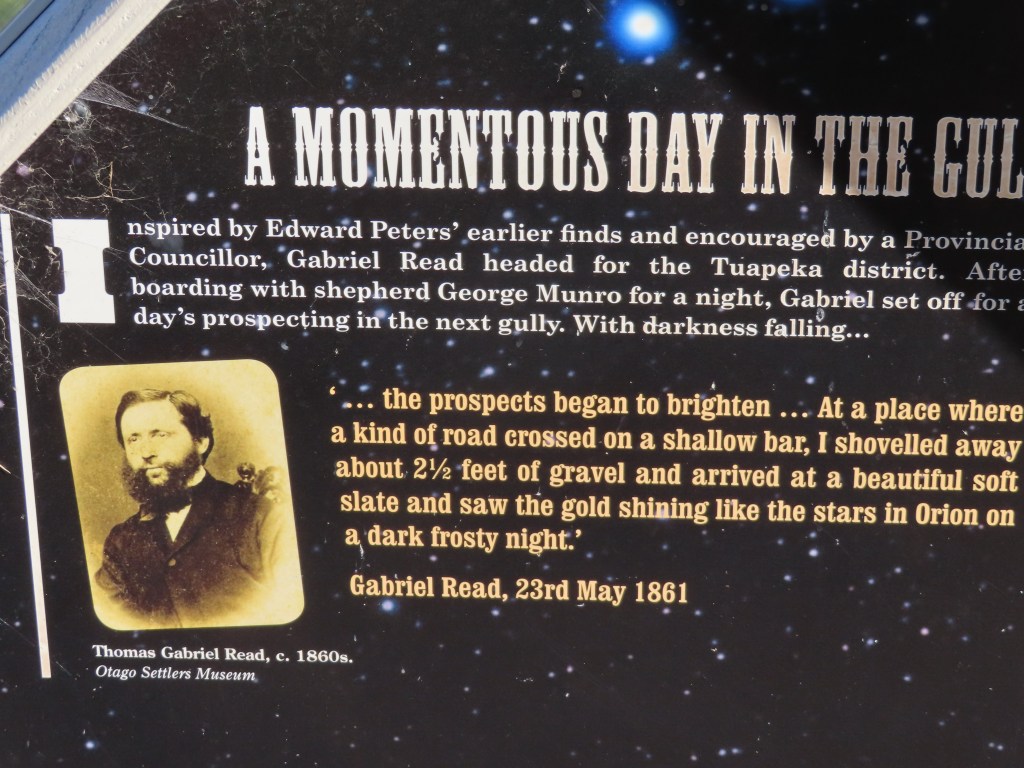
It is said that Gabriel’s Gully was one of the first sites where gold was discovered in New Zealand. In this case, it was discovered by a Mr Gabriel Reed, in May 1861. It was only a matter of months after that the whole area was a sea of tents, where miners all had a small claim, marked by mounds of earth, where they dug for gold. Gabriel Reed said that he found gold by digging in the soft earth, to a depth of about 2 1/2 feet until he hit a layer of slate, and there was the gold glistening like stars in the sky.

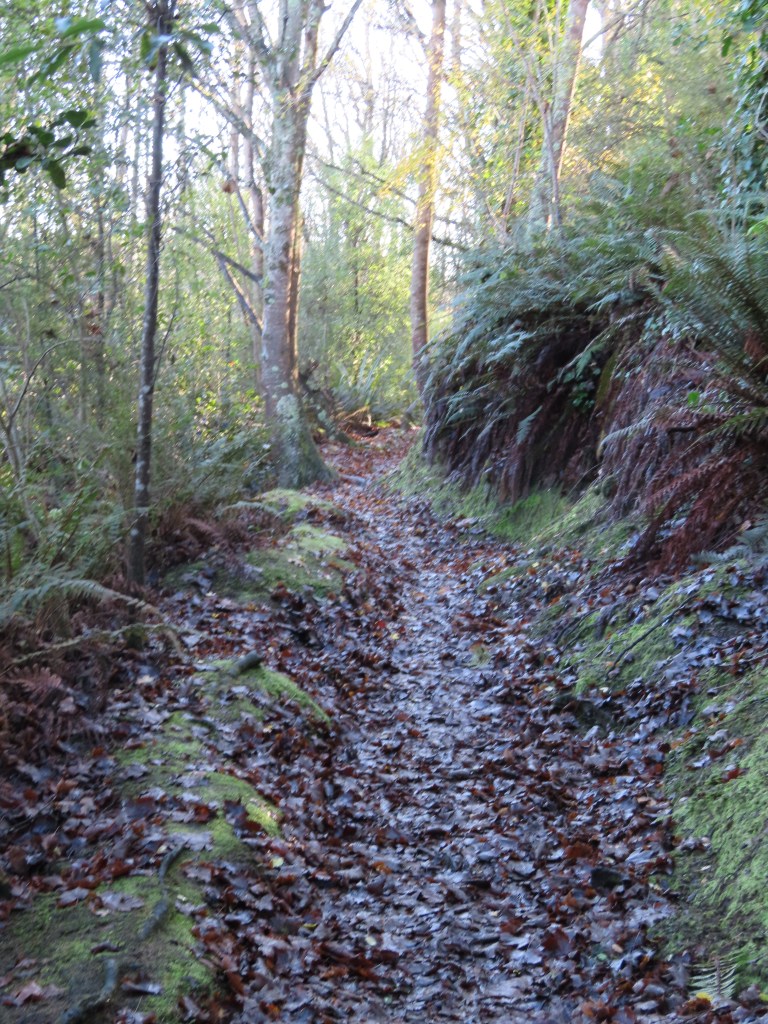
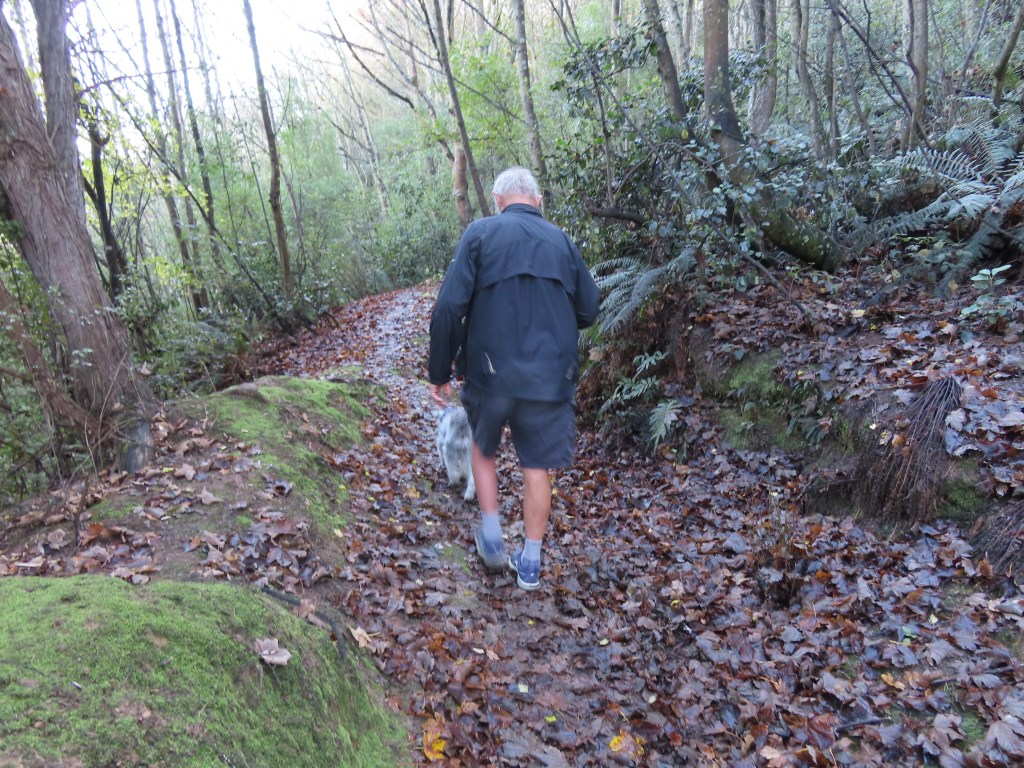
Bruce and I went for a trek following the gold trail. The track was supposed to be an easy grade, but no, it climbed and climbed to a height of 120 metres – almost twice the height of Shakespear cliffs at home, over about 800 metres! It was a narrow track at times, and covered in a lot of leaf litter, so we weren’t sure what terrain was going to be underneath that layer. Sometimes it was firm ground, other times mud. However, we managed without falling or tripping.

We took the dogs with us on the walk which was about 2.8 kilometres long and they seemed to enjoy it. There was an open metal set of steps at one point, and both dogs flatly refused to go down them, so we had to carry a dog each.

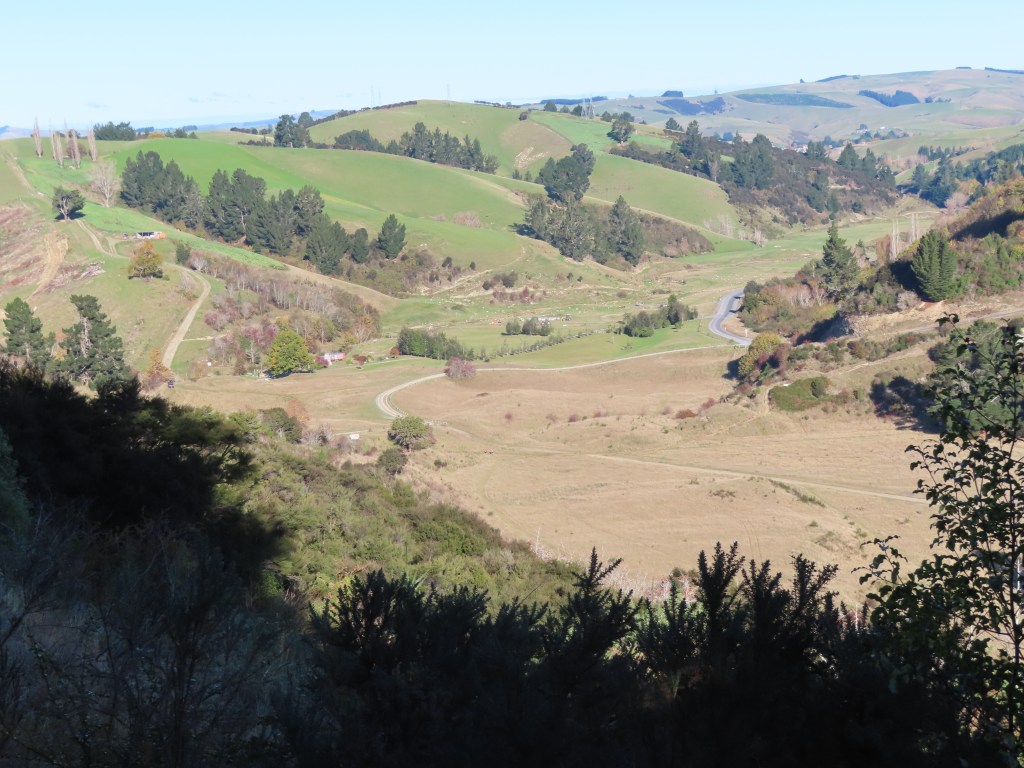
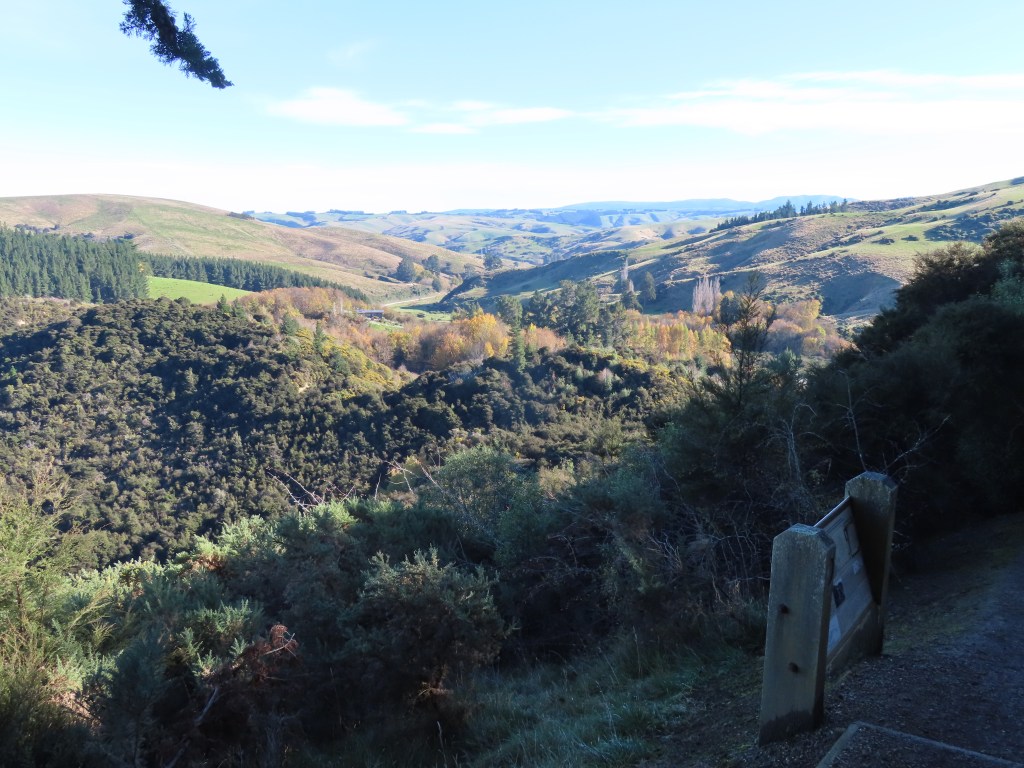
When we got near the top we were able to see across the gully. Hard to believe it was all mined, and a sea of tents!

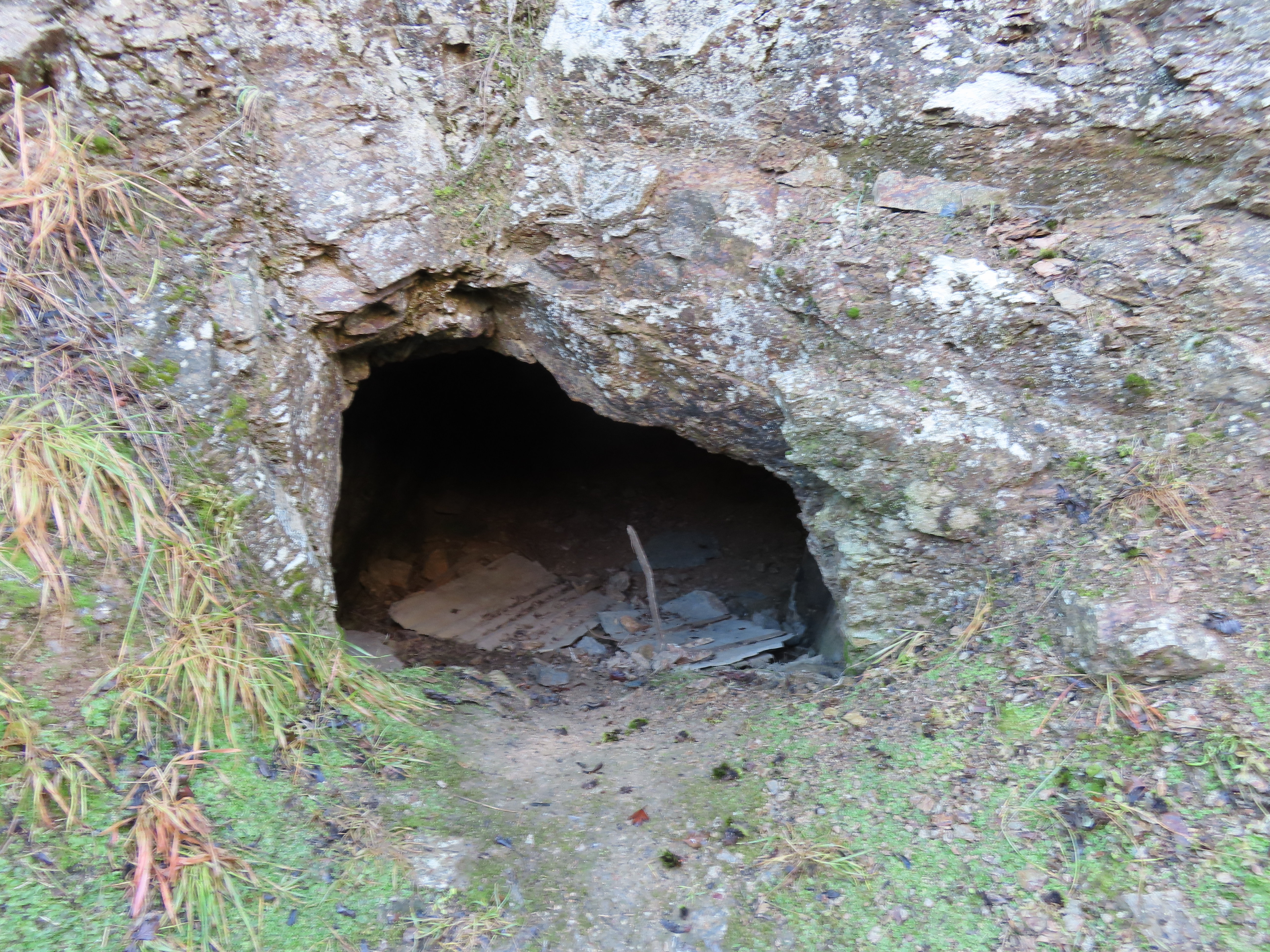
There were various signs along the way pointing out areas such as caves used for storing gunpowder

We made it back in one piece, and the dogs settled down for a sleep, while we drove further down the road for a look. There was a freedom camp next to the water storage lake for the gully. It was beautiful, and there was a couple and their kids camping there.

Our camp for the night was the Equestrian Club, just outside Lawrence, and that was a delightful park over property. I took the dogs for a walk the next morning and met the most beautiful horse, who just wanted lots of affection. Hunter certainly wasn’t keen on the idea, and Beau wasn’t sure, but I enjoyed it.

Later on we strolled through Lawrence, which is a very old town, established in the gold rush to meet the needs of the miners.

From there we traveled on towards Roxburgh.

The Points – Kaka Point and Nugget Point

There is a delightful Park over Property at Kaka Point. We had stayed there before and were keen to do so again. The place is a farm, just across the road from the beach, but is sheltered from the wind and OK in the rain. It was raining again when we arrived, and it did so for most of the night.

Nugget Point is just 8km down the road, but we decided not to go there until the next day when the forecast was for a sunny day. That proved to be the case, but before we went anywhere we had to take the dogs across the road to the beach.

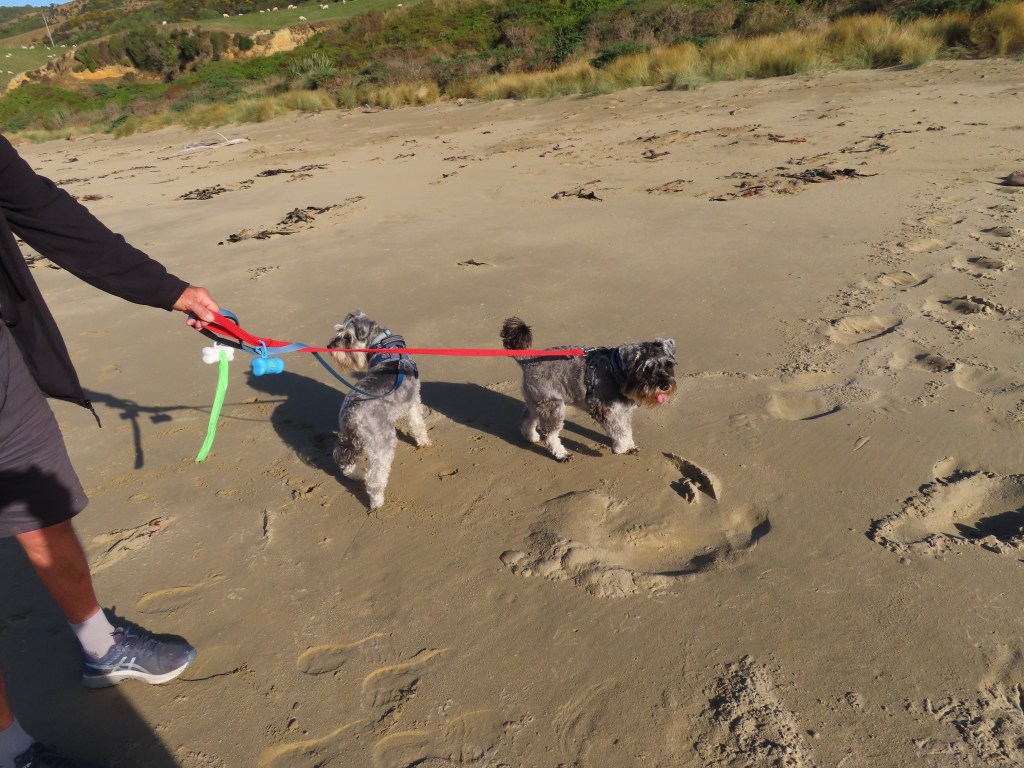
It is a long sandy beach, with a few dunes before the road, and the area is known for seals, so the dogs had to stay on the lead (maybe I should have been also).

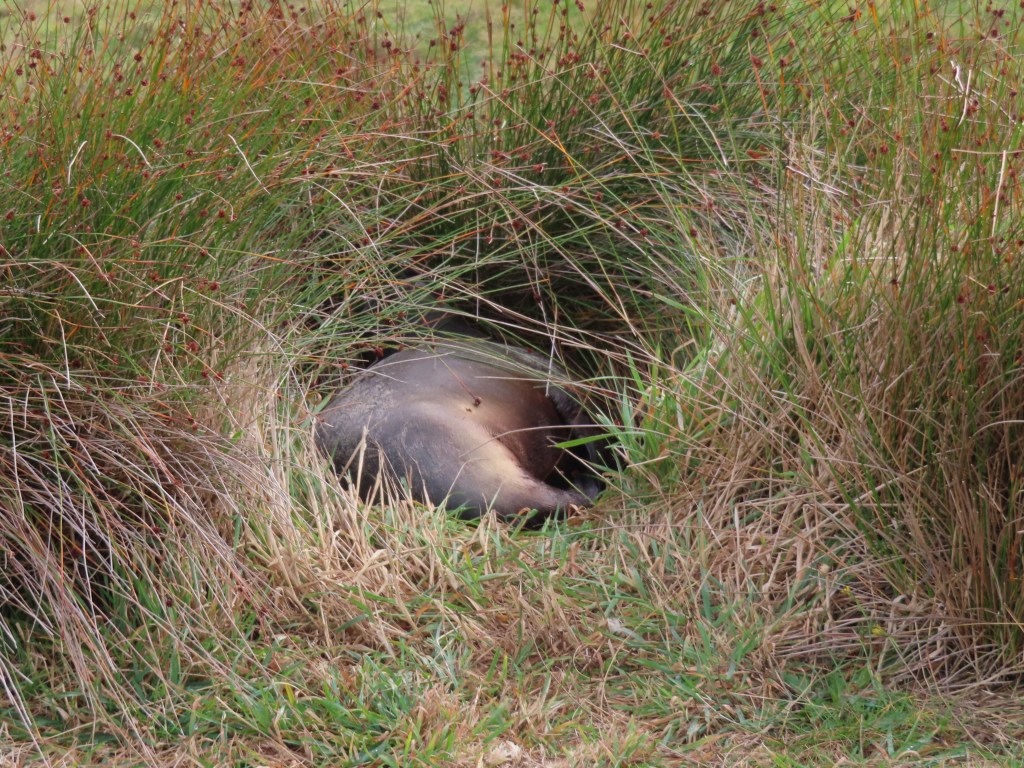
It wasn’t long before I noticed the telltale marks on the sand of a seal pulling themselves up the beach. There were three such tracks, and I followed one, and sure enough, there was a seal hiding (sleeping) in the grass.

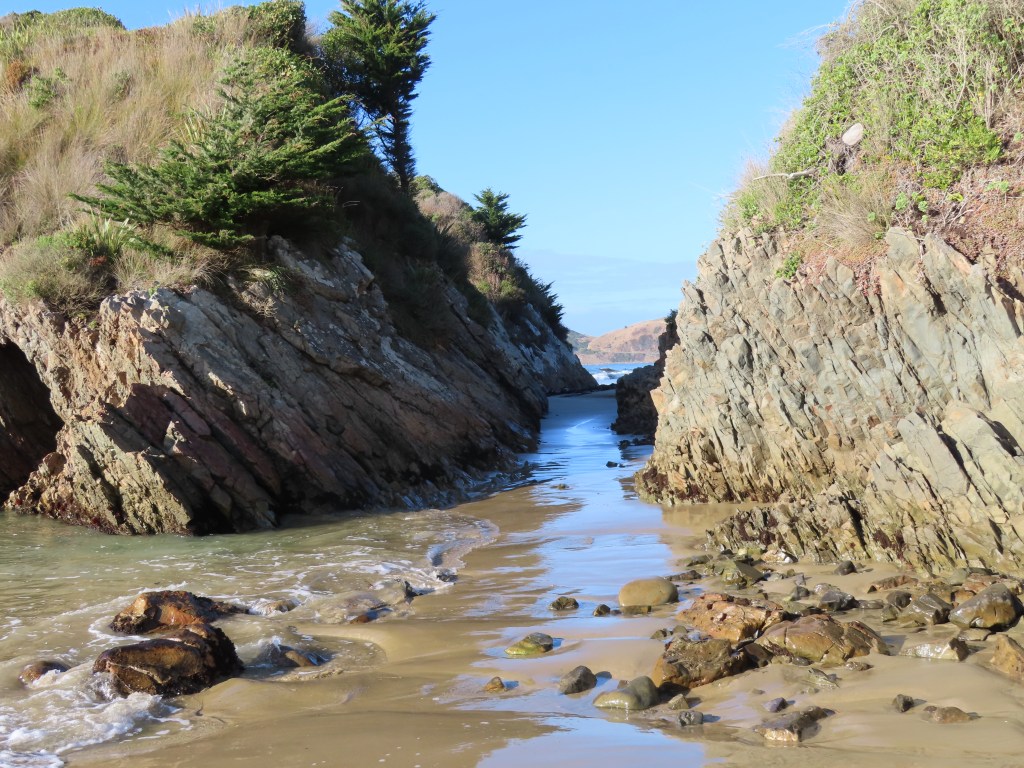
Each section of beach is separated by a little rocky outcrop. Sometimes there is a way through instead of having to go back up to the road to get around it.

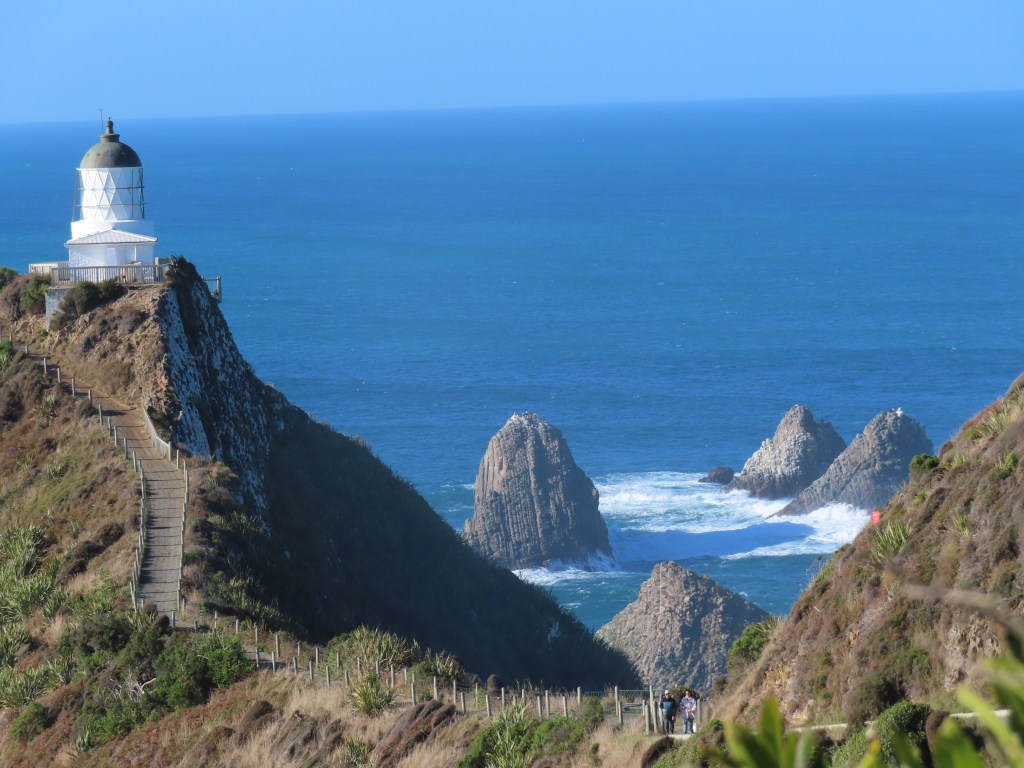
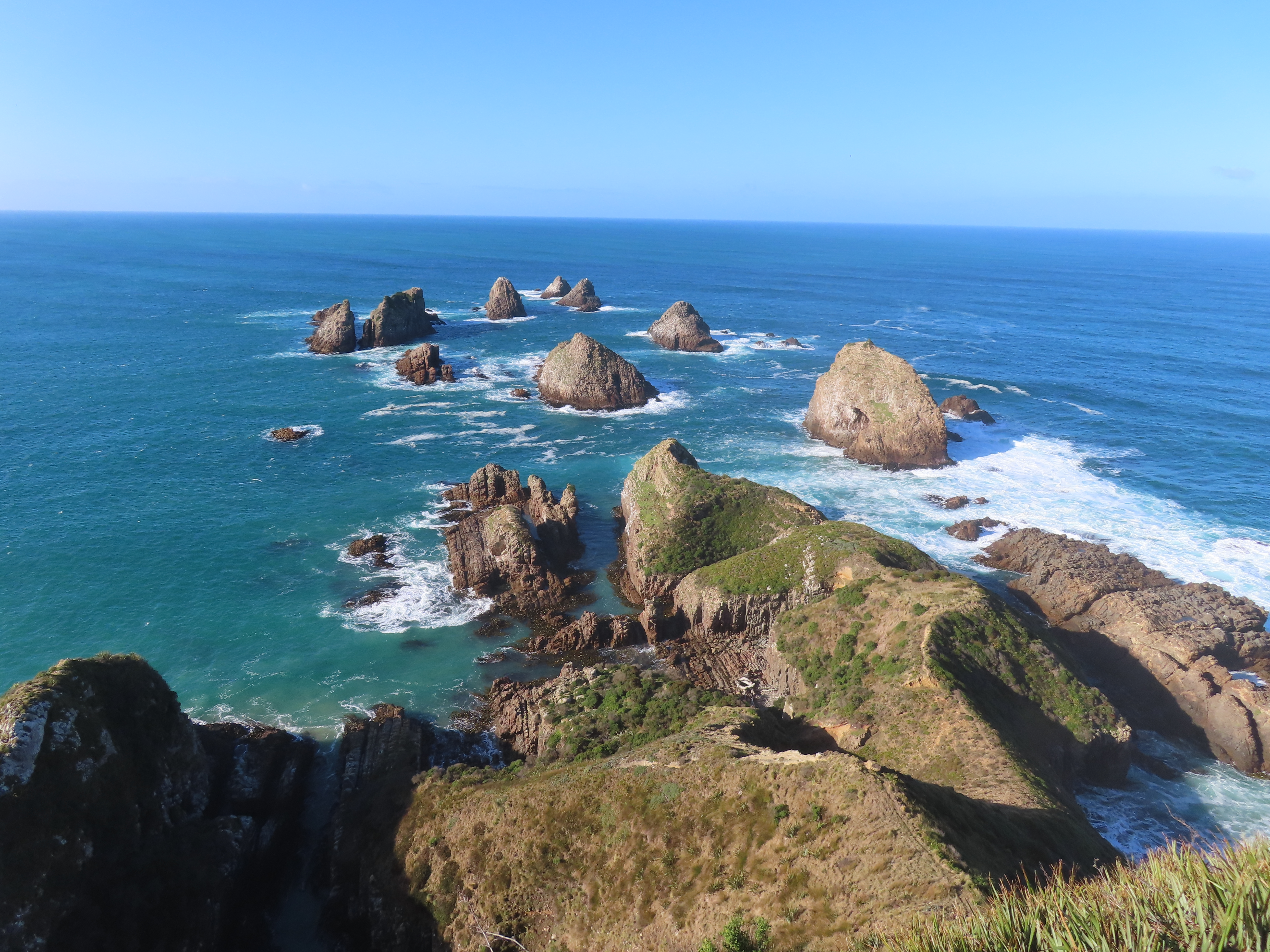
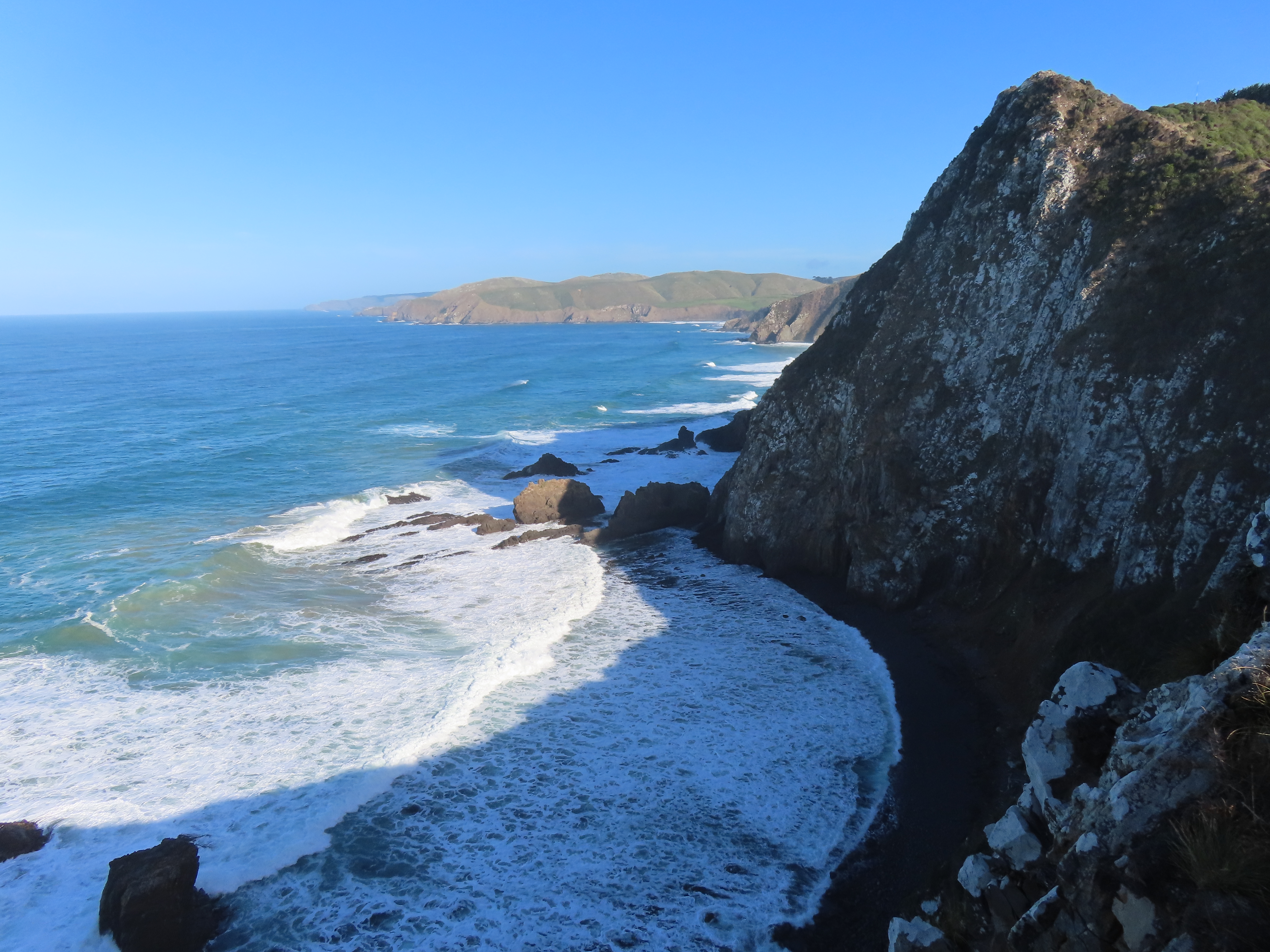
After a good walk we packed up camp and headed towards Nugget Point. We have been there before but as usual, had to go again. There is quite a walk to get there and up and down some steep slopes, so once again my lungs were challenged, but we made it, and it was well worth it.

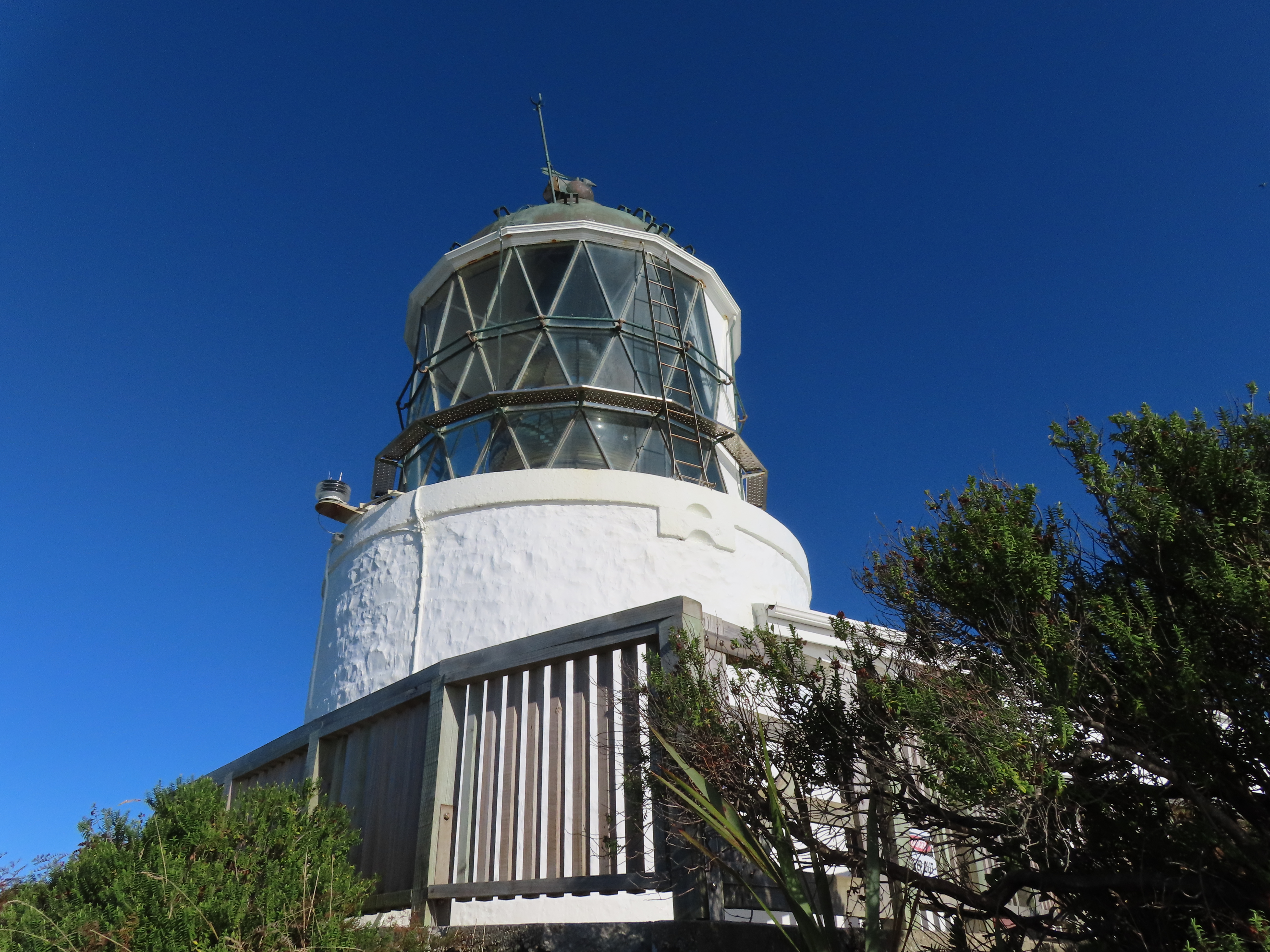
We spent a bit of time at the light house because the scenery is just awe inspiring – it takes your breath away. What also took my breath away was a young lady running up and down the track several times just for exercise!

After a delightful visit, and the return trek to the carpark, we settled in for the drive inland. No more coastal views for a while.

Slope Point – and seal capers

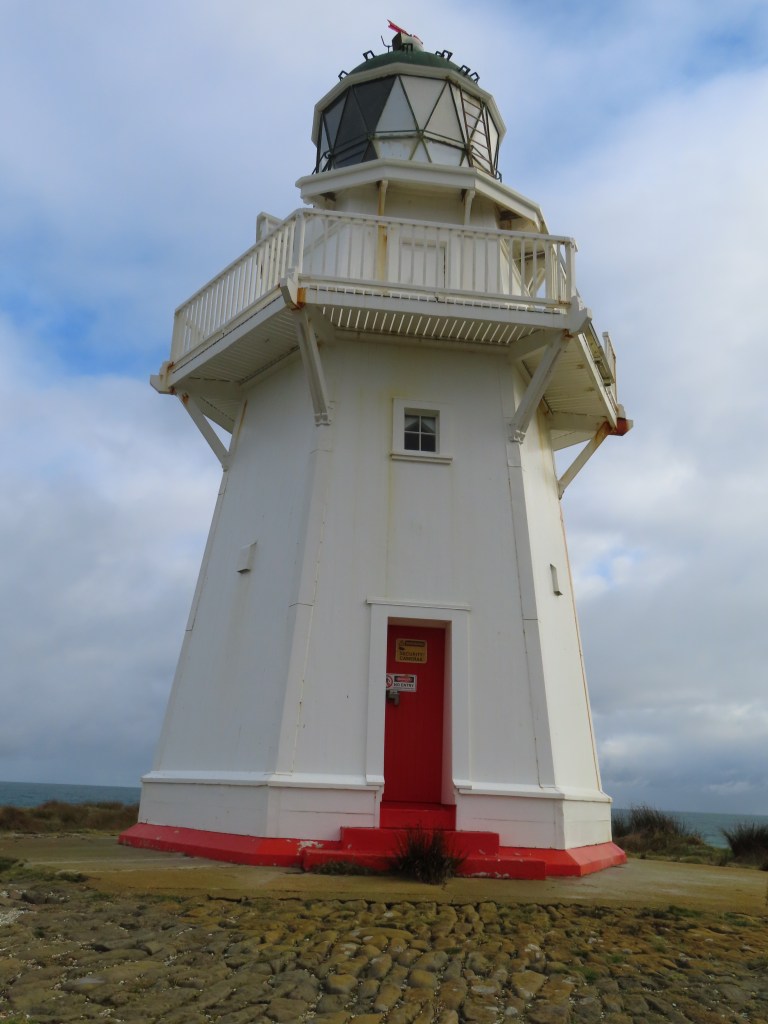
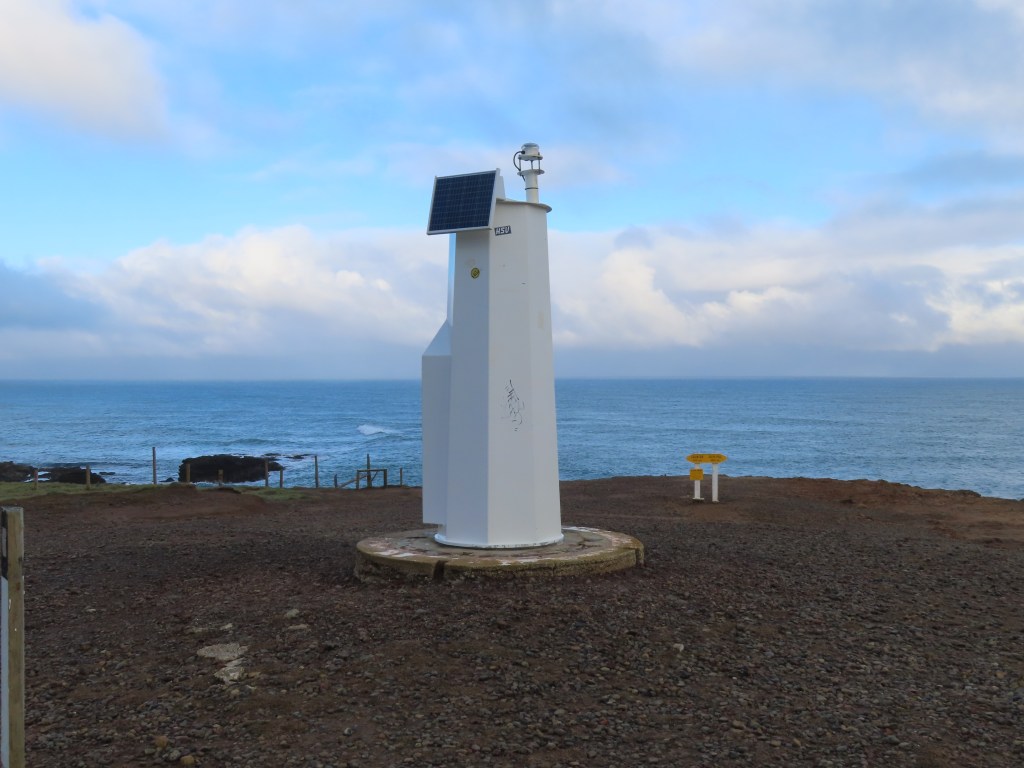
Next on our list of adventures, was a repeat trip to Slope point and the Waipapa point Lighthouse. The last time we were down this way the light house was all shrouded in plastic wrap as it was being re-furbished. We hoped to see more than just the top of it this time.

Once again the weather wasn’t the best but as it was just showery, I guess it could have been worse. Once again we were lucky in that it cleared enough for us to have a wander around.

At the base of the path up to the lighthouse is a sign warning that there may be sea lions in the area, and to stay at least 10 metres away from them as they can be aggressive. I wandered around the base of the light house and was on one side when Bruce called to me from the other. He pointed out this brown lump in the grass that I had not seen at all having been concentrating on photographing the lighthouse itself. It was a large lump, and at first I thought it must have been dead, but on closer observation I could see it breathing.

We hastily moved away and left it undisturbed.

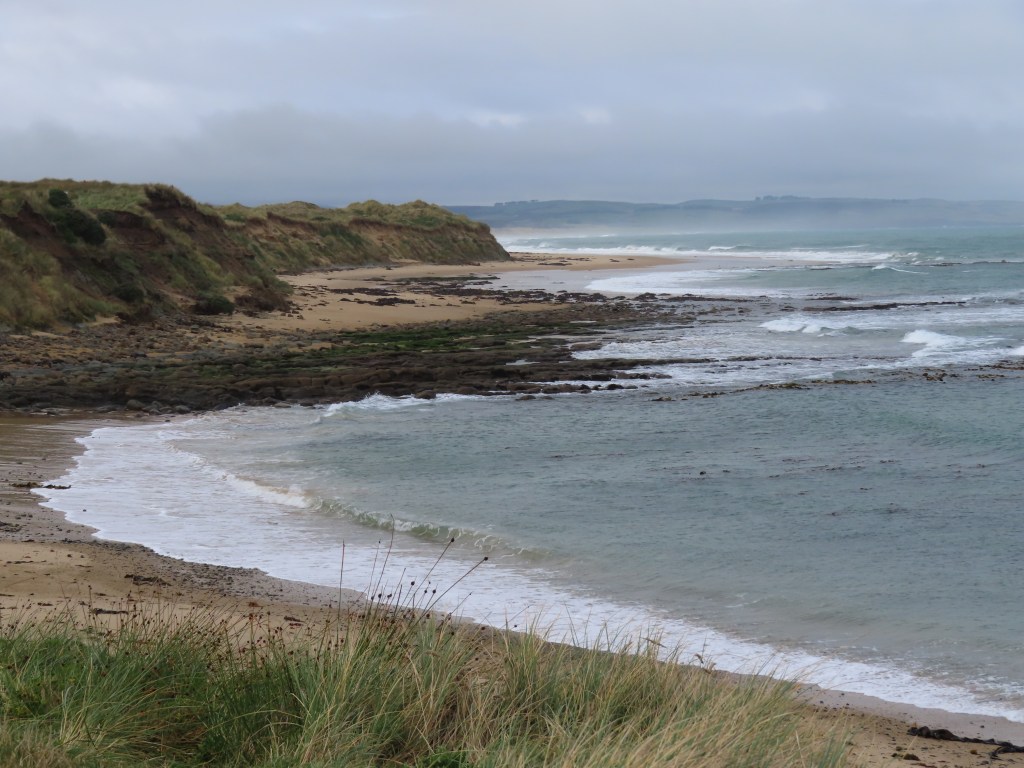
The beach down from the light house had a big rocky point but also a little sandy cove.

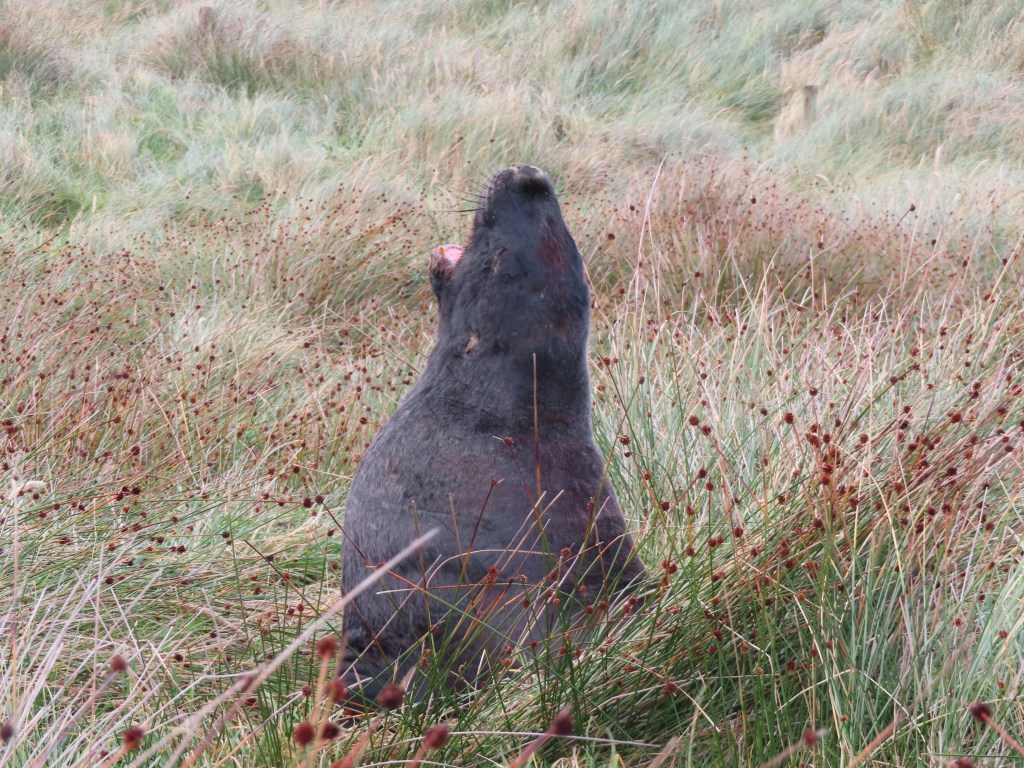
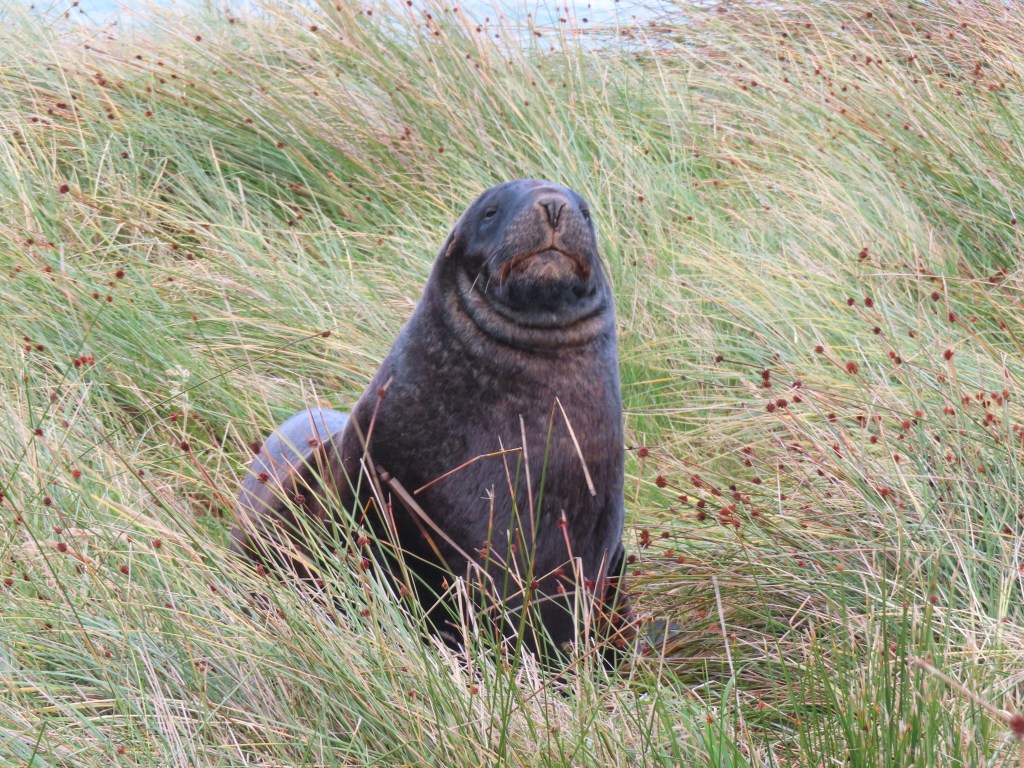
There was a distinct path down to the beach so off I wandered down the path, expecting Bruce and the dogs to follow. The dogs started barking, and Bruce started calling out to me. I looked behind to see what all the fuss was about, and it seemed there was another sea lion in the grass next to the path that I had innocently wandered past. The dogs had woken it up, and it was starting to get a bit stroppy, lunging towards me once, and towards the dogs a couple of times. I was stranded!

Bruce had to take the dogs away, and I kept out of its way to give it a chance to settle down, and then I gingerly picked a path through long grass on the other side of the path, hoping I did not come across any other seal lions in the process!

Thankfully I didn’t, but so much for keeping 10 metres away!

I happened to look down to the beach and saw a couple of big paua shells lying there. Bruce was keen to go down and get them, but that would have meant going past the sea lion again, so I vetoed that!
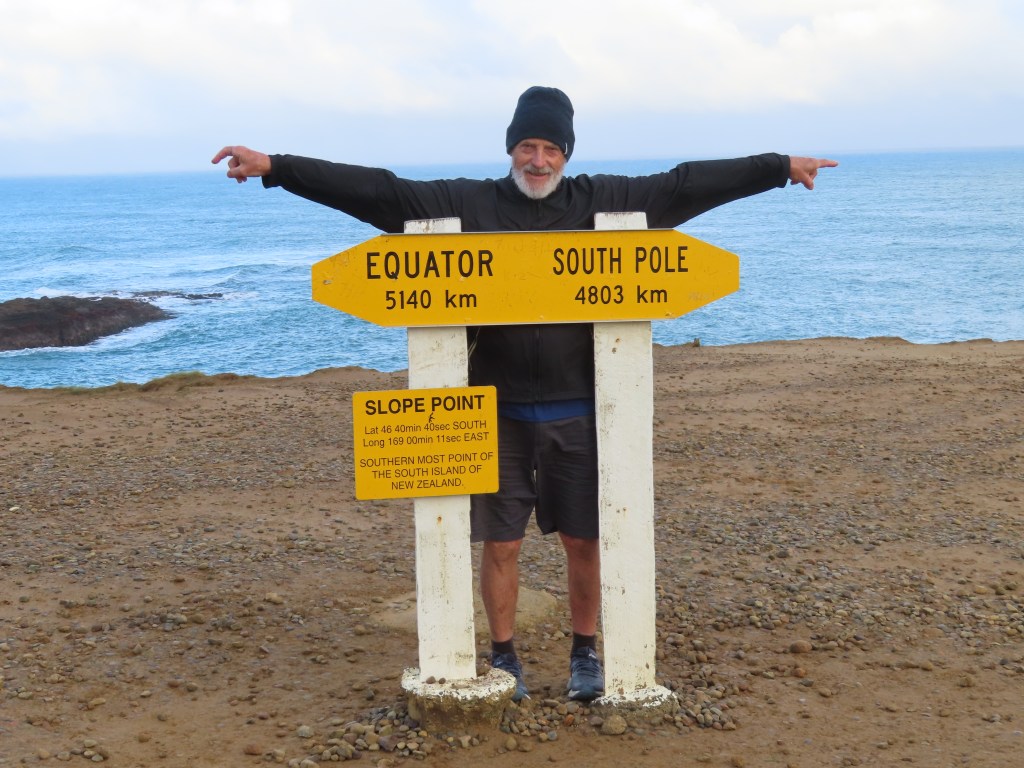
Once we had recovered our nerves we settled into the motorhome again for the short trip to Slope Point. Slope Point is the southern most point of the South Island, and although we had been there before, we had to go again as we were so close.

To get to the point you have to trek over farmland, avoiding sheep poo and cow pats.

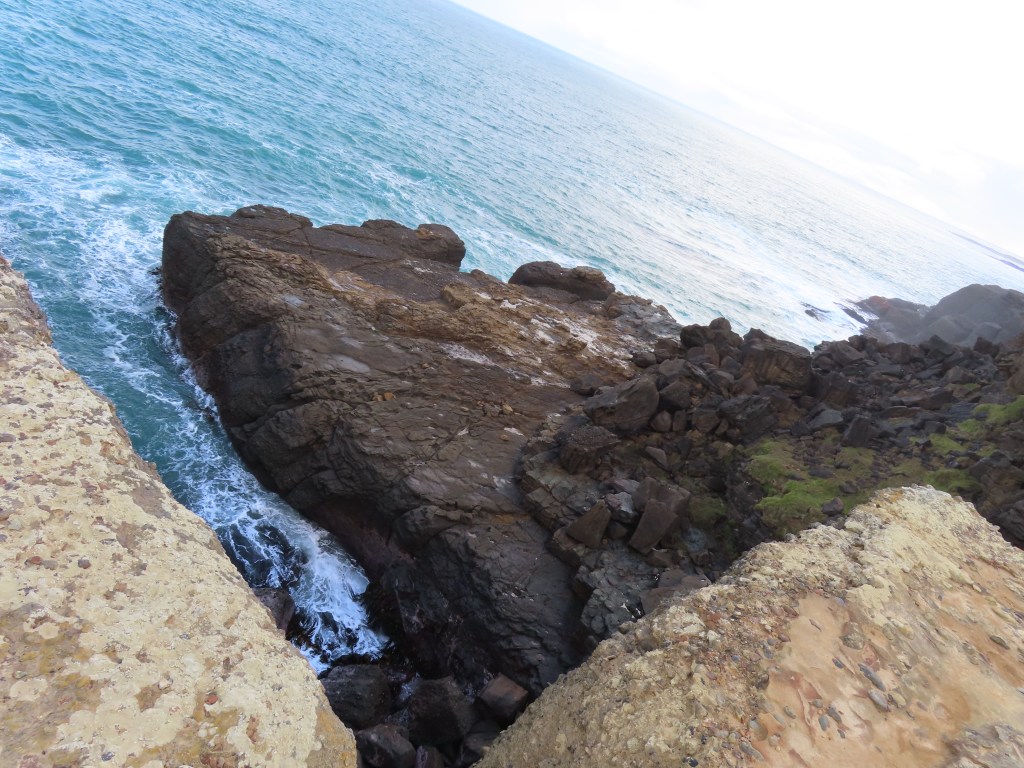
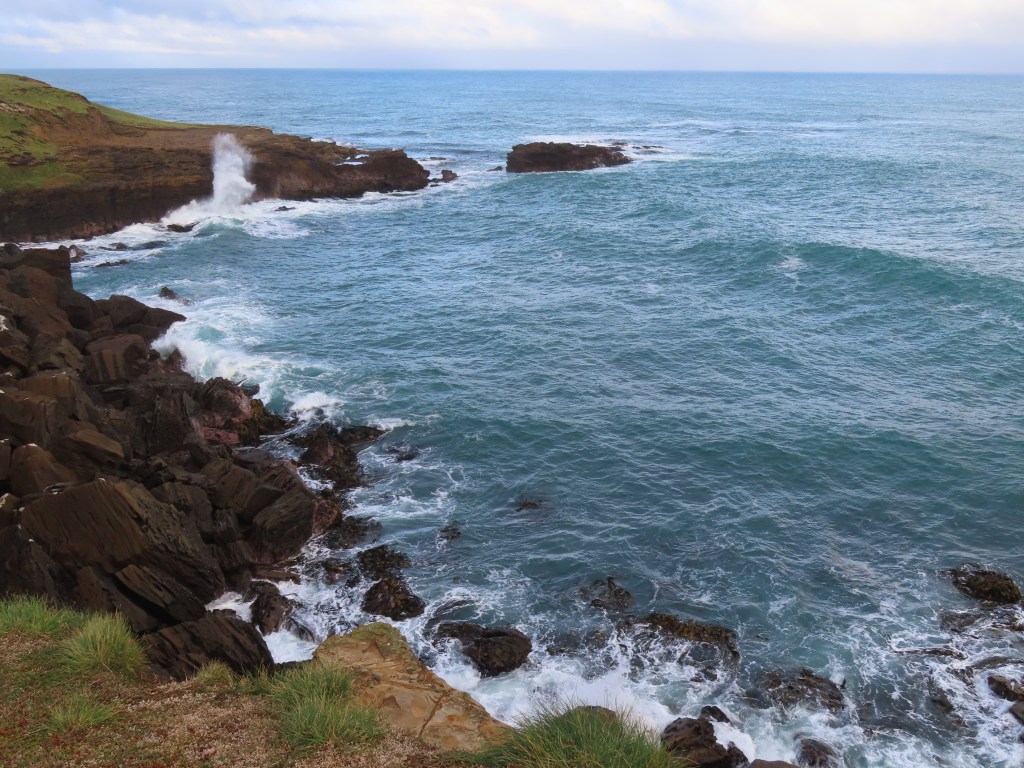
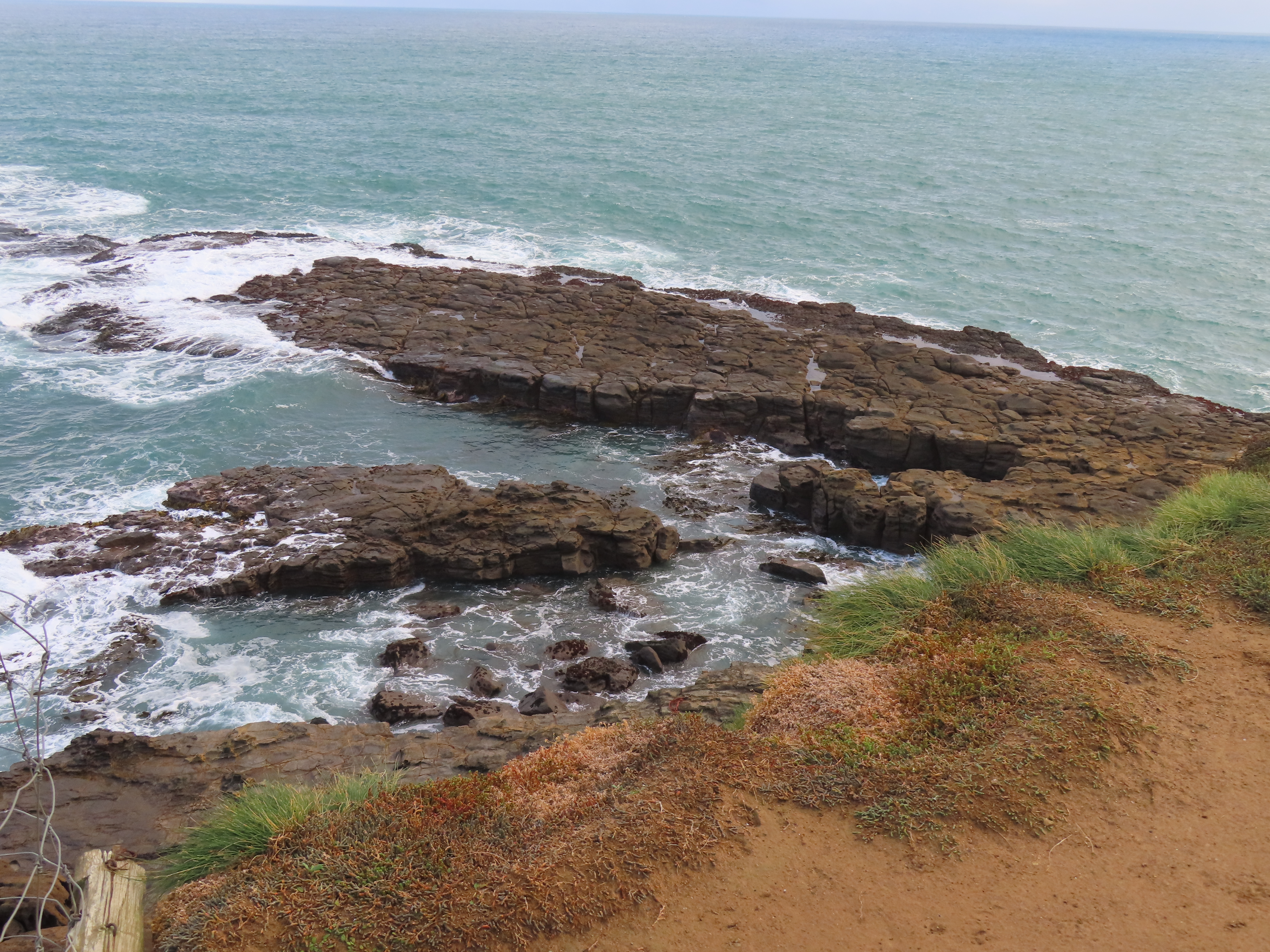
There has clearly been some erosion since we were last here, and the place is still rugged and exposed, with steep drops down to the sea.

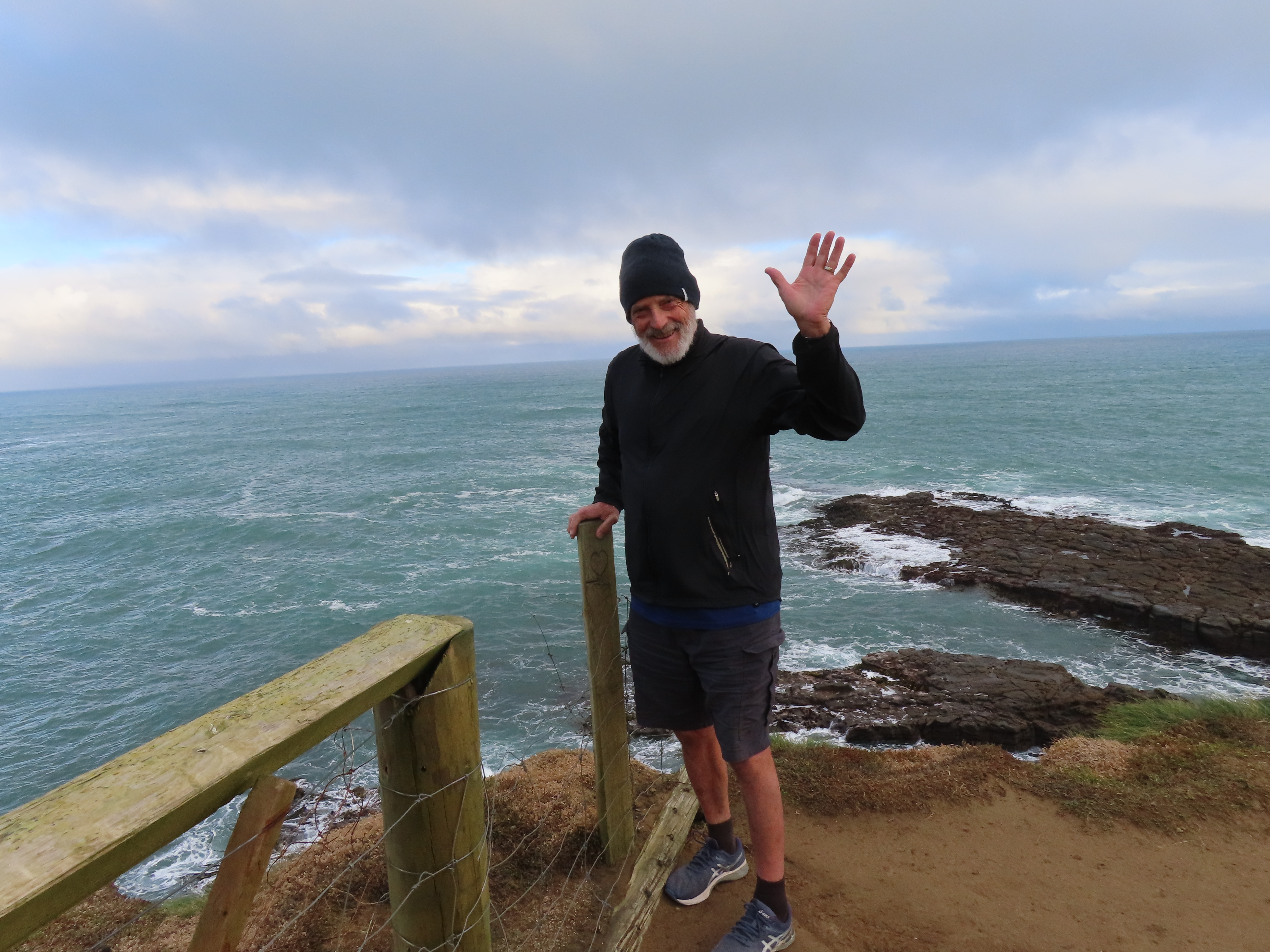
We wandered around a bit and enjoyed the view (and the wind) before trekking back over the farm back to the car park.

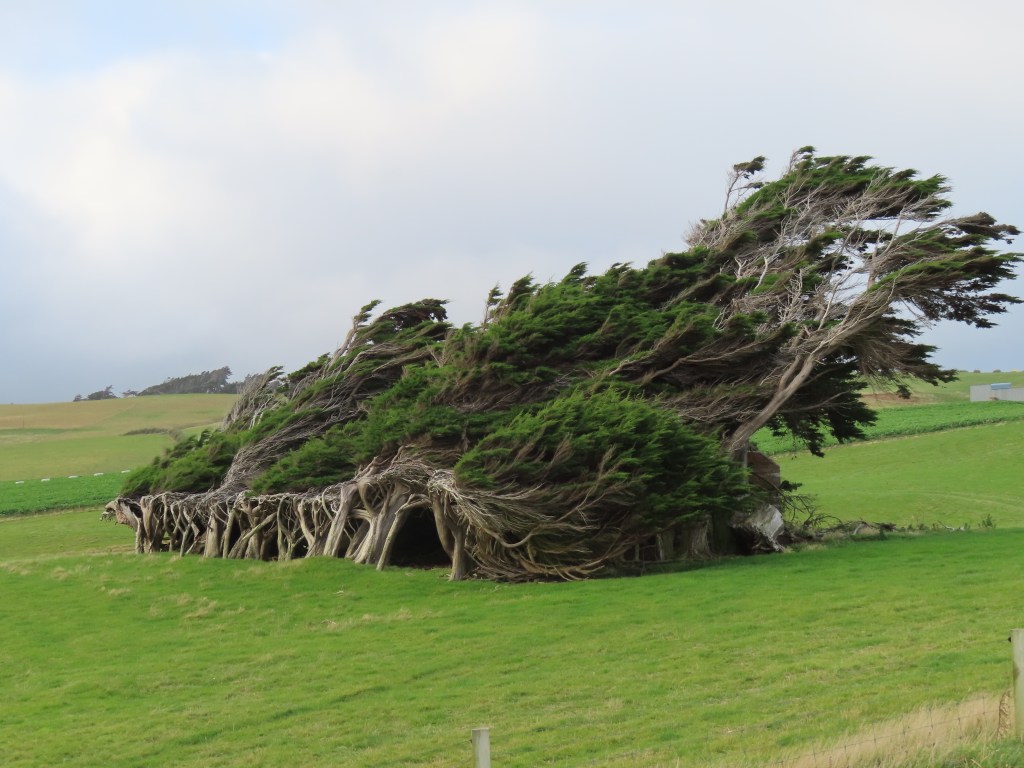
The trees around this area are legendary in that they are all bent over by the wind. Some of them were judged to be the world’s most beautiful in 2017.

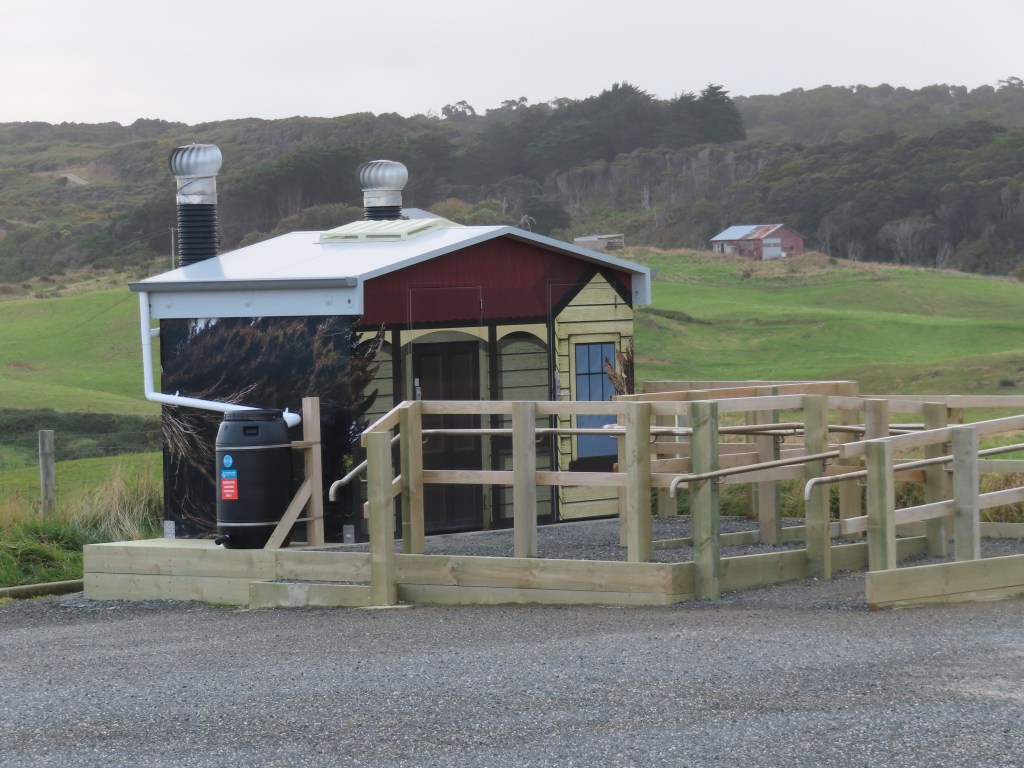
Even the long drop toilets at Slope point are cute.

All done for the day, we travelled on to our resting place for the night at Kaka Point.

Heading further south to Gemstone Beach and Monkey Island

Once we felt well enough we set out again. I wanted to revisit Gemstone Beach again, because the last time we went there it was almost full tide. We really needed to be there at low tide or an hour or so either side of it. Unfortunately, the weather wasn’t looking great and looked worse the more we drove. I guess the plus side was that parking wasn’t going to be too much of a problem because only hardy souls would be out in this.

Once we got to the Beach we were lucky to get a short fine break so we went for a walk.

You wouldn’t believe from the above photo that the stones would actually be so colourful and so varied.

Bruce and I must have spent about 45 minutes fossicking around before the rain started coming down again and with it the cold, so we made our way back to the van. We only had a small bag each so not enough to weigh the motorhome down and make us exceed our weight limit.

We dried off and then headed for Monkey Island, which is a freedom camp only a few kilometers away. By the time we got there the weather had fined up again. We were only the 3rd van there – little did we know that the caravan down the other end of the carpark belonged to Bruce’s sister’s best friend. They moved on before we made the connection.

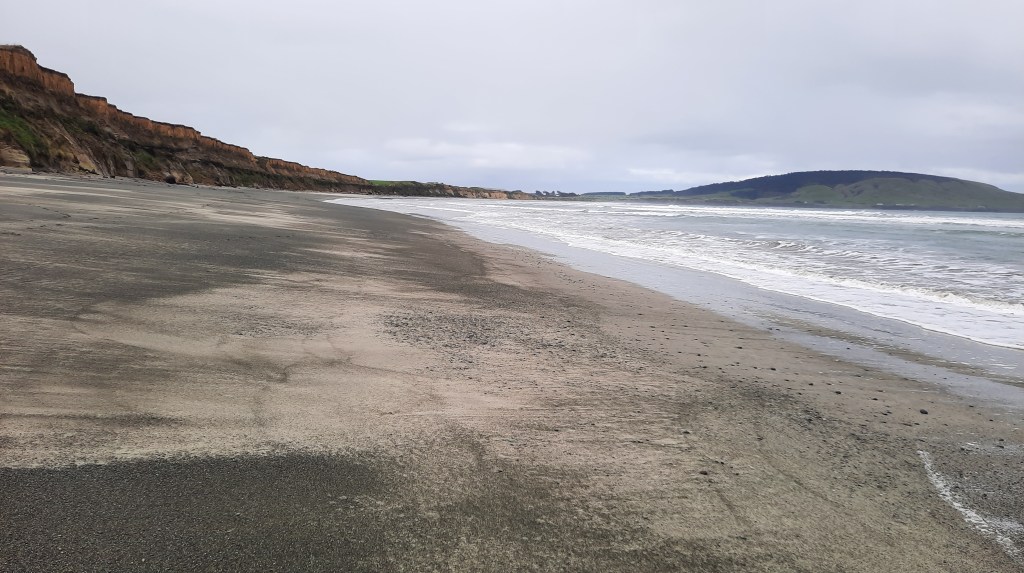
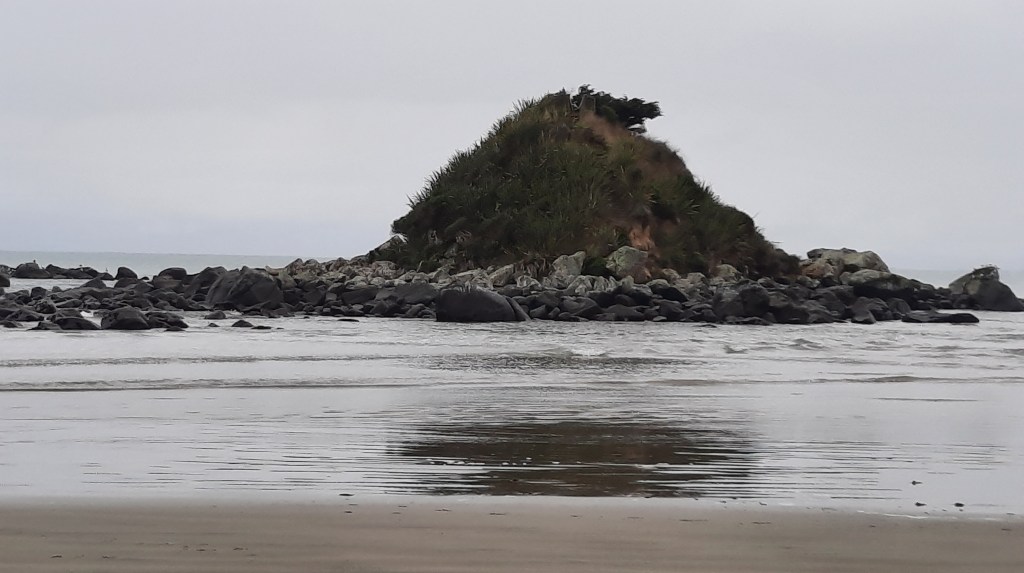
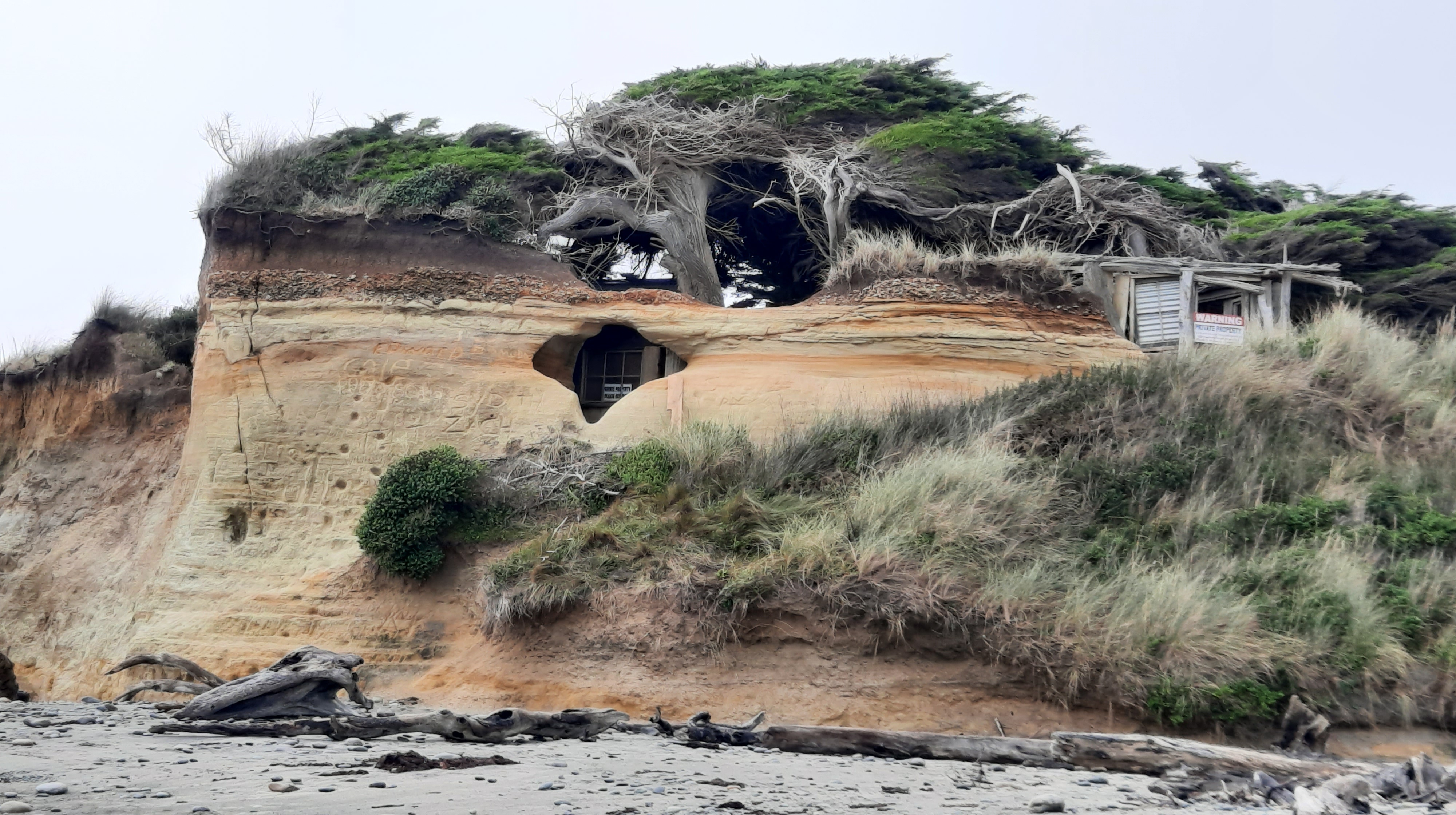
This time the dogs were able to come walking too and they really enjoyed some off leash time. As we walked further along the beach we spied this curious structure.

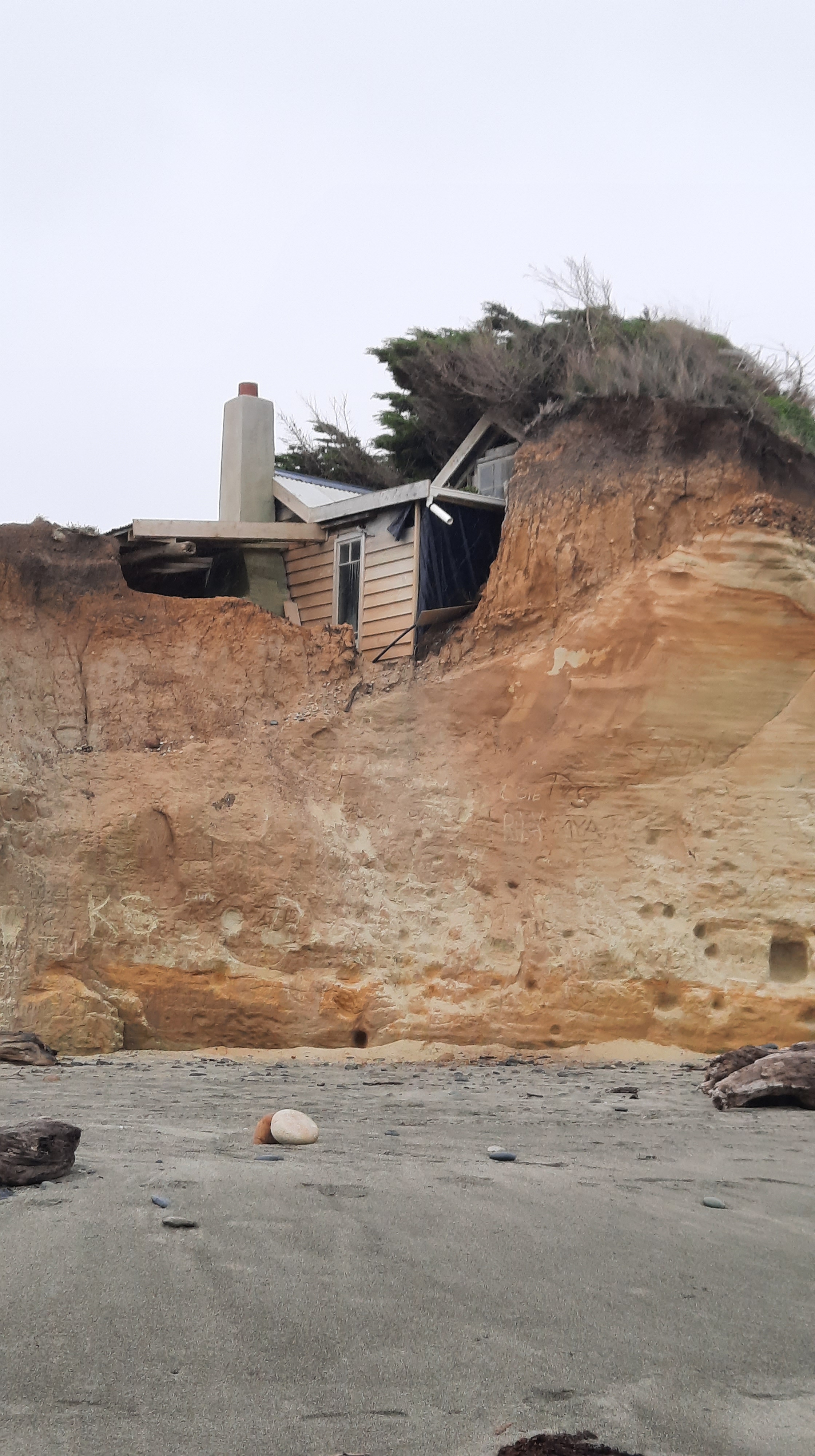
The closer we got, the more strange it seemed to be. We were not sure if the house got engulfed by the dunes, or were they building around the dune? You can see a window through the hole in the dune.

It was good to have a nice beach walk again and the dogs wore themselves out. We decided that as we planned on going to the Catlins tomorrow, it would make sense to stay the night in Invercargill again as it would save an hour off our trip tomorrow. We enjoyed as much of the day as we could at Monkey Island and then headed back to Invercargill.

I would have to say that we were impressed with how easy it was to navigate Invercargill, and that helped in the decision making. We were beginning to feel comfortable there. In addition, there are plenty of walks for the dogs, and all the necessary services needed by motorhomes.

Further South to Invercargill

After a night in Lumsden, we had a leisurely drive to Invercargill, via Cromwell, where we ended up staying 4 nights. The reason for this was that we both contracted head colds – probably from the crowds at Arrowtown. Catching a cold is always a bit of a problem because Bruce always thinks he is dying and I always get wheezy. Therefore, I wanted to be where I could get to a doctor if needed. Fortunately, I was able to manage it myself, and no medics were required.

We used this layover time to get our laundry done, restock the pantry and catch up on blogs.

When Bruce was feeling better he wanted to re-visit Bill Richardson’s Transport Museum. We had been there before, so I elected not to go this time, so Bruce had plenty of time to wander around on his own.

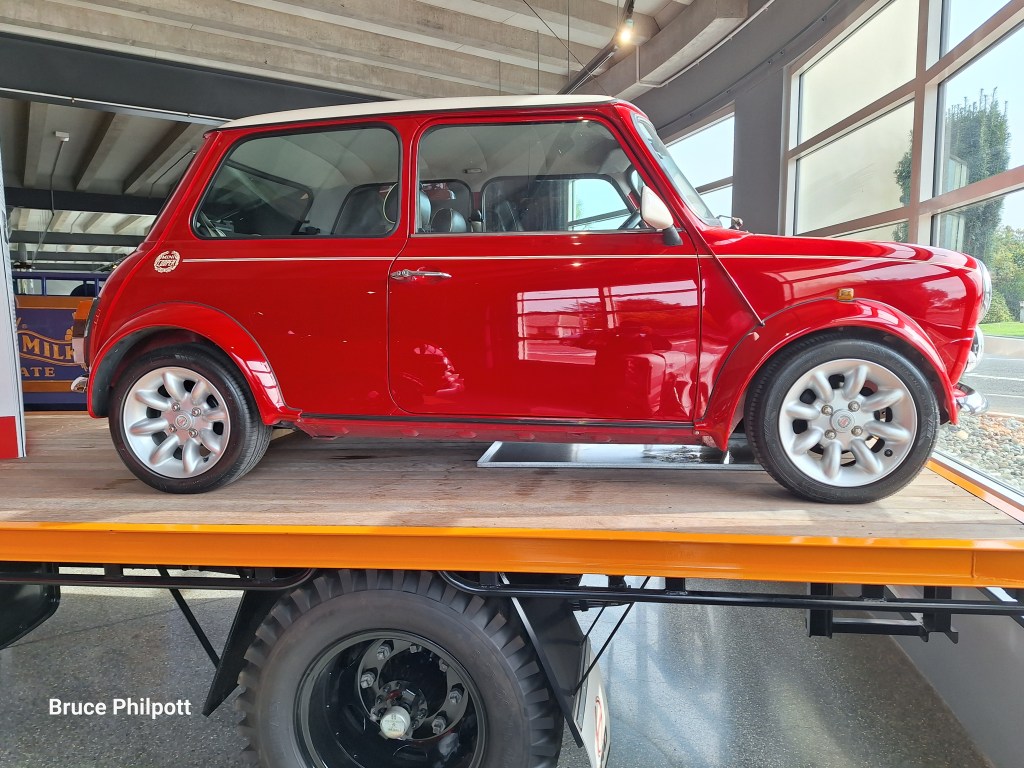
The first car he came to on his journey was a bright red mini. This had significance to him because he had a similar car that he lovingly restored and painted (so you couldn’t see the bog).

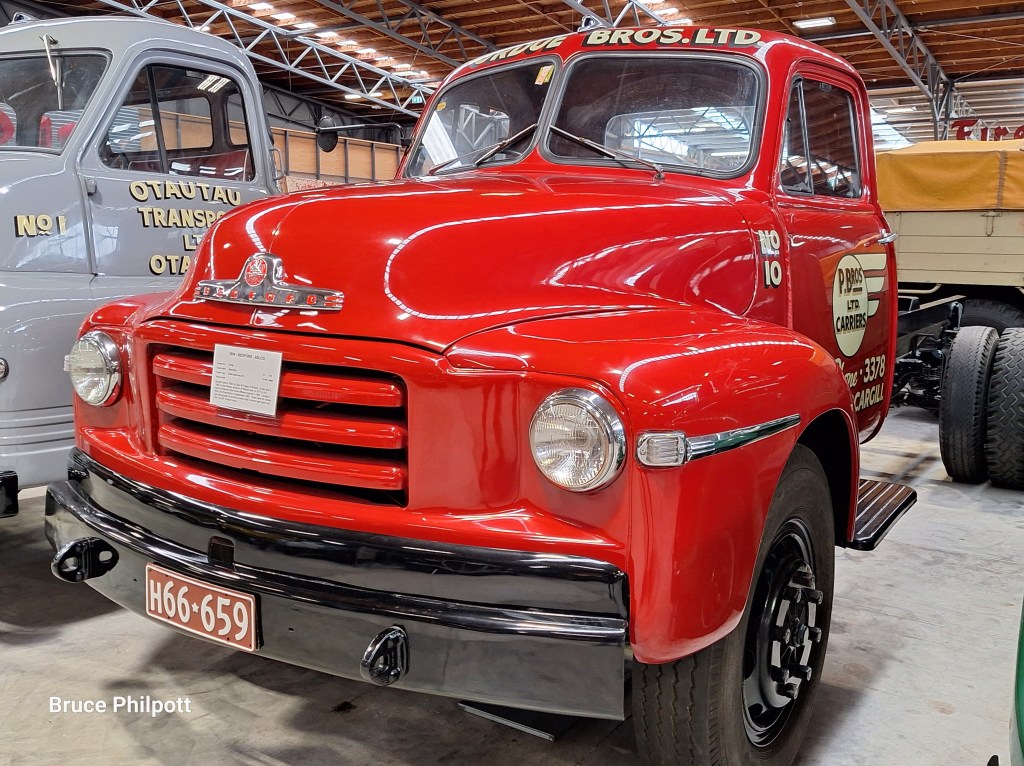
The red Bedford truck was the same as the one his father had when Bruce was young. Bruce sat his driver’s license in a similar one in Wellington, about 55 years ago.

The three wheeler truck took his fancy.

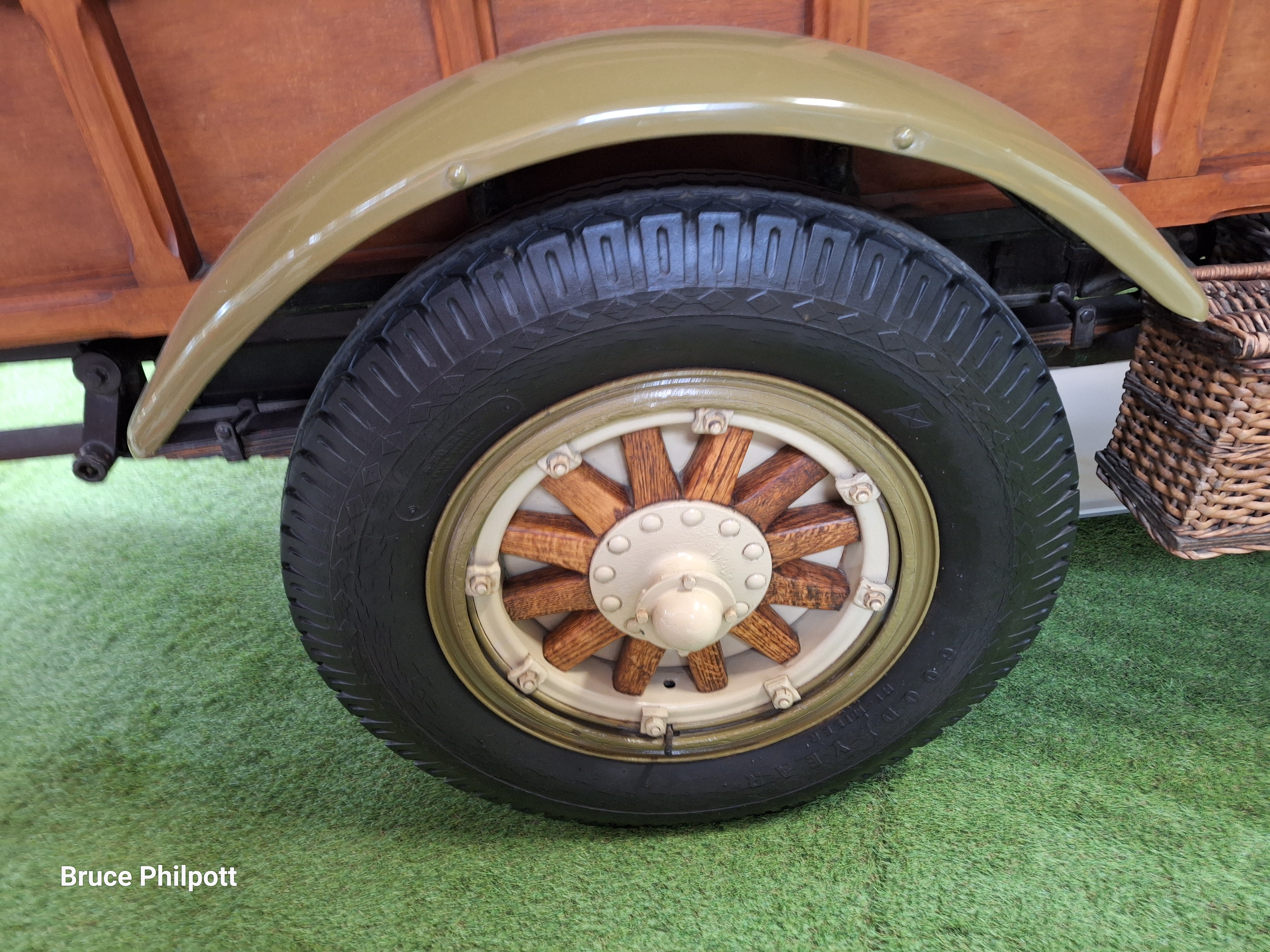
John Britten was a great NZ inventer of motorbikes, but he hand built his own motorhome between 1972 and 1975. He made all the cabinetry and as he had also had a bit of a try at glass blowing, he also made the stained glass windows.

Note the wooden spokes on the wheels!.

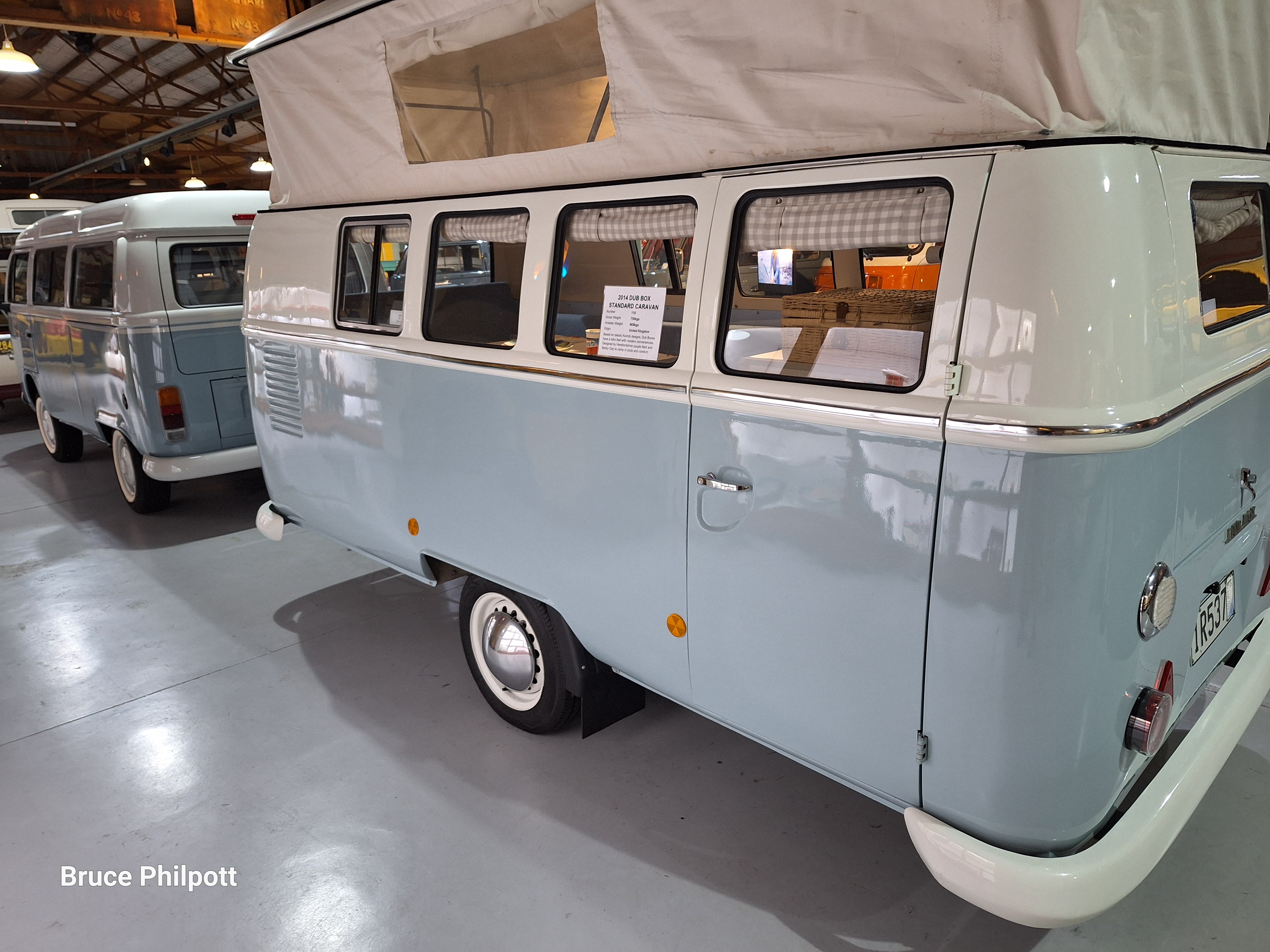
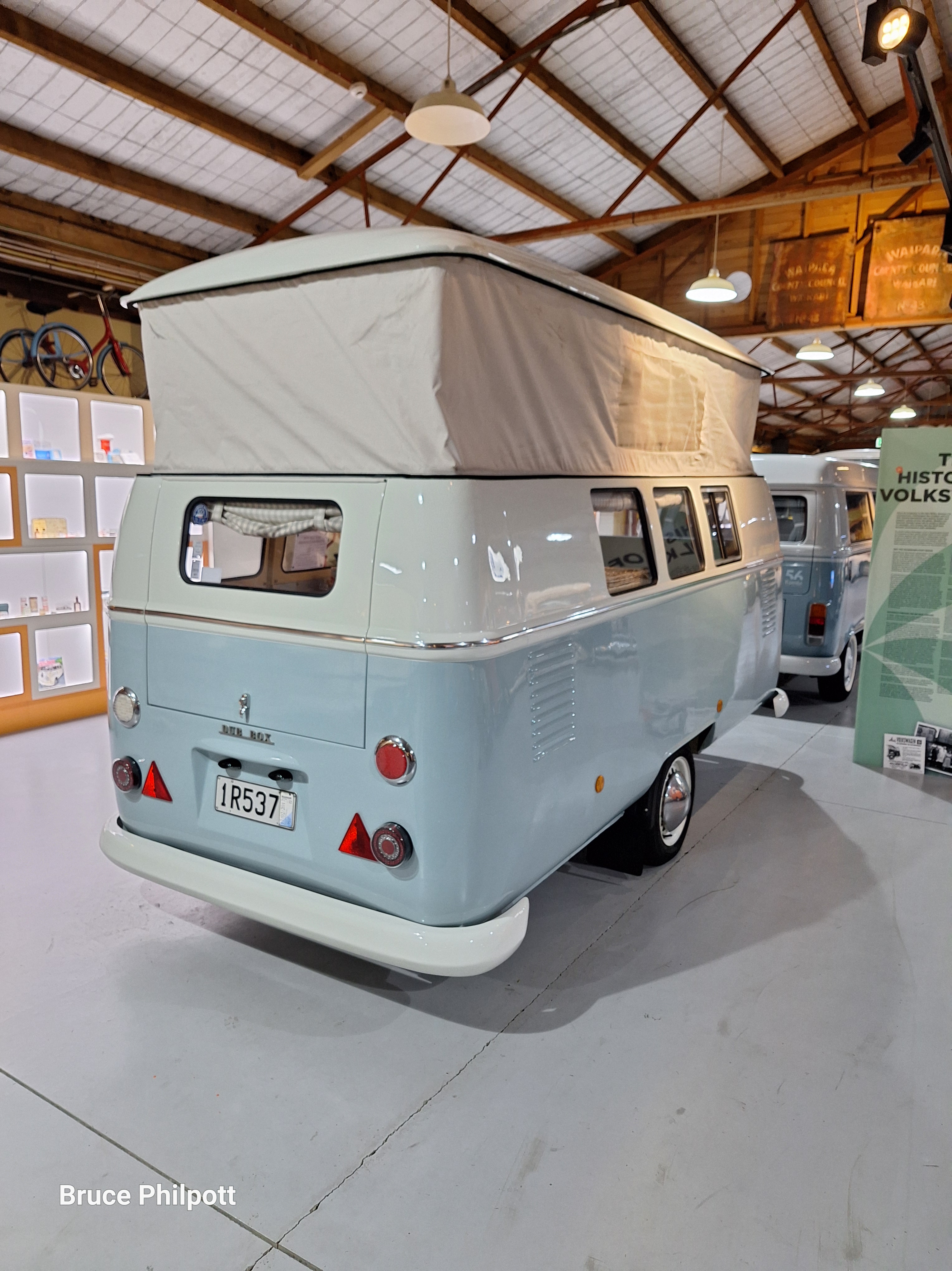
While on the topics of campers, Bruce also loved the VW camper

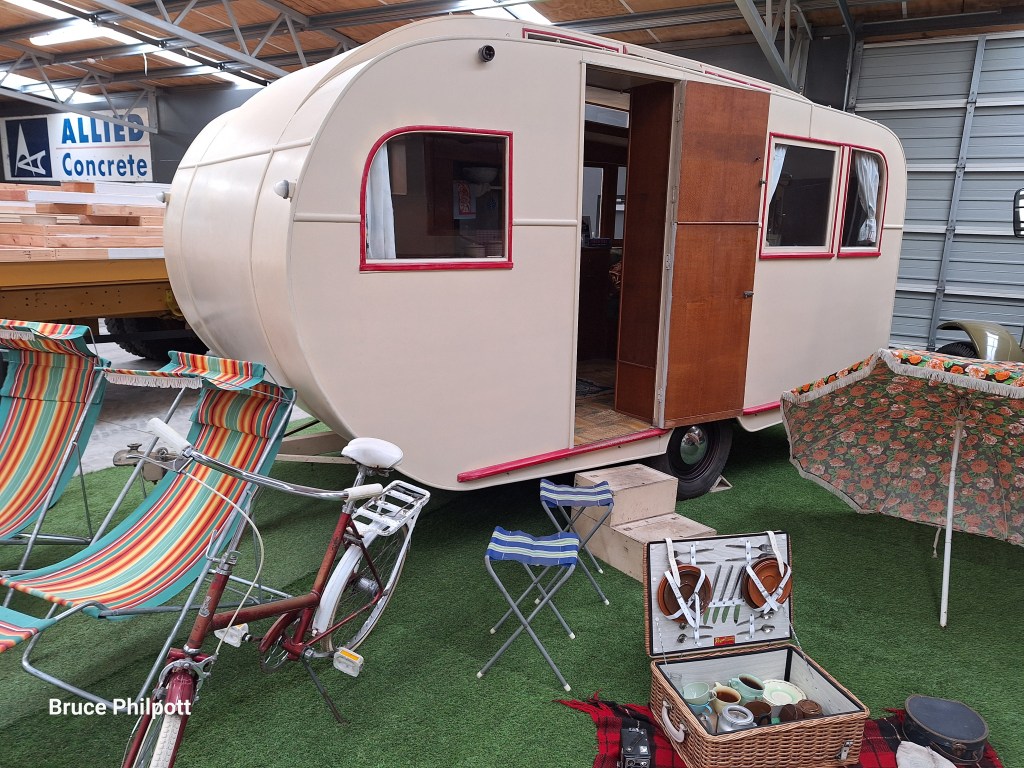
And then the caravan, built in 1956, and still has the original paint on one wall.

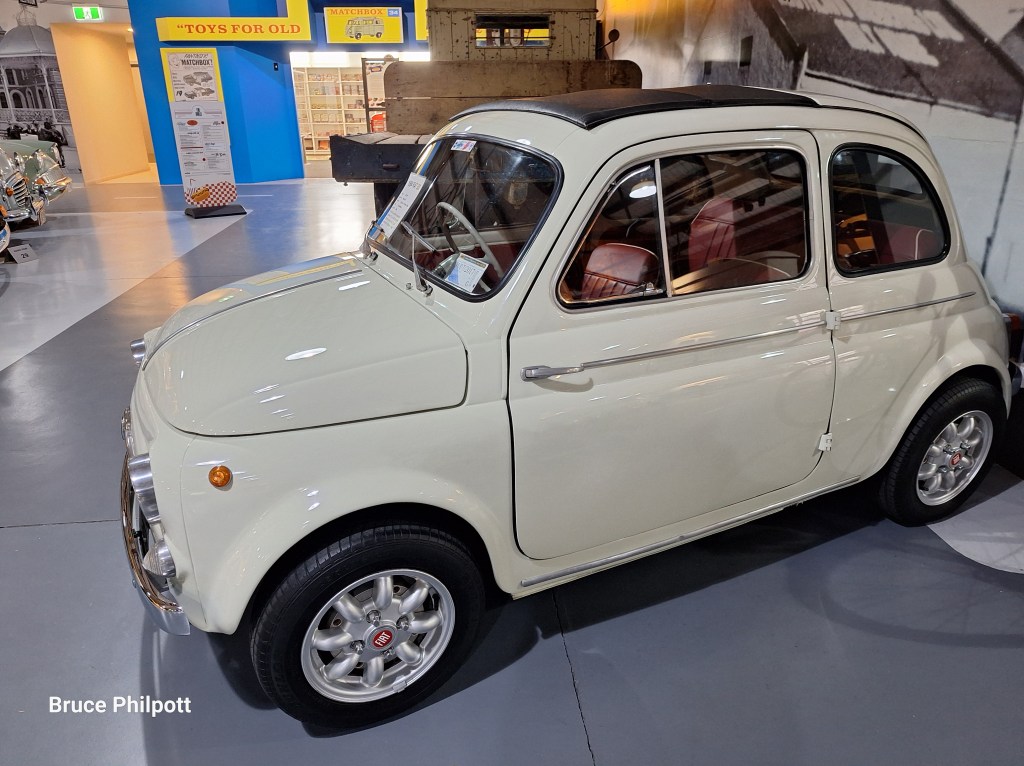
The next to take his fancy was the fiat – a predecessor to our motorhome. From this:

to this:

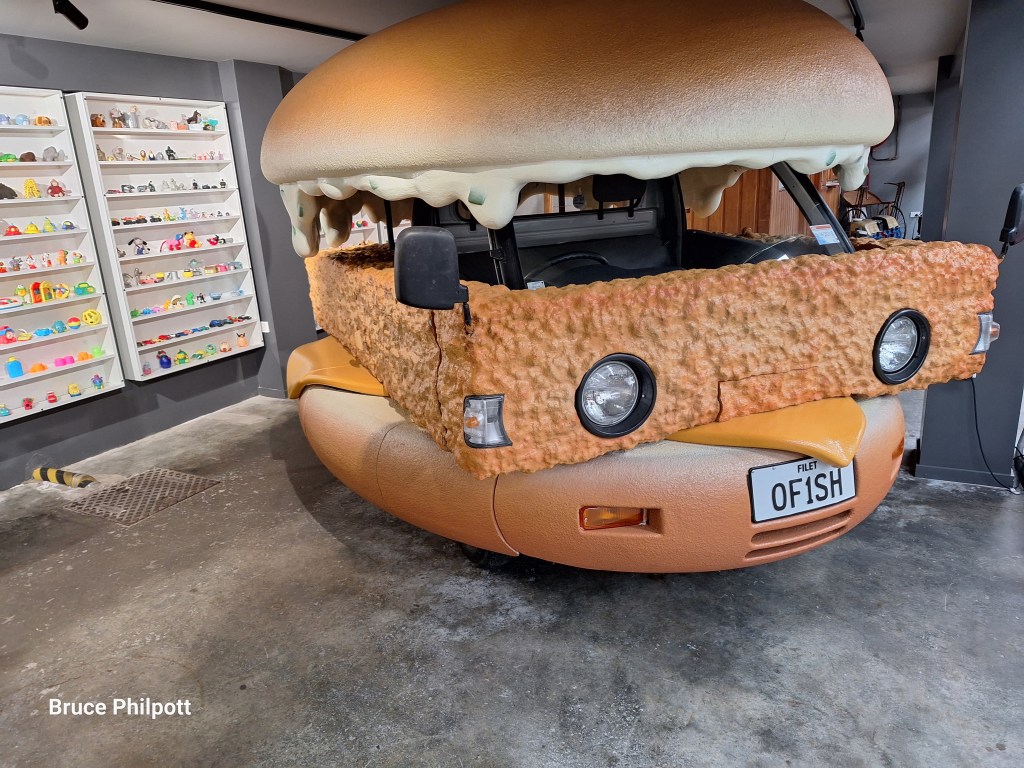
The hamburger car appealed to him just because it was so different, and a product of someone’s whacky imagination.

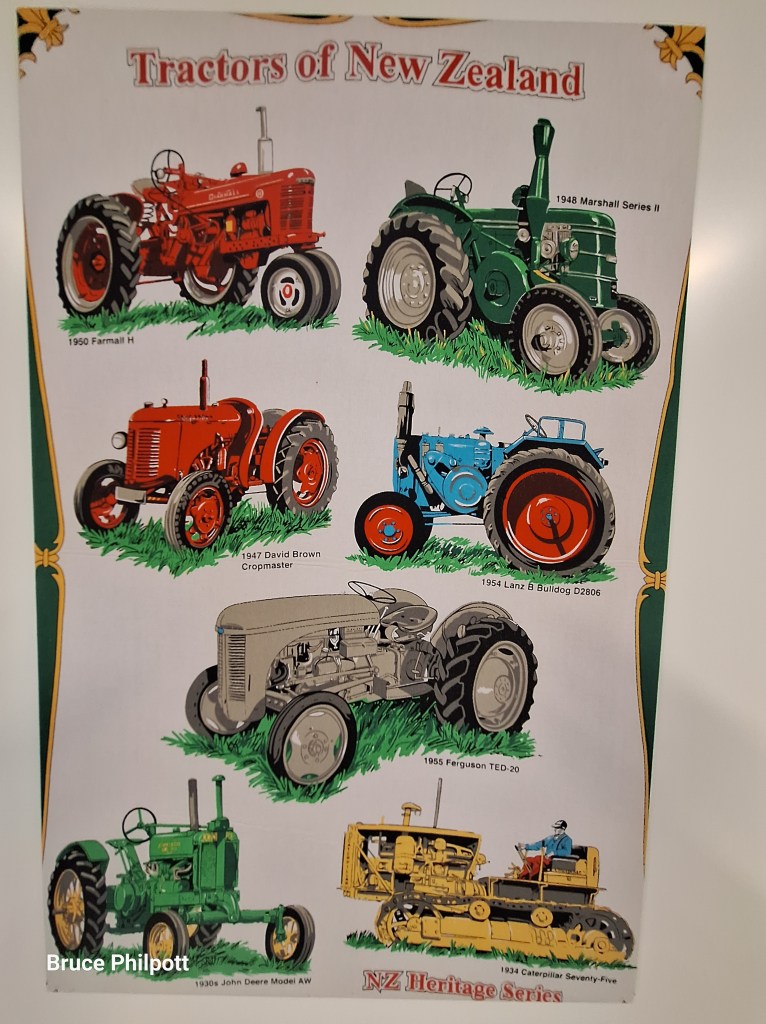
For some reason, the tea towel collection also appealed to him, but especially the tractor tea towel, because it has a tractor just like Ruby on it.

All in all, Bruce had Judy free time for about 3 hours and thoroughly enjoyed himself.